On Sexual Abuse: “Sizzler”


unnamed (1)

‘Is that all you’re having?’ Phillip has looked over her meal and seen that she is starving. It is the peak of a Melbourne summer outside and Merry feels fat and tired and large enough as it is. He frowns and pushes the breadbasket towards her. ‘You don’t have to worry about your weight, you wouldn’t suit being skinny. Have some bread.’

‘I’ve always been fat.’

art fiction 

Suddenly she doesn’t care about anything except what this conversation could be. No one since her father has ever brought up her weight. She has never talked to anyone about it either but now she feels she might be able to tell Phillip something, something that could perhaps explain.

He doesn’t reply with anything, doesn’t deny her statement. Merry feels a little light-headed, though she has hardly touched her Amaretto Sour. She fishes around in the glass with her fingers and pulls out the cherry, dangling it above and then down into her mouth.

art fiction 

‘Don’t do that. Women shouldn’t eat with their fingers.’

art fiction 

She wipes hand on the paper napkin beside her plate, mouth slightly watering from the effort not to lick.

After Phillip has gone back for more veal schnitzel and duck gravy and they are lily-lipped and cloud-eyed, he asks her if she will take him home.

art fiction 

‘I live with this old woman who hates it if I have guests. I think she’s in love with me.’

art fiction 

He smiles a little and adjusts his sagging shirt collar. Merry feels that the woman is most certainly in love with him; she understands through the liquor that the woman flirts with Phillip in her tattered kimono over eggs and beans for breakfast and that she has a cat who curls often on Phillip’s knee.

art fiction 

‘What’s her name?’ she asks.

‘June. Why?’ His voice has coloured slightly—it is a storm in the distance, in the heavy clouds.

‘Oh, I just wondered. June is a nice name.’

art fiction 

He frowns, forcefully, as if it will help him to tolerate her stupidity.

art fiction 

‘She’s just my housemate. She’s old and sagging and pays most of the rent.’

art fiction 

There is a familiarity to Phillip’s forehead that she did not see before. It’s in his crooked eyebrows, the slight pouches of muscle above each one that move when he talks like they are his voice. It must be the reason why she feels a pulsing in her groin at every word he speaks—because she knows him.

      They have dessert, coffee, more sours, more smooth froth on lagers like chocolate milkshakes. It is Phillip that decides when they need to leave, and he doesn’t come back to her nervous, cluttered flat after all. He starts to eat at her neck and then her chin in the taxi on the way there and tells the driver to stop so that he can fuck her up against an alleyway brick wall that is sprayed in red and green and blue: coloured words she can’t read but that she thinks just might mean everything.

       Just as he pushes himself in she sees who his forehead is. Now it’s her father with his hand up under her dress, pulling at her nipple too hard. She closes her eyes and tries to remember the sound of Philip’s voice. She hears sirens and feels strangled breath heat the skin that covers her neck tendons.

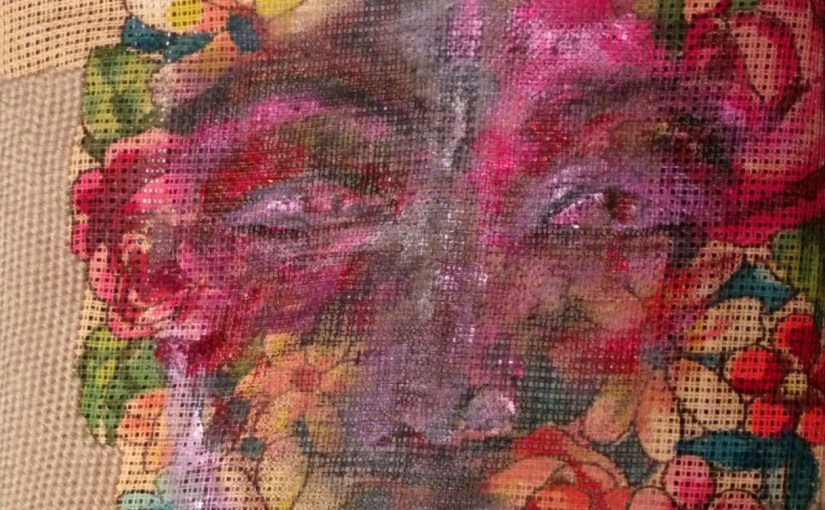
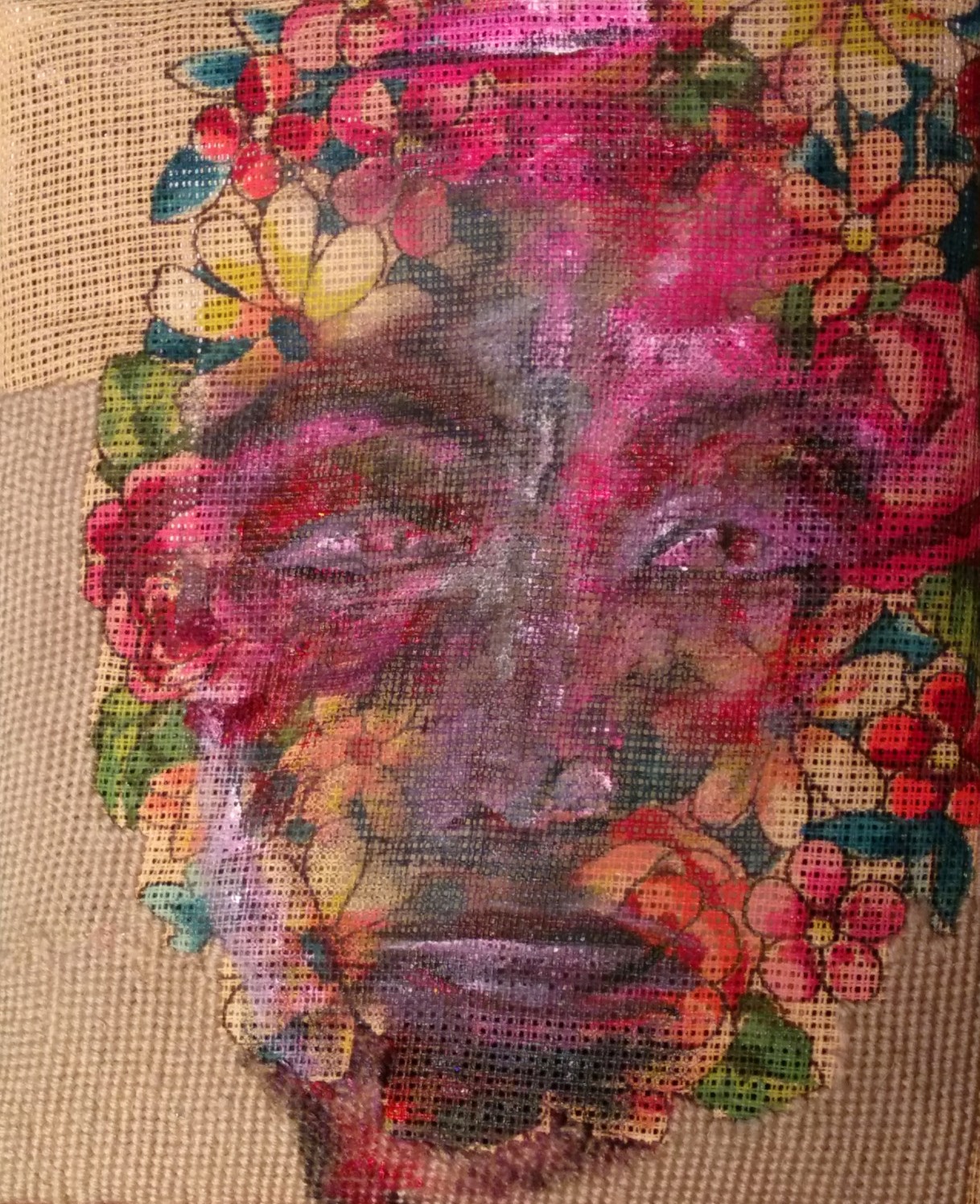
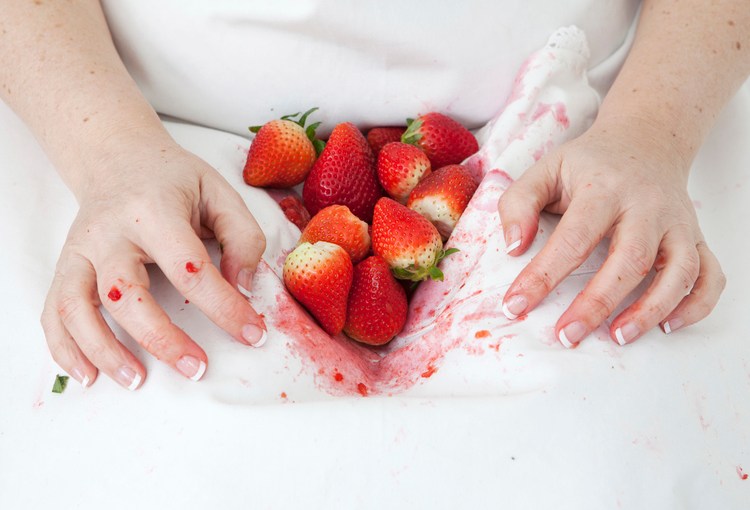
“When I saw this art piece by Fannie Gadouas, I immediately felt protective towards the woman with the blood and strawberries in her lap, with all her vulnerability so blatantly displayed. 
The character of Merry in my story ‘Sizzler’ is a vulnerable character because of her background, and the way her femininity and innocence was abused by those closest to her. Despite this trauma and vulnerability, Merry keeps living and trying to find something better for herself. The strawberries replacing most of the blood in Fannie Gadouas’ piece inspired the resilience inherent in the character of Merry, and reminded me of the resilience I have witnessed in so many (less fictional!) women I know and love.”

colour by Fannie Gadouas

“I am an interdisciplinary artist working with photography, fiber arts and performance. My work explores issues pertaining to femininity, identity and experience. By re-appropriating various traditional imagery, techniques and rituals, I question and challenge the way gendered identity is constructed, inherited and perceived in western society. Textiles is, and has traditionally been associated with the feminine realm. Critically engaging with techniques such as weaving, knitting and embroidery allows me to subvert and question my own role as both woman and artist. In this sense, my practice as a whole becomes a performance in which the process holds more relevance than the resulting objects. Informed and greatly influenced by feminist theory, the work I produce is a critical response to the social structure of western society.”
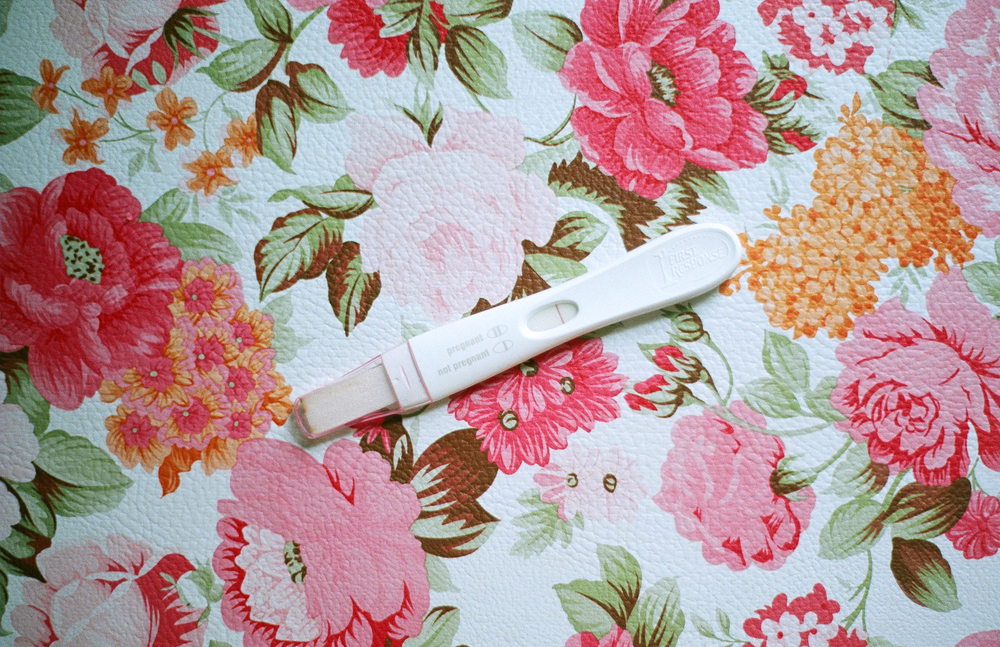
A reminder: your fate is permeable

back_03

The only time I ever took a pregnancy test I was eighteen years old and living with my boyfriend in a stranger’s apartment in Prague. We spent the days wandering and the nights drinking quietly, not knowing what or how to cook.


I curl into the kitchen windowsill smoking what might be my last cigarette, and silently contemplate this bleak fate. He slouches on the bed twirling the butterfly knife bought that afternoon despite my un-nuanced anti-violence politics. Or maybe I just couldn’t support violence for the sake of masculine amusement.


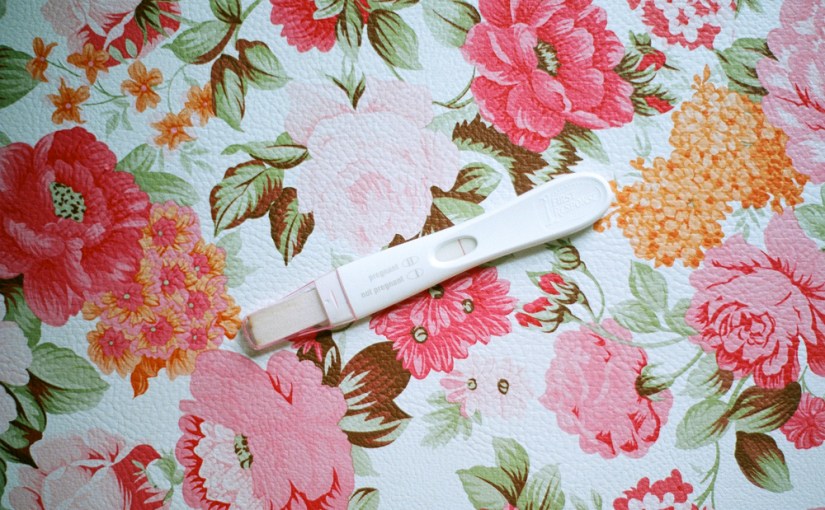
The kitchen table is draped in pink blossoming polyester flowers and the fridge is mostly empty. I swallow, and clutch to the unfinished sketches of my life, slipping. It is a small kitchen, badly lit and the night sky drops away from my body.


On a walk with mother, she told me that having children doesn’t necessarily equate to happiness. They did a study, she told me. On happiness. Together we unravelled the assumed inevitability that one day, you’ll see, it will just happen. Bam. Motherhood. And eventually you’ll even learn to like it.


Still I shrink away from the word, hold close and fast to the solitude, the silence, the ability to switch apartments seven times in four years.


Even without the study, her words sucked me out of the story. At least far enough away to bring it into focus. Socialization never amounted to fate in any mystical sense of the word. My anatomy does not presume that I was made for this, and mothering, just like any other job, must be knowingly consented to.


There I was: eighteen, tender and bitter with my un-nuanced anti-violence politics, licking childhood wounds and refusing fate. That small pink bar. I taped it to the wall along with the blossoming table cloth.


word by Alisha Mascarenhas 

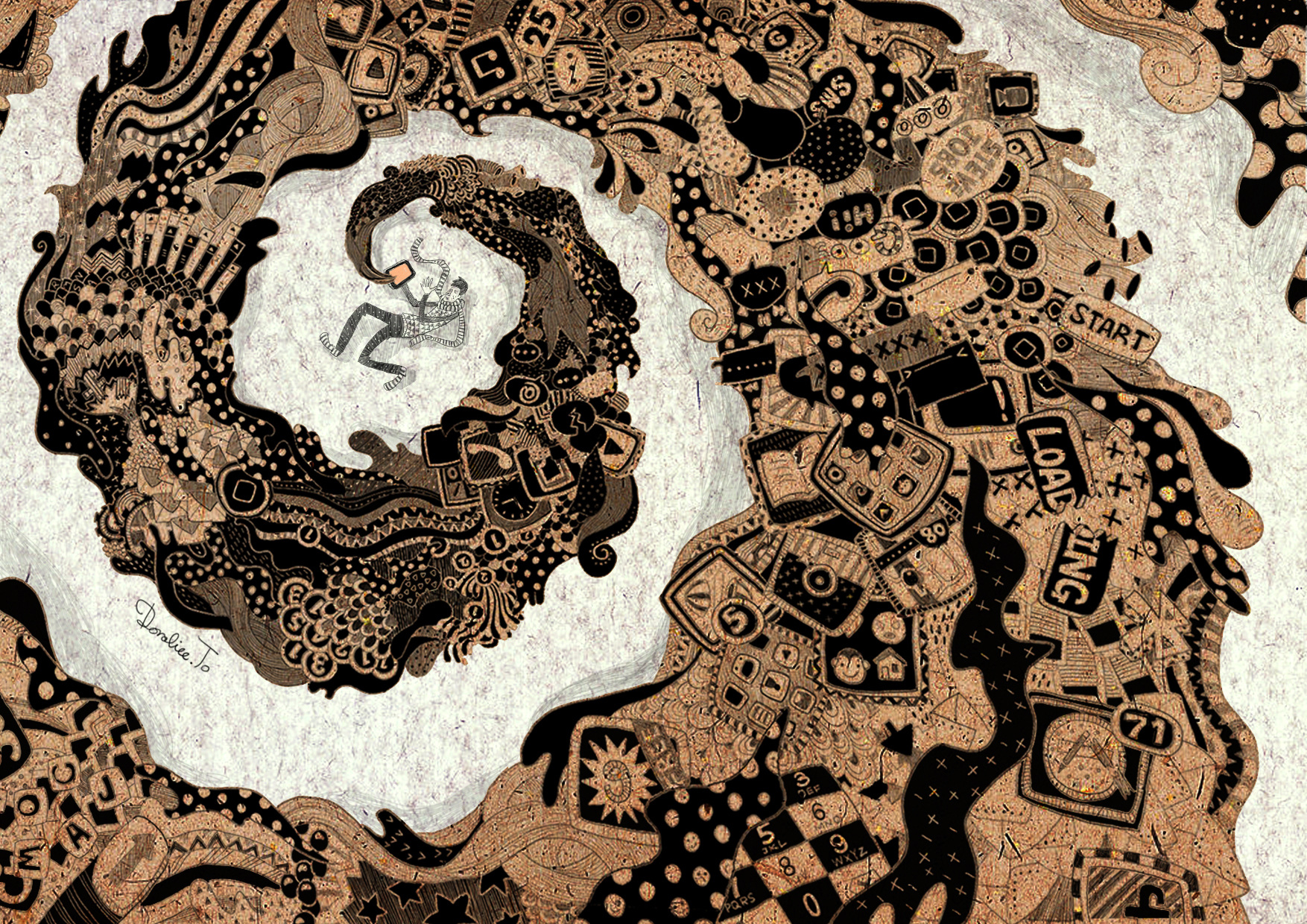
“I thought about all of the babies in strollers I’ve walked past this week, and about the persistent disjuncture that often presents itself between what we need and what we are told that we need. I thought of how socialization of femininity is made real through direct transmission from those who impress upon our minds most legibly, and how necessary that there are alternative narratives offered to us in these moments. I thought of the economics behind the inevitability of motherhood, and the threatening possibilities that can surface when what appears fated is pulled apart, set aside and seen through.”

colour by Fannie Gadouas

“I am an interdisciplinary artist working with photography, fiber arts and performance. My work explores issues pertaining to feminine, identity and experience. By re-appropriating various traditional imagery, techniques and rituals, I question and challenge the way gendered identity is constructed, inherited and perceived in western society. Textiles is, and has traditionally been associated with the feminine realm. Critically engaging with techniques such as weaving, knitting and embroidery allows me to subvert and question my own role as both woman and artist. In this sense, my practice as a whole becomes a performance in which the process holds more relevance than the resulting objects. Informed and greatly influenced by feminist theory, the work I produce is a critical response to the social structure of western society.”

On Abuse, Beauty Standards: “Blueberry Scones”

022

Content warning: abuse 

Blueberry scones.  Louise recalled her mother baking them fragrant and buttery every Sunday morning.  They left flour trails on the good porcelain dishware and corners of her mouth as they dined on the lawn.  Their necks sheltered by the limbs of the poplar tree.  Louise would blush with the heady kisses of the blueberries and peals of laughter.  The poplar bared its fruits in that space, though its trunk was slim and its leaves almost translucent.

The air in the house took on an electrified vibe when he started coming around.  In the parlour under definite drawls of “honey,” the coffee was bitter but jarring.  It pooled black and inky as it rested on her knees.  Back straight as she perched on the sofa, her lips painted cherry red to match her mothers.  Daytime appearances seamlessly folded into nightly visits.  Dresses were ironed carefully each time; their clean A-lines improved by the hundreds of tummy toners performed every morning.  He brought new sound to the house too; concertos of harsh shouts that didn’t echo beyond the starched, checkered curtains. Her mother’s eyes shone like slivers of wet jewels- any drips that touched her cheeks wiped clean and painted over with cream-coloured powder.  Tender spots of bruised flesh could be covered by wool as autumn closed in.

The ruts in her mother’s chin grew deeper and her mouth settled in placidity.

“I am making this work for us”, a mantra repeated as she pinched the earrings tight on her lobes and pulled her hair taut against her head. A golden egg exposed for the taking.

“It’s better for us to have a man,” she repeated somewhat apologetically as she pulled Louise down street to her ballet classes.


____________________________


The screams washed over the house that evening.  They rolled over the kitchen mouldings and crashed against the windowpanes.  Louise dashed upstairs- it was time to seek higher ground.  A wild female wail then a teacup flung- it sung as it fractured against the wall.

The dishes continued to fall downstairs.  The crushing sound became definite and dependable, like the merging of orchestrated notes in her ballet classes.

“You’re just gonna do that all night are ya?”

No answer.  Louise heard the front door slam.  Piece after piece, they were hurled at the wall.  She began to feel a rhythm.

Shattering.  Release.  He was gone- all these broken pieces were too difficult to tread on.  She heard sobbing.  The breaking continued.  Alone in her bedroom, Louise started to spin.  The merging of sound, performing under pressure.  Was she straining?  She didn’t think so.  Among the wreck, she felt in her element.  She wasn’t broken – her flesh withstood more than those brittle dishes.  She tilted her head back – a dizzy distancing feeling crept in.  For now she could cope.  Soon enough she would rise from these fragments and pirouette away.


word by Keah Hansen

From the author: “The shattered tea cup- with its clean lines and dainty features- made me think of the strain women feel when upholding conventional beauty standards. Its brokenness inspired me to write about an abusive domestic relationship, and an experience of cathartic release for the female characters.  While the mother smashes through her imposed constraints and repels her perpetrator, she is still cloistered within the traditional domestic sphere.”

colour by Fannie Gadouas

“I am an interdisciplinary artist working with photography, fiber arts and performance. My work explores issues pertaining to feminine, identity and experience. By re-appropriating various traditional imagery, techniques and rituals, I question and challenge the way gendered identity is constructed, inherited and perceived in western society. Textiles is, and has traditionally been associated with the feminine realm. Critically engaging with techniques such as weaving, knitting and embroidery allows me to subvert and question my own role as both woman and artist. In this sense, my practice as a whole becomes a performance in which the process holds more relevance than the resulting objects. Informed and greatly influenced by feminist theory, the work I produce is a critical response to the social structure of western society.”


On Death and Instagram: “The Right Filter For My Memory”

nadoune 3
My eyes raced to skim over the part of the text that was relevant to our current conversation in hopes of catching on to the gist of what was being discussed. Of course I was finding it impossible to formulate anything barely intelligent to contribute. As per the usual, and despite his general lack of insight, Micah’s hand bolted sky high. In a seminar of 11 graduate students he had somehow consistently missed all of the social and visual cues and extended his unusually long arm, fingers arrow straight towards the ceiling, as though he would combust if he could not speak.
 Death and Instagram
Dr. Meyer glanced at her watch and subtly but expertly waved Micah’s hand down, squinting her eyes and pursing her lips as if to say in that one brief facial expression.
Death and Instagram
“I know, we’ve run of out of time, I’m so sorry we’ll miss your gems of wisdom.”
Death and Instagram
Micah’s hand returned to the table and he nodded his head as if to respond, “You’re too right, I need more time to explain my genius to these folks.”
 
Before letting us go, she concluded: “In the corners of my mind are memories, deep in the archives, rarely if ever recalled. The truth is you have to train yourself in the art of that kind of excavation and it is work. You can easily rest your laurels on those moments prompted by a photo that has been sat in a dusty frame for eons, you can access it so readily that you begin to conflate the image for the history of the thing. Do you remember being there? What did you wear? How did you feel? You’re all so busy capturing the moment that you miss it. Do you remembering being there? Or texting, staring into your phone, applying filters? Do you remember being there?”
Death and Instagram
I chuckled thinking to myself. What does this old lady know about Instagram? Dr. Meyer was 68. Her probing questions anchored deep and roused me. I had covered over the covering over, forgotten what I had forgot, and there was a persistent gnawing, a dull reminiscent ache: the photos only captured so much, there were too few of them to ever imply an iota of the significance of your time and place here with me.
Death and Instagram
I don’t know when I lost you, really. Maybe it was when you moved, or maybe when you lost your leg; you had already begun to slip away. I couldn’t grasp your death until I saw you go into the ground.
Death and Instagram
Every now and then your face surfaces above the mossy mist. Your milk carton full of buttons had a very particular acrid smell, and the touch of your soft wrinkly skin felt like pure love; sewing needles kept in plastic film canisters and the fans you took to church. You are not far – I see you.

colour by Nadine Doune 

“Nadine est née à Montréal, d’une famille venant de s’installer d’Algérie. Elle grandit dans l’école buissonnière, une école dédiée à l’apprentissage par l’art. La musique et le visuel sont toujours présents dans sa vie, dès qu’elle le peut elle voyage avec son violon et ses poèmes/dessins au Mexique, dans l’ouest Canadien, et aux États-Unis où elle s’y installe un an. C’est une autodidacte qui apprend par les expériences, la rue est son terrain de jeu et où elle est le plus inspirée. Elle essaye de rendre la connaissance accessible en donnant plusieurs ateliers (notamment dans une coopérative d’art communautaire nommé le Milieu qu’elle essaye d’aider à bâtir). Elle est intervenante sociale, vend des popsicles artisanaux, et travaille présentement sur un projet de prise de parole chez les femmes immigrantes.”

“Nadine was born in Montréal to a family who arrived from Algeria. She grew up in the Buissonière School, where learning is achieved through art. Music and aesthetics are always present in her life, as she travels with her violin, her poems, and her drawings to Mexico, to Western Canada, and to the United States, punctually for years. The street and her experiences are her main sources of inspiration. She works to make education and art accessible by giving workshops – notably in Le Milieu, a community art cooperative that she’s involve in. She is currently working on a project that centers on the voices of immigrant women.”

On Self-Doubt: “Weather”

unnamed

It’s been raining for days. The girl has just been feeling like rain lately. She’s not sure when it’ll stop, but she knows it can’t go on forever.

            She sits in the waiting room of the office and thinks about how boring it all is. The same magazines as always, the same water cooler across the room, the same assistant answering phone calls and shuffling papers.

            The doctor comes into the waiting room and says the girl’s name. He holds the door to his office open for her, and she gets up slowly, walks toward him past the painting of a horse, past the painting of a whale. When they’re both in the office, he closes the door behind them.

            “So,” he says, “how are we feeling today?”

            “How do you think?” she asks.

            “I thought we were past this.”

            “Apparently not.” The girl sits in the uncomfortable chair she always sits in. The doctor sits in the more comfortable chair, takes the lid of his pen off with his teeth. The girl leans back.

            There’s the sound of thunder and the doctor looks out the window.

            She saw the first doctor when she was eight. He called her problem an Extreme Emotional Response to Weather Patterns, but even then she knew it didn’t explain anything. What was inside her head matched the weather before she ever saw the rain or the sun or the tornado. She could always feel the truth of it.

            “What is good or bad weather anyway?” the doctor asks. She can tell he’s frustrated with her. They always get frustrated eventually. She gives this one another two weeks. “If you’d been feeling great for a month, say, so we desperately need rain, shouldn’t it rain then even if you’re feeling great, since rain would be the great weather?”

            “I don’t make the rules,” the girl says, crossing her arms.

            “Let’s try a visualization exercise.”

The girl knows how this goes; she closes her eyes.

            The doctor speaks slowly, confidently. “Think of a forest. You’re deep in the forest. So deep that nothing can come through the trees. It’s very, very dark. You’re feeling angry today, so let yourself really feel that. Stay there for a minute.

            “Now I want you to start walking. You’re walking through the forest and you come to a clearing, and the first thing you notice is that it’s sunny. You can smell it and feel it as you come to the clearing.”

            The girl feels her anger and she feels the sun on her shoulders and she opens her eyes.

            The doctor pulls his sweater a little tighter around his body.

            “It’s only going to get colder,” she says.

word by Leah Mol 

“The artwork reminded me so much of those moments when a storm is just beginning or just ending. My story is about a link between weather and emotion in the mind of a girl who nobody believes. She is, after years of trusting her own instincts, finally feeling the self-doubt creeping in, which could be the ending or just the beginning of the storm.”

colour by Nadoune Doune 

“Nadine est née à Montréal, d’une famille venant de s’installer d’Algérie. Elle grandit dans l’école buissonnière, une école dédiée à l’apprentissage par l’art. La musique et le visuel sont toujours présents dans sa vie, dès qu’elle le peut elle voyage avec son violon et ses poèmes/dessins au Mexique, dans l’ouest Canadien, et aux États-Unis où elle s’y installe un an. C’est une autodidacte qui apprend par les expériences, la rue est son terrain de jeu et où elle est le plus inspirée. Elle essaye de rendre la connaissance accessible en donnant plusieurs ateliers (notamment dans une coopérative d’art communautaire nommé le Milieu qu’elle essaye d’aider à bâtir). Elle est intervenante sociale, vend des popsicles artisanaux, et travaille présentement sur un projet de prise de parole chez les femmes immigrantes.”

“Nadine was born in Montréal to a family who arrived from Algeria. She grew up in the Buissonière School, where learning is achieved through art. Music and aesthetics are always present in her life, as she travels with her violin, her poems, and her drawings to Mexico, to Western Canada, and to the United States, punctually for years. The street and her experiences are her main sources of inspiration. She works to make education and art accessible by giving workshops – notably in Le Milieu, a community art cooperative that she’s involve in. She is currently working on a project that centers on the voices of immigrant women.”

Issue 225: “At Daybreak”

For Jennifer 3 (1)

There is a room in the red house up the block that lets sound neither escape nor enter.  Its floor-to-ceiling window faces East.  The other walls are bare.  In the center of the room stands a canvassed easel off of which loosely hang a palette and brush.  But there are no colors to paint with.

At dawn, the woman who lives in the red house goes to the room and locks the door behind her.  She takes the palette and brush and settles in front of the canvas in a painterly posture.  The brow of the sun emerges from behind the buildings opposite her house.  The sun washes the room in the same hue as scrambled eggs.  She does not speak as she studies the canvas or the landscape in front of her.  She searches them with the intensity of one who is trying to pop her own pimples.

Her stomach’s growl sounds like someone squeezing an empty bottle of ketchup.  Every wall is a window.  The suck-suck of her heartbeat fills the room.  The woman dabs at the empty palette with the dry brush, which she holds the way you might imagine holding a wand.

The sun still rises. She runs the brush over the surface of the palette several times.  An inflating lung sounds like the hush when you go from out to inside a tunnel.   Her control of the brush for all intents and purposes seems limited to Mr. Miyagi’s recommendation to ‘paint the fence.’  The bristles on the brush appear frayed from overuse.  She has been doing this for a while.  Alive, she restores the palette and brush and leans on the wall adjacent to the window.

In this room, she is sound.

A crowd of boys on the street below walks hunched together.  One of them holds a baseball.  They can’t be older than fourteen.  The woman in the room smiles down on them as if they were her own children.  Her grin reveals that her 9th and 10th teeth have been badly broken.  The boys down below look up at her and mock her.  They pretend to paint.  The boys, they have all seen her before.  The woman’s expression, though, remains.

Her ears ring painfully as the glass shatters.  The room gasps for sound as would someone for air.  The baseball rolls across the ground and stops by the base of the easel.  The boys below laugh and walk away triumphantly.  The woman does not say anything but she has stopped smiling.  Their laughter hurts the way it hurts to have a snowball fight barehanded.  The woman wonders why they threw the ball through her window.  She spends the remainder of the morning picking up the glass shards and putting them in a recycling bag.

I wonder if she is a sad woman.

word by Jacob Goldberg

“The artwork that goes along with this painting gave me pause about how I can let technology control my life and consequently, forget to maintain focus and care about on what’s going on around me and inside me.  The woman in this story fights that as she is disciplined and compassionate – she just gets picked on for being different.” 

colour by Yukai Du, an illustrator and animator from Guangzhou, China, currently based in London.

“In 2012 I finished my BA Animation degree in Guangzhou Academy of Fine Arts, China.
‘Musical Chairs’ was my BA final project, also my first animation film.

Two years later I have received my MA degree in Central Saint Martins College in London.
I focused on research skills during my first year study in MA Communication Design
and then transferred to MA Animation in the second year for a more practical project ‘ Way Out’ – my second animation film.
Meanwhile, I have also been working as designer and animator in M-I-E studio, London.”

On Mental Illness: “Ag”

For Jennifer

I try to hold her hand and find that her nails are dug into her palm, so deep into her palm that I think they must have sunken into it, that they’re gone.

I try to touch her hair and I can tell that she doesn’t feel it.

“What are you thinking about?” I ask.

“I’m not,” she says.

“Then where are you?”

“I’m getting wrinkles in my forehead.”

“I don’t think so.”

She brings her forehead down to my eye level and zooms it in.

“There’s nothing there.”

“I can feel them,” she whines, and she puts her fingertips to her forehead.

“I promise,” I say.

“I scrunch my forehead when I worry. And I worry all day.” She breaks down, starts to cry on the subway, and I don’t know what to do.

Late, sitting in bed, she says, “It takes me so long to do anything. It takes me hours to clean the kitchen. How long does it take you to clean the kitchen?”

“It’s okay,” I say.

“I don’t have ideas anymore. It’s just a jumble of letters in my head. They’re all shaken up in there. Like Boggle.”

I don’t know what to say. “I’m sorry.”

“It’s okay. It’s not your fault. I’m sorry.”

She takes my hand. She strokes my palm.

“How was your day?”

“It was good,” I tell her. “I got a lot done at work.” It sounds inane.

She snuggles in close to me. She puts her nose in the crook of my neck.

“If it snowed for a week right now, what would you do?”

I laugh. “What do you mean?”

“It snows for a week, right now. It snows so badly that we can’t leave the house. We can’t do anything. We’re stuck here. What do you do?”

I put my arm around her. “I stay here.”

“Noooo,” she says. “Come on. You have to do something.”

“I rip up the carpet on the living room floor. I shred it into fluff. I turn the fan on and blow it around the apartment. It’s like a snow globe inside, but it’s warm.”

She laughs. “I coat myself in egg whites and then dance around the living room until I am covered in fluff. I am the beige abominable snowman.”

“Me too. Then we lie down on the floor. And we make love, two yetis who only know the cave that is this living room.”

“Nothing outside.”

“Just our furry bodies against each others’.”

“No job.”

“Just a wall of snow.”

“No hours ticking. No family calling.”

“Just snow.”

I reach for her hand, and it’s curled again.

“Is everything okay?”

“It is, it is, I don’t know.”

I try to do it. I try to close my eyes and fill my mind with letters, with nothing that means anything, with just the wheel that turns and never stops. She’s crying again. I love her.

word by Charlotte Joyce Kidd

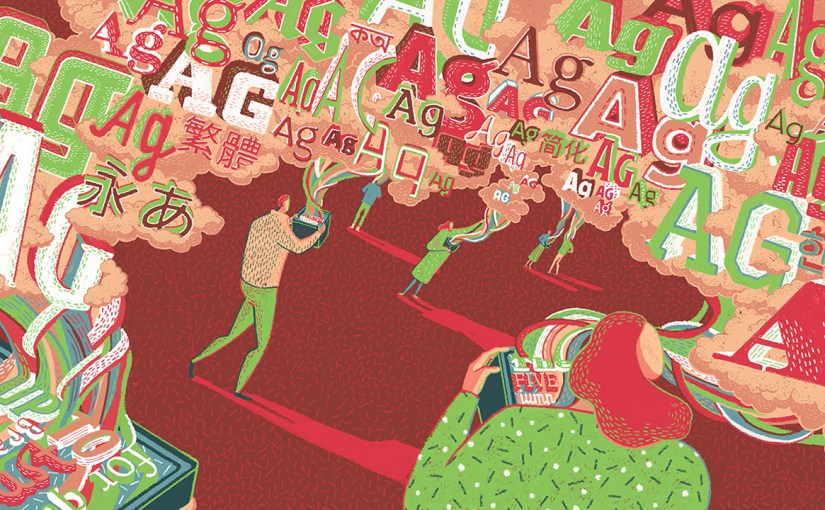
The repetitive letters and the feeling of people watching reminded me of the hyper-awareness, the externalization, that occurs in the throes of an anxiety attack. The thing about loving someone living with a mental illness is that there is nothing to do but encourage them to seek help and not stop loving them. Often, they know they are sick, but they don’t know how to fix it. Sometimes they want help and don’t know how to find it, or don’t have the resources to find it. I spent a lot of time on this piece, because the art resonated with the feeling of anxiety.

colour by Yukai Du

On Memory: “A Kind of Red”

Josh - Marina Gonzaleseme

There was a point, close to the edge of my memory, when all my stories started sounding the same, rehearsed; a point when I found myself clicking on the same websites every day, brain rotting, literally rotting in my skull; a point where rage and riot and raucousness were replaced by routine. I’m vitriolic in the face of routine.

I can’t help but feel like I used to be a much more interesting person. And this feeling, it’s pulling me apart. I can’t even tell youwhen I was more interesting – I just was. I can’t tell you what it was.

I’ve often wondered what might happen to my record collection if I were to up and disappear, what’s left of me no more than a puff of smoke carried towards the horizon on a westerly wind. Most of my stuff is just that, stuff…but my records? That’s me, man. If there’s one interesting thing about me, it’s my record collection. 

Faces on album covers, track lists, liner notes, mix tapes, Motown, delta blues, the Clash (original U.K. pressings only, fuck those American re-releases) and Abbey Road and the more obscure stuff, The Gun Club and Captain Beefheart all blur together to form a comprehensive understanding of an individual. My autobiography. The legacy of a puff of smoke. A subject for future study.

Even just talking about this, I can feel an uneasy frustration settle so deep it’s sticking to my bones. I am entirely unable to glue the interesting bits of myself back together. I’m grinding my teeth as I drop the needle on the turntable. Miles Davis, Kind of Blue. It’s funny, because I feel red. 

word by Josh Elyea

From the author: “Perhaps more than ever, I find myself being pulled in multiple directions. I’m often disparate, distracted and unfocused in the face of constant stimulation (from a wide variety of sources and mediums). When I saw this piece, it spoke to that feeling in me, the idea of being pulled apart and never quite being put back together, of lusting after some evanescent sense of fulfillment that may or may not lie right around the corner. It was quite a visceral reaction, and it left me wondering if others experiences this sense of deconstruction as well, this feeling of not being whole.” 

colour by Marina Gonzalez Eme 

On Mental Health: “Fight or Flight”

df168525400735.56344b22ee7be

It was an invisible voice, driving him onward.

“Run.”

He took comfort in knowing he wasn’t completely alone, but he paused, motionless, for someone else to lead the way.

“Hide,” the voice repeated, this time almost a shout.

Faint rustling, as someone else approached, were muffled through his own heavy breathing as he turned to stare, head on, into yellow evolving eyes. He was face to face with death.

He remained, unmoving, assessing what it would mean to his survival: the choice to fight.

He glanced behind his shoulder, out of options, as the eyes grew less distinct and he was forcefully pushed back into his helpless body, unable to run, no longer in time to hide.

Heart beating wildly, chest rising, yet he felt no air reach his lungs.

“Freeze.”

He opened his eyes and the room was no longer spinning—chest no longer growling. His stomach felt heavy, a bead of sweat meandered down his right cheek. He swiped at it, halfheartedly, with the back of his hand. There was no forest, no golden eyes staring him down, just a microphone in hand and an audience on looking, an uncomfortable pause between applause and speech, hanging in the air as they waited for him to begin.

“Yes-” he cleared his throat.

“Thank you all for coming out tonight.”

The hairs on his arm still stood on end. A shiver ran through his body. “Keep calm,” the voice now instructed.

He closed his eyes to shake himself of the attack, there was a bottle of Valium waiting for him at home, for now, the task at hand remained.

word by Annie Rubin 

From the author: “The harsh edges, intensely vibrant colours, and the vivid animal-like quality of the artwork inspired an intensity motivated by animalistic instinct. The jagged edges and bright lines were reminiscent of a sense of anxiety, in this case manifested in the form of a panic attack. Such an episode takes place as the body’s natural “fight or flight” instinct to combat present danger replaces logic. While many people have suffered from panic, our society rewards silence around the issue, perpetuating a stigma around mental health.”

colour by Marina Gonzalez Eme

On Gender Roles: “I am an extra X”

image

Trigger warning: rape

I am the perpetual embodiment of two letters. I am an extra X, and that’s all I will ever be.

Before I even heard my name they saw me on a screen. They sang with joy because I had an X and not a Y and the spare bedroom was already painted a dusty rose. Dad’s heart sunk because I dashed his dreams of taking my team to state.

When I was born they cried and hugged and congratulations overflowed out of Hallmark cards. I got a card too. It noted my extra X. During my third month they called me beautiful and cradled me more gently than they did my brother because my X baptized me as a paper-doll.

They kissed my cheeks and tucked me into floral flannels grandma gave me when Mom had a party with pink paper plates from the dollar store.

When I was five every boy was my prince and I decided that my wedding would be on a white sand beach with lilies in my bouquet.

When I was seven I finally started to colour inside the lines and I hated subtraction but my teacher told me that that was okay because girls are better at art anyways.

When I was nine my mom caught me trying on her makeup and scolded me for using the wrong shades. When I was 12 I cried because the boys wouldn’t let me play soccer with them anymore.

When I was 13 I cried because my ex-teammate shattered my heart.

When I was 19 I dropped out of physics because my test sheets were covered in X’s and I figured I was better at English anyways.

When I was 23 my heart was broken for the fourth time and my friends told me to forget about the X’s on the back of my hand. He bought me a drink or maybe it was six and I let him taste the seventh one on my tongue even though I hated that song and his breath reeked of Jack Daniels.

When I was 24 they still told me I shouldn’t have worn that skirt that night.

When I was 27 I said I do and they called me beautiful and cried and hugged and gave me tips on how to please my prince.

When I was 28 they bought me pink paper plates at the dollar store.

When I was 30 I typed X’s and O’s into a dusty keyboard and my boss called me “doll” and I was in charge of the coffee machine and I called it my life.

When I was dead the obituaries read “daughter and mother and wife” and nothing more. X marked the spot and they dressed me in floral and kissed my cheeks and the Hallmark cards came pouring in.

Sometimes he brings me lilies.

Most times he forgets.

He tells them that I was beautiful. I suffocate. I am an extra X, and that’s all I will ever be.

word by Hannah Chubb

colour by Marina Gonzalez Eme