New Prose: “January 20” by Ajay Mehra

why-it-show-case-01

The knurled cloth handles of Nicos’ hamper cut into his right hand.  The straps are connected all the way to the base of the bag and the weight of the laundry keeps pushing them apart.  They’re too short, now that the laundry is folded and holding the bag to its shape.  You switch hands but there isn’t enough time to rub the indentations out of the left hand before the pain in the right hand is impossible.

Nicos puts the hamper down on a bench facing the front window of a coffee shop.  People sit looking out onto the street—at the sidewalk and the bench and the parked cars and the road and the storefronts across the road that you can’t make out what they are from here.   You have to rub your hands with each other and look out as well.  How does anyone sit on this bench with the coffee shop staring them in the face.  You’d have to seem surprised all the time that you’d caught someone sipping or biting or reading.

You can’t sit next to your laundry on a bench.  It looks like you’re waiting for someone to come help you, because people can’t tell it’s done.  Is it still laundry when it’s done, and folded.  It’s laundry when it’s dirty, and while it’s getting clean, and while you fold it.  It’s clothes when you put it away.  You can sit next to clothes.  Clothes are like shopping.

Nicos had sat next to half his laundry at the laundromat.  Only because all the machines were full.  You can sit next to your laundry in the laundromat, if the machines are full and you have enough for a good-size load.  And if it’s a clean laundromat.  How do laundromats get dirty.  Car washes get dirty and the dirty ones have the strongest sprayers so you go to the dirtiest ones.  Luckily the closest car wash is filthy.

You don’t care about how a hamper carries when the machines are in the building.  Or when the laundromat at the corner is clean.  Who sends you to a dirty laundromat.  There isn’t another laundromat between here and home, so you have to buy another new hamper.  The store that sells hampers isn’t on the way either.

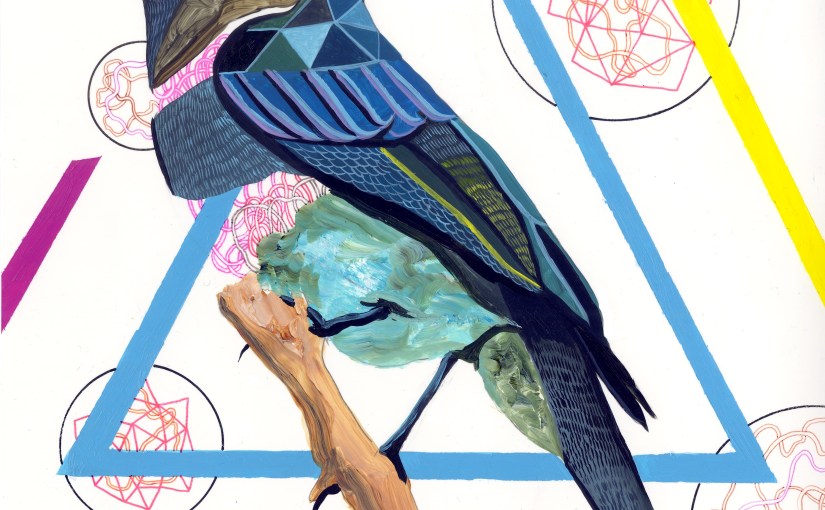
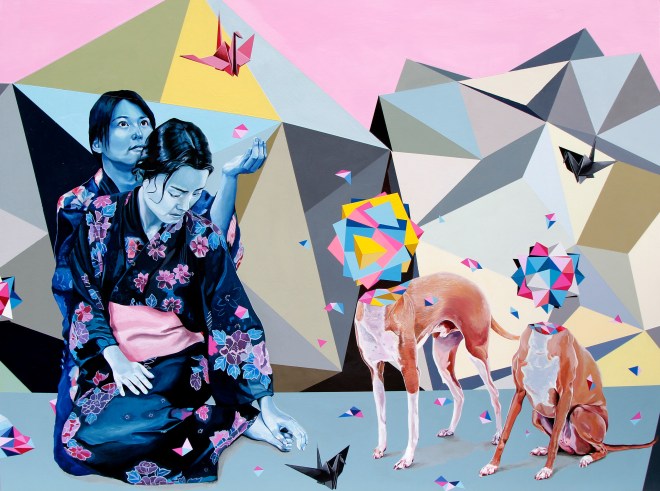
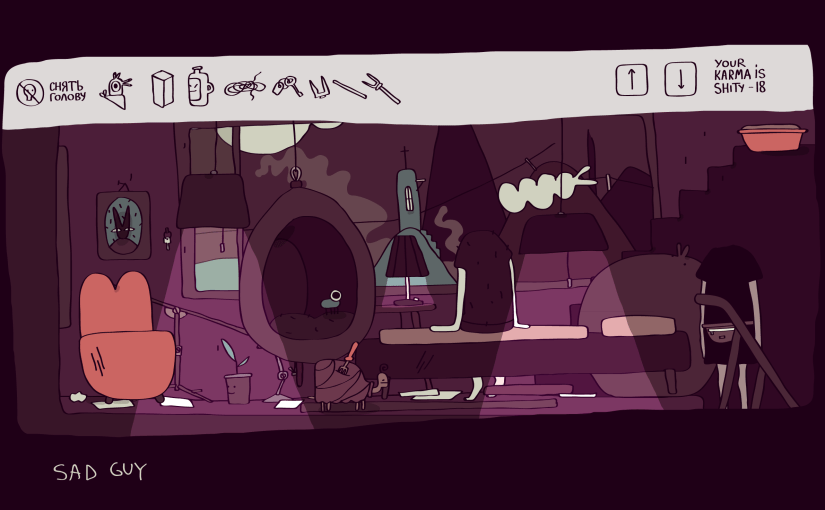
these words by Ajay Mehra were inspired by
the art of Pasha Bumazhniy
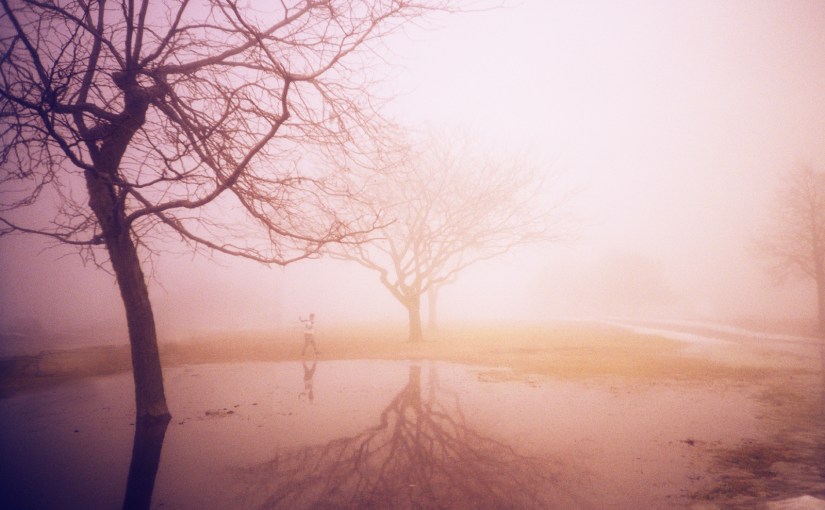
“Code Switching of the New Romance,” new prose by Kate Shaw

Alison_Scarpulla_3.jpg

Spanish cropped up in their discourse in a very predictable way. Their relationship was established in English — her first language, his second — and Spanish tended to couch the more intimate sentiments. For her, it created distance — both from the topic and from him — when they traipsed into territory that was rife with vulnerability, con dudas.

—Pues ¿por qué crees que te sientes así?

Spanish, in case asking directly about his emotions was too big a threat to his masculinidad, to the machismo of his culture. Spanish to distance herself from a fair question, but one that asked for vulnerability from a new partner who maybe wasn’t ready to give it. Spanish, porque tenía miedo.

She used code-switching as a buffer, a way to protect herself when she took a tentative step into the thick haze that was an infinity of potential futures for them.

It was different for him.

—Te escondes con mi idioma.

He didn’t fear that haze. The lack of clarity was something he simply accepted as inevitable, even beautiful in its incertidumbre. His Spanish was meant to pierce it boldly, shoot it through with light — aunque efímera — so they could both see, at least for a second. See each other.

The contexts overlapped almost perfectly. If you didn’t know them — as individuals, as partners — you might think the role Spanish played for each of them was identical. You had to have a much more personal perspective to see that what allowed her to hide was what most allowed him to show.

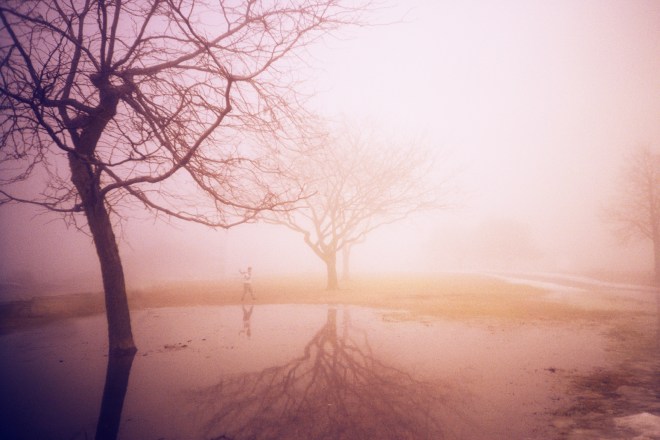
these words by Kate Shaw were inspired by the photography of Alison Scarpulla

From the author: “What spoke to me most about the photo was the haziness of the image and the reflections. I linked the lack of visual clarity in the photo to the uncertainty of the future shared by the two characters, which they approach in different ways. The idea that a reflection appears identical to the source it reflects without actually being the same is connected to the fact that the characters use Spanish in the same contexts but with very different intentions.”

“Sleeves,” new prose by Charlotte Joyce Kidd

alison_scarpulla_2-1
She stood on the edge of the bedroom. The walls, floors, and light were grey. She was wearing her shoes. The room was cluttered. Some of the clutter was hers, natural to her. Her uniform lay crumpled vertically in a corner by the closet; she’d stepped directly out of it and into her party dress that night. The covers were pulled back on the bed. The sheets were unruffled and unstained. Only the pillows spoke: she had owned the same two since early undergrad, and she stacked them to sleep alone, spread them for a guest. They looked especially thin and silent, offered no apology to her where she stood in the doorway.

She nudged a foot into the room. The toe of her boot landed between a pair of tights and a wool sock. The tights were torn, but that didn’t mean anything; almost all of her tights were torn. Still, something about their twisted angles, the way they were tangled into each other, suggested they’d been the victims of something. Stop, she thought. It’s only because you know what happened. She tried to open her eyes wider. The walls were covered in drawings and poetry made by people who had been her friends. The colours now seemed ludicrously bold, broadcasting a goofy happiness that was too tempting to crush. The uniform was in the corner to her left. She stepped past it. On the floor by the edge of the bed was the necklace she’d been wearing that night. The clasp was broken. Two beads had come off. One was hiding in the shadows under the bed and one was halfway across the room. Her eyes flew from the abandoned bead to where, floating gently, a strip of frayed, gauzy material was snagged on a corner of her nightstand drawers. She climbed across the bed, drawn to it and not caring about her shoes on the furniture. Strips of translucent white fabric lifted gently from the floor and swirled around her head. She tried to fight them away as they surrounded her, nudging her and blocking her view. Then they settled back down to the ground, ballooning and dropping like baby spiders’ webs. On the other side of them, between her and the door, lay the shell of their progenitor, the torso of the see-through dress she’d been wearing that night.

Then it happened quickly. She remembered where everything was and moved fast to see it all: the lamp knocked from the nightstand, her underwear balled up by the leg of the bed, then dark and square and too concrete, his passport (she’d dropped it in a mailbox days later, hoping that it would find its way back to him so that she could continue pretending nothing had happened) and then she crouched down and looked under the bed, and as always, the corner of the bed frame was broken, the wood splintered, the slats halved. The mattress still drooped in this spot. Everything’s here, everything’s here. Breathlessly, she searched harder. She couldn’t move anything much; she lifted things and put them down again, cursing herself for never tidying up, she opened drawers and shifted stacks of books and touched the tights that sent pained shivers up her arms into her spine. She looked under the covers and then started craning her neck and searching impossible places: the ceiling, the full-length mirror (her own reflection), were they hanging from the curtain rod? Please please please. She could hear her alarm ringing. She shut it off and willed herself back. Again. Door, tights, beads. This time, the pieces of torn dress stayed in their place. There was the dress itself, but where were the sleeves? Where had they gone? The sleeves were loose and gauzy, like the rest of the dress, and they had elastics at the wrists so that night, when she’d been dancing, arms in the air, the dress had billowed around her and then swayed away without a care in the world and where had they gone? Had he taken them? The sleeves of her dress? As she slipped away, she thought she saw them outside the window, floating over the tops of smoky buildings far away.

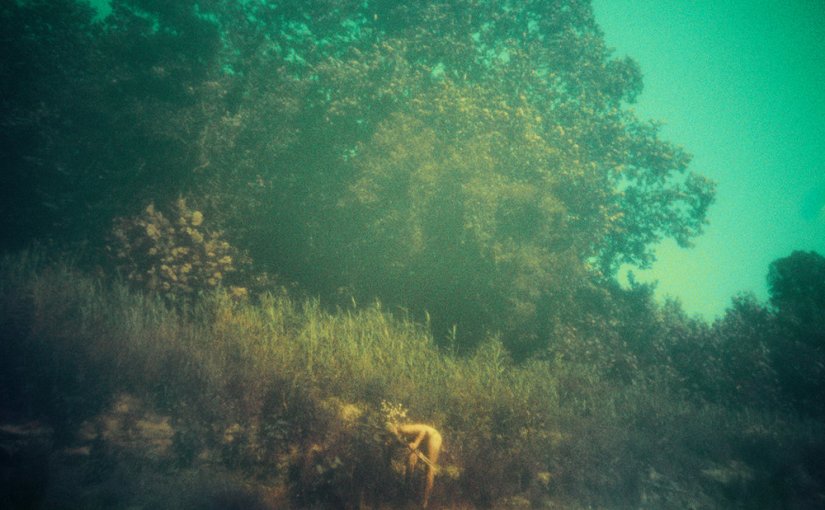
 this prose by Charlotte Joyce Kidd was inspired by the art of Alison Scarpulla

“A Field Guide to Fairies,” new prose by Samantha Lapierre

Autosave-File vom d-lab2/3 der AgfaPhoto GmbH

When I was young, my mom would dress me in a warm coat and bring me out into the autumn woods next to our cottage, and we would look for fairies.

In my mittened hands I held a pen and notebook. My mom held a pack of cigarettes. We would traipse through the crunchy leaves, our boots sinking into the soft ground. We would weave in and out of the birch bark trees, and our dog, Pal, was never far behind.

My mom would tell me that fairies live in small nooks and crannies in the woods. They live in trees, they play under the large tops of mushrooms, and they are magical. They are friends with birds, bunnies, and other creatures.

I’d spot fairy houses and jot down the sightings, and my mom would spot some too. She was at her gentlest during fairy expeditions. She would sip coffee from a travel mug, hold my hand, and listen to my excited chatter before it was time to leave.

When I grieve for my mom now, I grieve for her at her gentlest. The leaves in the treetops turn orange. A chickadee calls out from somewhere in the cityscape. I try not to grieve too hard, or too angrily. When I smell cigarette smoke in the cold fall air, I am still a girl wrapped up tight in her secondhand coat, surrounded by fairies.

this prose by Samantha Lapierre was inspired by the art of Alison Scarpulla

New prose by Annie Rubin, “We Are Survivors”

christinekim_3

It felt like dying, only you’re expected to reincarnate much faster: rapid loss of breath, chest heaving to compensate. Dizzy. The room would fade in and out. I watched myself descend into fight or flight, an encumbered observer over my own body.

At fifteen, I asked to be separated from that part of my identity rooted in fear. Was it possible to unlink? Could I attain the division of self: an existence without the weight of imminent extinction?

My father felt it too. He brought me tea one night, bourbon and honey. It Will Help You Sleep, he promised. What If I Die, I asked. You Will, he said. But Not For A Long Time. We Are Survivors, You And I.

They gave me Zoloft to stop the shaking and Seroquel to help me sleep and Prozac when I had the urges to go to temple when it rained and they gave me Lexapro for the side-effect depression. They gave me Klonopin and Ativan and Valium and Xanax was my favorite; it made the room spin the least.

The effort was in solid determination to mute what so viscerally tied me to my ancestors: that brink-of-death anxiety we all know so deeply. It ebbs and flows through our veins tethering us to each other, the Jewish people.

Maybe we didn’t speak Hebrew at our Seders but the bloodlines flowed. We were descendants of those lucky enough to hold on, who knew they had to keep living. At family gatherings, the room would get silent. Why Is Our Family So Small? someone asked once. The Rest Of Us Were Killed.

But the drugs seemed to perpetuate more drugs; we were desperate for some kind of medicalized solution, capitalizing on our ingrained identity. Could we learn to escape? Or to ever quell the pharmaceutical self?

The healing had to begin through the (re)discovery of voice. Shrouded by years of institutionalized hate, the beauty of our culture must manifest itself in celebration, unapologetic lighting candles and sharing kindred spirit. Singing and loving and never- forgetting, we must come out of hiding. I want to hear each voice.

this prose by Annie Rubin, “We Are Survivors,” was inspired by the art of Christine Kim 

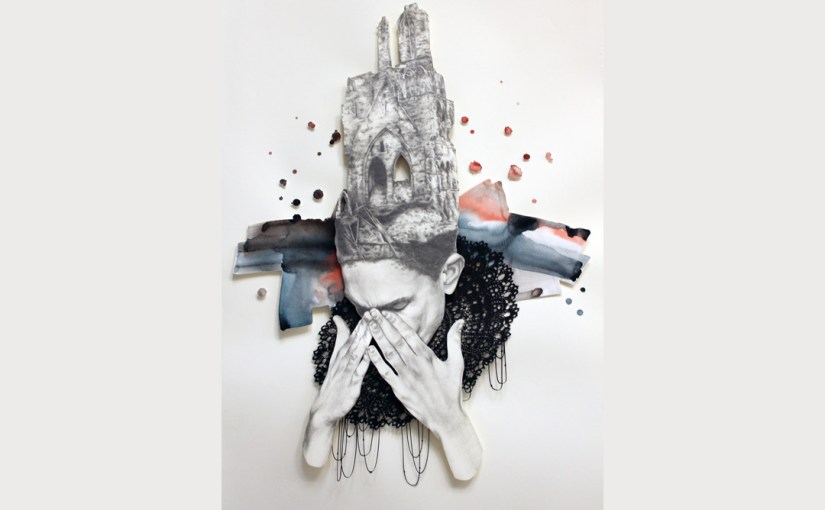
From Annie: “This work is inspired by the image of a character looking poised and overwhelmed, the base, supporting a dilapidated castle. The figure represents the protagonist’s Jewish ancestry in the strife and struggle of the Jewish people, who bear a weight that has been carried through generations. Striking colours provided a glimmer of hope through the subversion of institutionalized hatred, confiding in the expansive possibility of self-expression.”

New prose, “Macaroons,” by Erin Flegg

christinekim_1

I stopped being able to see the art in the situation. The crack down the centre of the table where the two halves came together was always clogged with the leftover crusts of things, clumps of flour and milk, the hardened white sinews from the inside of a pepper. I would tear fingernails trying to dig it out, doing so almost absently in the mornings while she made pancakes or slices of ham or sometimes just peeled fruit with a sharp knife, right on the table, leaving the light translucent spray that comes from lifting the tough skin of an orange.

She hated to shop for groceries. She never said it out loud but I think it had something to do with the fact of money, the tangible, generally negative change that happened to her material worth in the world after paying for a block of nice cheese. How it took the romance out of the thing. She didn’t believe in saying that kind of thing out loud. I came home from work one day in the winter with a bag full of big hunks of white chocolate. I had no intention of eating it and I knew she didn’t like it. It was a small test, I suppose. To see if she could resist something that should have been so sumptuous, resist turning it into something she could hold up, if only to me, and declare through her own culinary grace that this, whatever it was, colourless, malleable, opaque stuff, had romance. Even if neither one of us did. I sat on the floor by the stove, my back against the island and my feet pressing against the dishwasher, while she melted the chocolate in a metal bowl over a pot of water. She wouldn’t tell me what she was doing and I stopped just short of accusing her of having no idea herself what she was making. It probably would have given me away. In the end she made macaroons, searching the baking cupboard and unwrapping open packages of ingredients from their grocery-bag coverings to find the coconut shreds and oatmeal, mixing them into the thick puddle. She coloured it with a pinch of curry powder and cinnamon. Antioxidants, she said, flicking a bit of the brown dust onto me from above. I grabbed her by the ankle and bit her calf, still tense from pressing her weight forward into the stove. She jumped to one side and accidentally flung the wooden spoon out of the pot. It dropped molten clumps of chocolate on the floor and the top of the island and then hit the back wall. Like a baby after a fall, she waited wide-eyed for me to show her what kind of tone we were going to use to move forward. I got up and went over to the wall, sat down again and started to lick the spoon clean. I smiled without looking at her and she started to laugh. She threw her tea towel at me and used her finger to swipe up the drips from the countertop. I just sucked on the wet spoon, grinding bits of coconut between my back teeth.

this prose by Erin Flegg, “Macaroon,” was inspired by the art of Christine Kim 

New prose by Finn Morgan, “Home Enough”


christinekim_2

CW: abuse mention (child)

A peach morning, shards of grass sneaking into the sidewalk, branches swaying dull and dead. I arrive at the building gate and I am shaking, shaking still; should have kept the winter coat. I call the number saved from the last round of search scrolls and feigned phone pep. The concierge answers: “I’ll be right there!”

I am courteous, perform norm, stand straight and feminine, chuckling at a stray comment on tattoos and irresponsibility; be in-group, be in-group, be in-group to get what you need.

In the elevator, unmoving, with steady smiles. My tired eyelids linger closer shut with each rumble conveying us up, up. I hear the crash and the sobbing; the anxious adrenaline snaps me to wake. Concierge and I meet glances and she, with a light nod, softens her smile. The elevator sounds at the 22nd. “It’s right over this way,” she says, pointing, as the door rolls slowly open.

The hall is well-lit but there are scuffs on the wall. From neighbours? Is the building not maintained? How much can I afford to care? How much does care cost?
Concierge fidgets the key and jerks the door. A good lock. The apartment inside is fine. Nice view. Thick walls. Clean enough. Big enough. Enough is enough sometimes. Concierge points out the kitchenette, the fridge, the bathroom, the balcony. I remove my coat as we look around. I yawn and I hear a small sniffle as we head towards the bedroom.

The concierge gets a call. Issue on the 4th, will be right back.

I don’t expect the shaking and unsettled breathing to leave with her but I am still disappointed when it doesn’t. I open the room door, feel empty. I close my eyes, knowing exactly what will appear: a child with thick ringlets, crouched and sniffling in the corner of the open closet. This child lives in every empty room I visit. Ever since our first room was emptied. I know them well. Sometimes they tell me when I need to leave, sometimes they just need to be held. I am tired and this room is wide enough, sunny enough, so I tell them:

“She won’t find you here.”

“But what if she does?”

“There are locks on the door.”

“But you’ll still hear her.”

“We’ll drown her out.”

“How?”

“Music. The Shower. However we can.”

“And what if we can’t?”

“We’ll survive.”

“I’m still scared.”

“I know. Me too.”

“What do we do?”

“What we can.”

“Will it be enough?”

“It has to be.”

When Concierge returns I ask to start the paperwork. Home is wherever I’m without you.


this prose by Finn Morgan, “Home Enough,” was inspired by the art of Christine Kim 

Notes on Hesitation

350dpi009

The birds in my neighbourhood are having an existential crisis. They’re hesitating on their branches, resting for a moment longer than they should. Even when I scream and stomp my feet at the foot of the tree, they stand there, thinking about whether or not to fly away, wondering if it even matters.

              I learned the term “existential crisis” from my English teacher because we’re reading The Stranger by Albert Camus. I’m in this advanced class where everything is so deep. I love it. Anyway, the birds, right? I think I noticed it before I learned the word—is that possible? Can you notice something subtle like that and then learn the word for it, or is it kind of invisible until you can name it? I guess it doesn’t matter—the point is I’ve learned it and I can’t unlearn it.

              It’s weird because I was pretty sure flying was autonomic. That’s another word I learned recently—it means things you do without thinking. The fight or flight instinct, for example. You feel it in your body and you’re off. Thinking is a problem. It interrupts the things you need to do to survive. Like, imagine if you had to decide to take every breath—you’d die.

              I kind of know how the birds feel. Lately, when things get confusing, I slow down and get stuck in my thoughts. I can’t even choose between flavours of ice cream anymore—I just stand there at the 7-11 with the cooler door open, breathing in Freon-tasting air. When my mom yells, I used to go hide right away. Now, I just sit there thinking about what to do. Half the time, I end up doing nothing at all, and that just makes her angrier.

              The other day, she was yelling because I’d forgotten to let the cat in before we all went to bed. She said she thought the cat was probably dead. She asked me for the millionth time why I was so stupid. I snapped and yelled at her to fuck off. I’d never done that before—it just bubbled up from inside. I guess that’s the fight part of fight or flight, huh?

              But the problem with things that you just do without thinking is that you don’t know what’s going to happen next. I think she was as surprised as I was when she slapped me across the face. Her eyes got really big, and we just stared at each other. We’re the same height now, I realized. Then she was gone, up the stairs to her room. I guess it was her turn to hide. Once you’ve learned something you can’t unlearn it, especially about yourself. My poor mom. Maybe that’s when I started slowing down like the birds, sinking into my thoughts all tangled like yarn. I worry for the birds. I think someday something terrible will happen to them.

 these words by Erika Thorkelson were inspired by the colour of Juan Travieso

New prose by Josh Elyea, “Pulp Influence”

7248.jpg

            I keep having this dream where I’m two-dimensional. This dream isn’t a nightmare, but I still wake up feeling as though I’ve lost something.  Like I’m lacking in substance, as it were. Dimensionally challenged.

            Paper cranes fall slowly from the sky, and I can taste cherry blossoms (and verbs) on my tongue. I wander through this paper forest, aimless, wondering if there’s any other type of wandering. There are characters scrawled across the trunks of the trees, messages left in languages I don’t understand. Trumpets sound as I see words I recognize, hc svnt dracones. That’s not foreboding, not one bit.

            What little light the moon emits slinks down through the treetops, leaving deep pools of shadow that shift when I look up or down. When you’re made of paper, there is no side to side. Impossible to keep a sharp eye for the monsters that undoubtedly permeate these pre-mulched maples.

            I get more and more lost as I ponder the potential for dragons. It’d be easy to lose oneself in the black of the forest. It’ll eat you up, noir. Between the paper and the concentrated instances of darkness, there’s a real pulp influence here, I say, maybe out loud (maybe not). What I’m noticing though, now that I’m paying attention, is the ways in which the darkness is growing, expanding, in spite of the moonlight. Tendrils of black extend outward as my person begins to shake, and at that moment it’s almost as though I’d prefer the monsters. There’s something tangible about a mummy or a hellhound, and it’s a well-known if little thought of caveat of life that damages to the corporeal are far preferable to those of a more ethereal nature. That’s what so devious about the dark; it doesn’t really harm you at all.

            And it’s a silly thing to fear the dark, really. But we all do it anyways.

this prose by Josh Elyea

this prose by Josh Elyea, “Pulp Influence,”

was inspired by Juan Travieso‘s “Nightmare in a Dream”

“White Paper,” by Keah Hansen

Endangered Bird #131.jpg

Brother Bird alights on the silver birch, branches siphoned off from the moons with the frazzle of leaves. Golden leaves that lace the night, and the crinkly coins of the newcomers seem mawkish compared to these yellow hands coursing with veins and sugars. They wave incomprehensible at the new hands, which are different, all white and papery, pockmarked and brine-stained after a journey in a strained wooden frame. These hands are weaving into the woods uncouth and unwanted, gesticulating with the urgency of papers that make crisp noises as they fall into neat stacks on a knotted wood desk. They are dizzying themselves amongst these leaves that are falling from the birch. They are blanketing the grounds in smooth white words all flat and stark. The leaves are browning and returning to the earth. Winter is setting in.

Brother Bird thinks the spindly limbs of the trees seem ethereal from way up in the vapour. The white sheets with marks blackened by some unfortunate quill feather read like an ambiguous pattern. And the voices, which nest among the trees, seem strangely silent. Brother Bird thinks he sees tracts of smoke creeping westward from the shores, though the gales of wind are moistening his eyes and humming auspicious in his ears. The season of snow is bound to pass, says Brother Bird, giddily to himself. The air is brusque and flapping papers up, loose from their death grip on the grounds. They dissolve within the frail wisps of sunlight hitting Brother Bird’s head.

Centuries passed and the smithy whiteness blew through the trees, prying the bark back with all the soft power of snowflakes. Sap soldered with this milky presence, which poured all its white ink into etching the soft underbelly of the trees. There are new names now and the first peoples are dogs that bark. Or stoic like the trees, so the papers say. Then a white paper descends from some federal courier and is acclaimed for its difference. This paper ought to be peopled with leaves from when the first storm blew through. Pulling the pressed leaves out of dusty yellowed spines of books and planting seeds in the margins. But the paper that is published offends like blots of lead, or clammy hands in a handshake. White hot rage settles and Brother Bird swallows another bitter seed.


this short story, “White Paper, was written by Keah Hansen 

and inspired by Juan Travieso’s “Endangered Bird #131”  

from the author: “I wrote this piece about the White Paper Act of the Trudeau government of 1969. I was inspired by different modalities of expression, represented in the layering of the artwork. The layering of the artwork also made me think of erasure and censorship, which occurs when cultural worlds clash, and the irony in a paper literally titled the ‘White Paper’ that was intended to give representation to Indigenous peoples.”