“Ode to Being 24” by Samantha Lapierre

01duster

I used to get angry with myself for getting drunk at bars, in dimly lit clubs, at bad house parties.

I was 21 the first time my drink was spiked. I threw up in front of Tequila Jacks while my friends complained that the bouncers would never let them in as long as I was with them. I went home alone in a cab.

I would rip my tights from falling down on concrete, throw up in hotel bathrooms with pristine white floors, cry in groups of friends I’ve since unfriended, and have a smoke outside for good measure.

I’m so much more careful now with the company I keep, the liquor I avoid, the bars I go to.

DJ Emmett plays the Spice Girls for me on request. Winston buys us tequila shots at Babylon. We down Jägerbombs at Zaphod’s and regret it, but not too much.


these words by Samantha Lapierre were inspired by the work of Kelsy Gossett

“Still gaze,” by Khatira Mahdavi

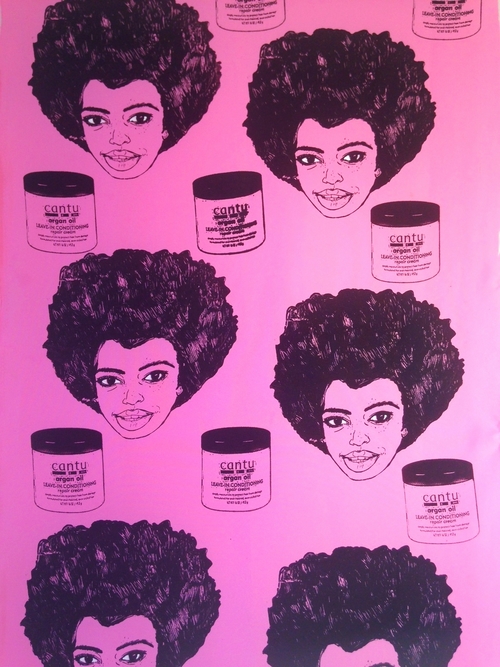
angela pilgrim_kinky hair cantu butter wonders
We are standing at bay
with a curtain drawn across the sea
from here, the sunset is only half as beautiful as it could be 
and the moon has lost its grip on the waves
but I am still standing here 
drowning in your eyes
wholly enamoured by that gaze


these words by Khatira Mahdavi were inspired by the work of Angela Pilgrim

“Balanced,” New Poetry by Ivana Velickovic

Processed with VSCOcam with c1 preset

You asked me if I thought
you were pretty.
Pretty is relative only to
everything besides oneself.
When I stare deeply into the mirror
I become confused.
There are two versions,
one always melting into
the other.

The first: a goddess,
black magic turned blue.
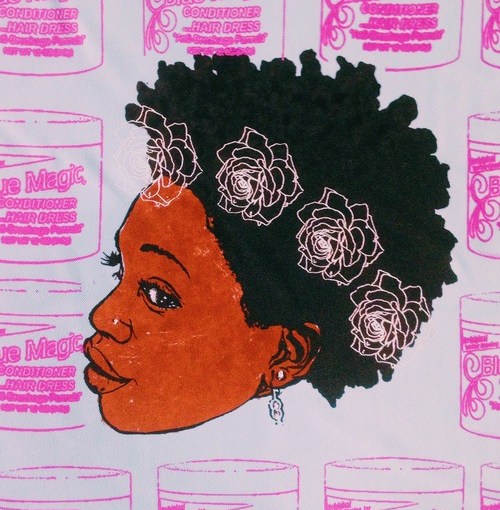
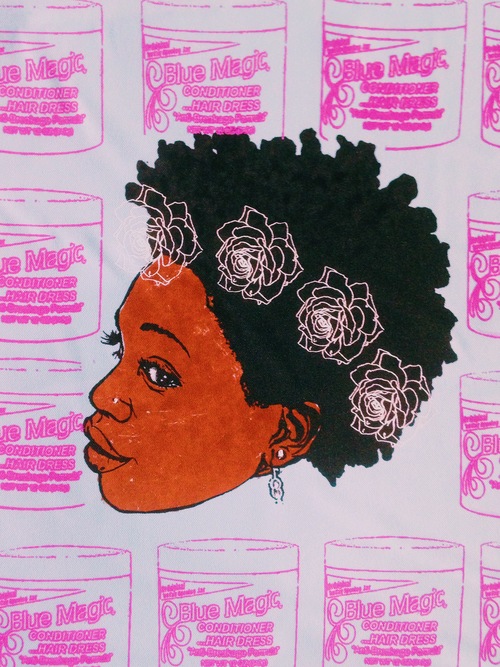
A garland of roses
atop my head,
pure and perfumed.

The second: relative.
A wise aunt who shares dark eyes.
A brave father who shares resilient,
smooth skin.

You liked the idea that beauty
is ancestral and proud.
You asked how you could come to wear
a garland made of roses.
Together we looked in the mirror
and I removed my garland,
delicate as a newborn.

I let it settle on your head.
I let it bring you balance.


these words by Ivana Velickovic were inspired by the work of Angela Pilgrim

“Mango” by Tristen Sutherland

Processed with VSCOcam with c1 preset Processed with VSCOcam with c1 preset

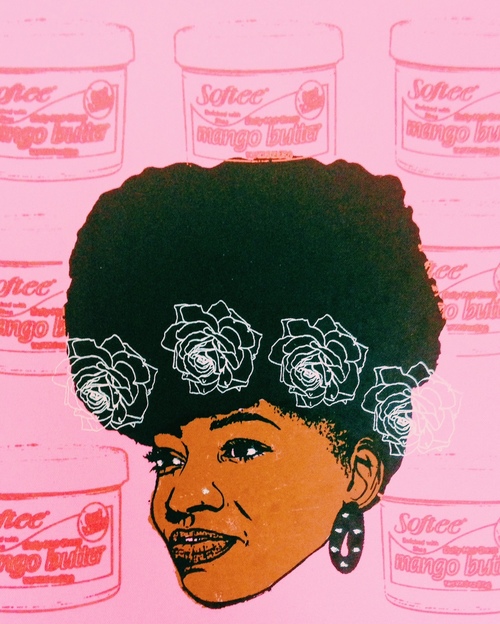
I didn’t taste a mango until early adulthood. Don’t get me wrong, it wasn’t a problem of mango availability; I just didn’t like the idea of them. They were messy and sticky and watching someone eat that orange flesh was grotesque enough to put me off it entirely. Juice would dribble down their chin and then the sucking and slurping would commence. As a child, I couldn’t bring myself to do it. My mother, long and sinewy, with skin as dark as polished wood, would offer me half of her mango. Usually, this would happen when she was barefoot in our garden, patterned fabric draped over her shoulders, a look that was very unusual in our Canadian suburb. Each time she offered I would shake my head no. I would feel a pang of embarrassment in my gut, even if no one was there to see. Over the years, she persisted despite my resistance. By my teenage years, all she had to do was reach for a mango for me to dismissively utter No thanks. I now recognize the sadness that would cross her eyes each time I would refuse a piece of her fruit, requesting an apple instead. My mother loved when mangos became available in stores, they were the only product she would splurge on because they reminded her of home.

I first visited my mother’s home, Martinique, when I was in my early twenties. It was strange seeing her in her element like that. She seemed to glide across the sand, her luminous hair flecked with silvery strands, fastened with a flower. I tried to mimic her, but my feet weren’t used to the uneven terrain of sand and my hair seemed to reject every flower that tried to nestle between its curls. When I tripped for the fifth time, my mother smiled and sat down next to me. I was clearly frustrated with my lack of grace and I think my mother sensed that. We sat in silence for a moment watching the waves. My mother reached into her tote bag and extracted a mango. Carefully, she sliced it into halves. Tentatively, she offered me a half. For the first time I accepted, happy to share something with my mother.

these words by Tristen Sutherland were inspired by the work of Angela Pilgrim

New Poetry by Annie Rubin: “You tasted safe”

Processed with VSCOcam with c1 preset

Someone once told me not to make homes out of human beings but with you I
couldn’t help it—

your body cradled perfectly against mine,
as if we were built to rest with our limbs intertwined.

We forged space for each other where there was none to be made.
I’d feel your heart as you held my head to your chest
I wanted to merge your body with mine.
But you were indestructibly you.

You lingered in the air, irresistible.
Exquisite, as you lay back, stretching out
beneath the sunlight of your bedroom window that splayed sparkles upon your cheeks.
As you unequivocally made yourself a part of my world.


these words by Annie Rubin were inspired by the work of Angela Pilgrim

“The Pink Sea” by Jo-Ann Zhou

James Gilleard_4

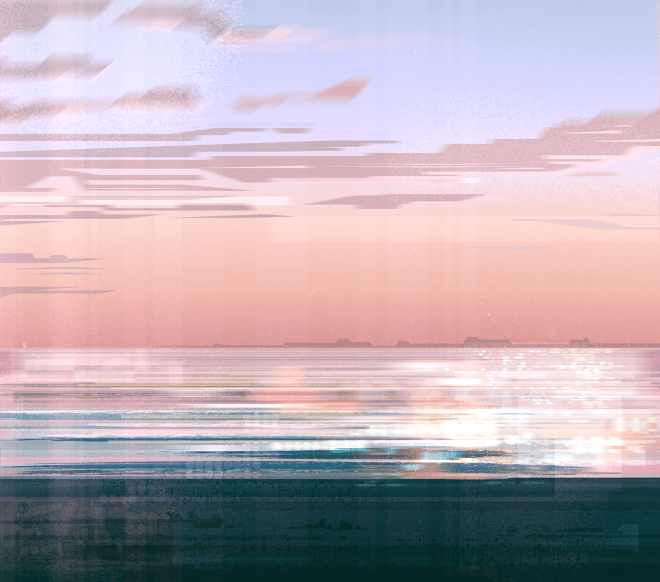
For three days we have stared at the sea.

For three days we have watched its changing moods and colours, from turbulent grey to blue-green, to this ephemeral pink at sunset.

Tonight the pink is particularly brilliant, the calm lapping sounds like small reassurances of “everything is going to be all right.”

Having observed the sea, I know these reassurances are fickle. Poseidon is tempestuous, and the pinks could turn to angry storms of steel grey just as easily as they could fade to sunset’s late indigo.

We are, in fact, waiting for the sea to turn black. Not just twilight blue, or the deep navy in the hours after the lingering sun fades. We wait for blackest black, when no lights save for the moon and stars shine upon its still surface. We can only hope to encounter no searchlights, no vessels that claim to help but are really meant to keep us from reaching our objective.

When the pinks complete their inky transformation, we will enter the darkness. We pray that when we greet the sea at last, it will be more cool smooth onyx than roiling tar soup. We know there is a chance that we too could become one with the sea, could become part of its spectacular colours, like many of our brothers and sisters before us. 

Despite this risk, we wait for darkness, watching the colours of this great obstacle to what we can only hope is our new home. As we wish away the sparkling pinks for dull blackness, we hope to one day look back at this sea with no fears and see nothing but calm pink water.

these words by Jo-Ann Zhou were inspired by the work of James Gilleard

New Poetry by Nahomi Amberber: “When It Hurts to Stand Next to Him”

james-gilleard_2

Forgive me

For not coming any closer.

You remind me too much of my father,

And the type of men

Who destroy

Women like me.


these words by Nahomi Amberber were inspired by the work of James Gilleard

“There Must Be A Name For This,” by Leah Horlick

james-gilleard_3

How to feel like how you imagined the city? A blur of light steps out of a cab. Stem of a glass in a ring on a wet table. Slink, slink. Would it have been better if you had moved into that little beehive level with the SkyTrain, whoosh all day, glow all night, little hexagram. One stool, one door, two windows at an angle with the tracks, tracks, track. Two windows! Rattle rattle goodnight all day. You imagined glass and water, heels and click, the film of alcohol across everything, city city. Little dots of light, little swipes. A secret: Vancouver is actually a series of small caves, mould like a dust of sugar powder, did you know? Saturday night aesthetic: the Chevron station for yachts in Coal Harbour, hovered out in the water, glossy black, little ring, orange light. How long did it take me to realize the white-hot squares at the top of downtown are penthouses? How long did it take me to realize those very regular fireworks are private planes? Why can’t I have, why can’t I have, why can’t I? What if we just kept living together, what if I just tried harder, what if I had moved to Toronto? All the women in this city say I love you, they say centered, we say seawall, we go home and murmur Toronto Toronto Seattle Toronto in our sleep. You don’t understand. I have an obligation to a girl in a barn, to a girl in a car, to a girl in the forest; she says Get Me Out Of Here, she says My Own Apartment. Is it possible to be dissociated not from me but the city. Like here I am arms and legs, here I am oh New York.

these words by Leah Horlick were inspired by the work of James Gilleard

“The Final Transmission,” by Erika Thorkelson

james-gilleard_1

The final transmission from Station Alpha came from General Watkins himself, who had gone to inspect the new device just two days before. Right up until the moment of the explosion, there had been hope that the device, a single man’s dream realized through unprecedented international cooperation, was the solution everyone had been hoping for.

There was no picture in the final transmission. Cloaked in static, Watkins’ voice was thick, moaning even. “The Earth’s heart is heavy.” He sighed. “So much heavier than we could even have imagined…” Then the whole facility evaporated.

Marcella Watkins, the General’s wife and special envoy to the United Nations, knew the voice well. It was the one he used when he wanted her to move closer, toward his side of the bed. It was the voice he used for quiet, reflective thoughts he could only express near sleep.

“Something is coming,” Marcella Watkins told her twin sister while the two drank whiskey on her back porch.

Aurelia nodded, watching the branches of the fruit trees rustle in the hot breeze. She didn’t want to say anything that would add to her sister’s burden, but since the explosion there had been a haze in the air that she didn’t like at all, an unnatural chemical sweetness, like bubblegum air freshener in a smoky truck.

“Is there anything I can do for you?” Aurelia asked for the seventeenth time. “Can I make you some dinner?”

Marcella shook her head, loose bits of her silver chignon swaying side to side. She was still wearing her office clothes—a sleeveless white blouse and green wool slacks that must have been far too warm in this unexpected weather. The matching blazer was somewhere in the house.

Even in this state and at their age, Aurelia couldn’t help admiring her sister’s figure—heavy breasts, narrow waist, round hips. She was the shorter of the two, but certainly the better looking. No wonder her life had gone so well—until now at least.

“All those petty skirmishes,” Marcella said, her voice just above a whisper. “All those years of worrying, and in the end, it’s some damned mad scientist scheme.”

Aurelia looked at the lines on her own hands as if they would tell her what to say. “Life will go on,” she murmured, gathering a smile for her sister. “You’ll see.”

Marcella gazed at her twin, admiring how life had spared her the wrinkles that dug valleys in her own skin. She took Aurelia’s hand in both her own and shook her head lightly. “I don’t think it will,” she said.

Aurelia nodded and the two sat on her porch, hand in hand, sipping their whiskeys and breathing the lavender air until the sun went away.


these words by Erika Thorkelson were inspired by the work of James Gilleard

Taisha Cayard in Dialogue with Audre Lorde, “But What Can I Learn From You”

poem

This poem by Taisha Cayard was inspired by Audre Lorde’s “But What Can You Teach My Daughter,” published in Lorde’s 1978 collection, The Black Unicorn