“Unplugged” – Josh Elyea

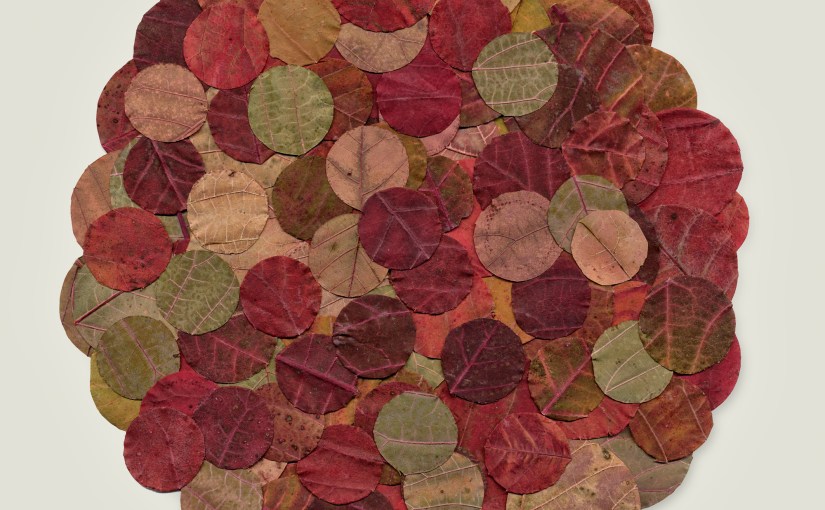
Smoke circle

When I was a child, my father would rake leaves in the front yard and when the pile was big enough, he’d pick me up and throw me (almost callously) into them. My father was wild in his younger days; he rode a motorcycle and played bass in an underground funk band. He settled down though, when he married my mother. He had a daughter, and found work as a cashier in a record store of dubious structural integrity but impeccable cultural acumen.

He killed himself when he was sixty-one.

***

There’s something slyly atavistic about the way the leaves, dried out now since they’ve fallen, feel against my hands as I rustle them gently. From behind the mountain, a small line of smoke stretches thin across the setting sun. Smoke signals at sunset, he says.

We’re quiet after that, for a long time. Uma Thurman had it right; you know you’ve found someone really special when you can just shut the fuck up and sit comfortably in silence, if only for a minute. Silence is a rare thing, and people don’t bother to make time for it anymore. How could they? There’s too many distractions, too many addictions. Screens everywhere, and sitcoms and internet dating websites, reality TV shows and political debate shows and the horrid, overwhelming cascade of contemporary pop music. There’s education and employment, no alternatives, and you’re left to choose between an outdated, meritocratic institution or the dreaded 9-5, an existence that’s so alarmingly mundane it’s turned an entire generation into alcoholics, assholes who waste their weekends on outrageously priced booze and horrific hangovers so as to forget that they owe their time, their lives, to companies who speak only in terms of profit. There’s internet pornography, advertisements and an endless supply of empty entertainment, assailing our senses and undermining our character, our concentration and our connections.

It’s all a joke, a joke with a vicious punch line that relies on the inherent irony of a situation whereby the most connected civilization in the history of humanity is destined to die alone, each and every one of us connected to the internet and nothing else. Where in this hilarious chaos can one be expected to sit and think on the endless potential of the universe, or even the endless potential of the self? I look again to the man beside me, and I tell him I’m afraid that not even the autumn leaves can save me from my vices, from my addictions both good and evil.

Don’t worry, he says. We’ll take refuge in the wilderness.

Don’t worry, he says. Once you’re unplugged, everything will be alright.

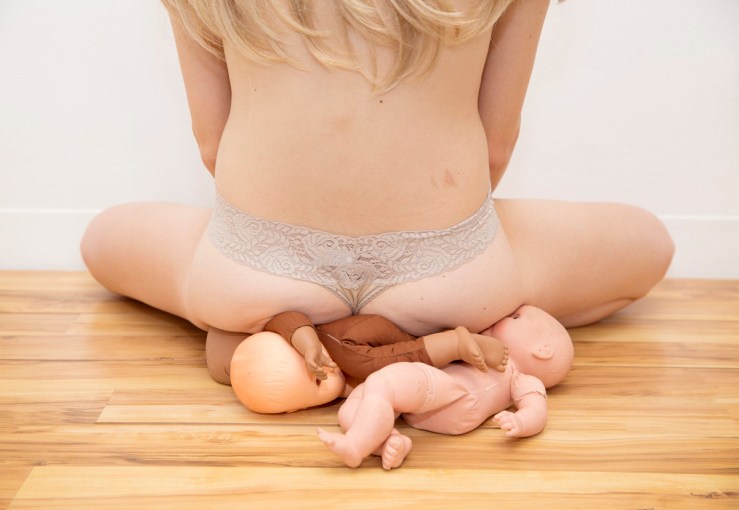
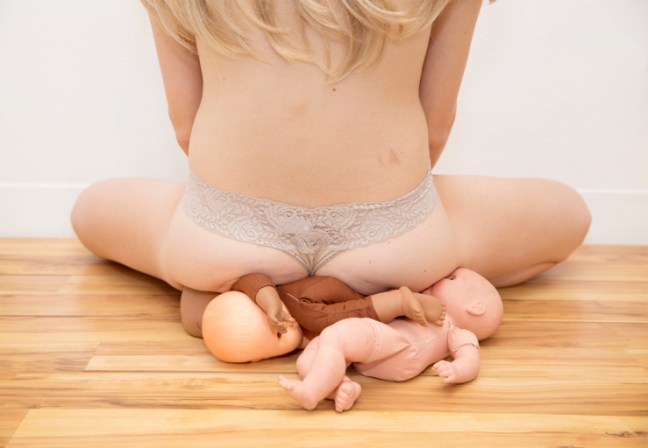
these words by Josh Elyea were inspired by the work of Daphne Boyer

New Prose: “Broken Eggs,” by Charlotte Joyce Kidd

03eggs

I used to be very sad. Even just a few weeks ago, I couldn’t get out of bed for days at a time and once I didn’t brush my teeth for a month. Yes, I used to be sad, but now I am goooood. I have been okay for three weeks and that’s the longest it’s been in a while.

I’m running a bit late for a thing I’m supposed to go to and I have $12.23 (Canadian) in my bank account, but I’m trying to go easy on myself and think about the big picture. I was hungry when I woke up so I bought myself eggs (because I’m trying to take care of myself, even though I’m late for a thing).

Now I’m biking home and I keep thinking this phrase over and over. I wonder what it’s from. “Girls with kind eyes who talk too fast, girls with kind eyes who…”

Oh. Whoa. Oh. Yep.

Now I’ve fallen over. That makes sense. I wasn’t looking where I was going. My knee is a bit scraped and my eyes are burning (am I going to cry?) but still (in the big picture) this is fine.

The egg carton looks squished. I open it to check and then the carton rips and eggs start tumbling out, as if in slow motion, every single egg until they’re all on the sidewalk. This isn’t so bad, though. Some of these eggs look like they could be salvaged. I pick one up and the clear mucus, the uncooked egg white, slides out onto my fingers. The yolk plops to the sidewalk. This happens with a second egg and then a third, and I want to say damn it and go home, but I am not a person who gives up on herself, not anymore. Maybe I can pick up some of these yolks and just put them back in the shells.

I slide my fingers under the first yolk, feeling my nails chip against the sidewalk, and I manage to grab it, whole, globular and slippery. Ha! I am like a surgeon. I have million dollar fingers. I put the yolk back in its casing and then put the egg back in the carton.

“Hey, are you okay?” says a stranger whose sneakers are in front of me.

I look up and smile very wide. I can’t see their eyes. “Yes! I am fine.”

“Okay,” they say, and their sneakers leave.

I hope it’s not anyone I know, because I guess I look pretty crazy.

I start to feel frantic for a minute or two, when it looks like the next egg won’t come off the pavement, when it’s sliding around in my hand like a baby who can’t hold its head up yet, but then there you go, got em all.

There will be a few bits of rock in my scrambled eggs (Just the yolks. Is this healthy, like eating just the whites?) but that’s okay. Could be much worse.


these words by Charlotte Joyce Kidd were inspired by the work of Kelsy Gossett

“The Ice Show” by Erin Flegg

smother_13x9.jpg

The vet only had two appointments for the day, morning or afternoon, so I took the 3:45. It didn’t seem like the sort of thing I could handle until after the ice show was done.

When I arrived at the rink it was full of parents stringing twinkle lights and plastering the boards with black paper and clear hockey tape, setting the scene, and by 2 p.m. when the lights went down the place was packed. The first small group teetered out onto the ice and I was suddenly emotional, my eyes misting over. It happened again as I watched my oldest senior skater perform, in a dress that clearly wasn’t made for her, a routine we finished three days ago. The salty intrusion confused me for a minute. I had been so relieved to be done with the season, my official ties with this town dissolved, that it was unexpected. They’re good kids. I didn’t want them to think I was abandoning them.

When the final number was over the other coach and I were called to center ice. I didn’t listen to what the announcer said and instead spent my last few minutes on the ice looking at each kid. All winter, so many hours spent just keeping track of them all. The announcer had to call Ava’s name several times before she heard it and rushed over to grab two bouquets and skate them over to us. Lisa hugged her so I hugged her too, but I worried it was the wrong thing to do. I had spent more time shouting across the rink at her than saying nice things when she was close by. Pay attention, stay in your position, leave that other kid alone. But maybe she felt just as strange, had shot her hand up in the air when whatever parent bought the flowers asked who wanted to present them, eager as usual for any chance to stand out, forgetting for a moment that she didn’t actually like me very much. We assembled for a group photo and I squatted next to one of the smallest kids, holding one hand while she used the other to snake broken bits of Doritos through the cage on her helmet and into her stained mouth.

I told Lisa I had to go, grabbed my backpack and walked across the street to the vet. It was just a small white house with a sandwich board out front on the weekends when they were in town. I walked in still holding the bouquet of flowers and worried the vet tech would think I’d got them for the cat. I didn’t want her to think I was the kind of person who would buy a bouquet of flowers and bring them with me to put down my cat. I tried to hold on to the flat, easy feeling from the end of the show, skip like a stone over this part, but my partner arrived with eyes swollen and the cat in his plastic crate and I sank back down. I lifted him onto the exam table and he flopped to one side, too weak to be either curious or upset. The vet shaved a small patch on his front paw, slid the needle in and he was gone.

these words by Erin Flegg were inspired by the work of Kelsy Gossett

“Mango” by Tristen Sutherland

Processed with VSCOcam with c1 preset Processed with VSCOcam with c1 preset

I didn’t taste a mango until early adulthood. Don’t get me wrong, it wasn’t a problem of mango availability; I just didn’t like the idea of them. They were messy and sticky and watching someone eat that orange flesh was grotesque enough to put me off it entirely. Juice would dribble down their chin and then the sucking and slurping would commence. As a child, I couldn’t bring myself to do it. My mother, long and sinewy, with skin as dark as polished wood, would offer me half of her mango. Usually, this would happen when she was barefoot in our garden, patterned fabric draped over her shoulders, a look that was very unusual in our Canadian suburb. Each time she offered I would shake my head no. I would feel a pang of embarrassment in my gut, even if no one was there to see. Over the years, she persisted despite my resistance. By my teenage years, all she had to do was reach for a mango for me to dismissively utter No thanks. I now recognize the sadness that would cross her eyes each time I would refuse a piece of her fruit, requesting an apple instead. My mother loved when mangos became available in stores, they were the only product she would splurge on because they reminded her of home.

I first visited my mother’s home, Martinique, when I was in my early twenties. It was strange seeing her in her element like that. She seemed to glide across the sand, her luminous hair flecked with silvery strands, fastened with a flower. I tried to mimic her, but my feet weren’t used to the uneven terrain of sand and my hair seemed to reject every flower that tried to nestle between its curls. When I tripped for the fifth time, my mother smiled and sat down next to me. I was clearly frustrated with my lack of grace and I think my mother sensed that. We sat in silence for a moment watching the waves. My mother reached into her tote bag and extracted a mango. Carefully, she sliced it into halves. Tentatively, she offered me a half. For the first time I accepted, happy to share something with my mother.

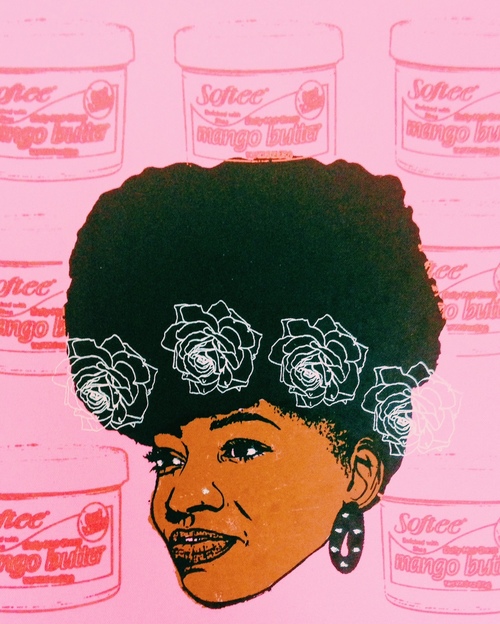
these words by Tristen Sutherland were inspired by the work of Angela Pilgrim

“The Final Transmission,” by Erika Thorkelson

james-gilleard_1

The final transmission from Station Alpha came from General Watkins himself, who had gone to inspect the new device just two days before. Right up until the moment of the explosion, there had been hope that the device, a single man’s dream realized through unprecedented international cooperation, was the solution everyone had been hoping for.

There was no picture in the final transmission. Cloaked in static, Watkins’ voice was thick, moaning even. “The Earth’s heart is heavy.” He sighed. “So much heavier than we could even have imagined…” Then the whole facility evaporated.

Marcella Watkins, the General’s wife and special envoy to the United Nations, knew the voice well. It was the one he used when he wanted her to move closer, toward his side of the bed. It was the voice he used for quiet, reflective thoughts he could only express near sleep.

“Something is coming,” Marcella Watkins told her twin sister while the two drank whiskey on her back porch.

Aurelia nodded, watching the branches of the fruit trees rustle in the hot breeze. She didn’t want to say anything that would add to her sister’s burden, but since the explosion there had been a haze in the air that she didn’t like at all, an unnatural chemical sweetness, like bubblegum air freshener in a smoky truck.

“Is there anything I can do for you?” Aurelia asked for the seventeenth time. “Can I make you some dinner?”

Marcella shook her head, loose bits of her silver chignon swaying side to side. She was still wearing her office clothes—a sleeveless white blouse and green wool slacks that must have been far too warm in this unexpected weather. The matching blazer was somewhere in the house.

Even in this state and at their age, Aurelia couldn’t help admiring her sister’s figure—heavy breasts, narrow waist, round hips. She was the shorter of the two, but certainly the better looking. No wonder her life had gone so well—until now at least.

“All those petty skirmishes,” Marcella said, her voice just above a whisper. “All those years of worrying, and in the end, it’s some damned mad scientist scheme.”

Aurelia looked at the lines on her own hands as if they would tell her what to say. “Life will go on,” she murmured, gathering a smile for her sister. “You’ll see.”

Marcella gazed at her twin, admiring how life had spared her the wrinkles that dug valleys in her own skin. She took Aurelia’s hand in both her own and shook her head lightly. “I don’t think it will,” she said.

Aurelia nodded and the two sat on her porch, hand in hand, sipping their whiskeys and breathing the lavender air until the sun went away.


these words by Erika Thorkelson were inspired by the work of James Gilleard

New Prose: “Bystander,” by Nailah King

overnight-and-unknown-20x20cm-2015-mixed-media

The little boy screamed when he heard the sound of smashing glass. He crept carefully, his tiny hands grazing the hallway walls. He was petrified, but more scared that he would make a ruckus and make his mother angry.

He knocked on the door.

“Mama?”

“Come in,” said the raspy voice behind the door.

The door creaked as he pushed it open. There, sitting by the window, was his mother. The white illuminating her dark brown body, her eyes seemed to glow in the dark.

“I heard a scary sound, Mama.”

She turned to him, all of her warmth filling him like a cup that runneth over. She gestured for him to sit near her. He climbed into her lap. She kissed his head and wrapped her frail arms around him.

“Did you hear it too?”

Her arms relaxed, she patted him gently on the knee.

“Yes, baby”

“What happened, Mama?”

He hopped off her lap, sitting closer to the window, peering out of it intensely, his eyes stirring.

“Where are they taking Daddy?” he shrieked.

She looked at him, sad for her child. Sad that he didn’t yet understand.

They looked down together at a man who had skin like their own. He stood planted, firm, bruises forming. The flashing light of the cop car cast an eerie blanket on the street, covered in red.

The boy whirled around, angry. He didn’t understand.

His mother turned away from the window.

“Mama! What are we going to do?”

She pointed at the cop car.

“Open your eyes, Charlie, and look,” she hissed.

The boy planted his palms against the window, his nose touching the glass, and he stared. The cop car windshield was broken. A bat, discarded, lay on the asphalt.

“It’s not Daddy’s fault,” he murmured, tears stinging his eyes.

His mother merely nodded.

“He did say, if they came back…something would happen,” she said in a sibilant, almost to herself.

He looked out again. There was a woman in a hat staring back at them. He burst out of the room.

“Charlie! Where are you going?” she asked.

But, he was gone.

He struggled to push the heavy building door. Then, he saw her.

He stood there, staring as her blonde hair rustled in the icy wind. Goose bumps dotted his arms. He forgot to bring a jacket.

The cop car was long gone. He didn’t know if he’d ever see his father again.

The woman kneeled, still facing him.

“Did you know the man they took away?”

“You saw it! Why didn’t you help?”

He pushed her and watched her fall to the ground, as if in slow motion. He watched her tumble, instantly regretting what he’d done. Still, he stood with his tiny frame, chest rising and falling with anger. He said nothing, as she had done.

He walked back to the building and reached for the correct buzzer.

Above, a woman in all white looked out the window.

these words by Nailah King were inspired by the work of Mairi Timoney

New Prose by Josh Elyea: “On Punching a Nazi”

Passing Through


He had a habit where he’d slowly and meticulously pull the hairs out of his beard and pile them, as though they were kindling to start a fire, on whatever surface lay in front of him. It was a disgusting habit, one he was not fond of and one he would’ve judged others for having, and despite his most earnest and steadfast attempts, he was simply unable to quit it.

He wondered if that’s how Trump supporters felt about their casual racism, about their callous disregard for their neighbours. Maybe they wanted to stop, he said. Maybe they were aware of the shame of their habit, maybe they knew what they were doing was wrong. Maybe they just couldn’t stop.

Who cares whether it’s conscious or not, she says. This is the 21st century—we have Google and Wikipedia, for chrissake—and you’ve got the totality of human knowledge at your fingertips. There’s no excuse for ignorance, she says, and he knows she’s right. She’s cool, of the old-school variety. Think Dana Scully, but with more heart. When she speaks, it’s with a sort of callous candor, a ruggedness of speech that only works when underscored by a passionate sincerity. She listens to old jazz records and calls Louis Armstrong by his proper name (Satchmo, she says with love, and she blows him a kiss across the time-space continuum). As he stares, it seems as though she’s blurred into the landscape, a variety store Venus on the warpath, ready to lay waste to the barbaric conservative politics that have, almost overnight, eclipsed the American consciousness.

The future is female, she tells him, and he knows that she’s right. How could it not be, with an arbiter like this?

Maybe it’s time to take off the kiddie gloves, she says. Maybe, just maybe, the left has been playing nice for too long, and it’s time to stop rolling around in the mud with the GOP.

It’s time to call alternative facts what they are: propaganda.

It’s time to call Trump’s Muslim ban what it is: racism.

It’s time to call the alt-right exactly what they are: Nazis.

Maybe it’s time to stop giving credence to the idea that we’re all entitled to an opinion, regardless of whether that opinion is right. You’ve got the right to an informed opinion, but fuck those people who choose ignorance over equality. Maybe we need to stop playing to our slowest members, and maybe we need to grab these petulant, misinformed, archaic relics of a bygone era by the scruff of their hypocritical necks and smack them until they realize that the only ones who don’t deserve a place in the world we’re building is them.

Of course we ought to strive to live in harmony, of course. In fact, that’s exactly what most of us are trying to do. But there comes a time when punching a Nazi isn’t just the right thing to do, it’s the only thing to do.


these words by Josh Elyea were inspired by the work of Mairi Timoney

New Prose by David Emery

Dimension

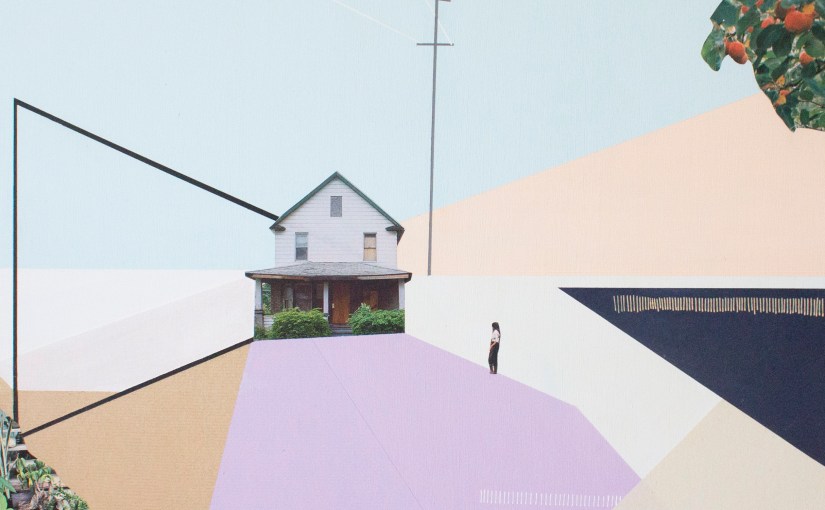
A house is not the same twice. Even if I stare long and hard and try not to blink and let the breeze distract, the house changes right in front of me. That was and was not my room. That was and was not the crooked porch roof. Was that wall always that short? It’s not the way I remember it and can’t be. How dare the house change? How dare it bend time and space? A person can’t be prepared to expect that. It used to be simple to start at the mouth of a neighbourhood and make your way to the belly. When you’ve been gone from a neighbourhood for twenty years, and you make your way back to that neighbourhood, that neighbourhood tries to throw you up.

Some neighbour I don’t recognize gives me a dirty look from two doors down, watching me to see what I’ll do. She’s tired of watching kids break through the plywood planks, carrying spray cans in their backpacks; when she calls them out they laugh at her wrinkled face and toss rocks at her Oldsmobile. You can’t blame a woman like that for being suspicious. I don’t half believe I’m standing here myself. Down the road, kids play ball hockey, treading new marks into freshly seeded grass, thrashing their sticks against the concrete curbside, taking chips out of something that always kidded me into seeming permanent. It would always be the same street and the same sun and the same gardens and trees, but at some point it stopped being the same. Now it stands here like a forgetful elderly relative, politely asking for a reminder, some flicker of a memory I can lay before it to make the house say, “Yes, I am the house you remember; you have all my love, you always have and always will.”

You don’t grow in a house. The house shrinks around you, becoming too small for your body until you have to escape through a front window before it splinters and cracks from clenching at your waist. Mostly they don’t bother to knock houses down. Curious. They stay standing and you keep growing and before you know it everything is in bits and pieces. This house is a standing nightmare. I wish I had the guts to step inside and reclaim that bedroom that was and was not mine. I’d yank the plywood out of the window and stay looking out at the streets until the sun went down, and the kids playing ball hockey were called in to eat, and the falling sun spread rays through the branches of the trees that have also changed, and the woman eyeing me suspiciously called the police on me.

If I’d been dragged out of here by force twenty years ago, that might have killed the urge to come back. I wouldn’t be standing in front of this house, watching it change, feeling myself shrink, feeling digested.

these words by David Emery were inspired by the work of Mairi Timoney

“Water Snakes or Medusa,” by Keah Hansen

sonia-alins-miguel_4

The views expressed in the texts do not necessarily represent the views of the artist.


She asked, “Why is it that women are always drowning?”

And Kate Chopin replied, “The voice of the sea speaks to [her] soul.”

And this soul seemed to wash out over the sidewalks like leafs held by puddles. They were singularly beautiful and flickered in the mid-afternoon sun and then almost jumped like fish in a koi pond. I thought of that good Lady of Shalott as a leaf, perhaps oak, swirling in a soapy green dress then resting amongst the reeds and silt. A body proffered to the sublime. The “dark continent.” The flumes of smoke that rest on eyelids or the foams that fork the beach into bits that yield and bits that take. The water admitted her hunger, spit it out with opal teeth, and the subconscious grasped another victim. But who, I wondered, had first moulded water into a woman?

I walked home and broke eggs in a pan. They sung and floated merrily in butter. I asked aloud, “Who would have the audacity to decide on a woman’s body or soul?”

And these words sizzled like life itself on the floorboards. They scratched the ears of my cat mindlessly and drew quizzical circles of soapy water on the moon-shaped plate in the sink. This soul seemed to hide inside the crinkles of the tissues. Or the steam from a lavender-scented bath. It even nestled in the roots of the houseplant when fed droplets from the dripping tap. But I was ravenous so I ate and thought and moved my body through the kitchen, falling into the news headlines and letting the water recede to wreak havoc in the basement.

Then a nasally voice bleated, “Storm warning in effect.” It was Clorox, which smartened up the murky underpinnings of each woman in her home, breaking eggs into pans and thinking. At this point, I used my tissues and waded into a bath soaked with the sounds of violin and imagined myself a muse then invoked all the saints of this city. The secular and sacred vied for me and I wondered which institution would best house my eyes and swaddle my soul in warm linen, made to look like silk.

I glanced outside and saw teardrops clawing at the windowpane and gathering strength in the rivets thrush against the vines. Then I heard the strength of a voice, and another, break through this window and worm into my submerged ears. It was the distinct sound of soul, not misty nor desperate but full as wildflowers bunched with string. I hunched my shoulders and raised myself, steaming, from that bath and pressed my forehead to the window. The tears had morphed back to rain, and there were women, not woman, moving through the streets with volition. The puddles remained but the leafs were trodden upon and the moving mouths were buttresses for all types of watery symbols.

I dried my legs and arms in time and gently pressed a towel against my wide eyes. Then I donned some clothes and linked with someone’s hand, though my hair still gleamed with wetness.


these words by Keah Hansen were inspired by the art of Sonia Alins Miguel

On Sisterhood and Solidarity: “All the Things I Never Got to Say,” by Fiona Williams

in-the-forest

The views expressed in the texts do not necessarily represent the views of the artist.


There aren’t enough words in the English language to sufficiently express what you mean to me.
I’m going to try anyway.

I should have told you that your smile is my favourite thing in the world. That the memory of your radiance is what keeps me warm during these cold winter nights.

I should have told you that a hug was all I needed. Instead, you gave me your heart and you gave it to me so fully. You also bought me chocolates.

I should have told you that I never meant to cry during our dinner. You didn’t even question it; you helped me wipe away the tears.

I should have told you that your 2 a.m. phone call saved my life. That the patience and selflessness you have shown me, I will never find in someone else.

I should have told you that I think I found my soulmate. Your intelligence keeps me in awe, and your kindness keeps me afloat.

I should have told you that I worry now that you’re not around. I worry you’ll settle for less than you deserve because even if I could gift you the universe, somehow it still wouldn’t be enough.

I should have told you that you look like Home to me. You look like Salvation. You look like Shelter. You look like Safety.

What I should have told all the incredible women who have helped me become the woman I am today:

Thank you.

I love you.

I couldn’t have done it without you.


these words by Fiona Williams were inspired by the art of Sonia Alins Miguel