On breakups: “Almost”

rivet 1
word by Hannah Chubb
colour by Stephanie Rivet 
 
I don’t care what anyone says, it’s the almosts that hurt the most.
breakups 
It kills me to watch this go down the drain.
 breakups 
You must have dipped your tongue in ink before you said those three words because I can’t find anything strong enough to erase those eight letters. My mind is black and blue with thoughts of you and my sclerae scream red because I can’t categorize these feelings I have for something I may have just created in my head.
 breakups 
You were almost there.
 breakups 
I have no label for you and it hurts because I need to know that I’m not delirious and that my feet were on the ground. I swear to god I remember yours being there next to mine because your shoes were too-white and the left one was always undone and I just wanted to tie it back together for you but I didn’t know how to say it.
 breakups 
I almost told you.
 breakups 
I swallowed a different brand of turquoise pill than you did and I never knew why but maybe that was the problem. Mine came on a shelf and killed the pain while yours was handled by grimy hands crusty with tangerine-tinted drugstore lipstick and made you feel anything at all. You always swallowed more than you should have but I let you because I didn’t even know that version of you and maybe you never wanted to know me anyways. I guess I’ll never know if you wanted me to stop you.
 breakups 
You almost felt like reality was enough.
 breakups 
We never held hands but we spoke in colours and sometimes you walked me home at night. Your mother never knew my name but your roommates sure did because your yellow walls were thin and your voice is loud when you drink enough to drown the monsters in your skull. I swear I could have slayed them but our time ran out too soon.
 breakups 
You almost asked me to stay.
 breakups 
I almost did.
 breakups 
Your mother should have named you Almost because I think that’s all you’ll ever be. I can’t stand you and your stupid razorblade tongue of promises slicing down my already raw throat. I think I belong up North because my head is a messy Aurora Borealis of the colours you used to turn my skin before you left and everything around me turned to black. I tried to be your fuchsia sky but you never told me you were colourblind.
 breakups 
I am a catastrophe of colour aching for the comfort of canvas, but darling, almost is just never enough.


When the lights go out

middlebrook

word by Josh Elyea

colour by Jason Middlebrook

What do you do when the lights have gone out? 

You take a walk. Not outside, where the autumn has turned leaves red and a familiar chill has crept into the Montreal wind, but rather inside: you take a walk through the desolate hallways of the mind. It’s best to ignore the part of your consciousness that tells you this is just your mind imagining itself – you can’t know what the inside of your head looks like – and continue to press deeper into the increasingly detailed world of your brain.

The further you walk, the more you notice the darkness; it’s not apparent at first, but before long you can’t help but see that in all these rooms, in all these wrinkles and rooms and chambers and palaces and dungeons that are dedicated to the things you cherish, the lights are out.

After wandering the halls for a while, you begin to wonder whether your brain works the way it used to; you find yourself pondering whether  these rooms can still light up in the way they did when you were young, when things were simple and you didn’t feel so used and so jaded.

You might make an effort to stop in each of these rooms and flick the small switch that hangs precariously on the darkly-papered walls; you might find yourself taking note of which lights shine bright and which bulbs now seem dim, and what this says about how you value the things stored in each room.

You’ll wonder what all this has to do with your addiction to entertainment, and whether there’s irony to be found in the fact that the room dedicated to Friends shines brighter than the room dedicated to your friends. This might be coincidental, but you can’t really know because you’ve never taken the time to understand irony.

You’ll begin to wonder where all the colours of your mind went, and what it says about you as a person that you don’t even have the requisite neuroelectricity to power the bulbs in the rooms you deem essential, those dedicated to creativity and personal fitness and Bob fucking Dylan.

You’ll ignore the advice of the people closest to you,  who tell you to pull yourself up by your bootstraps and focus on getting ahead by doing what you can. You’ll try and tell them it isn’t as simple as flicking a switch; by this point, you despise the colours of your mind, and you’re used to life without the lights on.

It’ll start small. You’ll find a room, somewhere deep in the right hemisphere of your brain, where a bright yellow light burns from behind a tightly locked door. Inside will be a book or a movie or a song, maybe even a person  or a pill that’ll walk with you, to remind you that there’s still vivid colour to be found, if you only take the time to turn on the lights.*


See more art by Jason Middlebrook


On Travel, Identity: “Try being your own friend”

kosi3

“Try being your own friend”

word by Annie Rubin

colour by Kosisochukwu Nnebe

“Try being your own friend.”

It was an exhausting job; he shook his head and hung up the phone.

The plane ride had felt long and treacherous, with each dip of the wing he was certain they would nose dive through the sky, be compelled to grab for their yellow life vests stored either directly beneath the seat or above you in the overhead compartment.

He would search frantically for the flight attendants out of the corner of his eye, secure. If they were still passing through the aisles with a variety of drinks and Skymall paraphernalia, he’d have no reason to panic.

The streets were shimmering with a blue-black slickness as he marched with conviction in the direction of the hotel.

The streetlights were flickering in and out of view. There was an unsettling echo of footsteps that he couldn’t swear were his own. Perhaps this was part of the adventure. Perhaps he was en route to be mugged. In either scenario, he found it best to focus his gaze on the road ahead, calculating the distance between fear and safety. Two hundred meters, now one-ninety…

In the lobby, he smoothed the lapel of his suit. It was one action in a whirlwind of unfamiliarity that brought him a moment closer to home. He couldn’t understand the startling sense of discomfort he experienced, surrounded in the idiosyncrasies of this place. The country felt oddly reminiscent of something he’d seen once in a dream, or maybe it was just that things felt so cartoonishly similar to images he’d stared at for months in preparation for the journey.

This recognition was stained by the fact that everything was just vaguely different than what he was used to. The water faucets, the scent of the stagnant air, the accents, of course a language he had never learned as his own.

Should this culture have been a piece of him, imparted by nature, somehow inherent in his blood? He wandered into a pizza joint out of habit or homesickness.

This was not his home. This did not remind him of the meals cooked by his grandmother; this was nothing reminiscent of his college chants or practiced habits or the inside jokes, memories collected into phrases and images that composed his true identity.

Maybe he was searching for something profound; maybe he wanted inspiration—confirmation that he had a home, a country, a culture that reflected his unique self. Instead, he was left in a state of flux: what was truly his? The room had fresh floral wallpaper and he felt nostalgic for a place that had until now, never truly understood him.


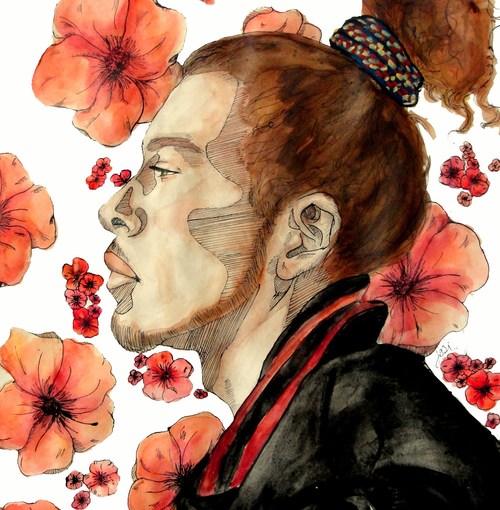
From the author: “I was inspired by the juxtaposition of the poised human look and the fragility of nature reflected in the vibrancy of the flowers. This led me to question identity, especially how to maintain a sense of self against a backdrop of an ever-fluid environment. The concept of identity raises questions about the significance of cultural background, and exposure, where the protagonist explores his familial history by visiting the country where his family comes from, realizing that he has little to no connection with a place he has never been, himself.”

On Heteronormativity, High School: “Easy”

word by Alisha Mascarenhas

colour by Tomasz Kartasinski

tomasz

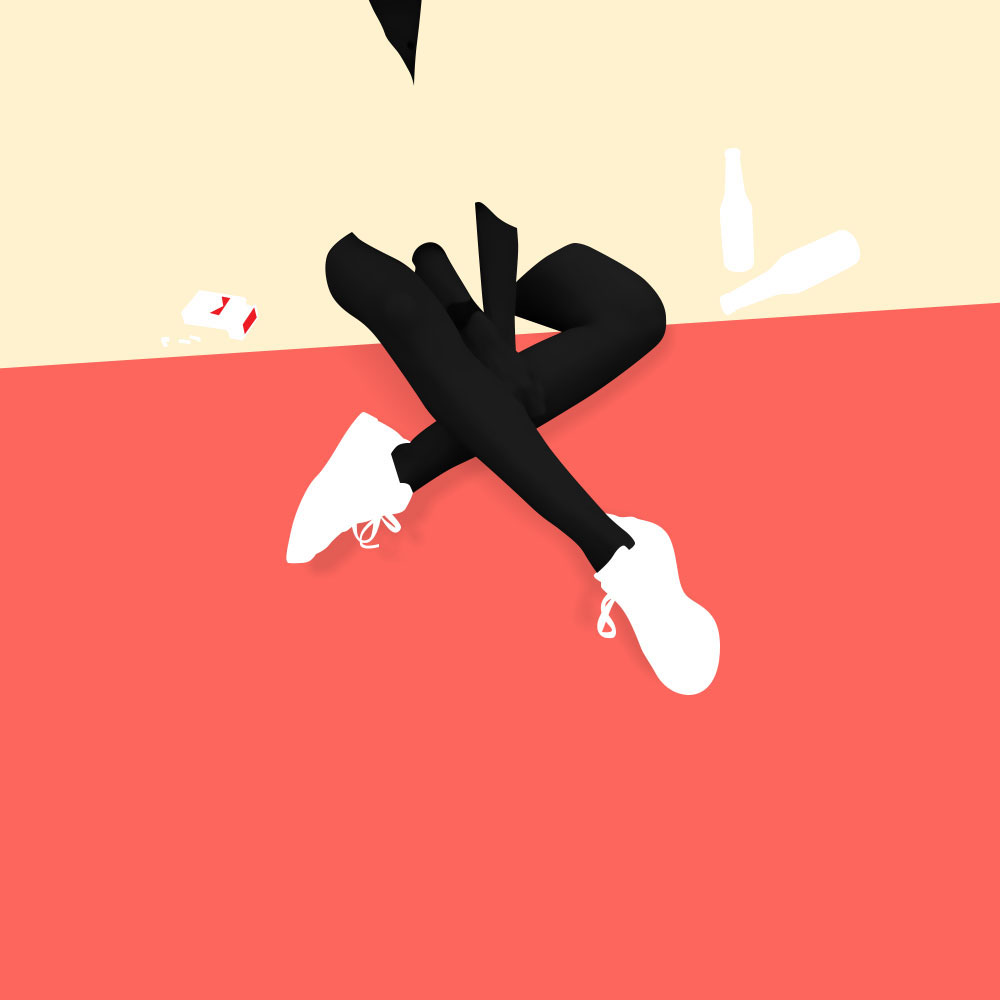
The bend in her legs is relaxed; easy.

She folds one beneath the other, waiting for the night to set in.

The loop in each clean, white hightop precise and dangling with that quiet anticipation that comes after sucking back the frenetic bubbling of the first beer. Giddy elation that rises to the sternum.

From where I stand in that hot pit of a parking lot all I can read on her body I feel in my hands: blunt fingers softening into the pinch of polyester jacket pockets.

All my life taught how to be seen by men, I don’t know what it is to look at a girl. I never gave myself permission. I want to know how to look without inhaling her; to let my gaze settle on her whole being; the space she inhabits and the retreat of a sleeve that licks her inner forearm.

She won’t look at me. At home with the other queers I’ve found ease in a different norm. Ambiguous friendships warmed by late night snuggles on that long, blue couch in my apartment, kisses on the mouth and other quiet affections. Sometimes sex.

But to her, I’ve decided, I’m someone to compare haircuts and outfit choices with. She might squeeze my hand later, or borrow my jacket as we walk home. We might share a cigarette and she won’t give a second thought to what’s passed between us. To her, I’ve decided, I’m another girl and she won’t ever look at our intimacies as anything other than sweet, dry and easy.

If she calls, it will be easy. The gesture only half thought through as she decides what to do with her Sunday afternoon. Not the tense thrill of an inhale that catches at the throat. Not the fleeting imagination of all the ways our bodies might move against one another. I’m a girl. We are girls. She’ll talk about boys. Girl talk. Girl love: not a boy-girl kind of a thing.

She won’t need to think about what to wear or how she smells. She might take a shower just to clear her head of the day; show up at my front door with her hair disheveled to eat ice cream at the kitchen table as I shrink into the wall across from her, afraid that if I get too close I might feel her breathing.

When we part, she’ll give me a little squeeze. Like a friend. Like girls do.

From the author: “I wrote this as a commentary on how systemic narratives of heteronormativity seep into the ways girls are taught to relate to one another and to their desiring selves. It is a response to how friendships between girls are mediated by romantic relationships with boys: constricting the kinds of intimacies that are permissible. I chose to use the words “girls” and “boys” to speak to a process of revisiting an adolescent self: a critical time during which heteronormative scripts can be particularly forceful.”

On Love: “Teach Me to Speak”

Sylvie2

My apartment has the music of love in it.  There is a row on my left and soupy breathing on my right.  I hear “fuck you” and I hear “fuck me.”  In love, someone is always getting fucked.  The rain outside patters the windows like a bowl of milk being filled with Rice Krispies and these slow and then moderate and then fast percussive bangs mimic the action unfolding here and there.  Snap crackle pop snap crackle pop snap crackle pop.

Behind the closed door to my right it sounds like my roommate and his girlfriend are hiccupping in harmony and it dawns on me there, wrapped in nothing but a towel, that this marked speechlessness seems more conversational and comprehensive and wholesome than the stuff going on to my left; but both still sound like love.  These are but two of love’s many iterations.

When I was younger, I would tip toe from my room to the stairwell that led to the kitchen to sit there and listen to my parents disagree loudly, hurtfully.  And I’d fear that the two people no longer loved each other.  I might enter the kitchen, crying, and ask if everything was all right, if they weren’t going to get a divorce.  It was in my kitchen that I learned that two people in love are allowed to fight.  Love necessarily yields war but war does not necessarily yield love.  And so back in my apartment, I feel like I’m seated again at the top of my staircase, all teary-eyed, only now I see that love can not only be scary, but that it is a choice.

Each of my roommates feels something in his heart if it is possible to feel there at all.  Right now I feel something there too.  Right now the Yankees are playing the Blue Jays and Lord knows a W for the Yanks here is huge.  Right now I have an unwritten story that my publisher needs by Wednesday.  Right now my English professor wants 500 words from me on the tension that Hemingway generates between language and experience.  I like that writing prompt.  It is worded beautifully.  My publisher also wants 500 words from me.  Twitter wants 40 characters.  That last sentence was 36.  Forty characters, 500 words: who cares?  It’s as if I’m talking to you through a damn keyhole.  Right now I have all this inside me but to you it’s only words and words and words.  Right now I wish my heart could talk because it has so much it would say to you.

Love and conversation, though, aren’t characterized by words; it is me and it is you, bundled up for minus 50 degree cold, undressing one another without letting either of us freeze.  My roommate engaged in the stuff at the end of the hall, you see, though, is freezing.  He moved too fast.  He inhabited himself without inhabiting his girlfriend.  So that makes true love going up to someone and saying, “Let me thaw you out.”

Can I?


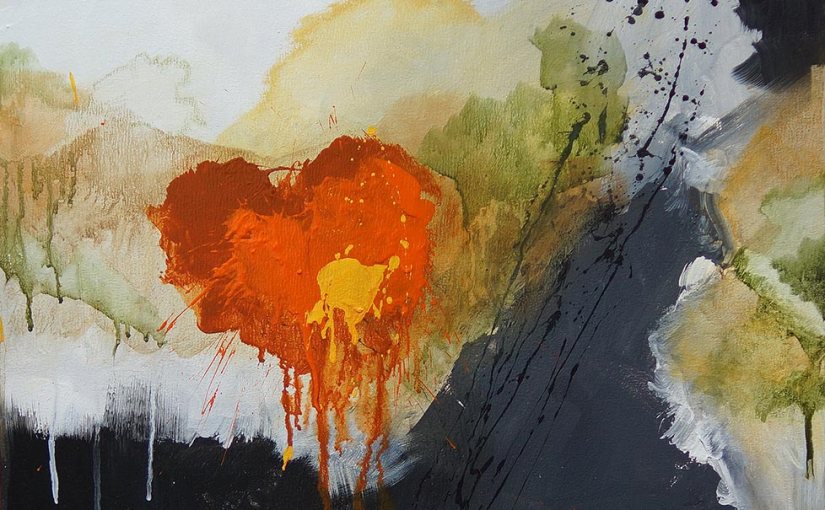
word by Jacob Goldberg: “The image has a heart in it.  This all happened in my house the other night, and I thought it was fitting to write about love.”

colour by Sylvie Adams

“A native New-Brunswicker, Sylvie Adams has lived mostly in Montreal since the 1980s. She has travelled intensively throughout her life, residing for brief periods in Germany, England and France.

She obtained a Bachelor’s Degree in Fine Arts from Concordia University and a Master’s Degree in Applied Sciences (Architecture) from Université de Montréal. She worked in the design field for close to fifteen years in Canada, the United States and Europe. Her love of visual arts brought her back to painting and she now has her own studio in Montreal, where she paints. 

Her work has been featured in solo exhibitions. She has also participated in numerous group exhibitions, nationally and internationally, in Quebec, Ontario and at the Affordable Art Fair in Seoul, South Korea (2015).

Her work can also be found in private and corporate collections, including the Permanent Art Collection of Rio Tinto Alcan.”

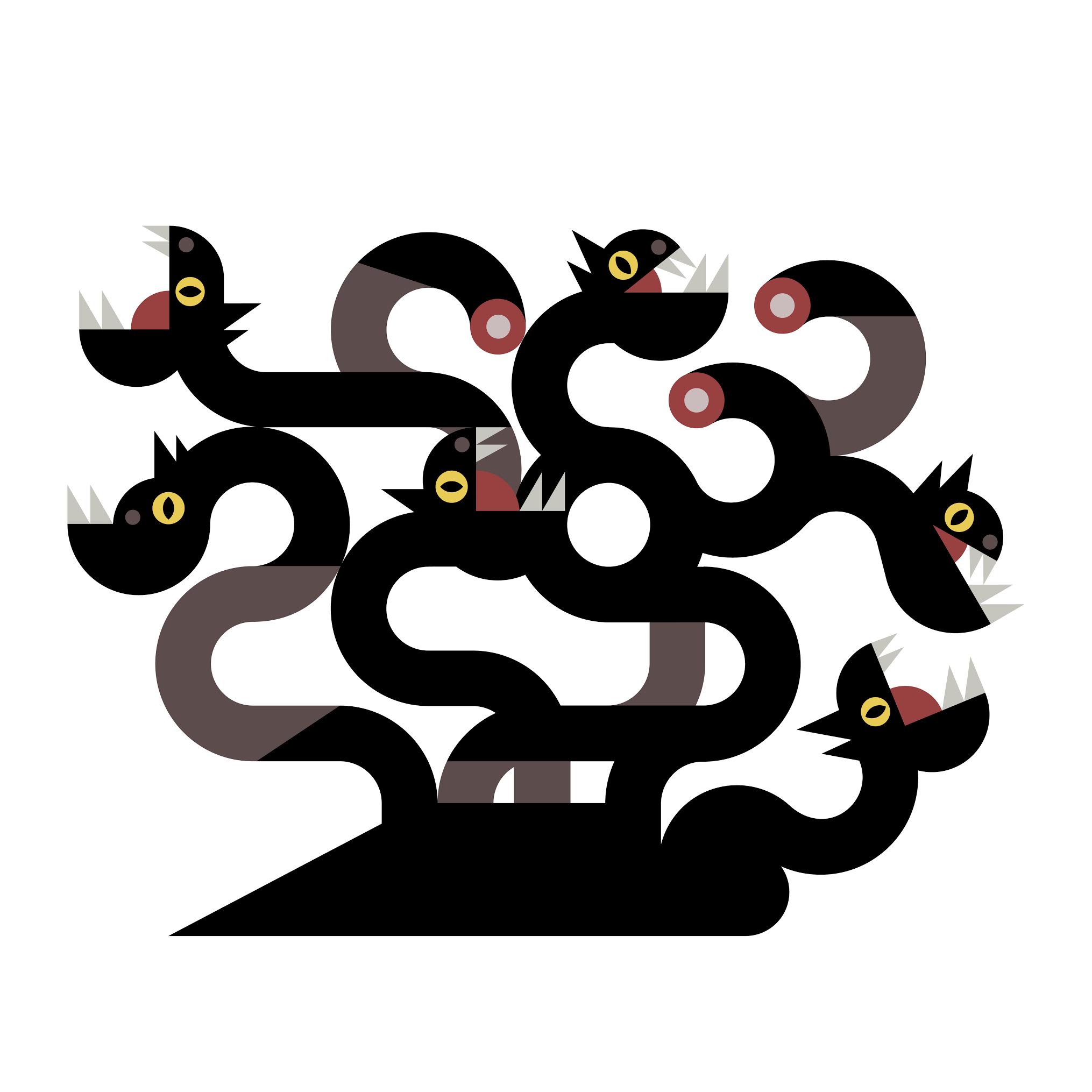
On unrequited love: “Turning Around Her”

unnamed (5)
I wasn’t sure what direction things were taking. I was having trouble sleeping, trouble concentrating and for the first time in a long time I didn’t know what my next step was.
 
I wasn’t myself. I used to be methodical, to a fault. I planned everything: my schedule, my goals and pursuits… so this was well beyond my capacity to deal with. I started running to clear my head, I tried to exhaust myself to sleep each night but nothing could clear the soundtrack of self-doubt and indecisiveness that invaded my mind.
 
She was beautiful and so uninterested in me and all the things I thought I had to offer. I didn’t exist in her world. I mean she was thick and curvy, soft with the hardest edge and sharpest wit. She didn’t let you get away with anything; called you out on every disingenuous gesture or colloquialism and demanded that you be nothing but one hundred percent real all the time. She wore black denim like it was her uniform and her long box-braids were always tied back. You sensed her presence before you even saw her enter the room; her misshapen silver bangles adorned each of her forearms and she smelled of menthol cigarettes and cherry cola. Make-up never touched her densely freckled face and her ears were never without the small diamond stud earrings her father gave her before he passed.

“She was beautiful and so uninterested in me and all the things I thought I had to offer. I didn’t exist in her world.”

She talked to me about it only once in the 17 years that I’ve known her. She said things were dark for a long time, she was angry, she lashed out and hurt some people she loved. I was in love with her, but I was scared of her. I’d seen her gnaw away at the affection that others so easily bestowed upon her. Despite the edge, the anger and her demanding nature, you couldn’t help but want to be near her. There was an enigmatic energy that orbited around her and she unwittingly drew people close to her but she never let them in. When I came out five years ago she was fiercely loyal, almost stiflingly protective. I realize now that I didn’t know her back then, I probably still don’t. I guess I thought that the experience had bonded us, that my sharing this part of my life with her made us closer. I thought we were friends but she had her own thing going on; so I silently pined from a distance and grew sick over unrequited feelings while she pursued other phenomenal women like herself only to chew them up and spit them out soon after, leaving husk where there was once plenty.
It was only getting worse for me. I was barely functioning. And I couldn’t tell her. Clearly I wasn’t a contender, I wasn’t worthy of her affection and I would not succeed where others far better than me had failed. I was drowning in the throngs of a relationship that existed only in my mind. I didn’t know which way to turn. 

colour by Hey Studio

“Hey is a graphic design studio based in Barcelona, Spain.
We specialise in brand identity, editorial design and illustration.
We love geometry, color and direct typography.
This is the essence of who we are.
We take care of every single step of the design process and we always work closely with our clients, big or small, in one-to-one relationships.

We also undertake side projects. These activities aim to play with new ideas, push our creative boundaries and develop a passion that is then injected into client’s work.

In 2014, we opened an online shop, a place to share our passion for typography, illustration and bold graphics.

Hey was founded in 2007 with the idea of transforming ideas into communicative graphics.
Here is a selected list of projects crafted for our clients.
We would love to hear from you. Say hi here.”

On Spousal Abuse: “I Thought You Were Dead”

leah

Trigger warning: spousal abuse

When she got really angry, she’d throw anything in sight. Once she took a painting right off the wall and threw it and it hit me in the side of the head. I blacked out and when I woke up she was on top of me, covering me with her body, and crying. “I thought you were dead,” she said. “I thought you were dead and I was so lonely.”

She moved into my apartment a week after we met. We threw out all of my furniture and she filled the apartment with her couch and table and chairs and bed. The first month, we would sit on the porch sharing cigarettes and discuss what pieces of my furniture had been picked out of the pile, which pieces we thought were the saddest. The coffee table went quickly, but it seemed like no one wanted my old mattress. One night, we drank too much and she punched me in the jaw. It snowed that night and the leftover furniture disappeared.

Sometimes when she threw things, I would grab her wrists until they were raw and swollen. And then she’d kiss me and I would put my arms around her thin waist, hold her so tight she would ask me to stop. We’d sit in front of the television, her face covered in blue from the screen, and I’d bandage her wrists, burned from my skin on hers. We’d laugh that our love was so hot we could burn one another just with a touch.

When you fall in love, the end is never important. The end is another day.

word by Leah Mol

“I found it very intriguing that the woman in this piece seems so strong, and is also seemingly being targeted. She is perfectly in place to be ruined. Because this piece brought forth the theme of contradiction for me, I wanted to write about people who love one another and want to hurt each other all at the same time. People house so many contradictions.”

colour by Rebecca Proppe

“I’ve been making art my whole life, drawing story books and cartoons since I was a little kid. Now I’m an adult, and I still love to draw.

I’m currently studying art history mixed with some painting and drawing classes. Like most people I don’t know where my life will take me after graduation, all I know is I love art in all its forms and will be making it for the rest of my life 🙂

I hope some of you can enjoy my art as much as I did making it.”

“Two Faced: On the Consequences of Beauty Standards”

proppe

“Two Faced”

The secrets of a woman’s mind are written in the details of her face.

Look closely.

Every expression, every line, and every crease has a tale to tell. They grow and change and multiply, just as the years do. Then, why is it that when I look in the mirror, I am consistently dissatisfied with what I see?

The root of my dissatisfaction lies in a variety of pubescent acne scars that have yet to fade; in the darkened circles under already dark, deep set eyes; in the thin but unmistakeable wisps of hair, around the corners of my lips and at the base of my nose, that bridge my eyebrows together.

I look in the mirror and I see an amalgamation of imperfections arbitrarily plastered together.

But there is a rawness in the way I choose to present myself. This amalgamation of imperfections is unassuming, unforgiving, and unafraid.
This is how I present myself to the world—this is how my story takes shape.

Why, then, is this what I am taught to dislike about myself? Why is this what I am taught to find fault with?

Every expression, every line, and every crease has its own tale to tell:

These acne scars are battle scars. My skin is my armor; tattered and trampled on, it shields my inner vulnerabilities and insecurities. These scars represent the years I spent hiding, covered in layers of foundation and concealer, failing to realize that beauty is more than skin deep.  These scars represent my development and growth, on both a physical and psychological level. While it is still imperfect, I’ve grown comfortable with my skin, in my skin.

It is often said that one’s eyes are the windows of the soul. Well, my soul shines out through them—they open wide, and bright, with excitement. Other times, these eyes are tired, showing exhaustion from late nights and sleep deprivation.
They crinkle when I laugh, just as tears pour out of them when I cry.

Hair grows relentlessly and freely all over my body—and, why wouldn’t it? Am I not human? Am I not alive and healthy?
Hair is the not-so-subtle reminder of my humanity, of my autonomy and my ability to choose. It can be both liberating and restricting, depending on how I choose to tame it.

My mouth is the vessel through which I articulate my thoughts; it is the vessel through which I express my emotions. The corners of my mouth curl up when I smile, and turn downwards when I am unhappy. It is with this mouth that I say, I love you, and with these lips that I let you feel and believe it.

The secrets of a woman’s mind are written in the details of her face.

Look closer.

Look deeper.

word by Fiona Williams

“The rawness of the artwork by Proppe caused me to reflect on how I view myself, particularly in light of the beauty standards perpetuated in the mainstream media. Whereas the female figure in Proppe’s art is depicted without inhibitions, I reflected on what I constantly find unsatisfactory, and then why I am unsatisfied with what I see: the immense amount of pressure we feel to be beautiful.” 

colour by Rebecca Proppe

“I’ve been making art my whole life, drawing story books and cartoons since I was a little kid. Now I’m an adult, and I still love to draw.

I’m currently studying art history mixed with some painting and drawing classes. Like most people I don’t know where my life will take me after graduation, all I know is I love art in all its forms and will be making it for the rest of my life 🙂

I hope some of you can enjoy my art as much as I did making it.”


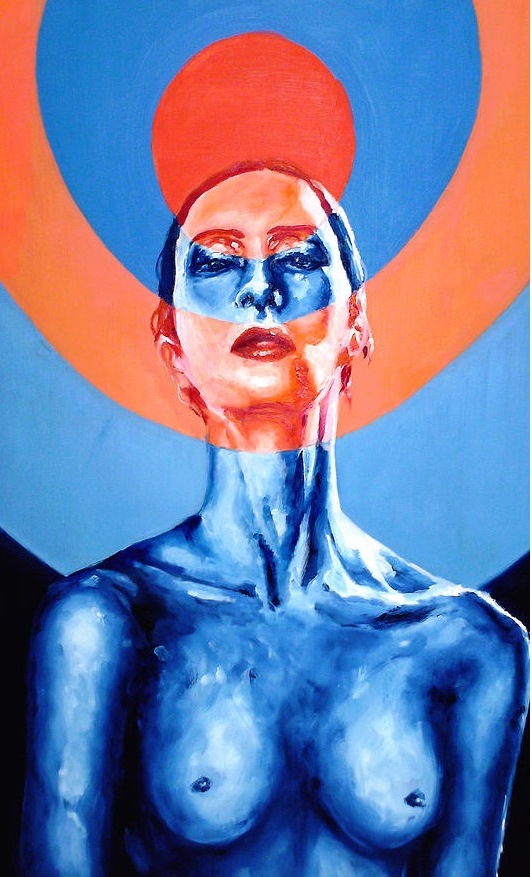
On Heteronormativity: “Blue”

4

She recoiled from me; our breath left stagnant carbon dioxide in the air.

“What if—”

She bowed her head, interrupting me with piercing subtlety. I felt my body succumb to the numbness of rejection, some feigned self-defense in preparation for when she’d say the word that would make me crumble at her feet.

Her hollow cheeks were flushed, lips pursed- eyes, pensive now. I couldn’t bear the insurmountable shock of no.

Leave now, get out, I begged myself.

Go before she tilts her cheek at me the way she so-often does, ensconced in blue-violet, and says my name.

She was scorching and the thought of losing her felt unbearably electric as I reached for her arm, craving that magenta, tell me it’s okay.

She looked spooked.

“I’m sorry.”

She shook her head as if ridding herself of an awful dream.

“No.”

Blinking, I withdrew. She ran a finger over her lower lip, as if to feel the words as they left her mouth, and then shifted her gaze to me. “I don’t…”

I felt a surge of disappointment. But she let her eyes linger on mine. I studied their magenta hues, wanting to learn her before the moment she would inevitably tell me say goodbye.

I stared at her expectantly, unsure of what I could say.

“Of course I still care for you,” she spoke softly.

I no longer felt like crumbling.

“I want children, you know? This was fun. You have to understand.”

Now it was she who awaited my reaction. I wanted the moment last as long as possible. Anything I said now would become inextricably linked to a new era of us and I wasn’t ready to let her go just yet.

word by Annie Rubin
 
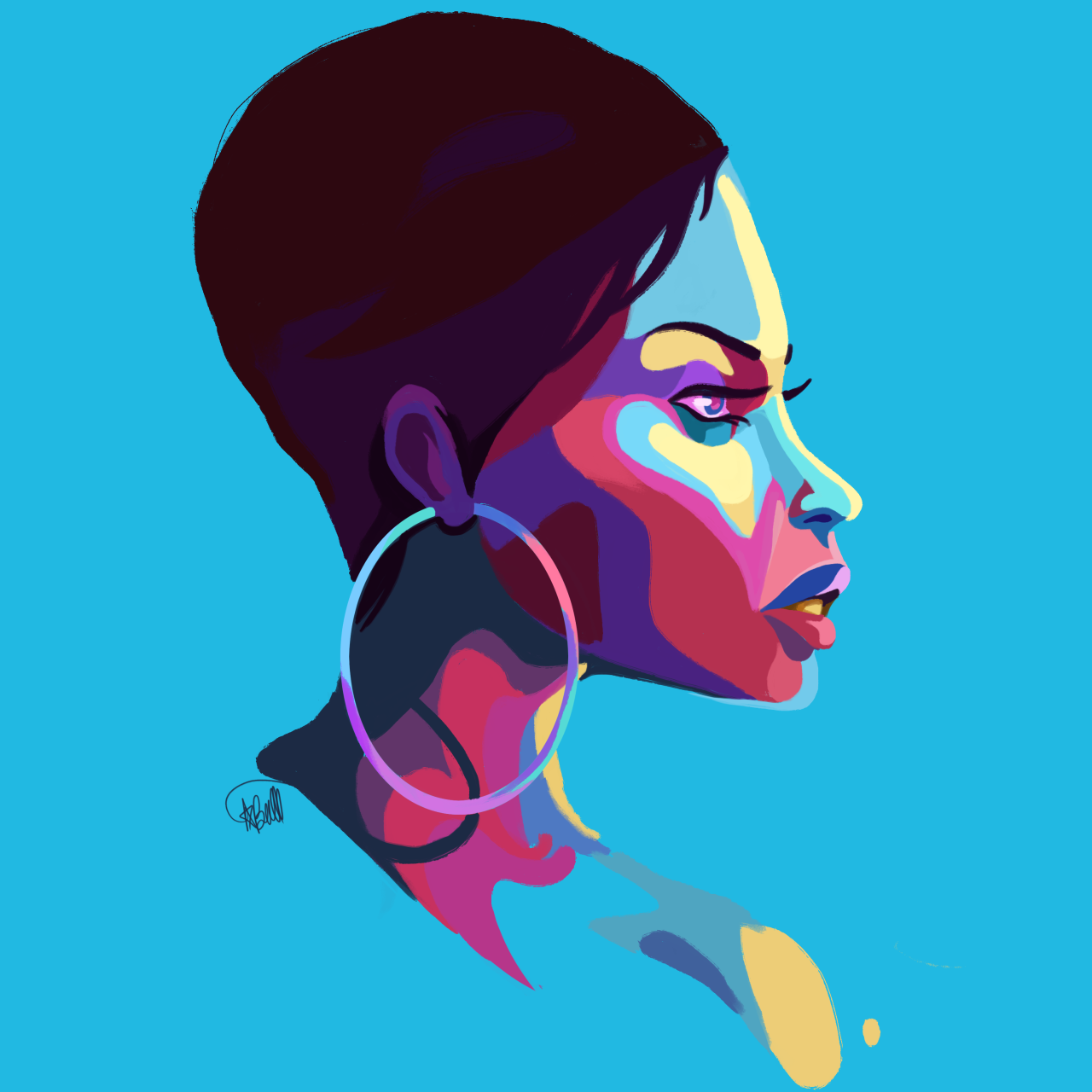
“Bold colours, and the well-defined silhouette of a woman inspired this piece to focus on passionate intimacy. This is a critique of heteronormativity, emphasizing two conflicting views on the legitimacy of a relationship between two women. I want to bring attention to the ways in which societal standards shape individual choices at a basic personal level.”

colour by Andre Barnwell 

Andre Barnwell was born July 7th, 1984 and raised in Toronto but currently resides in Vancouver. Ever since moving out west in 2013, Andre has been inspired by the city’s art community and motivated by the accessibility to the tools he needs to pursue his artistic passion and desires. Graduated as an animator from Ontario’s Sheridan College he was exposed to various styles and media to create art even though he prefers to use digital as a means to an artistic end. Fascinated by the human face, most of work is portrait based ranging in different colour schemes, particularly his blue and red monochromatic digital studies.

Outside of portrait work and digital sketches, he enjoys music, film, travelling, and building his brand, Sex N Sandwiches. He looks forward to collaborating with artists such as sculptors, photographers and musicians for future projects. With the world getting smaller with the help of technology, he implores artists and art lovers to follow his growth via social networks and eventually to international stages.

Keep it growing!

Professional Contact: 
Email: andrebarnwell@gmail.com

Social Contact:
Twitter: @AndreBarnwell77
Instagram: AndreBarnwell77

The author’s words do not necessarily represent the views of the artist.

25th edition of the First Peoples Festival

22
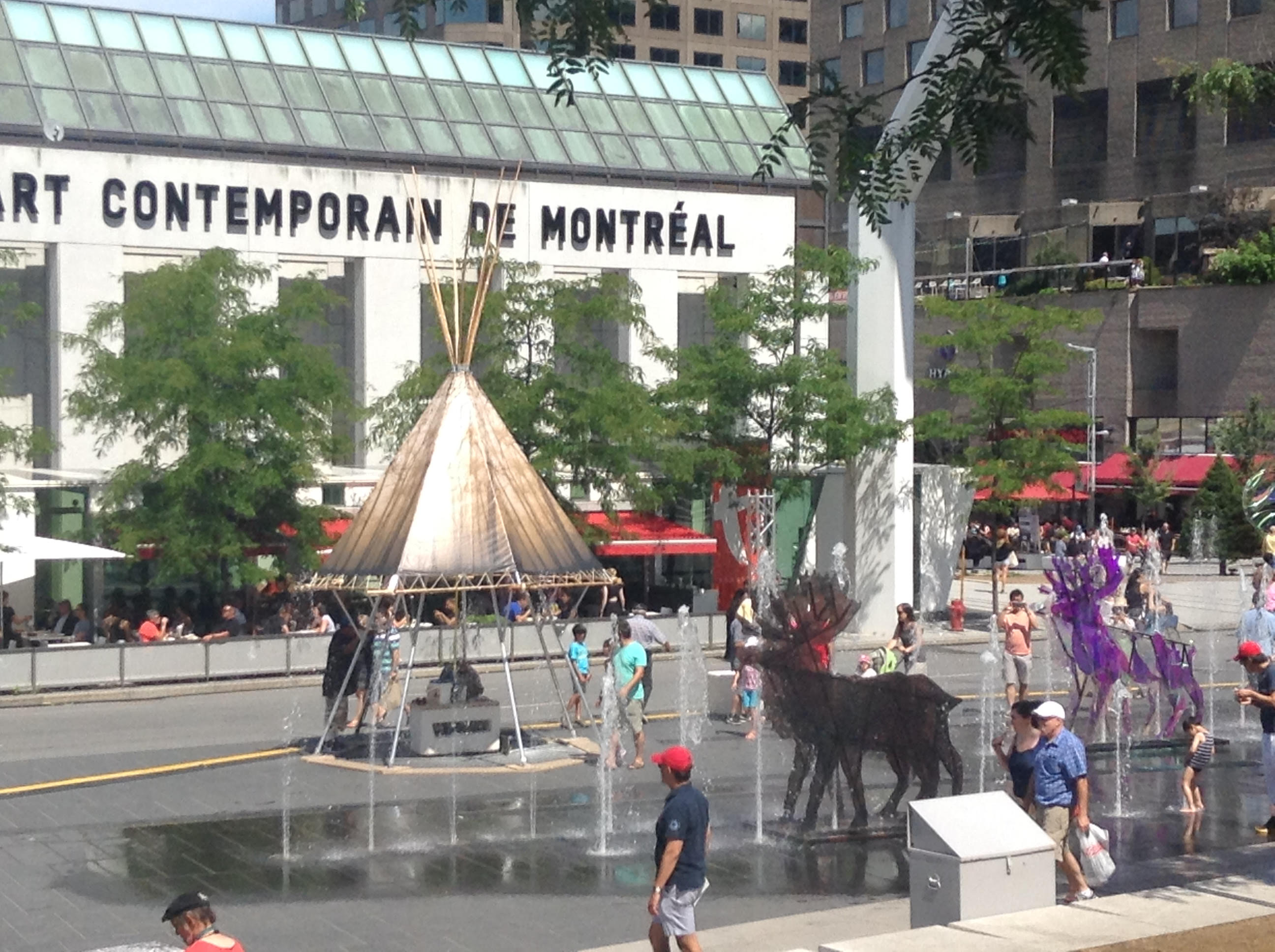
Présence autochtone, the 25th edition of the First Peoples Festival, is currently taking place at Place des Arts in Montréal, and is definitely worth checking out.

The festival features movies, concerts, readings, art, and more, celebrating aboriginal culture and its importance for Canadian identity.  Moreover, the festival highlights the evolution and adaptation of aboriginal music and art in a changing world.
Drumming circles and other forms of aboriginal traditional music, as well as new forms of aboriginal musical expression, such as DJ Psychogrid, Madekimo, Moe Clark, and Katia Makdissi Warren are featured every day on the big stage.
Additionally, many important aboriginal organizations like the APTN, the Makivik Corporation, Land Insights, and the AVATAQ Cultural Institute are using the festival to bring attention to the challenges that still remain within the aboriginal community, like the societal integration of First Nations and Inuit People who adapt to life in urban centres.
2
In response to this issue and others,  the First Peoples Festival promotes the use of art as a means of societal mobilization, identity building and cultural understanding.
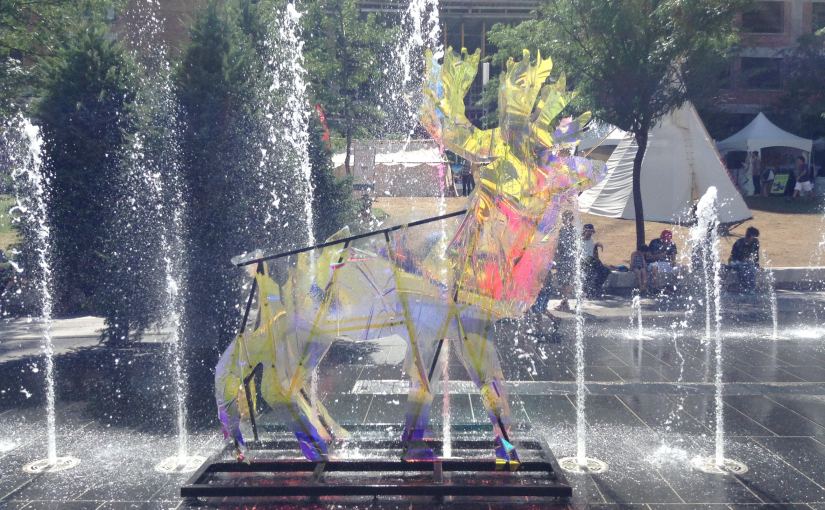
Inuit cultural expression using modern and non-traditional materials, including tepees and sacred animals like deer, turtles and moose, can be seen all over Place des Arts. In addition, the festival features First Nations artists like Jeffrey Veregge  of Port Gamble S’Klallam. Veregge’s art will be of particular interest to comic book fans, as it integrates traditional aboriginal artistic designs with popular culture icons like Iron Man and Buzz Lightyear.
Lastly, Parks Canada is giving out free airbrush tattoos of modern and traditional designs of aboriginal spiritual animals, each created by an aboriginal artist. With each tattoo comes a short explanation of the spiritual importance of each animal, and a description of the artist’s vision for the design.
The First Peoples Festival is not to be missed – check it out this week, until August 5, at Place des Arts!