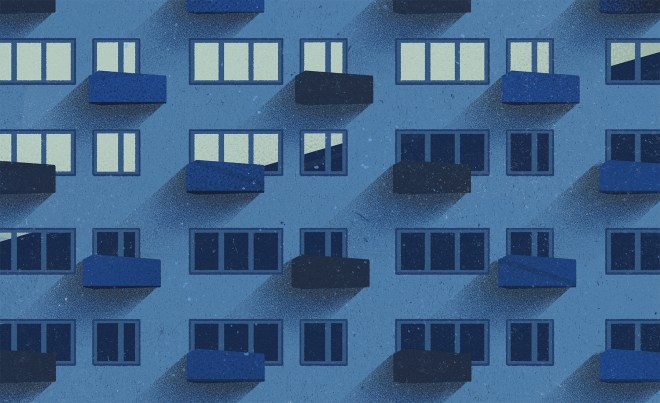
New Prose: “Broken Eggs,” by Charlotte Joyce Kidd

03eggs

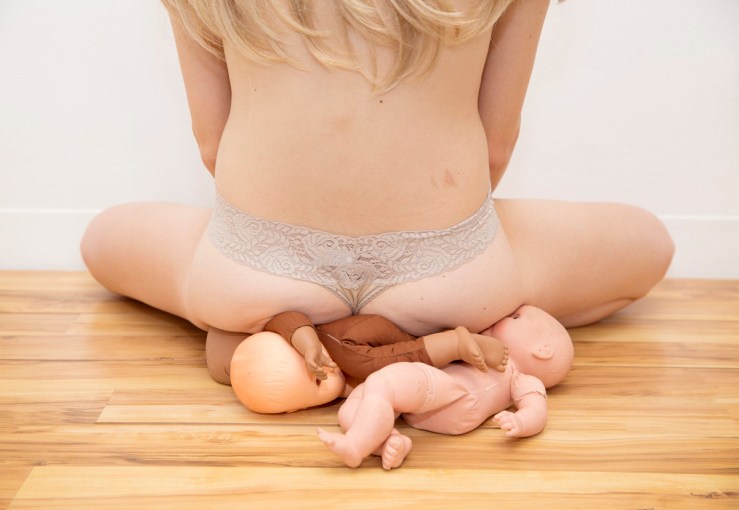
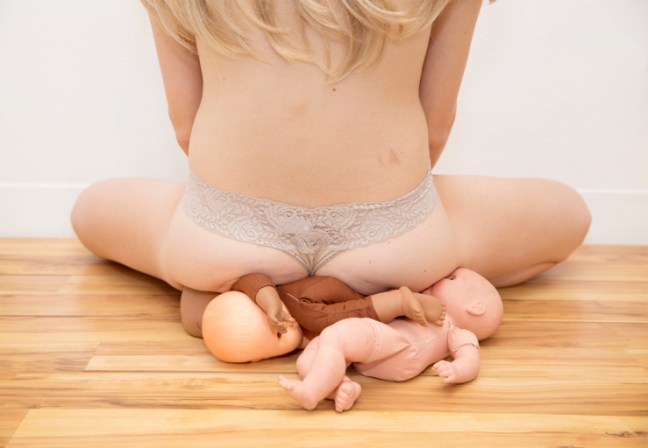
I used to be very sad. Even just a few weeks ago, I couldn’t get out of bed for days at a time and once I didn’t brush my teeth for a month. Yes, I used to be sad, but now I am goooood. I have been okay for three weeks and that’s the longest it’s been in a while.

I’m running a bit late for a thing I’m supposed to go to and I have $12.23 (Canadian) in my bank account, but I’m trying to go easy on myself and think about the big picture. I was hungry when I woke up so I bought myself eggs (because I’m trying to take care of myself, even though I’m late for a thing).

Now I’m biking home and I keep thinking this phrase over and over. I wonder what it’s from. “Girls with kind eyes who talk too fast, girls with kind eyes who…”

Oh. Whoa. Oh. Yep.

Now I’ve fallen over. That makes sense. I wasn’t looking where I was going. My knee is a bit scraped and my eyes are burning (am I going to cry?) but still (in the big picture) this is fine.

The egg carton looks squished. I open it to check and then the carton rips and eggs start tumbling out, as if in slow motion, every single egg until they’re all on the sidewalk. This isn’t so bad, though. Some of these eggs look like they could be salvaged. I pick one up and the clear mucus, the uncooked egg white, slides out onto my fingers. The yolk plops to the sidewalk. This happens with a second egg and then a third, and I want to say damn it and go home, but I am not a person who gives up on herself, not anymore. Maybe I can pick up some of these yolks and just put them back in the shells.

I slide my fingers under the first yolk, feeling my nails chip against the sidewalk, and I manage to grab it, whole, globular and slippery. Ha! I am like a surgeon. I have million dollar fingers. I put the yolk back in its casing and then put the egg back in the carton.

“Hey, are you okay?” says a stranger whose sneakers are in front of me.

I look up and smile very wide. I can’t see their eyes. “Yes! I am fine.”

“Okay,” they say, and their sneakers leave.

I hope it’s not anyone I know, because I guess I look pretty crazy.

I start to feel frantic for a minute or two, when it looks like the next egg won’t come off the pavement, when it’s sliding around in my hand like a baby who can’t hold its head up yet, but then there you go, got em all.

There will be a few bits of rock in my scrambled eggs (Just the yolks. Is this healthy, like eating just the whites?) but that’s okay. Could be much worse.


these words by Charlotte Joyce Kidd were inspired by the work of Kelsy Gossett

“The Ice Show” by Erin Flegg

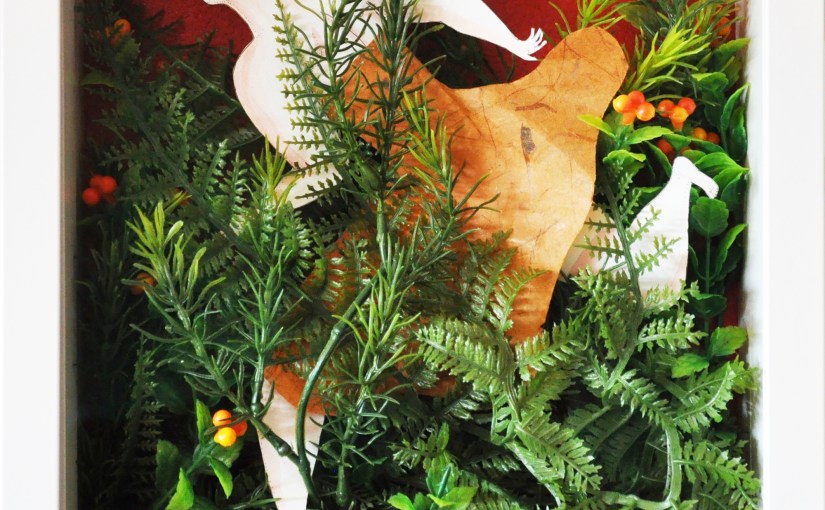
smother_13x9.jpg

The vet only had two appointments for the day, morning or afternoon, so I took the 3:45. It didn’t seem like the sort of thing I could handle until after the ice show was done.

When I arrived at the rink it was full of parents stringing twinkle lights and plastering the boards with black paper and clear hockey tape, setting the scene, and by 2 p.m. when the lights went down the place was packed. The first small group teetered out onto the ice and I was suddenly emotional, my eyes misting over. It happened again as I watched my oldest senior skater perform, in a dress that clearly wasn’t made for her, a routine we finished three days ago. The salty intrusion confused me for a minute. I had been so relieved to be done with the season, my official ties with this town dissolved, that it was unexpected. They’re good kids. I didn’t want them to think I was abandoning them.

When the final number was over the other coach and I were called to center ice. I didn’t listen to what the announcer said and instead spent my last few minutes on the ice looking at each kid. All winter, so many hours spent just keeping track of them all. The announcer had to call Ava’s name several times before she heard it and rushed over to grab two bouquets and skate them over to us. Lisa hugged her so I hugged her too, but I worried it was the wrong thing to do. I had spent more time shouting across the rink at her than saying nice things when she was close by. Pay attention, stay in your position, leave that other kid alone. But maybe she felt just as strange, had shot her hand up in the air when whatever parent bought the flowers asked who wanted to present them, eager as usual for any chance to stand out, forgetting for a moment that she didn’t actually like me very much. We assembled for a group photo and I squatted next to one of the smallest kids, holding one hand while she used the other to snake broken bits of Doritos through the cage on her helmet and into her stained mouth.

I told Lisa I had to go, grabbed my backpack and walked across the street to the vet. It was just a small white house with a sandwich board out front on the weekends when they were in town. I walked in still holding the bouquet of flowers and worried the vet tech would think I’d got them for the cat. I didn’t want her to think I was the kind of person who would buy a bouquet of flowers and bring them with me to put down my cat. I tried to hold on to the flat, easy feeling from the end of the show, skip like a stone over this part, but my partner arrived with eyes swollen and the cat in his plastic crate and I sank back down. I lifted him onto the exam table and he flopped to one side, too weak to be either curious or upset. The vet shaved a small patch on his front paw, slid the needle in and he was gone.

these words by Erin Flegg were inspired by the work of Kelsy Gossett

“Mango” by Tristen Sutherland

Processed with VSCOcam with c1 preset Processed with VSCOcam with c1 preset

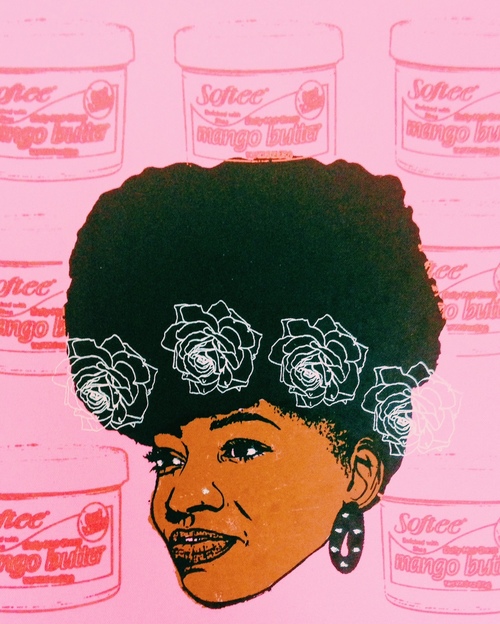
I didn’t taste a mango until early adulthood. Don’t get me wrong, it wasn’t a problem of mango availability; I just didn’t like the idea of them. They were messy and sticky and watching someone eat that orange flesh was grotesque enough to put me off it entirely. Juice would dribble down their chin and then the sucking and slurping would commence. As a child, I couldn’t bring myself to do it. My mother, long and sinewy, with skin as dark as polished wood, would offer me half of her mango. Usually, this would happen when she was barefoot in our garden, patterned fabric draped over her shoulders, a look that was very unusual in our Canadian suburb. Each time she offered I would shake my head no. I would feel a pang of embarrassment in my gut, even if no one was there to see. Over the years, she persisted despite my resistance. By my teenage years, all she had to do was reach for a mango for me to dismissively utter No thanks. I now recognize the sadness that would cross her eyes each time I would refuse a piece of her fruit, requesting an apple instead. My mother loved when mangos became available in stores, they were the only product she would splurge on because they reminded her of home.

I first visited my mother’s home, Martinique, when I was in my early twenties. It was strange seeing her in her element like that. She seemed to glide across the sand, her luminous hair flecked with silvery strands, fastened with a flower. I tried to mimic her, but my feet weren’t used to the uneven terrain of sand and my hair seemed to reject every flower that tried to nestle between its curls. When I tripped for the fifth time, my mother smiled and sat down next to me. I was clearly frustrated with my lack of grace and I think my mother sensed that. We sat in silence for a moment watching the waves. My mother reached into her tote bag and extracted a mango. Carefully, she sliced it into halves. Tentatively, she offered me a half. For the first time I accepted, happy to share something with my mother.

these words by Tristen Sutherland were inspired by the work of Angela Pilgrim

New Prose: “Bystander,” by Nailah King

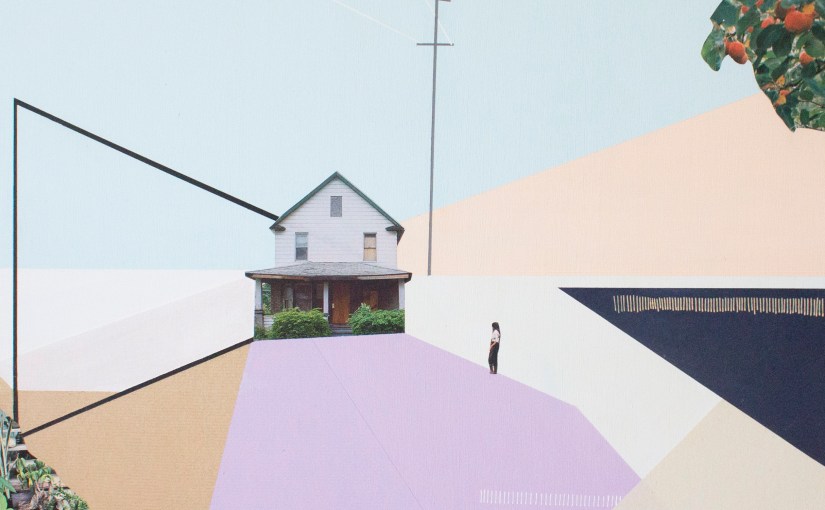
overnight-and-unknown-20x20cm-2015-mixed-media

The little boy screamed when he heard the sound of smashing glass. He crept carefully, his tiny hands grazing the hallway walls. He was petrified, but more scared that he would make a ruckus and make his mother angry.

He knocked on the door.

“Mama?”

“Come in,” said the raspy voice behind the door.

The door creaked as he pushed it open. There, sitting by the window, was his mother. The white illuminating her dark brown body, her eyes seemed to glow in the dark.

“I heard a scary sound, Mama.”

She turned to him, all of her warmth filling him like a cup that runneth over. She gestured for him to sit near her. He climbed into her lap. She kissed his head and wrapped her frail arms around him.

“Did you hear it too?”

Her arms relaxed, she patted him gently on the knee.

“Yes, baby”

“What happened, Mama?”

He hopped off her lap, sitting closer to the window, peering out of it intensely, his eyes stirring.

“Where are they taking Daddy?” he shrieked.

She looked at him, sad for her child. Sad that he didn’t yet understand.

They looked down together at a man who had skin like their own. He stood planted, firm, bruises forming. The flashing light of the cop car cast an eerie blanket on the street, covered in red.

The boy whirled around, angry. He didn’t understand.

His mother turned away from the window.

“Mama! What are we going to do?”

She pointed at the cop car.

“Open your eyes, Charlie, and look,” she hissed.

The boy planted his palms against the window, his nose touching the glass, and he stared. The cop car windshield was broken. A bat, discarded, lay on the asphalt.

“It’s not Daddy’s fault,” he murmured, tears stinging his eyes.

His mother merely nodded.

“He did say, if they came back…something would happen,” she said in a sibilant, almost to herself.

He looked out again. There was a woman in a hat staring back at them. He burst out of the room.

“Charlie! Where are you going?” she asked.

But, he was gone.

He struggled to push the heavy building door. Then, he saw her.

He stood there, staring as her blonde hair rustled in the icy wind. Goose bumps dotted his arms. He forgot to bring a jacket.

The cop car was long gone. He didn’t know if he’d ever see his father again.

The woman kneeled, still facing him.

“Did you know the man they took away?”

“You saw it! Why didn’t you help?”

He pushed her and watched her fall to the ground, as if in slow motion. He watched her tumble, instantly regretting what he’d done. Still, he stood with his tiny frame, chest rising and falling with anger. He said nothing, as she had done.

He walked back to the building and reached for the correct buzzer.

Above, a woman in all white looked out the window.

these words by Nailah King were inspired by the work of Mairi Timoney

New Prose by Josh Elyea: “On Punching a Nazi”

Passing Through


He had a habit where he’d slowly and meticulously pull the hairs out of his beard and pile them, as though they were kindling to start a fire, on whatever surface lay in front of him. It was a disgusting habit, one he was not fond of and one he would’ve judged others for having, and despite his most earnest and steadfast attempts, he was simply unable to quit it.

He wondered if that’s how Trump supporters felt about their casual racism, about their callous disregard for their neighbours. Maybe they wanted to stop, he said. Maybe they were aware of the shame of their habit, maybe they knew what they were doing was wrong. Maybe they just couldn’t stop.

Who cares whether it’s conscious or not, she says. This is the 21st century—we have Google and Wikipedia, for chrissake—and you’ve got the totality of human knowledge at your fingertips. There’s no excuse for ignorance, she says, and he knows she’s right. She’s cool, of the old-school variety. Think Dana Scully, but with more heart. When she speaks, it’s with a sort of callous candor, a ruggedness of speech that only works when underscored by a passionate sincerity. She listens to old jazz records and calls Louis Armstrong by his proper name (Satchmo, she says with love, and she blows him a kiss across the time-space continuum). As he stares, it seems as though she’s blurred into the landscape, a variety store Venus on the warpath, ready to lay waste to the barbaric conservative politics that have, almost overnight, eclipsed the American consciousness.

The future is female, she tells him, and he knows that she’s right. How could it not be, with an arbiter like this?

Maybe it’s time to take off the kiddie gloves, she says. Maybe, just maybe, the left has been playing nice for too long, and it’s time to stop rolling around in the mud with the GOP.

It’s time to call alternative facts what they are: propaganda.

It’s time to call Trump’s Muslim ban what it is: racism.

It’s time to call the alt-right exactly what they are: Nazis.

Maybe it’s time to stop giving credence to the idea that we’re all entitled to an opinion, regardless of whether that opinion is right. You’ve got the right to an informed opinion, but fuck those people who choose ignorance over equality. Maybe we need to stop playing to our slowest members, and maybe we need to grab these petulant, misinformed, archaic relics of a bygone era by the scruff of their hypocritical necks and smack them until they realize that the only ones who don’t deserve a place in the world we’re building is them.

Of course we ought to strive to live in harmony, of course. In fact, that’s exactly what most of us are trying to do. But there comes a time when punching a Nazi isn’t just the right thing to do, it’s the only thing to do.


these words by Josh Elyea were inspired by the work of Mairi Timoney

New Prose by David Emery

Dimension

A house is not the same twice. Even if I stare long and hard and try not to blink and let the breeze distract, the house changes right in front of me. That was and was not my room. That was and was not the crooked porch roof. Was that wall always that short? It’s not the way I remember it and can’t be. How dare the house change? How dare it bend time and space? A person can’t be prepared to expect that. It used to be simple to start at the mouth of a neighbourhood and make your way to the belly. When you’ve been gone from a neighbourhood for twenty years, and you make your way back to that neighbourhood, that neighbourhood tries to throw you up.

Some neighbour I don’t recognize gives me a dirty look from two doors down, watching me to see what I’ll do. She’s tired of watching kids break through the plywood planks, carrying spray cans in their backpacks; when she calls them out they laugh at her wrinkled face and toss rocks at her Oldsmobile. You can’t blame a woman like that for being suspicious. I don’t half believe I’m standing here myself. Down the road, kids play ball hockey, treading new marks into freshly seeded grass, thrashing their sticks against the concrete curbside, taking chips out of something that always kidded me into seeming permanent. It would always be the same street and the same sun and the same gardens and trees, but at some point it stopped being the same. Now it stands here like a forgetful elderly relative, politely asking for a reminder, some flicker of a memory I can lay before it to make the house say, “Yes, I am the house you remember; you have all my love, you always have and always will.”

You don’t grow in a house. The house shrinks around you, becoming too small for your body until you have to escape through a front window before it splinters and cracks from clenching at your waist. Mostly they don’t bother to knock houses down. Curious. They stay standing and you keep growing and before you know it everything is in bits and pieces. This house is a standing nightmare. I wish I had the guts to step inside and reclaim that bedroom that was and was not mine. I’d yank the plywood out of the window and stay looking out at the streets until the sun went down, and the kids playing ball hockey were called in to eat, and the falling sun spread rays through the branches of the trees that have also changed, and the woman eyeing me suspiciously called the police on me.

If I’d been dragged out of here by force twenty years ago, that might have killed the urge to come back. I wouldn’t be standing in front of this house, watching it change, feeling myself shrink, feeling digested.

these words by David Emery were inspired by the work of Mairi Timoney

“Water Snakes or Medusa,” by Keah Hansen

sonia-alins-miguel_4

The views expressed in the texts do not necessarily represent the views of the artist.


She asked, “Why is it that women are always drowning?”

And Kate Chopin replied, “The voice of the sea speaks to [her] soul.”

And this soul seemed to wash out over the sidewalks like leafs held by puddles. They were singularly beautiful and flickered in the mid-afternoon sun and then almost jumped like fish in a koi pond. I thought of that good Lady of Shalott as a leaf, perhaps oak, swirling in a soapy green dress then resting amongst the reeds and silt. A body proffered to the sublime. The “dark continent.” The flumes of smoke that rest on eyelids or the foams that fork the beach into bits that yield and bits that take. The water admitted her hunger, spit it out with opal teeth, and the subconscious grasped another victim. But who, I wondered, had first moulded water into a woman?

I walked home and broke eggs in a pan. They sung and floated merrily in butter. I asked aloud, “Who would have the audacity to decide on a woman’s body or soul?”

And these words sizzled like life itself on the floorboards. They scratched the ears of my cat mindlessly and drew quizzical circles of soapy water on the moon-shaped plate in the sink. This soul seemed to hide inside the crinkles of the tissues. Or the steam from a lavender-scented bath. It even nestled in the roots of the houseplant when fed droplets from the dripping tap. But I was ravenous so I ate and thought and moved my body through the kitchen, falling into the news headlines and letting the water recede to wreak havoc in the basement.

Then a nasally voice bleated, “Storm warning in effect.” It was Clorox, which smartened up the murky underpinnings of each woman in her home, breaking eggs into pans and thinking. At this point, I used my tissues and waded into a bath soaked with the sounds of violin and imagined myself a muse then invoked all the saints of this city. The secular and sacred vied for me and I wondered which institution would best house my eyes and swaddle my soul in warm linen, made to look like silk.

I glanced outside and saw teardrops clawing at the windowpane and gathering strength in the rivets thrush against the vines. Then I heard the strength of a voice, and another, break through this window and worm into my submerged ears. It was the distinct sound of soul, not misty nor desperate but full as wildflowers bunched with string. I hunched my shoulders and raised myself, steaming, from that bath and pressed my forehead to the window. The tears had morphed back to rain, and there were women, not woman, moving through the streets with volition. The puddles remained but the leafs were trodden upon and the moving mouths were buttresses for all types of watery symbols.

I dried my legs and arms in time and gently pressed a towel against my wide eyes. Then I donned some clothes and linked with someone’s hand, though my hair still gleamed with wetness.


these words by Keah Hansen were inspired by the art of Sonia Alins Miguel

On Sisterhood and Solidarity: “All the Things I Never Got to Say,” by Fiona Williams

in-the-forest

The views expressed in the texts do not necessarily represent the views of the artist.


There aren’t enough words in the English language to sufficiently express what you mean to me.
I’m going to try anyway.

I should have told you that your smile is my favourite thing in the world. That the memory of your radiance is what keeps me warm during these cold winter nights.

I should have told you that a hug was all I needed. Instead, you gave me your heart and you gave it to me so fully. You also bought me chocolates.

I should have told you that I never meant to cry during our dinner. You didn’t even question it; you helped me wipe away the tears.

I should have told you that your 2 a.m. phone call saved my life. That the patience and selflessness you have shown me, I will never find in someone else.

I should have told you that I think I found my soulmate. Your intelligence keeps me in awe, and your kindness keeps me afloat.

I should have told you that I worry now that you’re not around. I worry you’ll settle for less than you deserve because even if I could gift you the universe, somehow it still wouldn’t be enough.

I should have told you that you look like Home to me. You look like Salvation. You look like Shelter. You look like Safety.

What I should have told all the incredible women who have helped me become the woman I am today:

Thank you.

I love you.

I couldn’t have done it without you.


these words by Fiona Williams were inspired by the art of Sonia Alins Miguel

“View From the 20th Floor,” by Jo-Ann Zhou

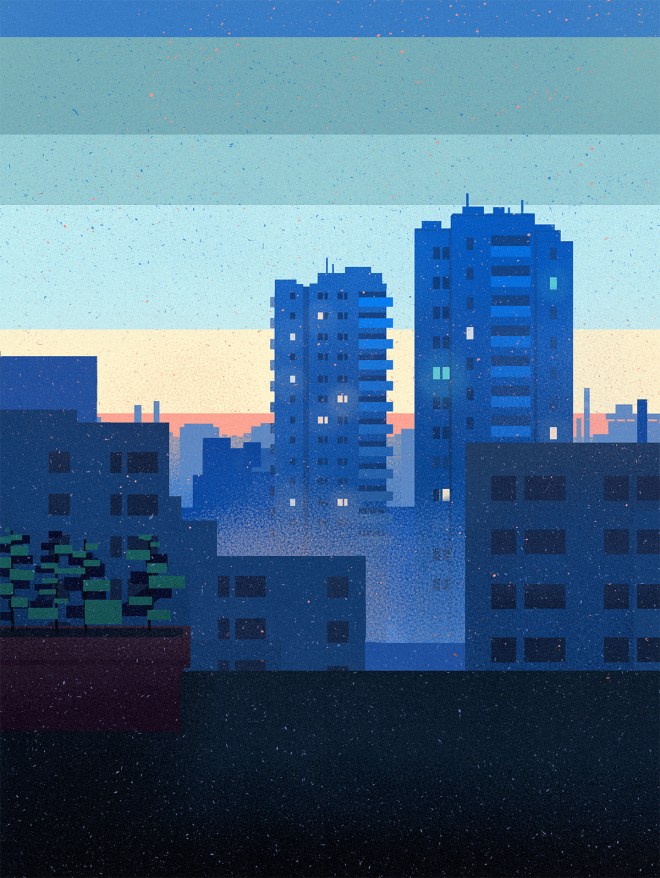
widok_1200px

content warning: abusive relationships

When the tiny rays of light were desperately grasping at the sky, when almost all the lights in the city beyond had turned black—that was when he came alive. His wine-stained teeth, the colour of dried blood caked into the crevices, would start to quiver as finally his lips moved at a rapid pace. At last, I would think. At last he is here. Here was the version of the man I liked and knew: interesting, articulate, prone to philosophical rants about metaphysics. He shone so much brighter than the version of himself with clean teeth—the version that only appeared when the sun was up, when the sky was too blue and bright—timid, uncertain, unwilling to express much more than the occasional nod by way of emotion.

I don’t know what drew me to him. Maybe it was because he was smart in ways that I wasn’t, and a few years older, and so completely unlike anyone I had ever met. I might never have met him if we hadn’t lived in the same building. He was funny: witty funny, laugh-out-loud-and-snort-with-laughter funny, but only in private when his teeth were stained from wine as we watched the sunrise from his window on the 20th floor. Sometimes when we were with his friends he was funny, but that was after three pitchers of beer, when the bar floors were sticky. As everyone else’s words began to slur and grow fuzzy, his would grow sharp.

In the daylight, we didn’t talk. He avoided me. He didn’t know how to talk to me without a glass in his hand. I don’t know what the view looked like from the 20th floor under blue skies. He would message me after his first glass in the evening, still not quite the version of himself that he would become a bottle later, but loosened up enough to ask for my presence. I probably should have known then that the bottle wouldn’t just make him funnier and louder and more confident.

I probably should have foreseen that after the first bottle, his hand would start reaching for the stapler, or the lamp, or the phone—knuckles white, hand shaking—as his wine-emboldened voice told me to get out or else. I don’t remember fighting. I just remember feeling utterly bewildered as we went from one moment chatting calmly and looking at the view of the sunrise to another where I was running out the door, wondering if the stapler might make contact with my head once my back was turned.

I’m glad I didn’t stay. We never really talked about why. Sometimes, after it was all over, I found myself back on the 20th floor. I would stand in the doorway with a million unasked questions—but then I would turn around and take the elevator back down to my apartment on the 5th floor. His door remained un–knocked upon and my questions all unanswered. Then I stopped going to the 20th floor entirely.

After I moved out of the building, I would look up to the 20th floor every time I walked past. I would think about how happy I was that I never found out what the view looked like from that window over the city when the sky was blue. A few years later, they built a new, taller building right in front of his window, so I suppose that view is gone. No one else will ever see the way the lights twinkled just so when the sun was coming up, glinting on his teeth stained the colour of dried blood.

these words by Jo-Ann Zhou were inspired by the art of Marcin Wolski

On Looking and Being Seen: “For Young Girls,” by Eileen Mary Holowka

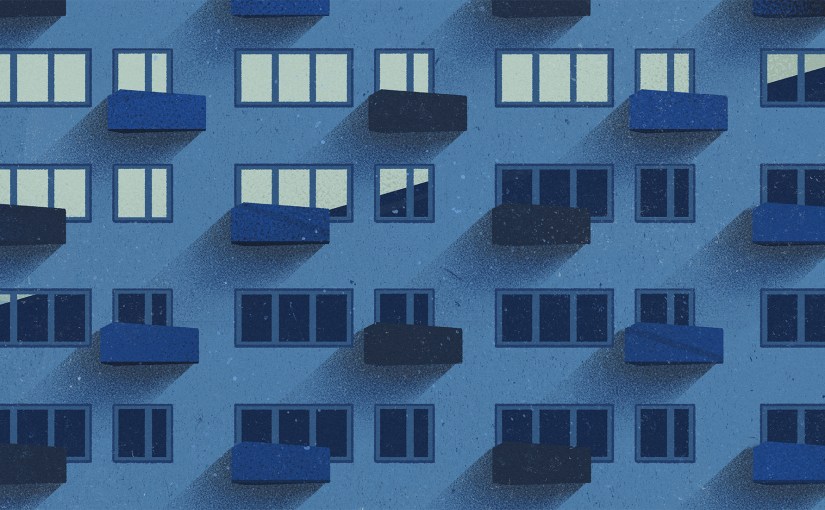
mieszkania_1800px

Content Warning: Depression and creepy insect stories

Maggie used to write stories in the attic. That was back when she was a child, when she wasn’t allowed to leave the house and instead spent family gatherings curled up in strangers’ jackets on her parents’ bed. She would rub her face into them and try to find a home in each of the different scents: winter smokers, damp lavender, a flooded basement. She would rifle through the pockets, stroking keys to guess where they belonged and reading crumpled receipts.

These days she had trouble writing. There were too many parties to attend and they always took days to get over. She still rubbed up against strangers’ jackets but it never gave her the same joy. These days, the smells were too familiar and all new possibilities seemed to end with every touch.

Sometimes Maggie went home with the jackets. She liked the homes and the jackets more than the people inside them, but they were her only excuse in. Most of the time they would have sex and some of the time she would bleed after. It was a symptom of some condition she hadn’t been able to diagnose. It became a kind of performance art piece, bleeding onto other people’s beds. They were never appreciative of her art.

Maggie built sets. Mock kitchens with only three walls and trees with trapdoors. It was a dream job on the way to what she hoped could one day be economically sustainable. She moved around theatres invisibly, in all-black outfits that doubled as formal wear, and spent rehearsal breaks hiding in the wings watching the actors bicker like they were in a play.

The best part about casual sex was locking herself in the strangers’ bathrooms, before she had let them down with her leaking uterus, to go through their cupboards. She loved the belongings and rituals of others, finding out where they kept their extra toilet paper or whether they Q-tipped their ears. She never took anything or moved it out of place, just looked. She figured it would make her a better artist, or make her like that particular stranger better. She tried to imagine what a future in their home would look like, but it was always better the less she knew.

The doctors kept telling her there was nothing wrong, but they scheduled her an ultrasound anyways. The technician pressed down on Maggie’s full bladder while they both watched the screen. Maggie eagerly looked for something, a cyst or a tumour, as if it were a fetus. But there was nothing there, not even a child, to explain her problems. She walked out of the hospital past husbands and their swelling wives and felt more infertile than she’d ever felt in her life.

Her journey home was slow and heavy, despite or because of her emptiness. Even the trees were barren, she noticed. Autumn made her want to call her ex. She touched her phone, but it turned off as soon as she tapped his name. She had no idea where the bus stop was without Google and it took her an hour to walk home. It was dark and damp, and she looked into the lit-up windows of other people’s houses with longing. She called him later that week, several times until she got past his voicemail. When he heard her voice, he paused, and hung up.

The printed ultrasound results came the same day. Everything was fine, but sounded deadly. She read the paper aloud to Anne over Skype. Apparently there is fluid in my cul-de-sac. Did you know you had a cul-de-sac in your uterus?

That explains your pain, Anne replied. Cars keep getting stuck.

Imagine the tiny little houses.

Little moms and dads.

God, even my diseases are domestic.

Maggie liked her parents and visited them often. They would cook her more food than she could eat and fill her full of enough tea to make her bus ride home unbearable. They tried to get her to clean her toys out of the attic, but instead she just hid in the back and watched spiders build webs around her Barbies. She didn’t have the heart to throw them out, nor the desire to clean them, so she just watched instead.

The attic was full of garbage treasures: VHS tapes of dance recitals and episodes of I Love Lucy; Mom’s broken mint green typewriter; her grandmother’s wedding photos. Maggie’s dollhouse sat in the corner near the window, covered in mud from where the roofers had gone wild. She used to imagine herself as the prettiest doll and would dress and undress her mock self for hours. Doll Maggie had always been intelligent and composed. She went to parties, her face always painted into a smile.

Maggie was scared to touch her doll self, even to save her from the wreckage of shingle bits. She had never intended to stop playing, but eventually everyone else did and the lonely, imaginative Saturdays became guilty pleasures, with an emphasis on the guilt. She knew that when she grew up she would call herself Margaret. She just didn’t know when that growing up would come.

As a child, she was good at being seen and not heard. She could never keep up with her family’s political conversations and figured she must not have any opinions. She told her father her theory and he laughed her down. She decided to drop that opinion as well.

Maggie brought a man home to her parents once. He was tall and professional and liked to put her down. She could see the confusion in her mother’s eyes, as she placed the plate in front of the man like some kind of offering. She could tell her mother would rather throw it in his face, but was trying to treat her daughter like a woman. Maggie would have preferred to be chastised like a child and she felt like one as she made eye contact with her mother and shrugged.

His name was Douglas. He always told her she was a good listener, but mostly he was just a good talker. He was a writer and told Maggie she should be a writer too and that he could edit her work if she liked, because it could use some editing. He called her Margaret, said it was a good writer’s name. It sounded so good in his mouth that she felt obligated to keep kissing him. She adored him and he adored her, except when he didn’t.

So I just googled it, Maggie texted Anne, and it says the cul-de-sac is also called “Pouch of Douglas” cuz of some guy named Douglas who “discovered” it I guess.

OF COURSE.

Even my insides belong to dudes.

Dudes named Douglas. Had to be a Douglas.

It’s always a Douglas.

The last time Maggie and Anne Skyped, the internet began cutting out in the middle of their chat about depression. Anne’s comforting words fractured into alien xylophone fragments and Maggie broke down laughing.

She hadn’t always been so sad. She read that birth control could be making her this way, but the doctor said that was just part of the deal. So she stayed on the meds and took selfies instead. Except they never looked beautiful or poetic enough, like Anne’s. Instead they were unnerving, lacking the adequate amount of performance for the camera.

Early in her career, Maggie had tried acting. She was excellent when she had to play a quiet school girl, but unconvincing when she tried the role of a confident lesbian. She realized she was only good at performing herself, her own intimacy, and went back to facilitating the public intimacy of others instead.

During her long distance relationships, Maggie always watched herself on the screen, instead of her lover. Her own tiny image was too distracting. Her long-distance self was cold and hard and contained behind glass. These days, she was somewhat softer. At least, she leaked.

She rarely brought men home but, after watching an episode of Sex and the City, the idea of having sex next to the open window appealed to her. It wasn’t the lovemaking that made it so enticing, but the idea that the neighbours might be watching, thinking of her as some sort of Samantha sex-goddess and wishing for her life.

As a teenager, Maggie had worked in her father’s office building where she’d spend the morning filing papers and the afternoons staring into the windows of the apartment building across the street. She’d map out the tenants’ rituals: the old lady’s lunchtime smoke, the child’s after-school milk and cookies, the perfectly trimmed bachelor’s quick change into evening clothes. She always hoped she might catch them looking back her way, but the window was likely reflective.

On one of her dates, she took a guy to an art gallery, but ended up coming down with diarrhea. He gave up on her after she spent too long in the washroom, and sent her some sort of inflammatory text about her thighs, or ass or something. It was her gut saving her, she realized, because after she recovered she stumbled into a Nan Goldin exhibit she knew he would have ruined. She spent two hours in the room, gazing at other people’s wounds, and crying. She went home knowing she should write down her thoughts, but ended up in bed instead, with an old recording of Judy Garland covering Singing in the Rain playing in the background on her parents’ passed-down wedding gift television set.

The next date was even more hopeless. She spent hours preparing, trimming her pubic hair into the toilet with safety scissors and wondering if other girls had better methods. However, as soon as she met him, she knew it was over. His profile picture beard was gone and he kept calling her Meg. She smiled and pushed through it, walking 16 km across the city with him until she finally came up with an excuse to leave. She went home and watched Rear Window on loop until she fell asleep.

Most nights before bed, she would scroll through Facebook, Twitter, /r/Relationships, and YouTube to watch the lives of others. Sometimes she would comment, but normally she just acted as a witness, eager to see a glimmer of emotion, something beyond herself. In the mornings she scrolled through Instagram, pretending that what she saw were just static portraits, but inevitably identifying with and reading into every one.

One night, an ant crawled into her ear while she was sleeping. At first she thought the crunchy popping sound was some kind of air bubble, but she was unable to pop it. She fished around for awhile before deciding to look in the mirror. Its tiny black legs were just visible as they reached around for a way out. She stared in icy panic, suddenly wishing for her mother or a roommate who could pull it out of her. The responsibility of the task ran over her like spilled milk, mundane but devastating, as she forced her trembling fingers towards his tiny body, burning her eyes open so she wouldn’t lose him.

Afterward, he crawled around her fingers and she watched with a kind of respect, understanding now that he had wanted to be there even less than she’d wanted him to. She put the ant on the windowsill and crawled back into her bed. Her room was yellows, blues, and beige and smelled of her home. On the walls hung postcards and letters from her friends. It was kind of lovely, she realized, this place entirely her own.

The next day, the subway was stalled due to a suicide. She took out a notebook and began sketching the man sitting across from her. She sketched his pale face and sunken features, shaping them into a story. He looked on the verge of breakdown, as though he had just suffered some great loss. She ripped out the page and passed it to him, a gesture of friendship, empathy, or just mutual boredom.

He took the picture from her and squinted at it, shaking his head.

What’s this? he asked.

A drawing I did of you, just now, Maggie answered, smiling.

This isn’t me, he said, and the subway started again.


these words by Eileen Mary Holowka were inspired by the art of Marcin Wolski