10 Reasons ‘Acceptable Protesting’ Is An Oxymoron

1. The clearest example of dominance is the ability to determine the legitimacy of ‘acceptable questions’ and how they are asked.

You can only question me if you ask my prepared questions. Raise your hand – wait for my answer. I’ll get around to answering if it doesn’t threaten my control.

‘Kettling’ tactics in Montréal on an ‘illegal’ protest

2. Riots in Baltimore exemplify that oppressed people have never sat idly by: a voice and resistance exemplified in violence is more a reflection of the violence they are subject to on a daily basis than an aberration or ‘deviancy’ of which they are often presumed guilty before innocent. 

3. When you’re doing well in a game, the last thing you think is to question if the game is fun or fair for everyonebecause you judge the world from your treatment, your bias brings you to believe that if things aren’t bothering you, people who are bothered must be overreacting. 

Celebrities who question those who do not have faith in the game because they are being slaughtered are assuming that everyone enjoys the same privilege, and that only questioning in an ‘acceptable way’ will bring about change. 
2815EFDA00000578-3058509-image-a-1_1430196978171

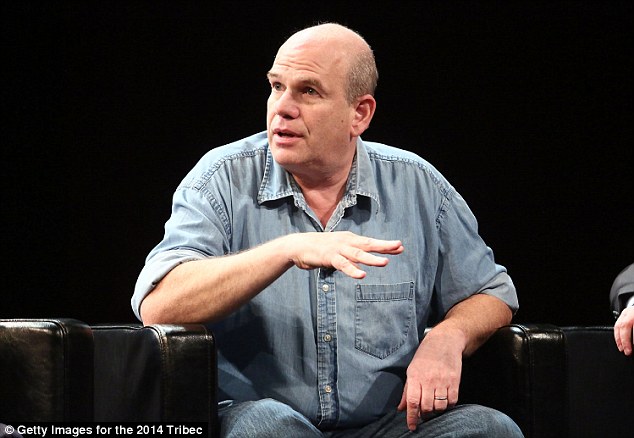
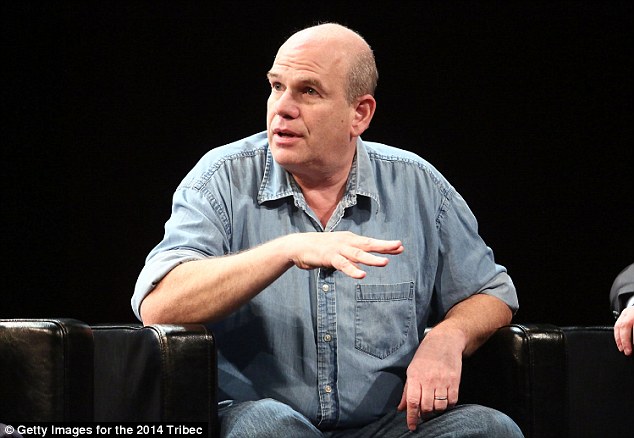
“The anger and the selfishness of the brutality of those claiming the right to violence in Freddie Gray’s name needs to cease,” said David Simon, creator of The Wire. 

4. “Designated protest-space” is an oxymoron. 

Let me count exactly how many of you there are so I can plan exactly how to erase you – don’t move.

5. The revolution will not only be realized through one-hundred and fifty character sentences.

6. The revolution will be realized on twitter and in protests and riots and speeches and community centres and cooperatives and within state institutions and on the lawns and in what companies grocery stores support and on our highways and ports and in the design of our video games.

Dwelling on the legitimacy of a method produces rust in the movement. People of all skills and activities come together to articulate the practical application of a question in different ways and none are less valid.

Divide and conquer is a tactic used to suppress dissent by wasting the valuable energy of people who believe in the same idea in fighting each other.

No protester should be told to go home and write because they are protesting the wrong way.

No tweeter should be told to go in the streets.

No writer should be told to go and cook for the movement.

No cook should be told to start designing posters.

No artist should be told to cook.

No politician should be told to write.

Past revolutions have been a product of many talents and types of people converging for a single goal. The diversity of their talents, physical and mental abilities, their interconnectedness, and their dispersion was necessary for the change.

7. The goal of the anti-oppressive revolution is to confront and radically change a fundamentally insecure system that requires dead bodies to show its supporters that it is doing something.

Y.jpeg

via ahscolwara

8. Focusing on the reaction of an attacked community rather than the act of their being attacked is a useful tactic to sidestep accountability.  

9. But non-violence is the only way, because MLK.

MLK, who was threatened by the FBI and then assassinated by the US Government (the Government was found guilty of conspiracy that resulted in his assassination)… that MLK?

“A riot is the language of the unheard.”

-Dr. Martin Luther King Jr. 

10. The narrative of ‘our city’ in talks against protests assumes the city was working well for everyone in the collective ‘our’ and not systemically destroying people. It reveals a care more for buildings than human beings. 

Awareness of social and economic inequality and the profit-driven push to incarcerate, murder, and erase entire groups of people is prompting a revolution, today.

Which role will you take?

11041415_10100902945837005_1626460717_n

art by Marcus Denomme & words by Liam Lachance, a writer at our upcoming live art event

Review: Justseeds Vernissage Confronts Injustice

support1

Justseeds’s artists Mary Tremonte & Jesse Purcell put up a wonderful exhibit last Friday – with Tremonte DJ-ing and Purcell showing off artwork from the thirty person collective, as part of the Howl! Arts FestivalJustseeds is a decentralized network of artists that produce pieces highlighting social, environmental and political injustices.

support

buy this print now by Jesse Purcell

One project, “Celebrate People’s History,” has been fifteen years in the making, and recognizes and commends ‘little people protesting big things’ through print art.

‘Big events’ include the Ejército Zapatista de Liberación Nacional (EZLN) in Chiapas, Mexico, protesting the American Free Trade Agreement in 1994, or the 2011 Wisconson protests that opposed the Wisconsin Budget Repair Bill.

02wisco_400.jpg


buy this print now by Sue Simensky Bietila

For those of you who missed Justseeds’s event last week, don’t worry! You can still check them out online at justseeds.org

Allison Kutcher, 28 Apr 2015

familyphoto2014.jpg

Support Word and Colour’s live art event!

Review: Howl! and CKUT host panel on austerity

image via Ecole De La Montagne Rouge

As part of the Howl Arts Collective Festival, CKUT FM invited four panelists to discuss artistic resistances to austerity in a live broadcast at Casa del Popolo. In discussing the relation between art and the movement against austerity in Montreal, the chief question was: What is the role of artists in the fight against austerity?

According to the panel – which included artists Edith Brunette and François Lemieux, graphic designer Kevin Yuen Kit Lo, and photojournalist Amru Salahuddien- artists have a choice: they can use their creativity to smooth over the bumps or they can reveal societal tensions through their creations.

However, if art can be used as a space where it is possible to dream, to envision a new future and to picture new social relations, then artists have not only the option, but the responsibility to define and depict an anti-oppressive future in order to raise awareness about austerity and engage discussion.

In addition to the discussion by the four panelists, La Chorale du Peuple, founded in 2011 during the occupation of Square Victoria, denounced neo-liberal policies and inequality through their songs: “Que la vie est belle” and “Ça fait rire les Libéraux.”

A problem underlined by Amru Salahuddien, an Egyptian photojournalist who was on the ground during the Egyptian uprising, was the lack of connections within the international anti-austerity movement. Though the fight against capitalism seems to be a fight that has a certain level of continuity across time and space, the lack of links, not only on an international level, but also within our own communities, has rendered the anti-austerity movement quasi-ineffective.

Salahuddien parallelled the Egyptian and Quebecois students, stating, “while in Egypt, bullets were used against the protesters, the weapon used by the government against Quebecois students was neglect.”

Despite the possibility of connections between these two groups of protesters, Salahuddien criticized the fact that very little support was given to either group by the other: that, though our world is said to be shrinking through technology and social media, there is little global awareness or concern for movements that do not affect us directly.

Concluding the discussion was a conversation about hope, where panelists suggested that if art is used as a tool in the fight against capitalism and the structures of power, it is because artists have hope for a better future, despite their use of seemingly sinister artistic tools, like irony or dystopia, in depicting their criticisms.

Thank you to Howl Arts Collective and to Casa del Popolo for hosting this interesting panel discussion- click here for more events happening this weekend!

Jiliane Golczyk, 23 Apr 2015, Montréal

On Beauty Standards: “Deep Hues and Curves”

untitled

“Deep Hues and Curves”

It was her thirteenth birthday and she’d asked for red lipstick, strapped heels, and an appointment to have her eyebrows waxed. We went to the mall together to try on dresses for the celebration. She wanted pale blue to match the balloons.

She picked one with a frill along the neckline that accentuated her small waist and cut off above the knee. She had flat-ironed her springy brown hair and twirled a smooth lock around her finger as she gazed at me from the floor of the changing room.

“This would look better on you,” she moaned.

I winced. What was unbelievably clear to me seemed positively inaccessible to Ella. How would she react if I told her she looked like Brooke Shields in the pale blue—smooth-skinned, perfect frame?

What I would give to look anything like that.

Instead I mustered a weak, “I like it.”

I saw a spectrum of colour in her eyes.

She shook her head and tossed the dress to the ground. We finally settled on a violet strapless cocktail dress that draped across her body regally.

I came over early to help set up. Her mother asked me to tie the knots as she inflated helium balloons. I watched Ella stride down the living room stairs in the purple dress, lips tinted bright red, eyes lined, she flashed me the kind of grin that said you’re in on the secret.

I smiled back, twisting the elastic of another balloon around a ribbon and letting it float to the ceiling.

How reassuring it must feel to be factory-made.

“Let me do your hair!” She sang, running her fingers through my messy blonde.

I followed her upstairs, where for a moment as she braided, I watched her lock eyes with herself in the mirror. The colour drained from her face and she looked away, turning back to me. “Will you help me go blonde?”

It was somewhat an absurd request, but one to which I was compelled to oblige. The title of best friend came with great levels of moral responsibility.

It was five and guests were supposed to arrive. Her mother was frosting the cake in the kitchen. It was chocolate, Ella’s favourite. She proceeded to dip a slim finger into the bowl of frosting, receiving a glare in return, and a harsh murmur of disapproval. Promptly, she ran her hand under the faucet, sugar dissolving in water, before turning back to me.

“She’s right,” Ella whispered.

I didn’t ask about what.

“I don’t need it.”

I found myself by her side for the remainder of the evening. It felt natural, shadowing her: my image of womanhood. She grasped my hand as she blew out her candles.

After her mother sliced the cake, I watched Ella stare at the plate placed in front of her. She prodded the chocolate with a fork, all the while inhaling the wafting smoke of blue striped candles. Not once did I see her lift the fork to her mouth.

word by Annie Rubin

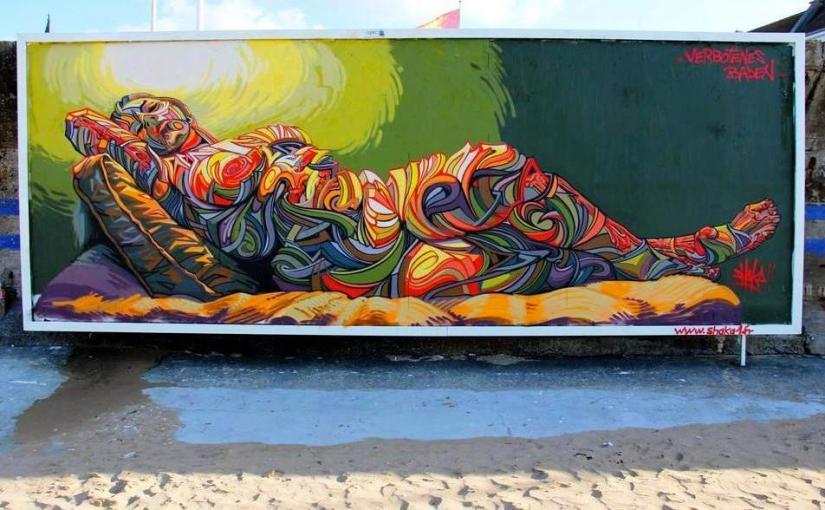
colour by SHAKA

From the author: “Adolescence is the time when our ideals of beauty are explored most thoroughly. As we grow, we learn about ourselves through our parents, our friends, and through what we see in the media.

Often, though, we are our own worst critics—what we see in the mirror is far more flawed than what our friends might see when they look at us.

Each of us are made up of many colours, and once we begin to accept our uniqueness, we can rest as confidently as this figure sprawled upon her couch.”

Support our live art event! 

Support our art event!

11182076_10100949515975075_8917371626465767779_n

Join the rest in helping our art event come true by visiting http://www.kisskissbankbank.com/en/projects/word-and-colour-s-live-art-exhibit/ !

On memory: “self and other”

image

Despondent at the sight of her, waxing caramel and silk, bruising blue from apathy. Who it is I am looking for in the shape of her, the curve and weight of her bones. The scrutiny of this survey has everything to do with consumption. Mass of flesh, scent of jasmine, soap, talcum powder.

I become suddenly thirsty and my legs fold in like a hand. From every angle calls some small adjustment, something not quite in place, not quite concealed. I remember the shirts I wore in highschool, carefully selected from your laundry pile and big enough for my body to move beneath them unnoticed.

Meanwhile she moved with such a lightness I had never been empty enough to feel, spread her toes across the bathroom counter smoothing lotion into her calves; she had six children for the institutions of God and marriage. What I saw for the sake of this story was the width of her waist on an inhale, saw her spinning across the living room floor. She praised my poetry then stopped calling altogether.

Of course I never expected she would, and this is not really about her, or the blue light of my new apartment where no one eats and everything is covered with a film of dust and the smell of smoke. I blink into the mirror and take a sip from a white, enamel cup stained with her lipstick. I know that I will see her in the kitchen and she will have cut her hair again. She will be quietly frantic, pouring cream in her coffee and letting the filter drip. The garbage can is full of dust and the ends of her cigarettes stained with lipstick.

If the weight of my bones were a little less dense. If I did not bruise under the touch of her fingertips. I could step into this room unfeeling, dressed in animal prints and steel, chewing a stick of gum.

word by Alisha Mascarenhas
colour by Gan Chin Lee 

Job opening: Head Of Colour

cropped-wqwww1.jpg

Job opening: Head of Colour

Word and Colour

Reports to Editor

The Art Director will curate the art for upcoming features at the magazine. After contacting artists, the Art Director will inform the Editor of upcoming features with all required information. Certain events in Montréal may require the attendance of the editor to represent our brand, and the Editor may also select artists to feature.

*An awareness or openness to social justice politics is essential as a representative of the Word and Colour brand. Word and Colour is a creative Non-Profit Organization of volunteers. This position will be paid when revenue streams are implemented according to workload, and requires minimal hours of commitment.

Our Ideal Candidate:

Reliable, organized, proactive

Education / Experience with visual art

Knowledge of social justice issues

Responsibilities:

Contacts artists for weekly features

Represents Word and Colour at art events

Responds to e-mail within the day

Is available for monthly meetings in Montréal


Please read over our mission statement before applying!

Application deadline:  Friday, May 1, 2015

Send CV to word@wordandcolour.com

On Consumption as Religion: “Print Nation”

7032525_orig

Print Nation

1

Oona was woken with a shove of the alarm. Thrust out from blissful nothingness through ever-lighter hoops, consciousness clicking its groove to bring a bleary world into focus. She passed the morning broadcaster in room 117B, tuning in to the daily download.

         … another day of fantastic performance with the corporation hitting total sales of 68 million yesterday – over target but as always, room for improvement…

Her crisp striped dress, fresh from the delivery draw, she filled her mind with the days work – excited as always.

          … and with 17 new opens yesterday and another 1300 upcoming until the end of this quarter we have plenty to get on with, it’s booming business as usual!’

Oona picked up the final piece of uniform, moved towards the sink; once again it captured her attention.

2

She observed the tiny dark red patch amongst otherwise perfect chrome tubing. The tiny rust that had evolved into a tiny leak with a tiny drip. The tiny puddle in the nook of the room.

“Did you find it?” said her sister.

Greta’s mousey brown eyes, squared and neat, glimmered like fish scales under the mirror light.

“Oona, you have to promise me this will be just ours. A bond between two chamber sisters.”

Oona knew that when she had to pray at day recap to MOD that evening, the Almighty One would know this memory.

“Block this out at prayer, it’s possible, I’ve done it.”

Greta’s fingers dove into the crack in the concrete where the puddle had been building, tearing out a piece. She scraped the dust away gently so they could see it.

 3

 Small green straw with two small green spoons.

“Oona Forty-Three of Chamber 117B, do you know what this is? This is what the Customers call, a plant.”

 4

The buzzer sounded for check-in. Greta covered up the corner with the dust then concrete and they grabbed their headphones before walking out the chamber.

The morning download finished.

        …And remember folks, one day we will get to the Golden Gates and that day we will all be rewarded by MOD.

Briskly they headed out before parting ways –Greta assigned to Food Print and Oona to Physical Server.

The shutters pulled up and in walked the first of the days Customers.

“Welcome to McDonalds, how can I help?”

word by Sam Fresco

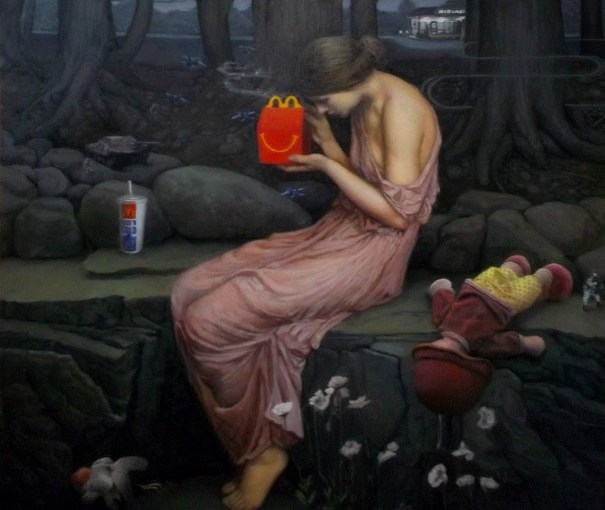
From the author: “Once I received this image, I looked up some facts on McDonalds and was stunned to find the following:

  • McDonald’s feeds 68 million people per day – about 1 percent of the world’s population (and more than the population of the UK; twice the amount of Canada)
  • 1 in every 8 Americans has worked in a McDonald’s
  • McDonald’s’ $27 billion in revenue makes it the 90th-largest economy in the world.
  • On average, McDonald’s opens a new branch every 14.5 hours
  • A recent study by Scholosser (2002) found that the Golden Arch’s were more recognizable than the cross

So it got me thinking: what if it printed food took it one step further and printed its staff? In that case, where’s the line between a corporation and a religion- a CEO and a God?

colour by Kojiro Ankan Takakuwa

On Family: “Bug”

152251_orig (1)

Bug

when Benny was 1 and I was 7, I took him down to the park near our place on the lane named after Shakespeare

he’d been at the pool with Mum all morning, tucked behind the blue walls on Alexandra Parade, and his tuft of soft hair was still wet

he nestled into my arm as we walked along the cooking bitumen, and when I crooked my arm to let him in, he cooed like a bird would, if a bird was Benny

at the park I climbed us up the ladder of the slide and put his bum on the cool grey top of it

he giggled as I backed down the rungs one by one and as I walked away from him and the slide and the sand and the dog poo, I felt my heart get bigger slowly like a blowing up balloon

my heart kept getting bigger and bigger as I walked down the street towards the milk bar, and as I was paying for my lemonade icy-pole it burst

Benny was wailing when I got back

I told him I’d just gone to get us an icy pole and he didn’t have to be sad

he was choking on his tears but then the tears slowed to hiccups and then the hiccups slowed to snot and I told him he’d crawled into my heart like a funny little bug, and it was just as well you can’t spray bug-spray near your heart

word by Laura McPhee-Browne

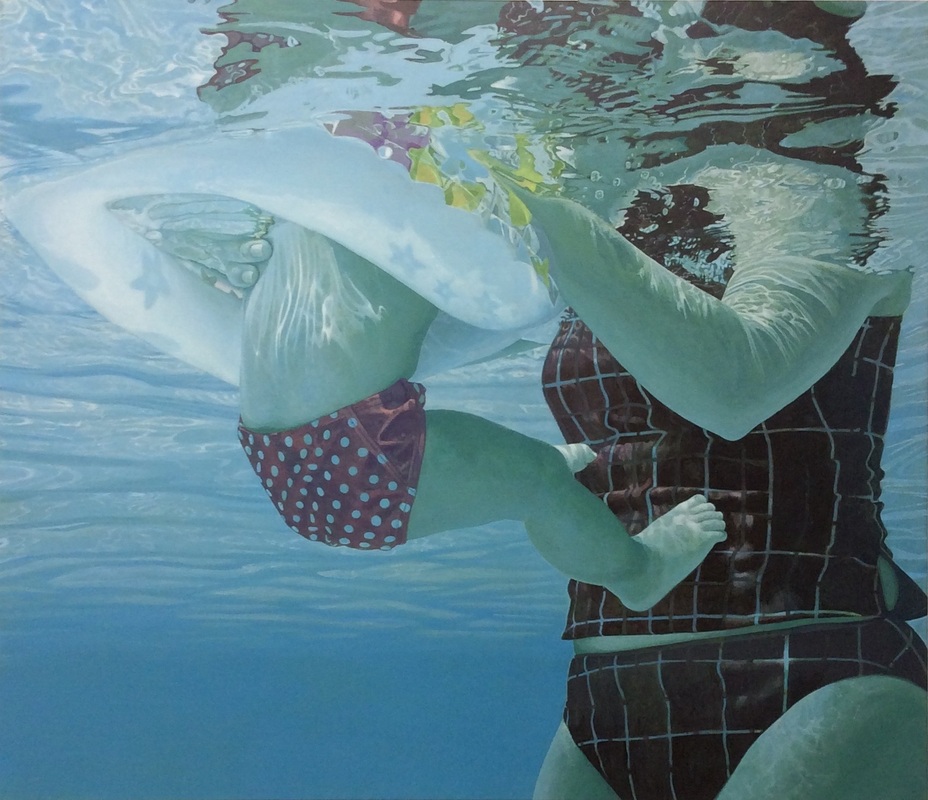
“This painting is beautiful, and reminded me of familial love. 

It reminded about how it for me was when my brother was a baby, and how older siblings often experience a cacophony of emotions when they are confronted with siblings, emotions that are strong and fierce and both negative and positive.” 

colour by Kojiro Ankan Takakuwa

On Masculinity: “Her lipstick”

10675542_10205668266971916_2726513934329467292_n

Content Warning: misogyny, violence

“She looks like a whore,” I say, covering my mouth with my hand in case the lady can read lips. I lean back against the wall, hiding my unlit cig behind me.

“It’s her lipstick,” says Danny. “Nobody’s wife wears that colour lipstick. It makes her mouth look like a pussy.”

Danny pulls a cig out of his pocket and lights it right there in front of the lady sitting in the car. He doesn’t care who sees him. Danny takes another cig out of his pocket and hands it to Albert, who’s sitting on the curb. Albert is my little brother. He’s in a school for kids who are slow because he doesn’t know how to read. Danny hands Albert his naked lady zippo and Albert lights up, just like Danny.

Albert holds the zippo out to me, looking at me like I’m a pussy.

The alley behind the gas station is where we always come to smoke. Danny steals cigs from the bag his dad keeps in the freezer. We come here because there’s never anyone here, but today there was the lady in the car. She’s just sitting in the passenger seat staring out the side window. I’ve never smoked in front of someone older than me before.
“She doesn’t give a shit, Thomas,” Danny says. He says it like he doesn’t want me to embarrass him. He waves at the lady but she doesn’t move; she just keeps staring, looking past us at the wall, maybe even past the wall.

“I know,” I say. I take the zippo from Albert but I leave the cig behind my back. Danny’s zippo has a hula dancer on it and when you flick the cap open her head comes off. Mine just has my grandad’s initials on it.

“She looks kinda like Ms. Glover,” Danny says. “Ms. Glover was a babe. Remember last year when she left school and Mr. Plummer got arrested?”

Everyone remembers when Ms. Glover left school. The lady in the car does look like Ms. Glover, except for the lipstick.

I take the cig out from behind my back and flick off the hula girl’s head. I run it along my jeans and it lights the first time. When I was 10 like Albert, I thought you were supposed to swallow the smoke and I’d cough every time, but I’m better at it now. I was scared of sea monsters and boogeymen; I was scared of the dark. Now that I’m 12, I’m not afraid of anything.

Albert flicks his cig out into the alley. “She’s trying not to cry,” he says.

word by Leah Mol

colour by Luis Sipion

From the author: “Youth is a time of naked tribalism, a time when language and behaviours stand as shibboleths. In this story, boys are pretending to be men in order to fit in, but they believe part of being a man is oppressing others. Thomas doesn’t want the lady to see him use the word whore, but he also doesn’t understand the weight that word carries with it. Danny brings up Ms. Glover and hints at the reason she left school, but they don’t explore the importance of that.

This story is about fear and reactions to fear. Fears of children vs. fears of adults. Fears of women vs. fears of men. Fears of imagined monsters, of not fitting in, of getting caught somewhere you shouldn’t be. And fears of the very real monsters that make people cry every day.”