A reminder: your fate is permeable

back_03

The only time I ever took a pregnancy test I was eighteen years old and living with my boyfriend in a stranger’s apartment in Prague. We spent the days wandering and the nights drinking quietly, not knowing what or how to cook.


I curl into the kitchen windowsill smoking what might be my last cigarette, and silently contemplate this bleak fate. He slouches on the bed twirling the butterfly knife bought that afternoon despite my un-nuanced anti-violence politics. Or maybe I just couldn’t support violence for the sake of masculine amusement.


The kitchen table is draped in pink blossoming polyester flowers and the fridge is mostly empty. I swallow, and clutch to the unfinished sketches of my life, slipping. It is a small kitchen, badly lit and the night sky drops away from my body.


On a walk with mother, she told me that having children doesn’t necessarily equate to happiness. They did a study, she told me. On happiness. Together we unravelled the assumed inevitability that one day, you’ll see, it will just happen. Bam. Motherhood. And eventually you’ll even learn to like it.


Still I shrink away from the word, hold close and fast to the solitude, the silence, the ability to switch apartments seven times in four years.


Even without the study, her words sucked me out of the story. At least far enough away to bring it into focus. Socialization never amounted to fate in any mystical sense of the word. My anatomy does not presume that I was made for this, and mothering, just like any other job, must be knowingly consented to.


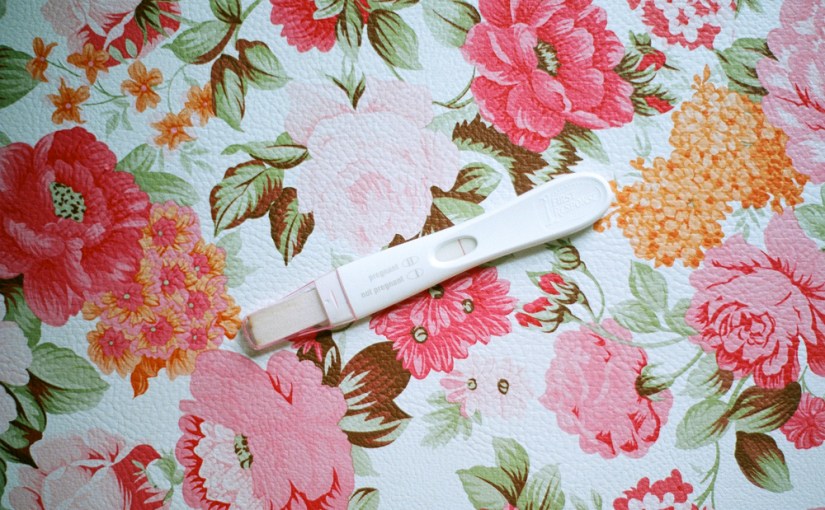
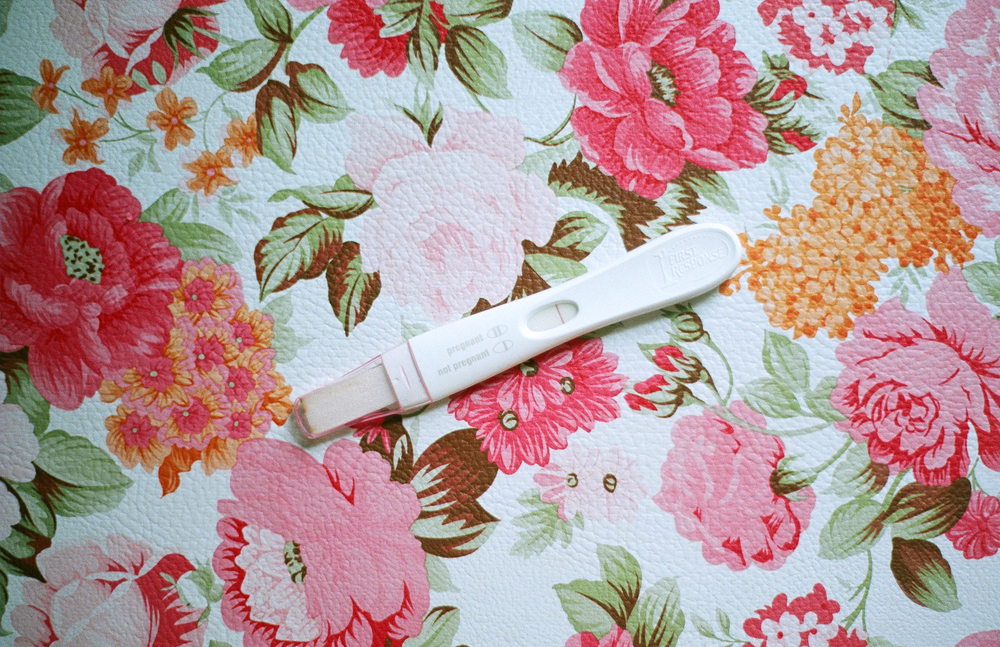
There I was: eighteen, tender and bitter with my un-nuanced anti-violence politics, licking childhood wounds and refusing fate. That small pink bar. I taped it to the wall along with the blossoming table cloth.


word by Alisha Mascarenhas 

“I thought about all of the babies in strollers I’ve walked past this week, and about the persistent disjuncture that often presents itself between what we need and what we are told that we need. I thought of how socialization of femininity is made real through direct transmission from those who impress upon our minds most legibly, and how necessary that there are alternative narratives offered to us in these moments. I thought of the economics behind the inevitability of motherhood, and the threatening possibilities that can surface when what appears fated is pulled apart, set aside and seen through.”

colour by Fannie Gadouas

“I am an interdisciplinary artist working with photography, fiber arts and performance. My work explores issues pertaining to feminine, identity and experience. By re-appropriating various traditional imagery, techniques and rituals, I question and challenge the way gendered identity is constructed, inherited and perceived in western society. Textiles is, and has traditionally been associated with the feminine realm. Critically engaging with techniques such as weaving, knitting and embroidery allows me to subvert and question my own role as both woman and artist. In this sense, my practice as a whole becomes a performance in which the process holds more relevance than the resulting objects. Informed and greatly influenced by feminist theory, the work I produce is a critical response to the social structure of western society.”
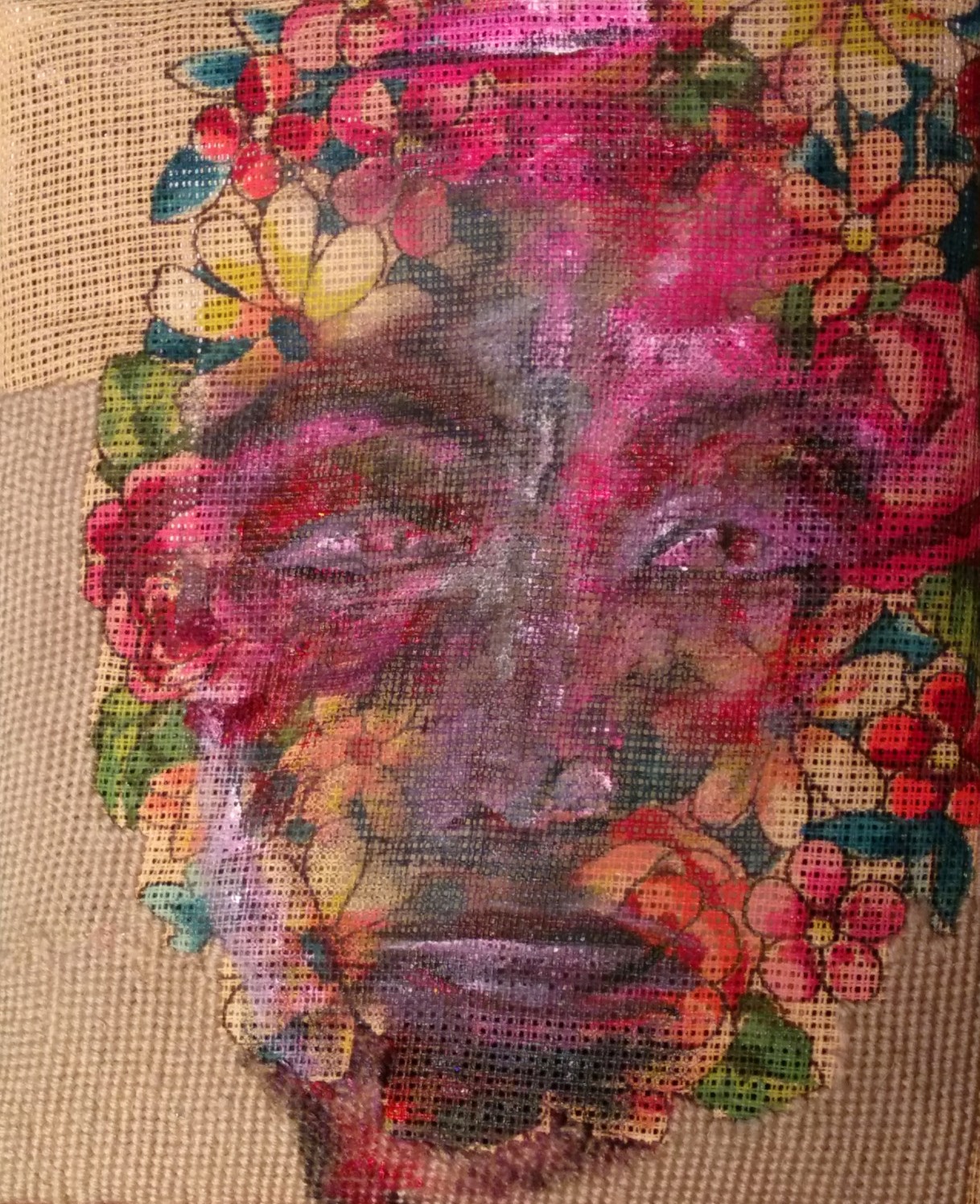
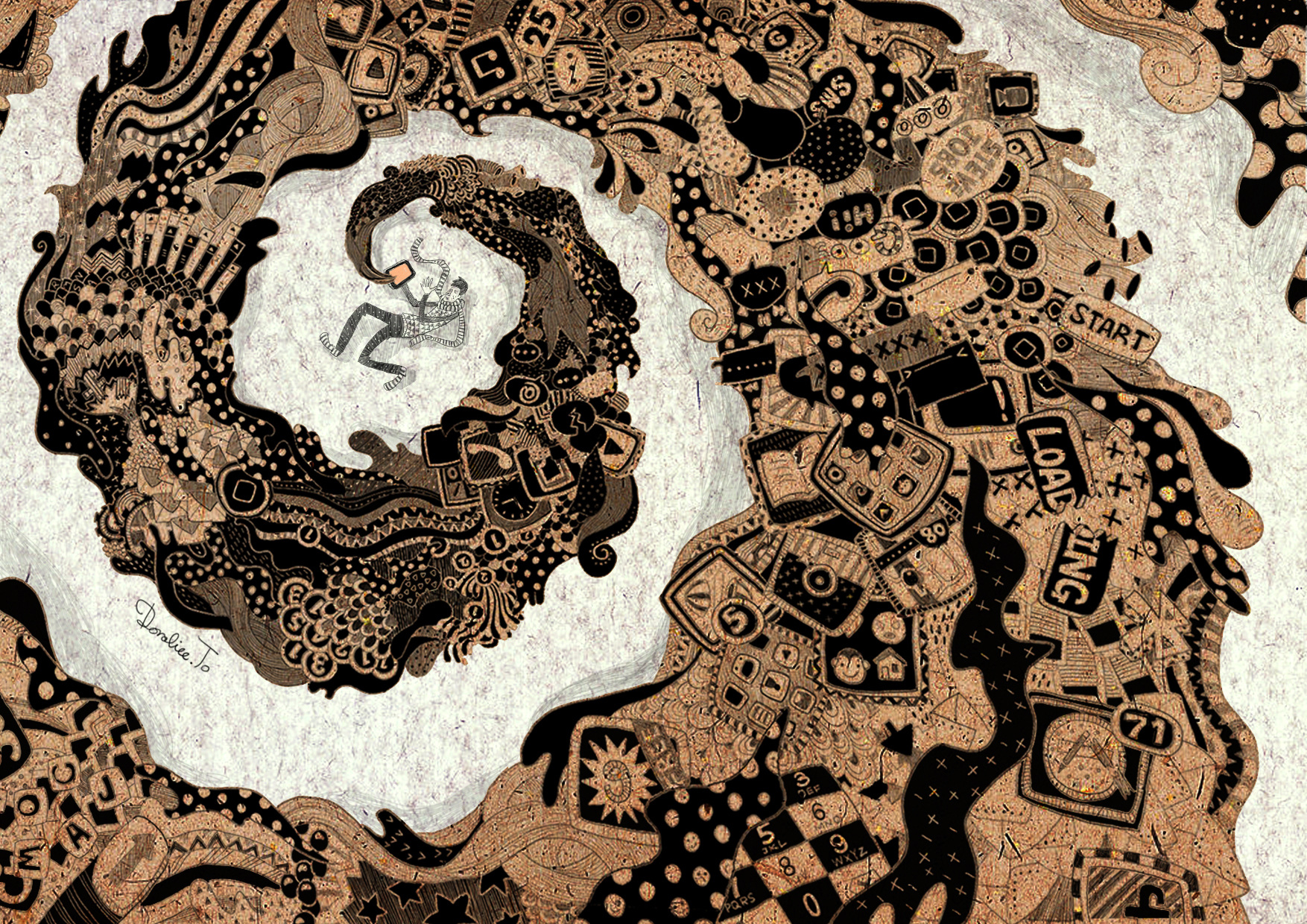
On Death and Instagram: “The Right Filter For My Memory”

nadoune 3
My eyes raced to skim over the part of the text that was relevant to our current conversation in hopes of catching on to the gist of what was being discussed. Of course I was finding it impossible to formulate anything barely intelligent to contribute. As per the usual, and despite his general lack of insight, Micah’s hand bolted sky high. In a seminar of 11 graduate students he had somehow consistently missed all of the social and visual cues and extended his unusually long arm, fingers arrow straight towards the ceiling, as though he would combust if he could not speak.
 Death and Instagram
Dr. Meyer glanced at her watch and subtly but expertly waved Micah’s hand down, squinting her eyes and pursing her lips as if to say in that one brief facial expression.
Death and Instagram
“I know, we’ve run of out of time, I’m so sorry we’ll miss your gems of wisdom.”
Death and Instagram
Micah’s hand returned to the table and he nodded his head as if to respond, “You’re too right, I need more time to explain my genius to these folks.”
 
Before letting us go, she concluded: “In the corners of my mind are memories, deep in the archives, rarely if ever recalled. The truth is you have to train yourself in the art of that kind of excavation and it is work. You can easily rest your laurels on those moments prompted by a photo that has been sat in a dusty frame for eons, you can access it so readily that you begin to conflate the image for the history of the thing. Do you remember being there? What did you wear? How did you feel? You’re all so busy capturing the moment that you miss it. Do you remembering being there? Or texting, staring into your phone, applying filters? Do you remember being there?”
Death and Instagram
I chuckled thinking to myself. What does this old lady know about Instagram? Dr. Meyer was 68. Her probing questions anchored deep and roused me. I had covered over the covering over, forgotten what I had forgot, and there was a persistent gnawing, a dull reminiscent ache: the photos only captured so much, there were too few of them to ever imply an iota of the significance of your time and place here with me.
Death and Instagram
I don’t know when I lost you, really. Maybe it was when you moved, or maybe when you lost your leg; you had already begun to slip away. I couldn’t grasp your death until I saw you go into the ground.
Death and Instagram
Every now and then your face surfaces above the mossy mist. Your milk carton full of buttons had a very particular acrid smell, and the touch of your soft wrinkly skin felt like pure love; sewing needles kept in plastic film canisters and the fans you took to church. You are not far – I see you.

colour by Nadine Doune 

“Nadine est née à Montréal, d’une famille venant de s’installer d’Algérie. Elle grandit dans l’école buissonnière, une école dédiée à l’apprentissage par l’art. La musique et le visuel sont toujours présents dans sa vie, dès qu’elle le peut elle voyage avec son violon et ses poèmes/dessins au Mexique, dans l’ouest Canadien, et aux États-Unis où elle s’y installe un an. C’est une autodidacte qui apprend par les expériences, la rue est son terrain de jeu et où elle est le plus inspirée. Elle essaye de rendre la connaissance accessible en donnant plusieurs ateliers (notamment dans une coopérative d’art communautaire nommé le Milieu qu’elle essaye d’aider à bâtir). Elle est intervenante sociale, vend des popsicles artisanaux, et travaille présentement sur un projet de prise de parole chez les femmes immigrantes.”

“Nadine was born in Montréal to a family who arrived from Algeria. She grew up in the Buissonière School, where learning is achieved through art. Music and aesthetics are always present in her life, as she travels with her violin, her poems, and her drawings to Mexico, to Western Canada, and to the United States, punctually for years. The street and her experiences are her main sources of inspiration. She works to make education and art accessible by giving workshops – notably in Le Milieu, a community art cooperative that she’s involve in. She is currently working on a project that centers on the voices of immigrant women.”

On Self-Doubt: “Weather”

unnamed

It’s been raining for days. The girl has just been feeling like rain lately. She’s not sure when it’ll stop, but she knows it can’t go on forever.

            She sits in the waiting room of the office and thinks about how boring it all is. The same magazines as always, the same water cooler across the room, the same assistant answering phone calls and shuffling papers.

            The doctor comes into the waiting room and says the girl’s name. He holds the door to his office open for her, and she gets up slowly, walks toward him past the painting of a horse, past the painting of a whale. When they’re both in the office, he closes the door behind them.

            “So,” he says, “how are we feeling today?”

            “How do you think?” she asks.

            “I thought we were past this.”

            “Apparently not.” The girl sits in the uncomfortable chair she always sits in. The doctor sits in the more comfortable chair, takes the lid of his pen off with his teeth. The girl leans back.

            There’s the sound of thunder and the doctor looks out the window.

            She saw the first doctor when she was eight. He called her problem an Extreme Emotional Response to Weather Patterns, but even then she knew it didn’t explain anything. What was inside her head matched the weather before she ever saw the rain or the sun or the tornado. She could always feel the truth of it.

            “What is good or bad weather anyway?” the doctor asks. She can tell he’s frustrated with her. They always get frustrated eventually. She gives this one another two weeks. “If you’d been feeling great for a month, say, so we desperately need rain, shouldn’t it rain then even if you’re feeling great, since rain would be the great weather?”

            “I don’t make the rules,” the girl says, crossing her arms.

            “Let’s try a visualization exercise.”

The girl knows how this goes; she closes her eyes.

            The doctor speaks slowly, confidently. “Think of a forest. You’re deep in the forest. So deep that nothing can come through the trees. It’s very, very dark. You’re feeling angry today, so let yourself really feel that. Stay there for a minute.

            “Now I want you to start walking. You’re walking through the forest and you come to a clearing, and the first thing you notice is that it’s sunny. You can smell it and feel it as you come to the clearing.”

            The girl feels her anger and she feels the sun on her shoulders and she opens her eyes.

            The doctor pulls his sweater a little tighter around his body.

            “It’s only going to get colder,” she says.

word by Leah Mol 

“The artwork reminded me so much of those moments when a storm is just beginning or just ending. My story is about a link between weather and emotion in the mind of a girl who nobody believes. She is, after years of trusting her own instincts, finally feeling the self-doubt creeping in, which could be the ending or just the beginning of the storm.”

colour by Nadoune Doune 

“Nadine est née à Montréal, d’une famille venant de s’installer d’Algérie. Elle grandit dans l’école buissonnière, une école dédiée à l’apprentissage par l’art. La musique et le visuel sont toujours présents dans sa vie, dès qu’elle le peut elle voyage avec son violon et ses poèmes/dessins au Mexique, dans l’ouest Canadien, et aux États-Unis où elle s’y installe un an. C’est une autodidacte qui apprend par les expériences, la rue est son terrain de jeu et où elle est le plus inspirée. Elle essaye de rendre la connaissance accessible en donnant plusieurs ateliers (notamment dans une coopérative d’art communautaire nommé le Milieu qu’elle essaye d’aider à bâtir). Elle est intervenante sociale, vend des popsicles artisanaux, et travaille présentement sur un projet de prise de parole chez les femmes immigrantes.”

“Nadine was born in Montréal to a family who arrived from Algeria. She grew up in the Buissonière School, where learning is achieved through art. Music and aesthetics are always present in her life, as she travels with her violin, her poems, and her drawings to Mexico, to Western Canada, and to the United States, punctually for years. The street and her experiences are her main sources of inspiration. She works to make education and art accessible by giving workshops – notably in Le Milieu, a community art cooperative that she’s involve in. She is currently working on a project that centers on the voices of immigrant women.”

Issue 225: “At Daybreak”

For Jennifer 3 (1)

There is a room in the red house up the block that lets sound neither escape nor enter.  Its floor-to-ceiling window faces East.  The other walls are bare.  In the center of the room stands a canvassed easel off of which loosely hang a palette and brush.  But there are no colors to paint with.

At dawn, the woman who lives in the red house goes to the room and locks the door behind her.  She takes the palette and brush and settles in front of the canvas in a painterly posture.  The brow of the sun emerges from behind the buildings opposite her house.  The sun washes the room in the same hue as scrambled eggs.  She does not speak as she studies the canvas or the landscape in front of her.  She searches them with the intensity of one who is trying to pop her own pimples.

Her stomach’s growl sounds like someone squeezing an empty bottle of ketchup.  Every wall is a window.  The suck-suck of her heartbeat fills the room.  The woman dabs at the empty palette with the dry brush, which she holds the way you might imagine holding a wand.

The sun still rises. She runs the brush over the surface of the palette several times.  An inflating lung sounds like the hush when you go from out to inside a tunnel.   Her control of the brush for all intents and purposes seems limited to Mr. Miyagi’s recommendation to ‘paint the fence.’  The bristles on the brush appear frayed from overuse.  She has been doing this for a while.  Alive, she restores the palette and brush and leans on the wall adjacent to the window.

In this room, she is sound.

A crowd of boys on the street below walks hunched together.  One of them holds a baseball.  They can’t be older than fourteen.  The woman in the room smiles down on them as if they were her own children.  Her grin reveals that her 9th and 10th teeth have been badly broken.  The boys down below look up at her and mock her.  They pretend to paint.  The boys, they have all seen her before.  The woman’s expression, though, remains.

Her ears ring painfully as the glass shatters.  The room gasps for sound as would someone for air.  The baseball rolls across the ground and stops by the base of the easel.  The boys below laugh and walk away triumphantly.  The woman does not say anything but she has stopped smiling.  Their laughter hurts the way it hurts to have a snowball fight barehanded.  The woman wonders why they threw the ball through her window.  She spends the remainder of the morning picking up the glass shards and putting them in a recycling bag.

I wonder if she is a sad woman.

word by Jacob Goldberg

“The artwork that goes along with this painting gave me pause about how I can let technology control my life and consequently, forget to maintain focus and care about on what’s going on around me and inside me.  The woman in this story fights that as she is disciplined and compassionate – she just gets picked on for being different.” 

colour by Yukai Du, an illustrator and animator from Guangzhou, China, currently based in London.

“In 2012 I finished my BA Animation degree in Guangzhou Academy of Fine Arts, China.
‘Musical Chairs’ was my BA final project, also my first animation film.

Two years later I have received my MA degree in Central Saint Martins College in London.
I focused on research skills during my first year study in MA Communication Design
and then transferred to MA Animation in the second year for a more practical project ‘ Way Out’ – my second animation film.
Meanwhile, I have also been working as designer and animator in M-I-E studio, London.”

On memory: “self and other”

image

Despondent at the sight of her, waxing caramel and silk, bruising blue from apathy. Who it is I am looking for in the shape of her, the curve and weight of her bones. The scrutiny of this survey has everything to do with consumption. Mass of flesh, scent of jasmine, soap, talcum powder.

I become suddenly thirsty and my legs fold in like a hand. From every angle calls some small adjustment, something not quite in place, not quite concealed. I remember the shirts I wore in highschool, carefully selected from your laundry pile and big enough for my body to move beneath them unnoticed.

Meanwhile she moved with such a lightness I had never been empty enough to feel, spread her toes across the bathroom counter smoothing lotion into her calves; she had six children for the institutions of God and marriage. What I saw for the sake of this story was the width of her waist on an inhale, saw her spinning across the living room floor. She praised my poetry then stopped calling altogether.

Of course I never expected she would, and this is not really about her, or the blue light of my new apartment where no one eats and everything is covered with a film of dust and the smell of smoke. I blink into the mirror and take a sip from a white, enamel cup stained with her lipstick. I know that I will see her in the kitchen and she will have cut her hair again. She will be quietly frantic, pouring cream in her coffee and letting the filter drip. The garbage can is full of dust and the ends of her cigarettes stained with lipstick.

If the weight of my bones were a little less dense. If I did not bruise under the touch of her fingertips. I could step into this room unfeeling, dressed in animal prints and steel, chewing a stick of gum.

word by Alisha Mascarenhas
colour by Gan Chin Lee 

On Consumption as Religion: “Print Nation”

7032525_orig

Print Nation

1

Oona was woken with a shove of the alarm. Thrust out from blissful nothingness through ever-lighter hoops, consciousness clicking its groove to bring a bleary world into focus. She passed the morning broadcaster in room 117B, tuning in to the daily download.

         … another day of fantastic performance with the corporation hitting total sales of 68 million yesterday – over target but as always, room for improvement…

Her crisp striped dress, fresh from the delivery draw, she filled her mind with the days work – excited as always.

          … and with 17 new opens yesterday and another 1300 upcoming until the end of this quarter we have plenty to get on with, it’s booming business as usual!’

Oona picked up the final piece of uniform, moved towards the sink; once again it captured her attention.

2

She observed the tiny dark red patch amongst otherwise perfect chrome tubing. The tiny rust that had evolved into a tiny leak with a tiny drip. The tiny puddle in the nook of the room.

“Did you find it?” said her sister.

Greta’s mousey brown eyes, squared and neat, glimmered like fish scales under the mirror light.

“Oona, you have to promise me this will be just ours. A bond between two chamber sisters.”

Oona knew that when she had to pray at day recap to MOD that evening, the Almighty One would know this memory.

“Block this out at prayer, it’s possible, I’ve done it.”

Greta’s fingers dove into the crack in the concrete where the puddle had been building, tearing out a piece. She scraped the dust away gently so they could see it.

 3

 Small green straw with two small green spoons.

“Oona Forty-Three of Chamber 117B, do you know what this is? This is what the Customers call, a plant.”

 4

The buzzer sounded for check-in. Greta covered up the corner with the dust then concrete and they grabbed their headphones before walking out the chamber.

The morning download finished.

        …And remember folks, one day we will get to the Golden Gates and that day we will all be rewarded by MOD.

Briskly they headed out before parting ways –Greta assigned to Food Print and Oona to Physical Server.

The shutters pulled up and in walked the first of the days Customers.

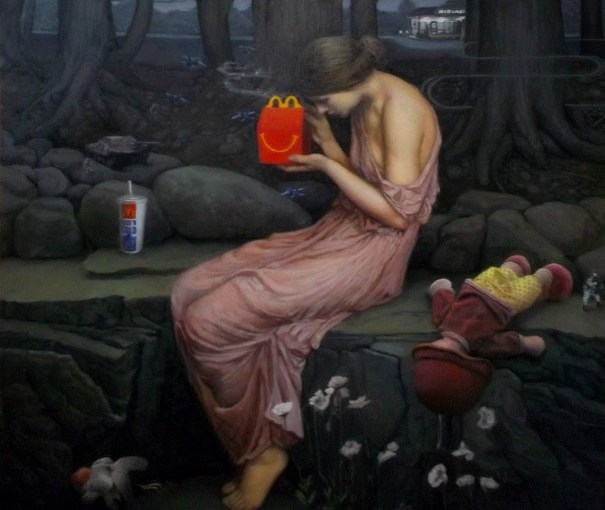
“Welcome to McDonalds, how can I help?”

word by Sam Fresco

From the author: “Once I received this image, I looked up some facts on McDonalds and was stunned to find the following:

  • McDonald’s feeds 68 million people per day – about 1 percent of the world’s population (and more than the population of the UK; twice the amount of Canada)
  • 1 in every 8 Americans has worked in a McDonald’s
  • McDonald’s’ $27 billion in revenue makes it the 90th-largest economy in the world.
  • On average, McDonald’s opens a new branch every 14.5 hours
  • A recent study by Scholosser (2002) found that the Golden Arch’s were more recognizable than the cross

So it got me thinking: what if it printed food took it one step further and printed its staff? In that case, where’s the line between a corporation and a religion- a CEO and a God?

colour by Kojiro Ankan Takakuwa

On Body Image and Norms

untitled“The little skeleton girl”

She was born without flesh.

It was just one of those things that happened sometimes: there was nothing anyone could have done about it and it was a blessing that it hadn’t been worse.

Her mother sat her down the day before the first day of school, tickled each vertebra in her back and said, “You have a spine.”

She knocked her knee caps and said, “You have good, strong legs.”

She stroked the underside of the girl’s flappy, yappy jaw and said, “You have a mouth, and a heart and a brain. You’ll be just fine.”

The little girl was late to school because a small, straw-y twig got stuck in her rib cage and it tripped her up. All the other kids knew each other already.

The girl had a crush on someone. She asked him to be her boyfriend. He held out his hand in her face and she didn’t know what it meant so she grabbed it with her bony claws and kissed it with her lips that weren’t lips. She felt something go from his palm to her mouth and it dodged past her vigilant tongue and slithered down, down, down into her stomach where it sat like a thumbtack in an airless balloon. He had shoved a tiny stone into her mouth to see if it would break her bones and though it was the most that anyone had ever hurt her, she did not cry but rather looked at the boy with a look of understanding that said that she saw that it was the worst thing he would ever do and that it would haunt him always and be the last thing he thought of before he fell asleep for a long time. Maybe it hadn’t been true before , but that look scared him so much that after it, the boy never did do anything worse, even when he was a man and there were many things he could have done.

The little skeleton girl, though, was pretty much done with the world after that, and she retreated to her room, where she wrote very very sad poems that hardly anyone understood. She did that for nearly the rest of her life.

word by Charlotte Joyce Kidd

colour by Andy Rofles

taking control of the layers

untitled

Dissension oozed thick, coloured with every shade of emotion; everyone could see that she was loosing form. The angles and contours of her performance were obscured – all precision to the approach had been abandoned. All that was left was a covering-over of that which was covered-over. Her sharp words now muffled and barely audible over the noise of what could be clearly seen as an implosion come undone.

I closed my eyes and put my fingers to my temples and awaited the barrier of silence I had built in my mind to be shattered by the sound of her cries. As her father I had become accustomed to reading the signs and positioning myself to be at the ready should she need me. I primped and prepped and practiced alongside her, but once she stepped out on that stage she was entirely on her own. And here she was, melting into a puddle of pastel-coloured mess, centre-stage, harsh lights ablaze. I sensed amusement on the lips of those around me, and full-bellied brawling laughter was just moments away. I sensed the horror on the faces of the four perfectly coiffed has-beens who spent their every weekend judging the misguided proclivities of young girls whose burgeoning self-worth would be inextricably tied to their looks.

I prepared myself for the unwonted stares, pitiful glances and murmurs of judgment but instead as I made my way towards the stage I found an impressive showing of ingenuity. In what appeared to be the beginning stages of a meltdown, profuse dissension had resolved itself into abundant honesty, a truth so pure that it lacked its typical bite.

Inside the dingy low-budget hotel conference room, in front of pageant parents, child contestants and jaded judges, Noelle begun to confidently rip long pieces of fabric off her dress, and stick them into the spaces between her still first set of teeth. She took the heels of her palms and expertly smeared eye make-up down her face. She ripped her tights, undid her hair and ran around the stage fully committed to portraying the mythical creature in her favourite bedtime tale. In one beautiful act of childhood defiance, Noelle played and pretended, sang and cooed, delivering gibberish prose with Shakespearian gravitas. Laughter escaped the tightly pursed and botoxed lips of the former beauty queen judges and childhood chatter echoed off the walls and lurid drapes.

I was once beyond resentful of spending my every other weekend with the insipid pageant folks, practicing routines and applying fake lashes, but that was all that I could get, so I took it. And Noelle was a wonder on that stage, consistently low-scoring but persistent. And after years of attempted conformity an apparent meltdown unleashed a cacophony of colour and sound, my beautiful girl.

word by Cora-Lee Conway

colour by Zutto

From the author: “A thick, sweet, melt like a human ice cream cone; I kept thinking about the upside to a meltdown… Perhaps also inspired by my location as I write this sitting on the beach in Cuba, melting in the best way.”

zuttto

zuttto33

Ken

floating-away_650 (1)

Ken and Mavis lived at number 9 Flosstooth Avenue. Ken loved Mavis like a dog loves its favourite bone—he would chew on her every now and then to remind himself what true gristle could taste like, but then he would bury her, and all that she meant, and would wait for weeks or months until he dug her up to gnaw at her all over again. That way it was special, and that way Ken knew he would never get bored of his favourite bone. Mavis didn’t like being gnawed at every few months; she told him just before she asked him to leave that she expected constant gnawing. He hadn’t realised that, and offered to never bury her again, but by then it was far too late.

The summer before the end, the neighbours on the side with the dead rose bush that looked like a mutant spider moved out. A few weeks later a dual-cab UTE was parked in the driveway when Ken got home from work, and after some careful investigating from the kitchen window through Mavis’s homemade gauze curtains, Ken gathered that their new neighbour had moved in, and that he was a tall, broad-chested man, with the necessary bulges to wear only a singlet as he loped from his UTE to the door with boxes and bags. Ken saw that the man with the necessary bulges had two lean and hefty dogs. Ken was terrified of dogs, ever since he had been chased by a pack of gnashing greyhounds up and over the slide in the playground one afternoon when his father had forgotten to pick him up from school. He felt trapped in the house, and told Mavis about it when she came home weary from the salon, but she didn’t seem to be listening, and just stood and watched out the window until the sun went down and there was nothing to see anymore.

A couple of months later on a Friday Ken decided to leave work early. He arrived home to see that Mavis was already there, and though he called out for her in every room in the house but he couldn’t find her. Mavis didn’t like to walk anywhere; if her car was there, she had to be too. Ken poured the tap for the kettle and as he poured he looked through the gauze straight into the man with the bulges’ living room. There he saw Mavis, completely naked and dancing around the room with the man with the necessary bulges.

Ken hadn’t wanted to leave, even after watching Mavis and the man with the bulges in a variety of positions all over the living room that made him begin to sweat under his arms and in between his elbow creases. When she came home that night, crumpled and smelling of dog food, he had offered to stay in the spare bedroom. That she simply agreed, and didn’t seem to need to ask him why, told Ken that he would never unearth his favourite bone again.

word by Laura Mcphee-Browne

colour by Ilya Shipkin

From the author: “When I first saw this illustration by Ilya Shkipin, I saw the man and the dogs he was feeding as dangerous, as hostile. As I came back to look at the illustration again and again, I began to feel that there was a special relationship between the man and the dogs; that they knew each other well, and perhaps looked after each other.

My story, ‘Ken’ is about a man who does not feel comfortable in his own skin like the man in this illustration surely does. It is about the threat that confidence and mystery can be to a flailing relationship.”

my atlas

2 - Leah

I have to confess to being an absolute intolerable lay-about for the past twelve weeks. Never before has so many eggs on toast been consecutively imbibed. But after week twelve, something changed. You see, I began being able to read the brightness of other people’s souls.

Now – bear with.

I would never lie to you, my reader. A few nights ago, I was watching the box and I could see and feel the density and energy in the souls on screen, you see.

Imagine a sort of X-ray sense, an unlocked potential from partially losing my vision. Not better hearing but a heightened instinct for character.

Quite quickly I’m proud to say I started spotting a pattern. It wasn’t to do with how ‘famous’ or how ‘good’ humans they were, nothing as crude as that, it was to do with their real actions in our little society, you see: watching the whitest ones shine darkest.

The real problem whirs in our nightmarish collective of unhappiness and inequality… while the rich get richer, they stamp up the prices of opportunity and education. Meritocracy?

Bullshit, I’ve always said, only difference is that it’s now in my face, glowing from the screen. Can’t ignore it anymore.

As I watch the oozing blackness pulsate around every orifice of the spiffingly rich and white, I begin to realign where I stand in this mess of a melting pot.

I’m now the guardian of the gates, the one thing that has the god-given ability to grab the status quo by the horns and flip it on its head.

I can physically suck out their prejudices…

I can cure them of their illness.

word by Sam Fresco

colour by el Decertor