New poem, “Okay for Now,” by Rachael Simpson

deer

We’ve reached the point in the evening where
our responsible selves have fallen
asleep beside us on the floor. Now
we can talk about what troubles us.

Our voices touch like whiskers
and scratch the door.
A heaviness pulls at our sleeves.
I thought you were asleep, we say.
How much did you hear?

We put ourselves properly to bed.
Pour another glass. Something
knocks into us—

bad dream
I had another
don’t know
what to do.

We do not raise our arms.
We do not shoot questions.

Over time, the moon lines up with the window.
Glasses pile on the table
like small sunken ships.

It was right there
says someone
about a deer in the yard.
We point as though we saw it, too.

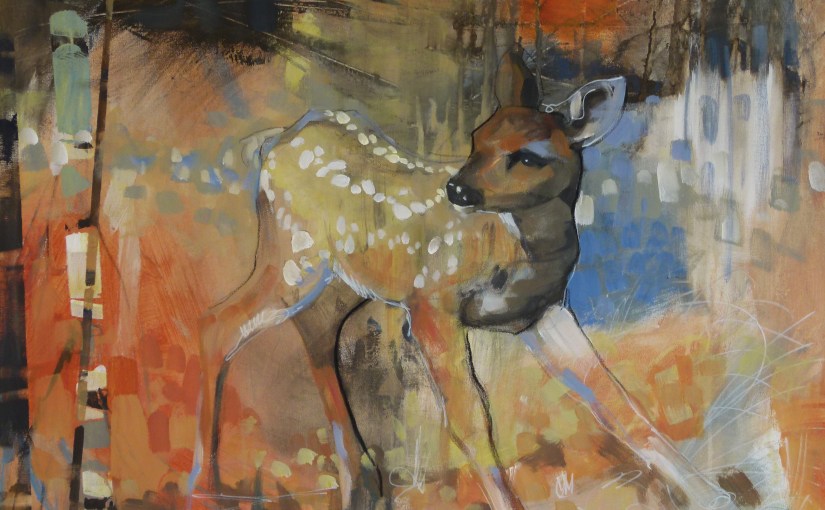
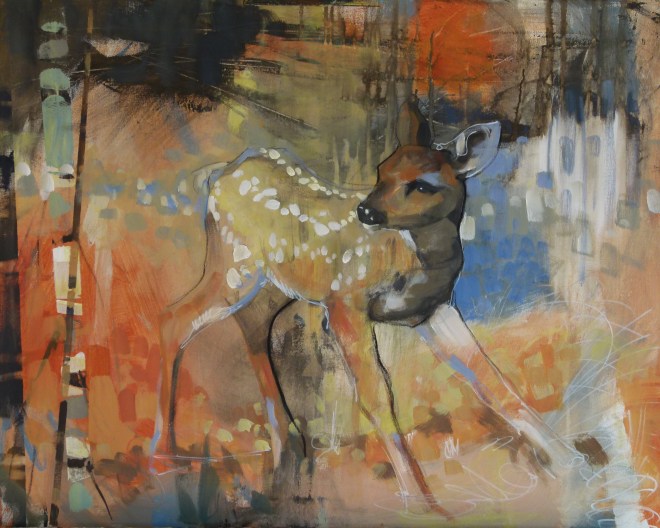
this poem by Rachael Simpson was inspired by Dominique Normand‘s painting, “Walking Out”

New poem, “Resistance,” by Francine Cunningham

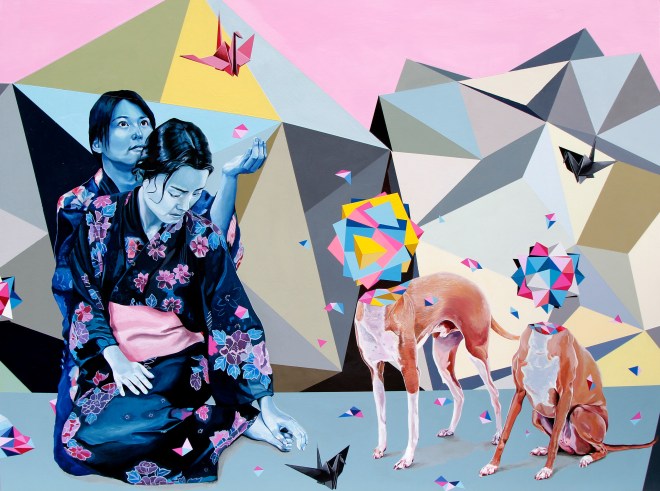
twowomen.jpg

can you feel the breaking?
i don’t know if it’s my heart, or something older
the cracks in my spirit are easier to see
they show themselves on my face
in the way my smile falters,
in the darkness etched under my eyes

i wake up from dreams
running in an endless loop
the skin of the earth cracking
molton fire spewing
childrens’ skeleton husks
dehydrated from the inside
hearts thudding, dust raising in chest cavities
the water of the earth running like the foretold fire
lakes and rivers burning their stories to the sky
telling about how they were ravaged
how their banks were used as dumping grounds
can you not imagine a day when the sky is painted red with the haze of endless fires?
when the black clouds of progress have spewed too much,
taken up too much space in the sky
where the ground shakes down our buildings, reduces everything to the same size
the soil only producing poison

my grandfather had a gift
could see death in his dreams
would sit at bedsides,
help souls pass over
and i have to wonder,
are the truth and future finding their way to me back to me?

the light which normally lights my soul is dimmed
the world feels somehow different, can’t you feel it?
that something out of sight has changed and we are now living in the last days
i have read the prophesies,
of the war of water, of the next culling
i have seen the brutality of our war against the earth
the way in which we seem to hate it
grind it up, rip it apart, spew our waste all over it
but i know there is life, buried like seeds, threaded throughout this prophesy
those seeds are the people and the light they carry inside of them

but my heart breaks whenever I see one of our seeds taken away
when they are pushed to hanging themselves in closets
when they are viciously beaten killed tortured, just for existing
when the very act of saying no is an affront

and have also felt the swelling of hope that comes from an act of resistance
when a woman stands up for the water
when a brother helps another up, carries him on shoulders until he can walk again
a greeting spoken in a revived language
the drums giving life to the earth
the dropping of tobacco and the cleansing smoke of pray

these are the pinpricks of light that cast my dreams into doubt
these acts are the resistance
these are seeds of hope

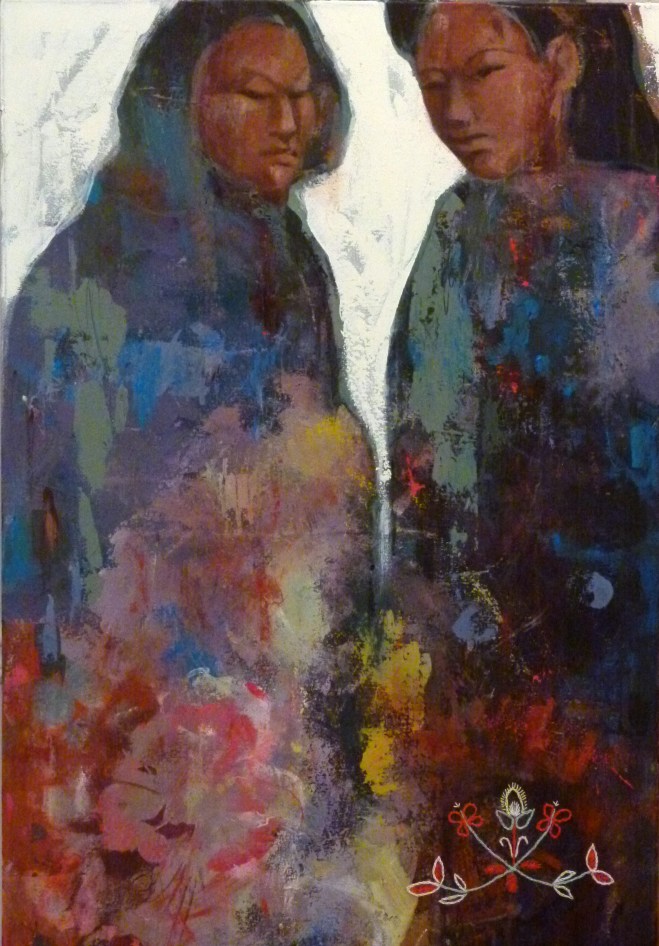
this poem by Francine Cunningham was inspired by Dominique Normand‘s “Two Women” 


New poem, “Sabbat,” by Leah Horlick

aupieddelanuit

In years past it’s been scraps
of paper, candles, a drainful of hair —

anything to light on fire in effigy
of the calendar, walking figure eights

through Strathcona trailing rosemary
and smoke. This year I am keeping

it simple, throwing salt out of my own
eyes, casting mascara circles, going

to synagogue — I need all the help
I can get. Years past I’ve been all true love

and boundaries and I release this codependence
and this year we are just basic, elemental — protect the land,
protect the water, the people protecting the land

and the water, forgive me for the sin of succumbing
to despair.
All the witches are indoors soothing

their pets from the firecrackers, toilet paper ghosts
stranded out in the wet trees. Today you wanted to show me
 
the last blaze of that tiny arbutus in the traffic circle on your way
to work and you turned me into a red trail of feathered leaves. The best

thirty-five dollars I spent all year was on a psychic who told me
to learn to say not yet. I need all the help I can get. I sweep out

the devils. I zip up our house like a tent. A bright ember,
a blue gem in the slick black fur

of this city. The tiny, solid fire of you
at the centre of my life.

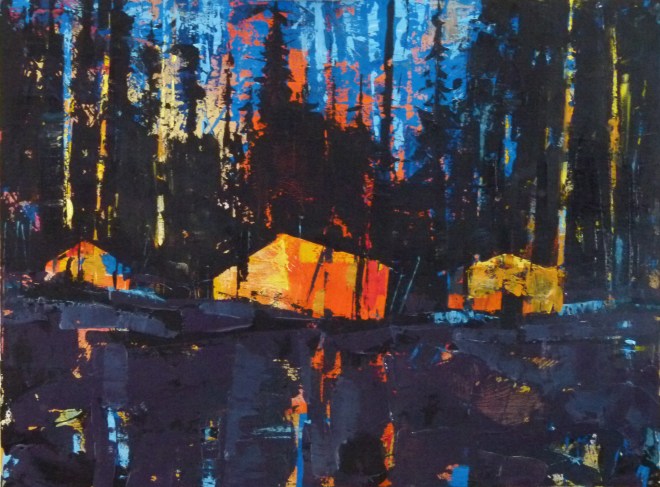
this poem by Leah Horlick was inspired by Dominique Normand‘s art 

Notes on Hesitation

350dpi009

The birds in my neighbourhood are having an existential crisis. They’re hesitating on their branches, resting for a moment longer than they should. Even when I scream and stomp my feet at the foot of the tree, they stand there, thinking about whether or not to fly away, wondering if it even matters.

              I learned the term “existential crisis” from my English teacher because we’re reading The Stranger by Albert Camus. I’m in this advanced class where everything is so deep. I love it. Anyway, the birds, right? I think I noticed it before I learned the word—is that possible? Can you notice something subtle like that and then learn the word for it, or is it kind of invisible until you can name it? I guess it doesn’t matter—the point is I’ve learned it and I can’t unlearn it.

              It’s weird because I was pretty sure flying was autonomic. That’s another word I learned recently—it means things you do without thinking. The fight or flight instinct, for example. You feel it in your body and you’re off. Thinking is a problem. It interrupts the things you need to do to survive. Like, imagine if you had to decide to take every breath—you’d die.

              I kind of know how the birds feel. Lately, when things get confusing, I slow down and get stuck in my thoughts. I can’t even choose between flavours of ice cream anymore—I just stand there at the 7-11 with the cooler door open, breathing in Freon-tasting air. When my mom yells, I used to go hide right away. Now, I just sit there thinking about what to do. Half the time, I end up doing nothing at all, and that just makes her angrier.

              The other day, she was yelling because I’d forgotten to let the cat in before we all went to bed. She said she thought the cat was probably dead. She asked me for the millionth time why I was so stupid. I snapped and yelled at her to fuck off. I’d never done that before—it just bubbled up from inside. I guess that’s the fight part of fight or flight, huh?

              But the problem with things that you just do without thinking is that you don’t know what’s going to happen next. I think she was as surprised as I was when she slapped me across the face. Her eyes got really big, and we just stared at each other. We’re the same height now, I realized. Then she was gone, up the stairs to her room. I guess it was her turn to hide. Once you’ve learned something you can’t unlearn it, especially about yourself. My poor mom. Maybe that’s when I started slowing down like the birds, sinking into my thoughts all tangled like yarn. I worry for the birds. I think someday something terrible will happen to them.

 these words by Erika Thorkelson were inspired by the colour of Juan Travieso

New prose by Josh Elyea, “Pulp Influence”

7248.jpg

            I keep having this dream where I’m two-dimensional. This dream isn’t a nightmare, but I still wake up feeling as though I’ve lost something.  Like I’m lacking in substance, as it were. Dimensionally challenged.

            Paper cranes fall slowly from the sky, and I can taste cherry blossoms (and verbs) on my tongue. I wander through this paper forest, aimless, wondering if there’s any other type of wandering. There are characters scrawled across the trunks of the trees, messages left in languages I don’t understand. Trumpets sound as I see words I recognize, hc svnt dracones. That’s not foreboding, not one bit.

            What little light the moon emits slinks down through the treetops, leaving deep pools of shadow that shift when I look up or down. When you’re made of paper, there is no side to side. Impossible to keep a sharp eye for the monsters that undoubtedly permeate these pre-mulched maples.

            I get more and more lost as I ponder the potential for dragons. It’d be easy to lose oneself in the black of the forest. It’ll eat you up, noir. Between the paper and the concentrated instances of darkness, there’s a real pulp influence here, I say, maybe out loud (maybe not). What I’m noticing though, now that I’m paying attention, is the ways in which the darkness is growing, expanding, in spite of the moonlight. Tendrils of black extend outward as my person begins to shake, and at that moment it’s almost as though I’d prefer the monsters. There’s something tangible about a mummy or a hellhound, and it’s a well-known if little thought of caveat of life that damages to the corporeal are far preferable to those of a more ethereal nature. That’s what so devious about the dark; it doesn’t really harm you at all.

            And it’s a silly thing to fear the dark, really. But we all do it anyways.

this prose by Josh Elyea

this prose by Josh Elyea, “Pulp Influence,”

was inspired by Juan Travieso‘s “Nightmare in a Dream”

“The monument,” new poetry by Jessica Goldson

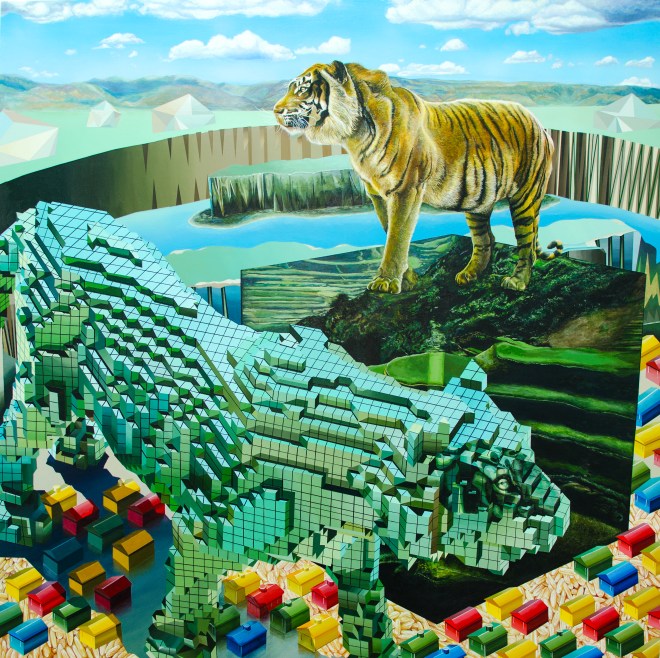
the-monument-final-piece

Foreign
construction;
Mirrors
cling to past images,
Smooth
edges recite falsehoods
Fraught
with mixed emotions.
Dissociated
desire;

Fractured by efforts to complement the landscape.


this poem by Jessica Goldson was inspired by Juan Travieso’s “The Monument”

“White Paper,” by Keah Hansen

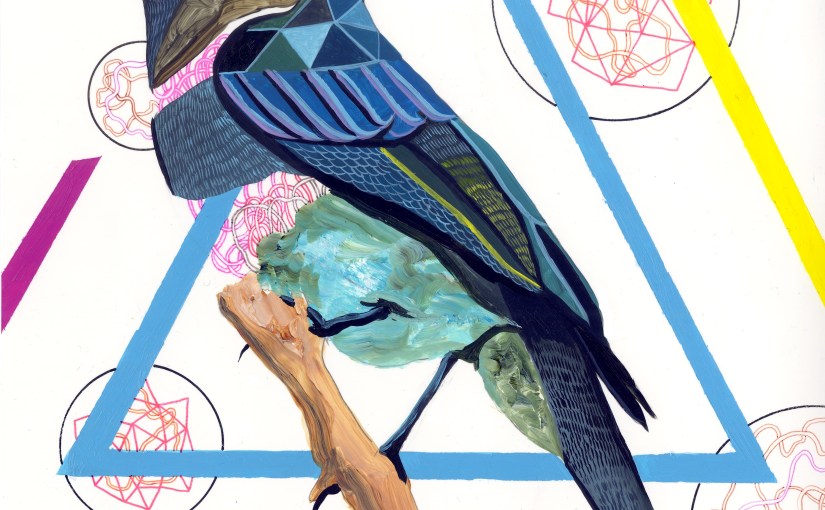
Endangered Bird #131.jpg

Brother Bird alights on the silver birch, branches siphoned off from the moons with the frazzle of leaves. Golden leaves that lace the night, and the crinkly coins of the newcomers seem mawkish compared to these yellow hands coursing with veins and sugars. They wave incomprehensible at the new hands, which are different, all white and papery, pockmarked and brine-stained after a journey in a strained wooden frame. These hands are weaving into the woods uncouth and unwanted, gesticulating with the urgency of papers that make crisp noises as they fall into neat stacks on a knotted wood desk. They are dizzying themselves amongst these leaves that are falling from the birch. They are blanketing the grounds in smooth white words all flat and stark. The leaves are browning and returning to the earth. Winter is setting in.

Brother Bird thinks the spindly limbs of the trees seem ethereal from way up in the vapour. The white sheets with marks blackened by some unfortunate quill feather read like an ambiguous pattern. And the voices, which nest among the trees, seem strangely silent. Brother Bird thinks he sees tracts of smoke creeping westward from the shores, though the gales of wind are moistening his eyes and humming auspicious in his ears. The season of snow is bound to pass, says Brother Bird, giddily to himself. The air is brusque and flapping papers up, loose from their death grip on the grounds. They dissolve within the frail wisps of sunlight hitting Brother Bird’s head.

Centuries passed and the smithy whiteness blew through the trees, prying the bark back with all the soft power of snowflakes. Sap soldered with this milky presence, which poured all its white ink into etching the soft underbelly of the trees. There are new names now and the first peoples are dogs that bark. Or stoic like the trees, so the papers say. Then a white paper descends from some federal courier and is acclaimed for its difference. This paper ought to be peopled with leaves from when the first storm blew through. Pulling the pressed leaves out of dusty yellowed spines of books and planting seeds in the margins. But the paper that is published offends like blots of lead, or clammy hands in a handshake. White hot rage settles and Brother Bird swallows another bitter seed.


this short story, “White Paper, was written by Keah Hansen 

and inspired by Juan Travieso’s “Endangered Bird #131”  

from the author: “I wrote this piece about the White Paper Act of the Trudeau government of 1969. I was inspired by different modalities of expression, represented in the layering of the artwork. The layering of the artwork also made me think of erasure and censorship, which occurs when cultural worlds clash, and the irony in a paper literally titled the ‘White Paper’ that was intended to give representation to Indigenous peoples.”

“Buzz,” prose inspired by Nikoladze’s sound machine

L says to T, “Do you ever hear sounds coming from your fingers?” She’s examining the tips of her fingers, the little grooves put there by the strings of T’s guitar. She holds her fingers to her ears. “I swear I can hear a buzzing sound.” L is learning to play. Ever since T told her that guitars have songs trapped in them waiting to get out, she’s been practicing. One day I’ll free them all, she thinks.

“I don’t actually believe that, you know,” T says, “that thing about songs being trapped in guitars. It’s just something some musician said ‘cause it sounds cool.”

L says the real reason she’s practicing is because she wants T to fall in love with her. Then she says, “Just kidding,” because she is, partly, though another part of her isn’t. She’s seen the way he looks at those girls in bands when they go see shows. Bass players, keyboardists, lead singers playing guitar.

L watches YouTube videos of people playing songs on the guitar and tries to imitate what they’re doing. Most of the time the people in the videos talk too fast, or the camera angle is off and she can’t see where they’re placing their fingers. Rewind, pause. Rewind, pause. Find a different video to watch.

T is out seeing bands every night now. He usually calls and asks L to come but then he’ll say things like, “But if you’re tired, don’t worry about it,” or “I think those guys won’t go on until late, so it’s okay if you don’t want to.” So, she stays home and practices until her fingers burn. Sometime after midnight, she goes to bed with aching hands and wrists, and falls asleep imagining her fingers are red and glowing under the bedsheets.

The next week L barely hears from T at all, just one text that says, “Hope your week’s going okay. Let’s hang out soon,” followed by a champagne bottle emoticon. She types, “Okay, sounds good,” then stops before sending it. She erases her reply. According to the formula—take the total time you’ve been dating someone and divide it by two—she’ll forget about T in about a month or so.

On the bus, she examines her white calloused fingertips now permanently indented from the stress of the guitar strings. She thinks of the tips of T’s fingers, remembers how they looked the same as hers do now, dry, white, torn, how they felt rough on her cheek when he touched her face. She places her own rough fingertips against her cheeks then moves them back towards her ears so she can hear the buzzing sound again. She wonders if maybe one of the songs that was trapped in T’s guitar has crawled out of it and into her fingers. Whatever it is, it isn’t a very good song, she thinks. There’s no melody to it. It’s just a bunch of random notes and pitches. When trapped songs are freed, do they need to be decoded somehow?

L is listening so hard to her fingers that she misses her stop and has to backtrack two blocks in the rain to her apartment. When she gets inside, she takes off her coat and hangs it in the bathroom so it can drip into the tub. She goes to the living room to get the guitar but it’s gone. Then she remembers T still has her spare key.

She stands there in the middle of the living room and closes her eyes, lets her feet sink into the floor like she’s standing in an inch of warm water. Her fingers are vibrating now and the room is filling up with the buzzing sound and without even realizing it, she starts to hum along.

words, “Buzz,” by Tariq Hussain, were inspired by the colour of Koka Nikoladze

on Nikoladze’s video: “Filling the Glass”

12:20pm

The glass stands tall. Still. Sure. A foil to the thundering chaos in your mind—crash. A few straggling fingers of feeble winter sun clamber through the window, bouncing delicately off the clear vessel. It is entirely transparent, down to the liquid within. Pure.


I.

12:22pm

A resigned hand stretches toward the glass, slipping effortlessly into an old action so long suppressed. Soft fingertips alight on flawless glass—how is it that the union of such smooth surfaces ends in such a crash?

1:37pm

You roll your head back. It lands heavily on the scratchy couch cushion. Your eyes are trained on the ceiling above, pocked with all sorts of nicks and notches. They’re multiplying as you watch, so you shut your eyes, allowing the third glass’s contents to trickle through your thoughts unimpeded. The sadness comes in crashing waves—you will the drink to hasten the ebb of the tide.

3:40pm

The slam of the front door tears you unceremoniously from a fitful doze. Your head swims thickly. The sea hasn’t ebbed; it’s just become murkier. You can no longer see the sand beneath. That used to be comforting—now it only adds to the chaos.

The sun is disappearing now, and none of its final rays manage to cross the threshold of the window. The glass looks different now, empty in the early wintertime twilight. Small. Weak.

You struggle to pull it all together—your disobedient limbs, your weak eyes and lips—to muster up an impression of control. But before you manage to focus your sight and orchestrate a warm smile, he’s already shutting the door to his bedroom. The only sign that he was there is the mail strewn on the doormat.

A new wave wells up, merciless, fueled by whatever placidity you mustered while you slept. You feel its crash resonate through every part of you. You fill the glass again.


II.

3:34pm

His tread is mechanical. His body could walk him home blindfolded. Music is playing loudly into his ears as he turns the corner onto his block, backpack swinging from one shoulder.

3:38pm

His hand reaches into the mailbox and meets several envelopes. He doesn’t have to look to know they’re bills, warnings, notices. His jaw tightens.

3:40pm

It smells like home: air freshener and gin, one a pathetic attempt to mask the other.

A drunken pile of limbs on the couch. Unsurprising. He drops the mail where he stands and shuts the door with a crash, much harder than necessary. He’s done being sympathetic.

much harder than necessary.

words by Kate Shaw, “Filling the Glass,” were inspired by Koka Nikoladze‘s “INFINITELY SUSTAINED GLASS BREAKING WITH GRANULAR SYNTHESIS” (shown above)

From the author: “Recording glass breaks creates the sensation of a process of shattering that doesn’t end. It defies time, moving backwards and forwards, generating a feeling of chaos that can’t be controlled. That feeling of a lack of agency in a situation spinning out of control spoke to me of alcoholism at its true root. The belief that there is agency in a case of alcoholism—depicted here by the son of an alcoholic parent figure—plays into a dangerous stereotype that allows alcoholics to be blamed for their “choices” instead of helped to overcome their addiction.”

new prose, inspired by sound: “The Trill”

Content Note/ Trigger Warning: Sexual assault, rape culture

They were jittering parallel, his leg and hers. They faced away from each other, tapping in terrified Morse code against the legs of the bed between them. He was shrinking and she was expanding. He was supposed to be the downbeat and she, the trill.

She recalled how his fingers had played her strings. How there was something so excruciatingly offbeat in the way that he’d sped up. He said he liked that sound; she said nothing. There was the pounding of their hearts and the curls of her hair. His hips were rhythmic. She counted to ten, holding onto nothing until he was empty and she was supposed to feel full.

She was his echo, the drum he hit against, a projection of his voice, and she convinced herself to feel empowered to exist solely in the glory of his smile. Too soon it became automatic: a euphoric cacophony of springs and curls.

In the climax, one of her strings snapped. She cried out, he froze. It was unlike her, he thought. She never asked to be hit, she thought. She removed herself from him, shaking, and perched on the edge of the bed.

words, “The Trill,” were written by Annie Rubin: “Koka’s electronic creation made automatic the emotive experience of producing music. This new system, mechanical and intricate, represents a structure of oppression we perpetuate through unawareness or indifference: one in which women are left voiceless and unquestioning. The moment of escape occurs when the woman rejects her role as a void (Cixous) and gains agency through expression.”

the colour and inspiration for Rubin’s work was inspired by Koka Nikoladze’s sound project, 

“Beat Machine No. 2”