New poetry by Ivana Velickovic, “Fabric”

christinekim_4

We no longer wait in line for apricot pits.
As the arched windows of our building
fall fast, become tombstones,
we are not there.
I let her cling to thick fabric,
dragging her feet,
leaving deep grooves in the soil
that connect small footprints and
form a map of disproportioned scale.
With a head raised to level,
pulled up only by maternal duty and disparity,
I tell her we are impenetrable.
This empty lightness
tenderly strokes her glowing eyelids to rest.
In time, she may return to the rubble,
pick bones for a living
in open fields scattered with footballs and
broken nets.

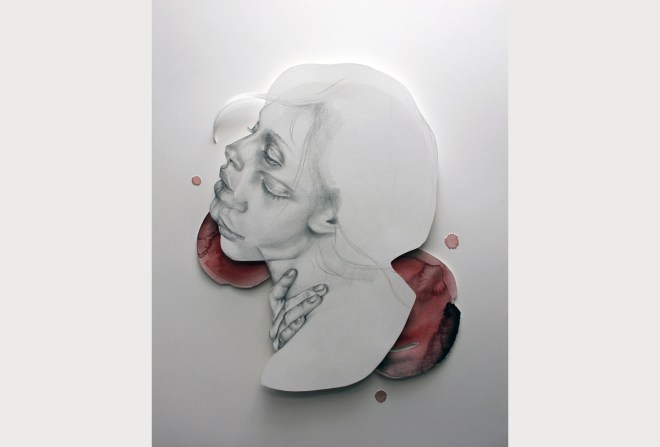
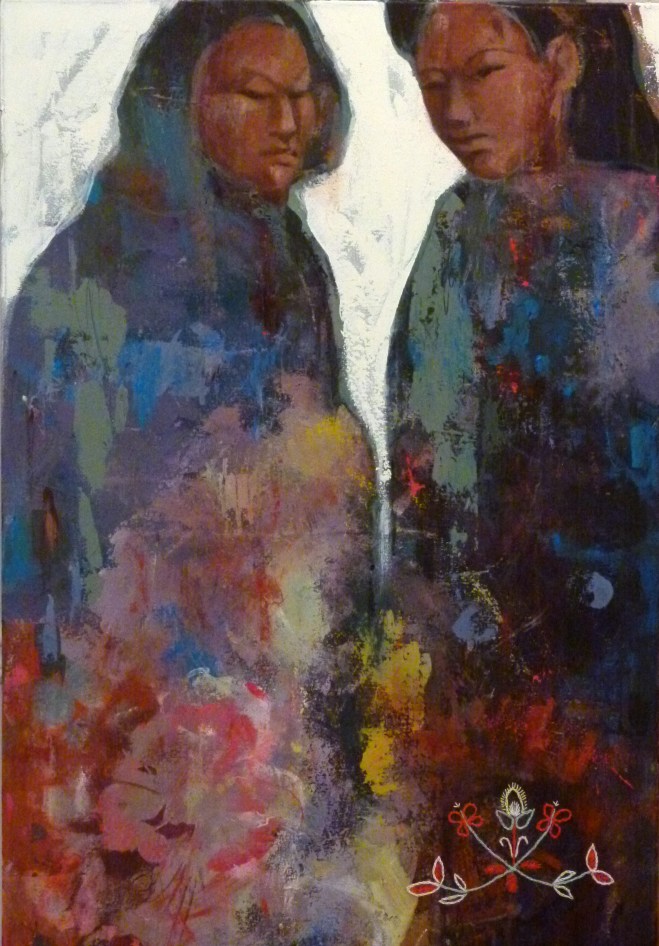
 this poem, “Fabric,” by Ivana Velickovic, was inspired by the art of Christine Kim

New prose, “Macaroons,” by Erin Flegg

christinekim_1

I stopped being able to see the art in the situation. The crack down the centre of the table where the two halves came together was always clogged with the leftover crusts of things, clumps of flour and milk, the hardened white sinews from the inside of a pepper. I would tear fingernails trying to dig it out, doing so almost absently in the mornings while she made pancakes or slices of ham or sometimes just peeled fruit with a sharp knife, right on the table, leaving the light translucent spray that comes from lifting the tough skin of an orange.

She hated to shop for groceries. She never said it out loud but I think it had something to do with the fact of money, the tangible, generally negative change that happened to her material worth in the world after paying for a block of nice cheese. How it took the romance out of the thing. She didn’t believe in saying that kind of thing out loud. I came home from work one day in the winter with a bag full of big hunks of white chocolate. I had no intention of eating it and I knew she didn’t like it. It was a small test, I suppose. To see if she could resist something that should have been so sumptuous, resist turning it into something she could hold up, if only to me, and declare through her own culinary grace that this, whatever it was, colourless, malleable, opaque stuff, had romance. Even if neither one of us did. I sat on the floor by the stove, my back against the island and my feet pressing against the dishwasher, while she melted the chocolate in a metal bowl over a pot of water. She wouldn’t tell me what she was doing and I stopped just short of accusing her of having no idea herself what she was making. It probably would have given me away. In the end she made macaroons, searching the baking cupboard and unwrapping open packages of ingredients from their grocery-bag coverings to find the coconut shreds and oatmeal, mixing them into the thick puddle. She coloured it with a pinch of curry powder and cinnamon. Antioxidants, she said, flicking a bit of the brown dust onto me from above. I grabbed her by the ankle and bit her calf, still tense from pressing her weight forward into the stove. She jumped to one side and accidentally flung the wooden spoon out of the pot. It dropped molten clumps of chocolate on the floor and the top of the island and then hit the back wall. Like a baby after a fall, she waited wide-eyed for me to show her what kind of tone we were going to use to move forward. I got up and went over to the wall, sat down again and started to lick the spoon clean. I smiled without looking at her and she started to laugh. She threw her tea towel at me and used her finger to swipe up the drips from the countertop. I just sucked on the wet spoon, grinding bits of coconut between my back teeth.

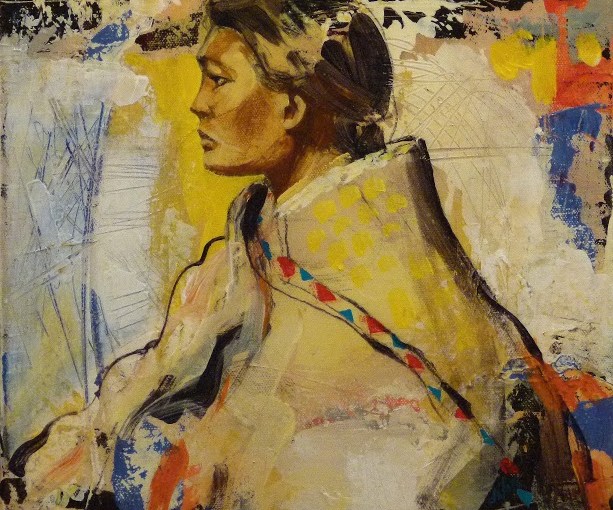
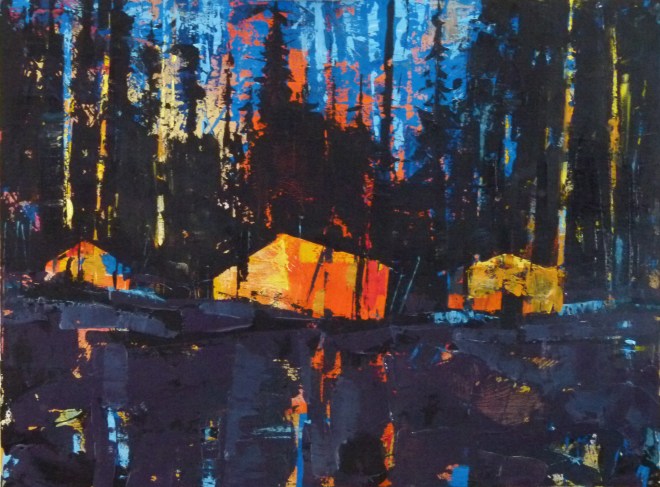
this prose by Erin Flegg, “Macaroon,” was inspired by the art of Christine Kim 

New prose by Finn Morgan, “Home Enough”


christinekim_2

CW: abuse mention (child)

A peach morning, shards of grass sneaking into the sidewalk, branches swaying dull and dead. I arrive at the building gate and I am shaking, shaking still; should have kept the winter coat. I call the number saved from the last round of search scrolls and feigned phone pep. The concierge answers: “I’ll be right there!”

I am courteous, perform norm, stand straight and feminine, chuckling at a stray comment on tattoos and irresponsibility; be in-group, be in-group, be in-group to get what you need.

In the elevator, unmoving, with steady smiles. My tired eyelids linger closer shut with each rumble conveying us up, up. I hear the crash and the sobbing; the anxious adrenaline snaps me to wake. Concierge and I meet glances and she, with a light nod, softens her smile. The elevator sounds at the 22nd. “It’s right over this way,” she says, pointing, as the door rolls slowly open.

The hall is well-lit but there are scuffs on the wall. From neighbours? Is the building not maintained? How much can I afford to care? How much does care cost?
Concierge fidgets the key and jerks the door. A good lock. The apartment inside is fine. Nice view. Thick walls. Clean enough. Big enough. Enough is enough sometimes. Concierge points out the kitchenette, the fridge, the bathroom, the balcony. I remove my coat as we look around. I yawn and I hear a small sniffle as we head towards the bedroom.

The concierge gets a call. Issue on the 4th, will be right back.

I don’t expect the shaking and unsettled breathing to leave with her but I am still disappointed when it doesn’t. I open the room door, feel empty. I close my eyes, knowing exactly what will appear: a child with thick ringlets, crouched and sniffling in the corner of the open closet. This child lives in every empty room I visit. Ever since our first room was emptied. I know them well. Sometimes they tell me when I need to leave, sometimes they just need to be held. I am tired and this room is wide enough, sunny enough, so I tell them:

“She won’t find you here.”

“But what if she does?”

“There are locks on the door.”

“But you’ll still hear her.”

“We’ll drown her out.”

“How?”

“Music. The Shower. However we can.”

“And what if we can’t?”

“We’ll survive.”

“I’m still scared.”

“I know. Me too.”

“What do we do?”

“What we can.”

“Will it be enough?”

“It has to be.”

When Concierge returns I ask to start the paperwork. Home is wherever I’m without you.


this prose by Finn Morgan, “Home Enough,” was inspired by the art of Christine Kim 

New poem, “Bystander,” by Jeff Blackman

stillness
Tell her not to ask what I can do.
Tell her I wish someone else would help.
Tell her I’m not joining the defense.
Tell her something she already knew.

Tell her I read but I did not share her story.
Tell her I checked in & checked away from there.
Tell her she’s not in my thoughts or prayers.
Tell her, from here, I don’t see her territory.

Tell her, here, the fall has been so long.
Tell her, here, we had the Friday off.
Tell her, today, we took a thousand photographs.
We’re working through them. Tell her it’s a slog.


this poem by Jeff Blackman was inspired by the art of Dominique Normand

New poem, “Okay for Now,” by Rachael Simpson

deer

We’ve reached the point in the evening where
our responsible selves have fallen
asleep beside us on the floor. Now
we can talk about what troubles us.

Our voices touch like whiskers
and scratch the door.
A heaviness pulls at our sleeves.
I thought you were asleep, we say.
How much did you hear?

We put ourselves properly to bed.
Pour another glass. Something
knocks into us—

bad dream
I had another
don’t know
what to do.

We do not raise our arms.
We do not shoot questions.

Over time, the moon lines up with the window.
Glasses pile on the table
like small sunken ships.

It was right there
says someone
about a deer in the yard.
We point as though we saw it, too.

this poem by Rachael Simpson was inspired by Dominique Normand‘s painting, “Walking Out”

New poem, “Resistance,” by Francine Cunningham

twowomen.jpg

can you feel the breaking?
i don’t know if it’s my heart, or something older
the cracks in my spirit are easier to see
they show themselves on my face
in the way my smile falters,
in the darkness etched under my eyes

i wake up from dreams
running in an endless loop
the skin of the earth cracking
molton fire spewing
childrens’ skeleton husks
dehydrated from the inside
hearts thudding, dust raising in chest cavities
the water of the earth running like the foretold fire
lakes and rivers burning their stories to the sky
telling about how they were ravaged
how their banks were used as dumping grounds
can you not imagine a day when the sky is painted red with the haze of endless fires?
when the black clouds of progress have spewed too much,
taken up too much space in the sky
where the ground shakes down our buildings, reduces everything to the same size
the soil only producing poison

my grandfather had a gift
could see death in his dreams
would sit at bedsides,
help souls pass over
and i have to wonder,
are the truth and future finding their way to me back to me?

the light which normally lights my soul is dimmed
the world feels somehow different, can’t you feel it?
that something out of sight has changed and we are now living in the last days
i have read the prophesies,
of the war of water, of the next culling
i have seen the brutality of our war against the earth
the way in which we seem to hate it
grind it up, rip it apart, spew our waste all over it
but i know there is life, buried like seeds, threaded throughout this prophesy
those seeds are the people and the light they carry inside of them

but my heart breaks whenever I see one of our seeds taken away
when they are pushed to hanging themselves in closets
when they are viciously beaten killed tortured, just for existing
when the very act of saying no is an affront

and have also felt the swelling of hope that comes from an act of resistance
when a woman stands up for the water
when a brother helps another up, carries him on shoulders until he can walk again
a greeting spoken in a revived language
the drums giving life to the earth
the dropping of tobacco and the cleansing smoke of pray

these are the pinpricks of light that cast my dreams into doubt
these acts are the resistance
these are seeds of hope

this poem by Francine Cunningham was inspired by Dominique Normand‘s “Two Women” 


New poem, “Sabbat,” by Leah Horlick

aupieddelanuit

In years past it’s been scraps
of paper, candles, a drainful of hair —

anything to light on fire in effigy
of the calendar, walking figure eights

through Strathcona trailing rosemary
and smoke. This year I am keeping

it simple, throwing salt out of my own
eyes, casting mascara circles, going

to synagogue — I need all the help
I can get. Years past I’ve been all true love

and boundaries and I release this codependence
and this year we are just basic, elemental — protect the land,
protect the water, the people protecting the land

and the water, forgive me for the sin of succumbing
to despair.
All the witches are indoors soothing

their pets from the firecrackers, toilet paper ghosts
stranded out in the wet trees. Today you wanted to show me
 
the last blaze of that tiny arbutus in the traffic circle on your way
to work and you turned me into a red trail of feathered leaves. The best

thirty-five dollars I spent all year was on a psychic who told me
to learn to say not yet. I need all the help I can get. I sweep out

the devils. I zip up our house like a tent. A bright ember,
a blue gem in the slick black fur

of this city. The tiny, solid fire of you
at the centre of my life.

this poem by Leah Horlick was inspired by Dominique Normand‘s art 

Notes on Hesitation

350dpi009

The birds in my neighbourhood are having an existential crisis. They’re hesitating on their branches, resting for a moment longer than they should. Even when I scream and stomp my feet at the foot of the tree, they stand there, thinking about whether or not to fly away, wondering if it even matters.

              I learned the term “existential crisis” from my English teacher because we’re reading The Stranger by Albert Camus. I’m in this advanced class where everything is so deep. I love it. Anyway, the birds, right? I think I noticed it before I learned the word—is that possible? Can you notice something subtle like that and then learn the word for it, or is it kind of invisible until you can name it? I guess it doesn’t matter—the point is I’ve learned it and I can’t unlearn it.

              It’s weird because I was pretty sure flying was autonomic. That’s another word I learned recently—it means things you do without thinking. The fight or flight instinct, for example. You feel it in your body and you’re off. Thinking is a problem. It interrupts the things you need to do to survive. Like, imagine if you had to decide to take every breath—you’d die.

              I kind of know how the birds feel. Lately, when things get confusing, I slow down and get stuck in my thoughts. I can’t even choose between flavours of ice cream anymore—I just stand there at the 7-11 with the cooler door open, breathing in Freon-tasting air. When my mom yells, I used to go hide right away. Now, I just sit there thinking about what to do. Half the time, I end up doing nothing at all, and that just makes her angrier.

              The other day, she was yelling because I’d forgotten to let the cat in before we all went to bed. She said she thought the cat was probably dead. She asked me for the millionth time why I was so stupid. I snapped and yelled at her to fuck off. I’d never done that before—it just bubbled up from inside. I guess that’s the fight part of fight or flight, huh?

              But the problem with things that you just do without thinking is that you don’t know what’s going to happen next. I think she was as surprised as I was when she slapped me across the face. Her eyes got really big, and we just stared at each other. We’re the same height now, I realized. Then she was gone, up the stairs to her room. I guess it was her turn to hide. Once you’ve learned something you can’t unlearn it, especially about yourself. My poor mom. Maybe that’s when I started slowing down like the birds, sinking into my thoughts all tangled like yarn. I worry for the birds. I think someday something terrible will happen to them.

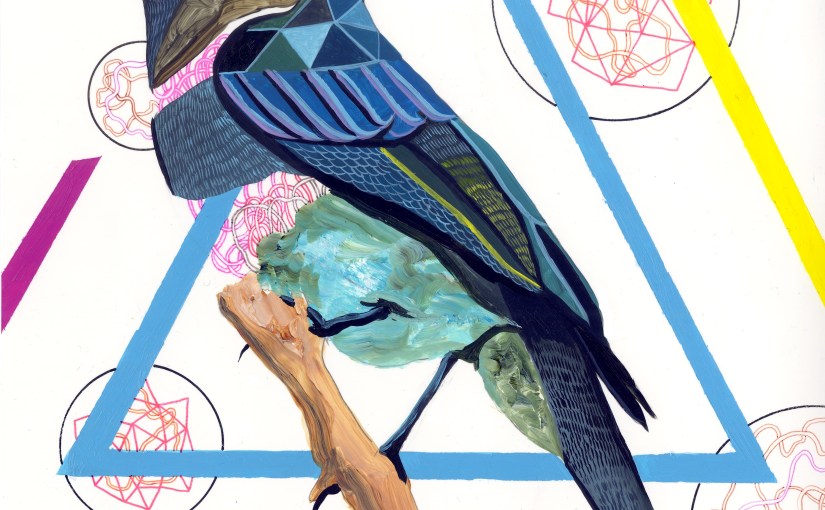
 these words by Erika Thorkelson were inspired by the colour of Juan Travieso

New prose by Josh Elyea, “Pulp Influence”

7248.jpg

            I keep having this dream where I’m two-dimensional. This dream isn’t a nightmare, but I still wake up feeling as though I’ve lost something.  Like I’m lacking in substance, as it were. Dimensionally challenged.

            Paper cranes fall slowly from the sky, and I can taste cherry blossoms (and verbs) on my tongue. I wander through this paper forest, aimless, wondering if there’s any other type of wandering. There are characters scrawled across the trunks of the trees, messages left in languages I don’t understand. Trumpets sound as I see words I recognize, hc svnt dracones. That’s not foreboding, not one bit.

            What little light the moon emits slinks down through the treetops, leaving deep pools of shadow that shift when I look up or down. When you’re made of paper, there is no side to side. Impossible to keep a sharp eye for the monsters that undoubtedly permeate these pre-mulched maples.

            I get more and more lost as I ponder the potential for dragons. It’d be easy to lose oneself in the black of the forest. It’ll eat you up, noir. Between the paper and the concentrated instances of darkness, there’s a real pulp influence here, I say, maybe out loud (maybe not). What I’m noticing though, now that I’m paying attention, is the ways in which the darkness is growing, expanding, in spite of the moonlight. Tendrils of black extend outward as my person begins to shake, and at that moment it’s almost as though I’d prefer the monsters. There’s something tangible about a mummy or a hellhound, and it’s a well-known if little thought of caveat of life that damages to the corporeal are far preferable to those of a more ethereal nature. That’s what so devious about the dark; it doesn’t really harm you at all.

            And it’s a silly thing to fear the dark, really. But we all do it anyways.

this prose by Josh Elyea

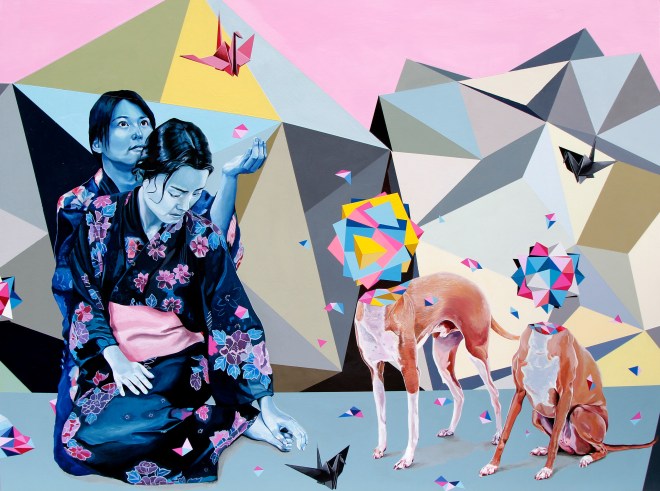
this prose by Josh Elyea, “Pulp Influence,”

was inspired by Juan Travieso‘s “Nightmare in a Dream”

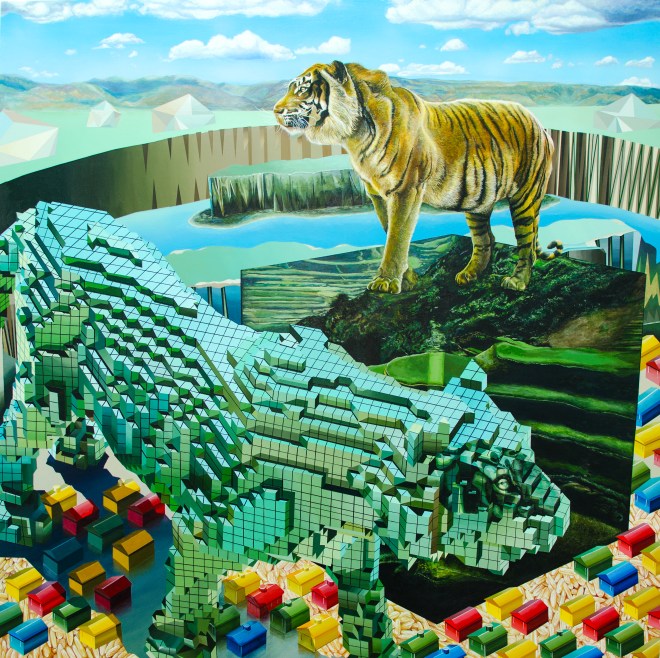
“The monument,” new poetry by Jessica Goldson

the-monument-final-piece

Foreign
construction;
Mirrors
cling to past images,
Smooth
edges recite falsehoods
Fraught
with mixed emotions.
Dissociated
desire;

Fractured by efforts to complement the landscape.


this poem by Jessica Goldson was inspired by Juan Travieso’s “The Monument”