On Looking and Being Seen: “For Young Girls,” by Eileen Mary Holowka

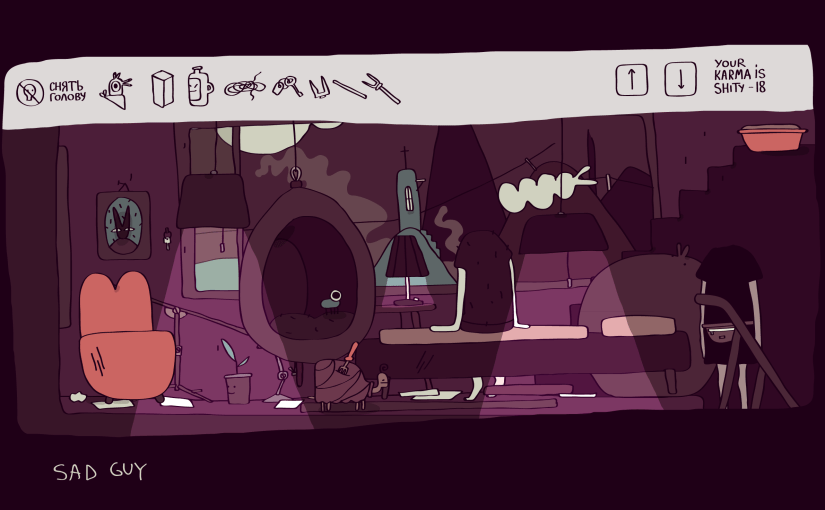
mieszkania_1800px

Content Warning: Depression and creepy insect stories

Maggie used to write stories in the attic. That was back when she was a child, when she wasn’t allowed to leave the house and instead spent family gatherings curled up in strangers’ jackets on her parents’ bed. She would rub her face into them and try to find a home in each of the different scents: winter smokers, damp lavender, a flooded basement. She would rifle through the pockets, stroking keys to guess where they belonged and reading crumpled receipts.

These days she had trouble writing. There were too many parties to attend and they always took days to get over. She still rubbed up against strangers’ jackets but it never gave her the same joy. These days, the smells were too familiar and all new possibilities seemed to end with every touch.

Sometimes Maggie went home with the jackets. She liked the homes and the jackets more than the people inside them, but they were her only excuse in. Most of the time they would have sex and some of the time she would bleed after. It was a symptom of some condition she hadn’t been able to diagnose. It became a kind of performance art piece, bleeding onto other people’s beds. They were never appreciative of her art.

Maggie built sets. Mock kitchens with only three walls and trees with trapdoors. It was a dream job on the way to what she hoped could one day be economically sustainable. She moved around theatres invisibly, in all-black outfits that doubled as formal wear, and spent rehearsal breaks hiding in the wings watching the actors bicker like they were in a play.

The best part about casual sex was locking herself in the strangers’ bathrooms, before she had let them down with her leaking uterus, to go through their cupboards. She loved the belongings and rituals of others, finding out where they kept their extra toilet paper or whether they Q-tipped their ears. She never took anything or moved it out of place, just looked. She figured it would make her a better artist, or make her like that particular stranger better. She tried to imagine what a future in their home would look like, but it was always better the less she knew.

The doctors kept telling her there was nothing wrong, but they scheduled her an ultrasound anyways. The technician pressed down on Maggie’s full bladder while they both watched the screen. Maggie eagerly looked for something, a cyst or a tumour, as if it were a fetus. But there was nothing there, not even a child, to explain her problems. She walked out of the hospital past husbands and their swelling wives and felt more infertile than she’d ever felt in her life.

Her journey home was slow and heavy, despite or because of her emptiness. Even the trees were barren, she noticed. Autumn made her want to call her ex. She touched her phone, but it turned off as soon as she tapped his name. She had no idea where the bus stop was without Google and it took her an hour to walk home. It was dark and damp, and she looked into the lit-up windows of other people’s houses with longing. She called him later that week, several times until she got past his voicemail. When he heard her voice, he paused, and hung up.

The printed ultrasound results came the same day. Everything was fine, but sounded deadly. She read the paper aloud to Anne over Skype. Apparently there is fluid in my cul-de-sac. Did you know you had a cul-de-sac in your uterus?

That explains your pain, Anne replied. Cars keep getting stuck.

Imagine the tiny little houses.

Little moms and dads.

God, even my diseases are domestic.

Maggie liked her parents and visited them often. They would cook her more food than she could eat and fill her full of enough tea to make her bus ride home unbearable. They tried to get her to clean her toys out of the attic, but instead she just hid in the back and watched spiders build webs around her Barbies. She didn’t have the heart to throw them out, nor the desire to clean them, so she just watched instead.

The attic was full of garbage treasures: VHS tapes of dance recitals and episodes of I Love Lucy; Mom’s broken mint green typewriter; her grandmother’s wedding photos. Maggie’s dollhouse sat in the corner near the window, covered in mud from where the roofers had gone wild. She used to imagine herself as the prettiest doll and would dress and undress her mock self for hours. Doll Maggie had always been intelligent and composed. She went to parties, her face always painted into a smile.

Maggie was scared to touch her doll self, even to save her from the wreckage of shingle bits. She had never intended to stop playing, but eventually everyone else did and the lonely, imaginative Saturdays became guilty pleasures, with an emphasis on the guilt. She knew that when she grew up she would call herself Margaret. She just didn’t know when that growing up would come.

As a child, she was good at being seen and not heard. She could never keep up with her family’s political conversations and figured she must not have any opinions. She told her father her theory and he laughed her down. She decided to drop that opinion as well.

Maggie brought a man home to her parents once. He was tall and professional and liked to put her down. She could see the confusion in her mother’s eyes, as she placed the plate in front of the man like some kind of offering. She could tell her mother would rather throw it in his face, but was trying to treat her daughter like a woman. Maggie would have preferred to be chastised like a child and she felt like one as she made eye contact with her mother and shrugged.

His name was Douglas. He always told her she was a good listener, but mostly he was just a good talker. He was a writer and told Maggie she should be a writer too and that he could edit her work if she liked, because it could use some editing. He called her Margaret, said it was a good writer’s name. It sounded so good in his mouth that she felt obligated to keep kissing him. She adored him and he adored her, except when he didn’t.

So I just googled it, Maggie texted Anne, and it says the cul-de-sac is also called “Pouch of Douglas” cuz of some guy named Douglas who “discovered” it I guess.

OF COURSE.

Even my insides belong to dudes.

Dudes named Douglas. Had to be a Douglas.

It’s always a Douglas.

The last time Maggie and Anne Skyped, the internet began cutting out in the middle of their chat about depression. Anne’s comforting words fractured into alien xylophone fragments and Maggie broke down laughing.

She hadn’t always been so sad. She read that birth control could be making her this way, but the doctor said that was just part of the deal. So she stayed on the meds and took selfies instead. Except they never looked beautiful or poetic enough, like Anne’s. Instead they were unnerving, lacking the adequate amount of performance for the camera.

Early in her career, Maggie had tried acting. She was excellent when she had to play a quiet school girl, but unconvincing when she tried the role of a confident lesbian. She realized she was only good at performing herself, her own intimacy, and went back to facilitating the public intimacy of others instead.

During her long distance relationships, Maggie always watched herself on the screen, instead of her lover. Her own tiny image was too distracting. Her long-distance self was cold and hard and contained behind glass. These days, she was somewhat softer. At least, she leaked.

She rarely brought men home but, after watching an episode of Sex and the City, the idea of having sex next to the open window appealed to her. It wasn’t the lovemaking that made it so enticing, but the idea that the neighbours might be watching, thinking of her as some sort of Samantha sex-goddess and wishing for her life.

As a teenager, Maggie had worked in her father’s office building where she’d spend the morning filing papers and the afternoons staring into the windows of the apartment building across the street. She’d map out the tenants’ rituals: the old lady’s lunchtime smoke, the child’s after-school milk and cookies, the perfectly trimmed bachelor’s quick change into evening clothes. She always hoped she might catch them looking back her way, but the window was likely reflective.

On one of her dates, she took a guy to an art gallery, but ended up coming down with diarrhea. He gave up on her after she spent too long in the washroom, and sent her some sort of inflammatory text about her thighs, or ass or something. It was her gut saving her, she realized, because after she recovered she stumbled into a Nan Goldin exhibit she knew he would have ruined. She spent two hours in the room, gazing at other people’s wounds, and crying. She went home knowing she should write down her thoughts, but ended up in bed instead, with an old recording of Judy Garland covering Singing in the Rain playing in the background on her parents’ passed-down wedding gift television set.

The next date was even more hopeless. She spent hours preparing, trimming her pubic hair into the toilet with safety scissors and wondering if other girls had better methods. However, as soon as she met him, she knew it was over. His profile picture beard was gone and he kept calling her Meg. She smiled and pushed through it, walking 16 km across the city with him until she finally came up with an excuse to leave. She went home and watched Rear Window on loop until she fell asleep.

Most nights before bed, she would scroll through Facebook, Twitter, /r/Relationships, and YouTube to watch the lives of others. Sometimes she would comment, but normally she just acted as a witness, eager to see a glimmer of emotion, something beyond herself. In the mornings she scrolled through Instagram, pretending that what she saw were just static portraits, but inevitably identifying with and reading into every one.

One night, an ant crawled into her ear while she was sleeping. At first she thought the crunchy popping sound was some kind of air bubble, but she was unable to pop it. She fished around for awhile before deciding to look in the mirror. Its tiny black legs were just visible as they reached around for a way out. She stared in icy panic, suddenly wishing for her mother or a roommate who could pull it out of her. The responsibility of the task ran over her like spilled milk, mundane but devastating, as she forced her trembling fingers towards his tiny body, burning her eyes open so she wouldn’t lose him.

Afterward, he crawled around her fingers and she watched with a kind of respect, understanding now that he had wanted to be there even less than she’d wanted him to. She put the ant on the windowsill and crawled back into her bed. Her room was yellows, blues, and beige and smelled of her home. On the walls hung postcards and letters from her friends. It was kind of lovely, she realized, this place entirely her own.

The next day, the subway was stalled due to a suicide. She took out a notebook and began sketching the man sitting across from her. She sketched his pale face and sunken features, shaping them into a story. He looked on the verge of breakdown, as though he had just suffered some great loss. She ripped out the page and passed it to him, a gesture of friendship, empathy, or just mutual boredom.

He took the picture from her and squinted at it, shaking his head.

What’s this? he asked.

A drawing I did of you, just now, Maggie answered, smiling.

This isn’t me, he said, and the subway started again.


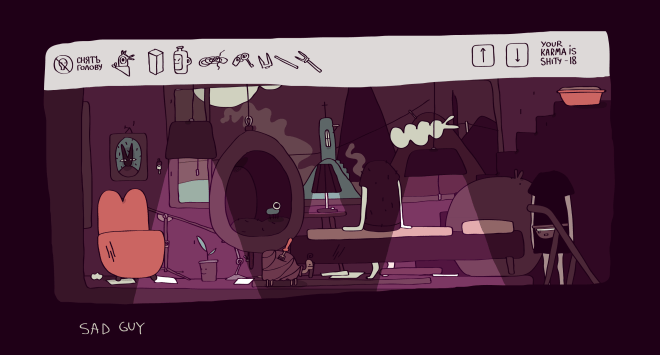
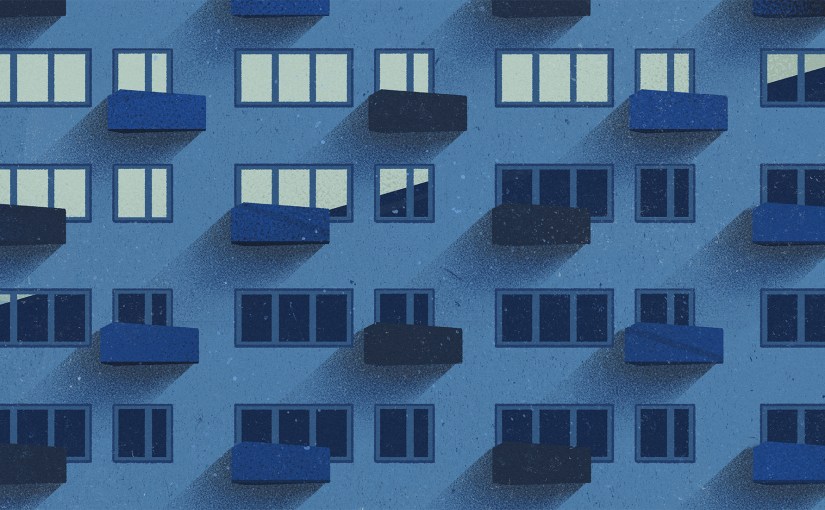
these words by Eileen Mary Holowka were inspired by the art of Marcin Wolski
New Prose: “January 20” by Ajay Mehra

why-it-show-case-01

The knurled cloth handles of Nicos’ hamper cut into his right hand.  The straps are connected all the way to the base of the bag and the weight of the laundry keeps pushing them apart.  They’re too short, now that the laundry is folded and holding the bag to its shape.  You switch hands but there isn’t enough time to rub the indentations out of the left hand before the pain in the right hand is impossible.

Nicos puts the hamper down on a bench facing the front window of a coffee shop.  People sit looking out onto the street—at the sidewalk and the bench and the parked cars and the road and the storefronts across the road that you can’t make out what they are from here.   You have to rub your hands with each other and look out as well.  How does anyone sit on this bench with the coffee shop staring them in the face.  You’d have to seem surprised all the time that you’d caught someone sipping or biting or reading.

You can’t sit next to your laundry on a bench.  It looks like you’re waiting for someone to come help you, because people can’t tell it’s done.  Is it still laundry when it’s done, and folded.  It’s laundry when it’s dirty, and while it’s getting clean, and while you fold it.  It’s clothes when you put it away.  You can sit next to clothes.  Clothes are like shopping.

Nicos had sat next to half his laundry at the laundromat.  Only because all the machines were full.  You can sit next to your laundry in the laundromat, if the machines are full and you have enough for a good-size load.  And if it’s a clean laundromat.  How do laundromats get dirty.  Car washes get dirty and the dirty ones have the strongest sprayers so you go to the dirtiest ones.  Luckily the closest car wash is filthy.

You don’t care about how a hamper carries when the machines are in the building.  Or when the laundromat at the corner is clean.  Who sends you to a dirty laundromat.  There isn’t another laundromat between here and home, so you have to buy another new hamper.  The store that sells hampers isn’t on the way either.

these words by Ajay Mehra were inspired by
the art of Pasha Bumazhniy

New Poetry: “Espionage,” by Pete Gibbon

why-it-show-case-04

CW: sexual assault


Like anyone else, I spent time & energy imagining how 007 I could be.

Like anyone else, taught on reflex to look both ways before crossing
my street

but that’s where our shared experience ends. No daily business ends
of martini goggles for me. No living through exits—lucky for them if it

never happens; also guilty. Also, odds are good
it will happen again, so

memorize that hotkey. No inept guard. No

Paintball Mode. Nights, stacked with antagonists. Every human. Every are. Seems
badass
except with no agency at all. Not like how wrestling’s fake, either. More like

when it’s dark, we’re walking home together & I flip off a car of strangers being rude
she’s not impressed. That’s a grimace. That’s a grimace because

she’s an operative with no security. Raised a spy but treated as an eavesdropper.
More like her opposite of FIGHT isn’t FLIGHT. It’s raped.


these words by Pete Gibbon were inspired by
the art of Pasha Bumazhniy

Why Black Role Models Matter


fullsizerender-1

As a young child, if someone were to ask me about my race, I would say with great pride: I am Black. Being the daughter of a Women’s Studies Professor definitely had its informative advantages – by the age of 6, I was familiar with heavy terms such as systemic racism, visible minority, and gender politics. This early exposure, untainted by perspectives of my peers, made me proud to identify as Black. Unfortunately, various life experiences caused this pride to waver. It never died completely, but at times it did temporarily burn out.

The first time my Black pride died was in fourth grade. I had just returned from Nigeria, and upon being re-introduced to an environment where being Black meant being Other, I realized that my identity was bizarre to those around me. At first, I did not realize the slight differences that caused my peers to distance themselves from me. However, when my rude awakening did happen, it altered the picture-perfect idea of my Blackness. It was my first day at a new school, and all I wanted was to be friends with the tattoo club girls, who would always be on the basketball court making cool designs for their temporary tattoos during recess. I distinctly remember mustering up all the courage I possibly could in order to approach them; more importantly, I remember my request being politely declined because the tattoos would not show up on my skin. After that, it became difficult to take pride in something that my peers considered strange – so I gave up embracing my identity in order to be accepted by them. I decided that I needed to re-define my Blackness, and I turned to the Internet for inspiration. At the time, I did not realize that re-defining such an important part of my identity in order to be accepted by my white counterparts would cause me to view being unapologetically Black as something to be ashamed of.

As an adolescent, if someone were to ask me about my race, I would pause and quietly admit that I was Black. I was no longer the young Black girl who ran around the house shouting, “sing it loud I’m Black and proud!” The girl who begged her mom to tell more stories about the Nigerian Civil War, and about the history of slavery in Canada, was gone. This young carefree Black girl was replaced  by the Black girl that loved catfish, grape soda, and fried chicken, because the media told her that this was the acceptable way to embrace Blackness. This girl refused to have crushes on Black boys because she thought they would all eventually become “thugs” and “gangsters.” She idolized Cinderella and knew that her Prince Charming could only be white. She identified as stereotypically Black in order to be convenient for her white friends, but wished she was white so that she could be exactly like her idol, Cinderella. The media told her that her Blackness was only okay when it was stifled by the stereotypes created by whiteness to control Black people and Black bodies. Her Blackness was accepted only when she realized that she was ‘other,’ while whiteness was the standard. She accepted this as the truth because Cinderella did not look like her, but the characters who did were servants, antagonists, and clowns. She truly believed that in order to be the princess she wanted to be, she had to somehow achieve this standard called whiteness.

I know the effect of not having role models that look like you in the media, and for me it was a catastrophe. When you see people that look like you represented in a negative way, you begin to believe that there is something wrong with you. The shift from young pride and innocence is subconscious and slow, but before you know it you have stifled yourself in order to attain a certain standard that the media enforces. In times of self-doubt, I looked to my movie and TV show characters for an affirmation that my Blackness was acceptable. When I failed to find this affirmation, my ten-year-old self watched the movies with the white Disney princesses and began to idolize them. But my ten year old self looked nothing like her idols and this was a problem, because in order to become them, she had to look like them.

I say all this to emphasize the importance of events like the Montreal Black International Film Festival, which took place earlier this month. This annual festival allows Black artists and creators to express themselves in an area where they are often both underrepresented and misrepresented. Representation of Black people in the media is crucial because there are young Black children out there, watching and waiting for their next idol. They all need to know that not only are they acceptable, but they are beautiful and destined for excellence. In times when their non-Black peers question their Blackness, they need a Disney princess that looks like them so they know that they too are royalty. And lastly, they need to know that whiteness is not the default, and that Blackness is not the ‘other’. They need to be able to turn on the television and see a positive representation of someone who looks like them. These young people need to be aware that unapologetic Blackness is not only acceptable, but something to be proud of.


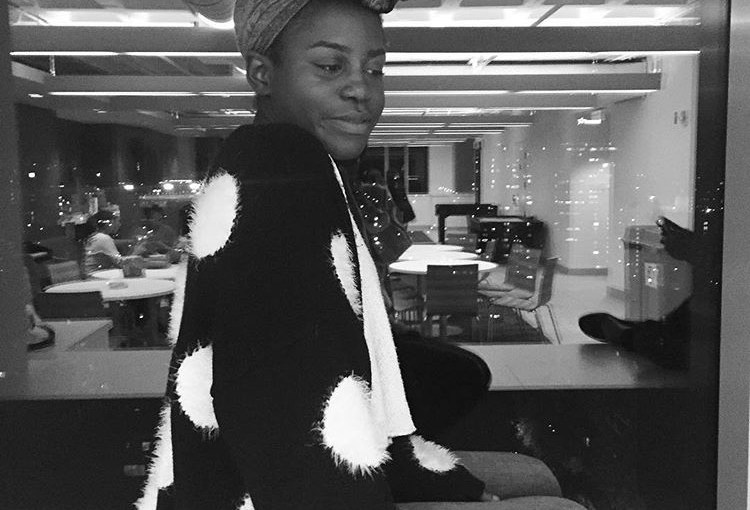
Chidera Ihejirika is a proud Nigerian Canadian in her second year at McGill University. She is an admirer of Chimimanda Ngozi Adichie and a lover of storytelling, dance and hiphop. 

“hotel,” new poetry by jesslyn delia smith

why-it-show-case-03

if i sift with my fingers
through fabrics, not
look away, be
domestic

lift and carry the 
weight of old skin
before it can rise 
from the floorboards

arrive in one piece
and then
stay

grow a garden to nowhere at all

beneath a white flame
with my mother,
her mother,

dig for
reflections
we’ve buried
for years in the sand

what’s left is a body,
skin tethered to bones,

grown but from
nothing
at all:

the

small of
my back
just a space
for your hand
to announce
when it wants to be heard

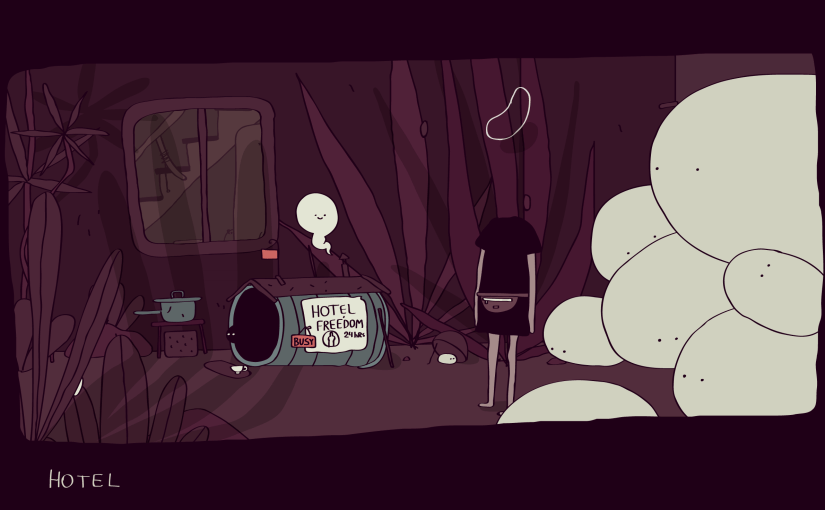
these words by jesslyn delia smith were inspired by the art of Pasha Bumazhniy

“A Standstill,” new poetry by Khatira Mahdavi

why-it-show-case-02

I called you

and gave you my word

that between right now and forever

there is a house of mirrors,

and then there is you.

You, a standstill—

the starting point, the finish line

and all of the in-betweens.


You called back

and whispered across the line

that from here until anywhere,

I’m your favourite ride along.

these words by Khatira Mahdavi were inspired by the art of Pasha Bumazhniy

“Make Me,” new poem by Justin Million

Alison_Scarpulla_1.jpg

so we took up inspired
fights like the -isms,

the air, the water,
the rolling glaciers,

the fears we feel
in homes, our least conversated

doors staying owned,
most only accepting MEN, to say (like anyone intelligent asked or cared)

they still exist
to pretend they wouldn’t jerk a man off in a secret vacuum.

The glow of a few decades’ mistakes
still spreads red,

despite us being in charge forever and no one else, no handed down way, no alien us,
most mostly

alike, tho some stopped reading this poem
because of my science on men wanting to try cock at least once,

my science being don’t make an individual
a video of that same individual being you. They are not you.

This is where we’re at.

No gigantic man handing us down to us. I can’t stress that
or anything else enough. I am shaking for a world of reasons.

We have a 2000 problem, 0000’s of MEN
are videos displaying how dim men continue

to study spectrum
with the light out.

That last bit was a metaphor
for porn, men’s rights, and the new Nazis

(you lost fucks see me on George Street, stab fast,
or you’ll lose the personal war too this time);

this open bomb of a world.

Amazing we exist in this at all. Amazing we exist.
Amazing.

The young man at the protest about to climb the lamp
can’t be Gene Kelly,

trained to keep his hands off the high light,
take home as much grace as he can scrape off the bottom.

There is a baby who is important to the future lying
by the political blast zone Schrodingering,

and because everyday’s a news day, the knife
or branch in your hand;

keep the future you don’t know down is the red lesson. Stab a gay baby.
You have to have a gun,

your right to not much isn’t God
given, or taken. It’s plain. Your belief is a ladder to another finity.

In charge of nothing
but fixing

the world we went into
debt to see, and have

since brunched back
to our mothers and fathers,

lived inside basements, inheritances,
until we had the wall space to hang

what failed us; photos of hairdos all
ecstatic to be sepia, cross-legged on the wall, denying they’re putting us down;

every memory back then
straight.

Oh mother,
come back to bread.

Yes, we are furious,
because we were ushered in, without shushing, when the world was still

blind, and quarrelling over how much YES is left when it’s a ruin, and the whole
time just around the corner

You, absolutely
not your father,

maybe President;
worth a shot-

these words by Justin Million were inspired by the photography of Alison Scarpulla


“Sleeves,” new prose by Charlotte Joyce Kidd

alison_scarpulla_2-1
She stood on the edge of the bedroom. The walls, floors, and light were grey. She was wearing her shoes. The room was cluttered. Some of the clutter was hers, natural to her. Her uniform lay crumpled vertically in a corner by the closet; she’d stepped directly out of it and into her party dress that night. The covers were pulled back on the bed. The sheets were unruffled and unstained. Only the pillows spoke: she had owned the same two since early undergrad, and she stacked them to sleep alone, spread them for a guest. They looked especially thin and silent, offered no apology to her where she stood in the doorway.

She nudged a foot into the room. The toe of her boot landed between a pair of tights and a wool sock. The tights were torn, but that didn’t mean anything; almost all of her tights were torn. Still, something about their twisted angles, the way they were tangled into each other, suggested they’d been the victims of something. Stop, she thought. It’s only because you know what happened. She tried to open her eyes wider. The walls were covered in drawings and poetry made by people who had been her friends. The colours now seemed ludicrously bold, broadcasting a goofy happiness that was too tempting to crush. The uniform was in the corner to her left. She stepped past it. On the floor by the edge of the bed was the necklace she’d been wearing that night. The clasp was broken. Two beads had come off. One was hiding in the shadows under the bed and one was halfway across the room. Her eyes flew from the abandoned bead to where, floating gently, a strip of frayed, gauzy material was snagged on a corner of her nightstand drawers. She climbed across the bed, drawn to it and not caring about her shoes on the furniture. Strips of translucent white fabric lifted gently from the floor and swirled around her head. She tried to fight them away as they surrounded her, nudging her and blocking her view. Then they settled back down to the ground, ballooning and dropping like baby spiders’ webs. On the other side of them, between her and the door, lay the shell of their progenitor, the torso of the see-through dress she’d been wearing that night.

Then it happened quickly. She remembered where everything was and moved fast to see it all: the lamp knocked from the nightstand, her underwear balled up by the leg of the bed, then dark and square and too concrete, his passport (she’d dropped it in a mailbox days later, hoping that it would find its way back to him so that she could continue pretending nothing had happened) and then she crouched down and looked under the bed, and as always, the corner of the bed frame was broken, the wood splintered, the slats halved. The mattress still drooped in this spot. Everything’s here, everything’s here. Breathlessly, she searched harder. She couldn’t move anything much; she lifted things and put them down again, cursing herself for never tidying up, she opened drawers and shifted stacks of books and touched the tights that sent pained shivers up her arms into her spine. She looked under the covers and then started craning her neck and searching impossible places: the ceiling, the full-length mirror (her own reflection), were they hanging from the curtain rod? Please please please. She could hear her alarm ringing. She shut it off and willed herself back. Again. Door, tights, beads. This time, the pieces of torn dress stayed in their place. There was the dress itself, but where were the sleeves? Where had they gone? The sleeves were loose and gauzy, like the rest of the dress, and they had elastics at the wrists so that night, when she’d been dancing, arms in the air, the dress had billowed around her and then swayed away without a care in the world and where had they gone? Had he taken them? The sleeves of her dress? As she slipped away, she thought she saw them outside the window, floating over the tops of smoky buildings far away.

 this prose by Charlotte Joyce Kidd was inspired by the art of Alison Scarpulla

“A Field Guide to Fairies,” new prose by Samantha Lapierre

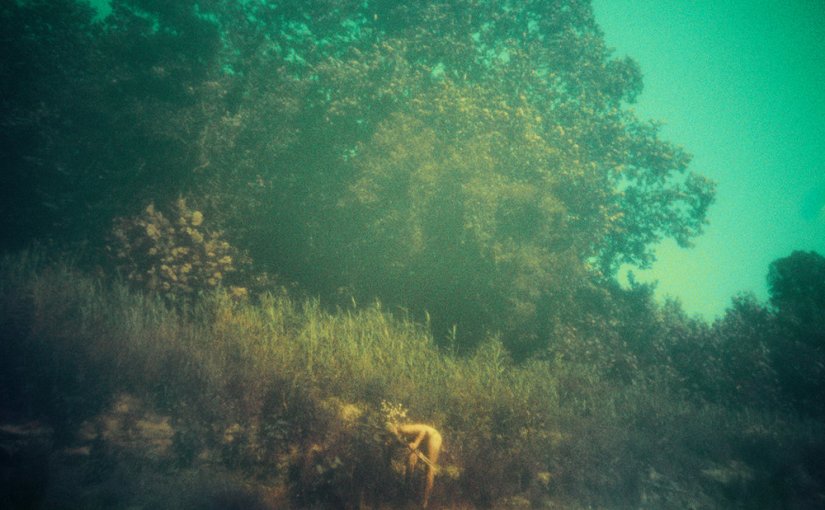
Autosave-File vom d-lab2/3 der AgfaPhoto GmbH

When I was young, my mom would dress me in a warm coat and bring me out into the autumn woods next to our cottage, and we would look for fairies.

In my mittened hands I held a pen and notebook. My mom held a pack of cigarettes. We would traipse through the crunchy leaves, our boots sinking into the soft ground. We would weave in and out of the birch bark trees, and our dog, Pal, was never far behind.

My mom would tell me that fairies live in small nooks and crannies in the woods. They live in trees, they play under the large tops of mushrooms, and they are magical. They are friends with birds, bunnies, and other creatures.

I’d spot fairy houses and jot down the sightings, and my mom would spot some too. She was at her gentlest during fairy expeditions. She would sip coffee from a travel mug, hold my hand, and listen to my excited chatter before it was time to leave.

When I grieve for my mom now, I grieve for her at her gentlest. The leaves in the treetops turn orange. A chickadee calls out from somewhere in the cityscape. I try not to grieve too hard, or too angrily. When I smell cigarette smoke in the cold fall air, I am still a girl wrapped up tight in her secondhand coat, surrounded by fairies.

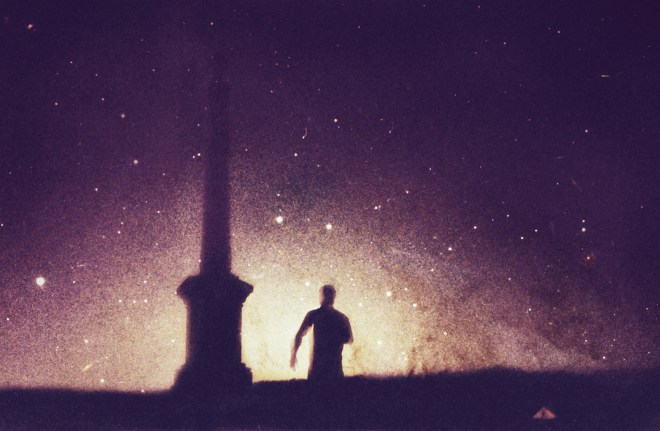
this prose by Samantha Lapierre was inspired by the art of Alison Scarpulla

New prose by Annie Rubin, “We Are Survivors”

christinekim_3

It felt like dying, only you’re expected to reincarnate much faster: rapid loss of breath, chest heaving to compensate. Dizzy. The room would fade in and out. I watched myself descend into fight or flight, an encumbered observer over my own body.

At fifteen, I asked to be separated from that part of my identity rooted in fear. Was it possible to unlink? Could I attain the division of self: an existence without the weight of imminent extinction?

My father felt it too. He brought me tea one night, bourbon and honey. It Will Help You Sleep, he promised. What If I Die, I asked. You Will, he said. But Not For A Long Time. We Are Survivors, You And I.

They gave me Zoloft to stop the shaking and Seroquel to help me sleep and Prozac when I had the urges to go to temple when it rained and they gave me Lexapro for the side-effect depression. They gave me Klonopin and Ativan and Valium and Xanax was my favorite; it made the room spin the least.

The effort was in solid determination to mute what so viscerally tied me to my ancestors: that brink-of-death anxiety we all know so deeply. It ebbs and flows through our veins tethering us to each other, the Jewish people.

Maybe we didn’t speak Hebrew at our Seders but the bloodlines flowed. We were descendants of those lucky enough to hold on, who knew they had to keep living. At family gatherings, the room would get silent. Why Is Our Family So Small? someone asked once. The Rest Of Us Were Killed.

But the drugs seemed to perpetuate more drugs; we were desperate for some kind of medicalized solution, capitalizing on our ingrained identity. Could we learn to escape? Or to ever quell the pharmaceutical self?

The healing had to begin through the (re)discovery of voice. Shrouded by years of institutionalized hate, the beauty of our culture must manifest itself in celebration, unapologetic lighting candles and sharing kindred spirit. Singing and loving and never- forgetting, we must come out of hiding. I want to hear each voice.

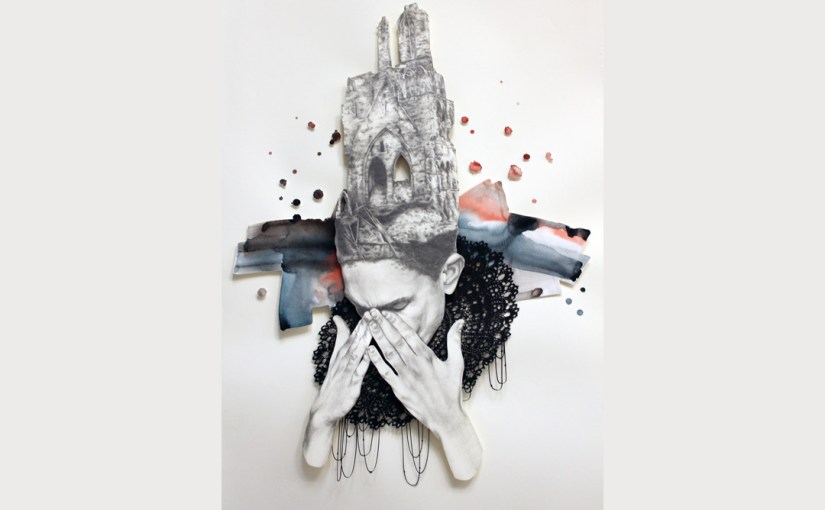
this prose by Annie Rubin, “We Are Survivors,” was inspired by the art of Christine Kim 

From Annie: “This work is inspired by the image of a character looking poised and overwhelmed, the base, supporting a dilapidated castle. The figure represents the protagonist’s Jewish ancestry in the strife and struggle of the Jewish people, who bear a weight that has been carried through generations. Striking colours provided a glimmer of hope through the subversion of institutionalized hatred, confiding in the expansive possibility of self-expression.”