On Self-Doubt: “Weather”

unnamed

It’s been raining for days. The girl has just been feeling like rain lately. She’s not sure when it’ll stop, but she knows it can’t go on forever.

            She sits in the waiting room of the office and thinks about how boring it all is. The same magazines as always, the same water cooler across the room, the same assistant answering phone calls and shuffling papers.

            The doctor comes into the waiting room and says the girl’s name. He holds the door to his office open for her, and she gets up slowly, walks toward him past the painting of a horse, past the painting of a whale. When they’re both in the office, he closes the door behind them.

            “So,” he says, “how are we feeling today?”

            “How do you think?” she asks.

            “I thought we were past this.”

            “Apparently not.” The girl sits in the uncomfortable chair she always sits in. The doctor sits in the more comfortable chair, takes the lid of his pen off with his teeth. The girl leans back.

            There’s the sound of thunder and the doctor looks out the window.

            She saw the first doctor when she was eight. He called her problem an Extreme Emotional Response to Weather Patterns, but even then she knew it didn’t explain anything. What was inside her head matched the weather before she ever saw the rain or the sun or the tornado. She could always feel the truth of it.

            “What is good or bad weather anyway?” the doctor asks. She can tell he’s frustrated with her. They always get frustrated eventually. She gives this one another two weeks. “If you’d been feeling great for a month, say, so we desperately need rain, shouldn’t it rain then even if you’re feeling great, since rain would be the great weather?”

            “I don’t make the rules,” the girl says, crossing her arms.

            “Let’s try a visualization exercise.”

The girl knows how this goes; she closes her eyes.

            The doctor speaks slowly, confidently. “Think of a forest. You’re deep in the forest. So deep that nothing can come through the trees. It’s very, very dark. You’re feeling angry today, so let yourself really feel that. Stay there for a minute.

            “Now I want you to start walking. You’re walking through the forest and you come to a clearing, and the first thing you notice is that it’s sunny. You can smell it and feel it as you come to the clearing.”

            The girl feels her anger and she feels the sun on her shoulders and she opens her eyes.

            The doctor pulls his sweater a little tighter around his body.

            “It’s only going to get colder,” she says.

word by Leah Mol 

“The artwork reminded me so much of those moments when a storm is just beginning or just ending. My story is about a link between weather and emotion in the mind of a girl who nobody believes. She is, after years of trusting her own instincts, finally feeling the self-doubt creeping in, which could be the ending or just the beginning of the storm.”

colour by Nadoune Doune 

“Nadine est née à Montréal, d’une famille venant de s’installer d’Algérie. Elle grandit dans l’école buissonnière, une école dédiée à l’apprentissage par l’art. La musique et le visuel sont toujours présents dans sa vie, dès qu’elle le peut elle voyage avec son violon et ses poèmes/dessins au Mexique, dans l’ouest Canadien, et aux États-Unis où elle s’y installe un an. C’est une autodidacte qui apprend par les expériences, la rue est son terrain de jeu et où elle est le plus inspirée. Elle essaye de rendre la connaissance accessible en donnant plusieurs ateliers (notamment dans une coopérative d’art communautaire nommé le Milieu qu’elle essaye d’aider à bâtir). Elle est intervenante sociale, vend des popsicles artisanaux, et travaille présentement sur un projet de prise de parole chez les femmes immigrantes.”

“Nadine was born in Montréal to a family who arrived from Algeria. She grew up in the Buissonière School, where learning is achieved through art. Music and aesthetics are always present in her life, as she travels with her violin, her poems, and her drawings to Mexico, to Western Canada, and to the United States, punctually for years. The street and her experiences are her main sources of inspiration. She works to make education and art accessible by giving workshops – notably in Le Milieu, a community art cooperative that she’s involve in. She is currently working on a project that centers on the voices of immigrant women.”

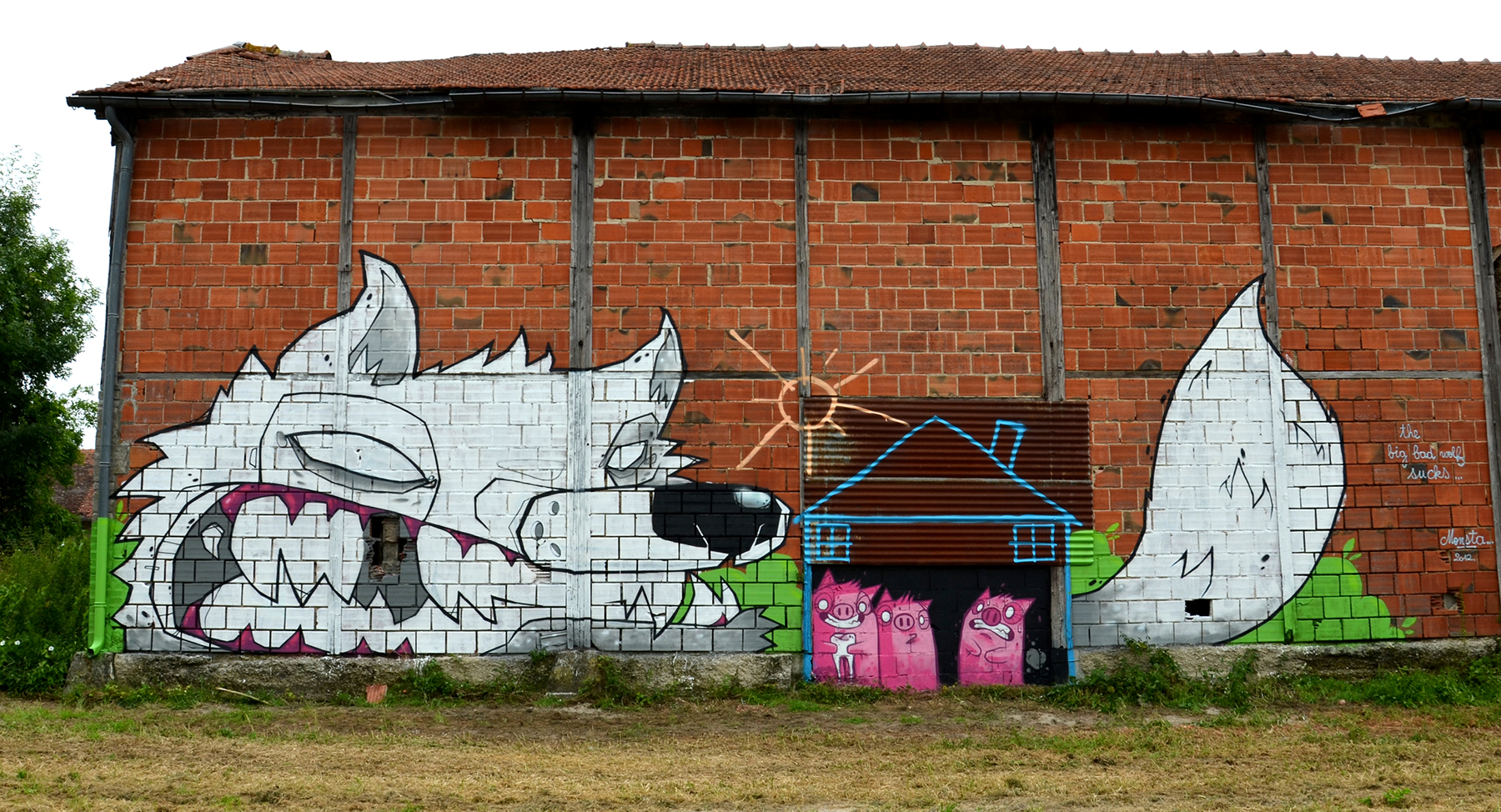
his wolf

piiiiiiiiiiiiiiiiiiiiiiinnnk

Dad got anxious. Mama didn’t: she just swished around beautifully like colour in a paintbrush jar, singing Moon Shadow and tying scarves around her forehead so I never really knew how big it was. But Dad was anxious. His thin body shook inside his dressing gown, taking the tea Mama would bring him in his match-stick rouge hands, thanking her with his quiet voice, his normal voice; the voice I never heard raised.

Dad was so thin because he barely ate, and anything he did eat he told me he tapped away. He did tap it away—I watched him each night after school as he sat as close to the fire as he could in winter, and as close as he could to the fan in summer, his foot tapping at the floor and his hands tapping at his crooked, dancing leg.

Dad wouldn’t eat pigs—he said he was too fond of their pink hairy backs and the way they really had those curled tails you saw in picture books. He wouldn’t eat apples for obvious reasons; ‘they’re so happy up there on the tree and then we cruelly pick them down.’

When Mama would make me eat my carrots and corn, Dad would sit there smiling faintly, his plate free of anything but bread and thick shiny butter. He didn’t have to eat carrots and corn. I didn’t shake like him.

One morning I got up early to see whether Mama had left the butter on the kitchen table. I liked to spoon curves of it into my mouth before we had breakfast, so the grease would sit warm and safe in my mouth. I remember it was winter-time because I dragged my mittens onto my feet after searching to no avail for my slippers and they made it hard to get down the stairs without slipping. As I passed their room I heard Mama’s voice low and hurried and edged my head around the door. Dad was lying on the bed, flat and old, and Mama was standing above him. She was crying—I could see the tears dropping onto the doona and the air felt thick with worry and damp. She looked over at me.

‘Daddy’s sick darling. He’s very sick,’ she said, gulping, clutching at the doona’s soggy edge.

I asked her what was wrong with him, standing as tall as I was just there in my mittens.

‘His wolf has come again darling,’ she said. ‘His wolf has come to scare him.’

I ran to my bedroom, tripping on stairs in knotted wool mittens, grasping at the wooden edges to pull myself up and up.

I sat tight on my bed, wondering when my wolf would come.

word by Laura Mcphee-Browne

colour by Monsta

piiiiiiiiiiiink

shoplifting

EYEZ

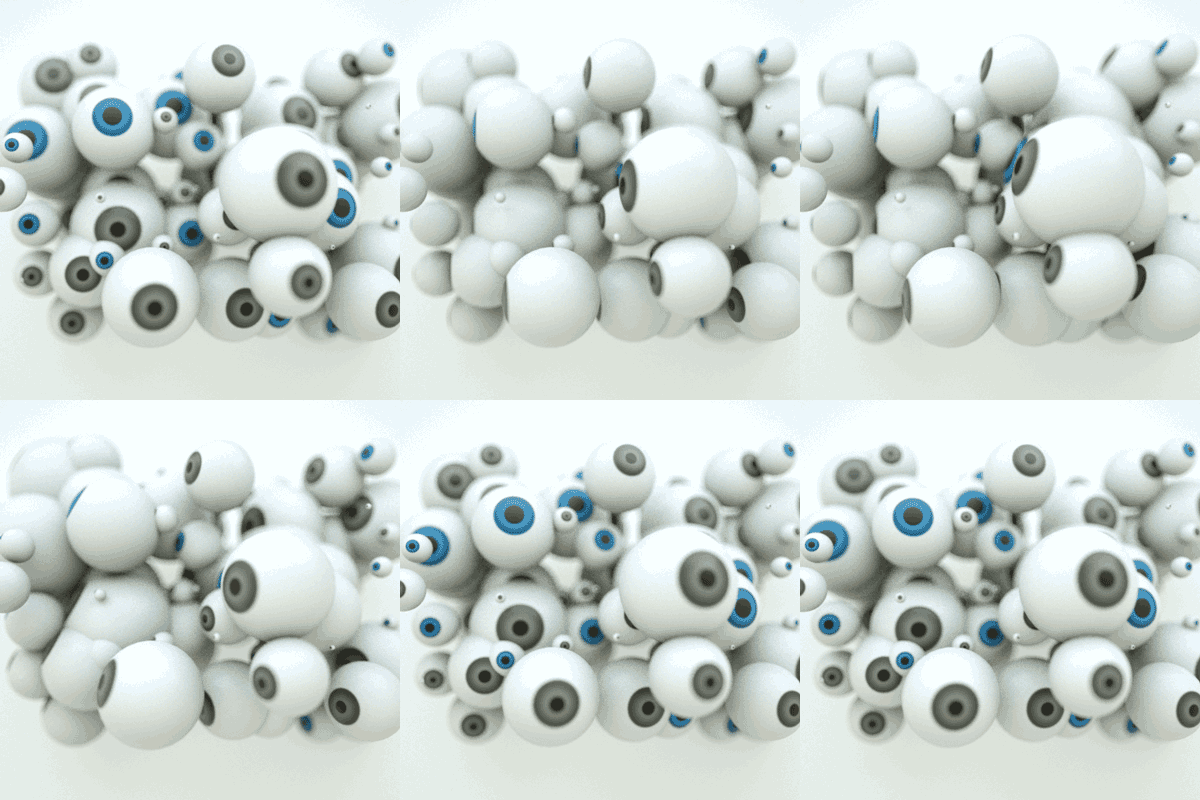
“The first rule,” Joanna says, “is make sure nobody’s watching.” She tells me that because she wants me to be ready for anything. “It’s pretty obvious.” She rolls her eyes.

Make sure nobody’s watching. I say it three times in my head. I know what obvious means.

Joanna is five years older than me. We have the same mother but we live in different houses. She has a boyfriend named Peace. He’s waiting in front of The Bay because he can’t smoke inside. We’re walking around the mall looking for a store that looks easy for my first time. The mall is shaped like an L, and we’ve already passed every store. Joanna is chewing gum and blows little bubbles, over and over.

            “Can I have some?” I ask. “Gum?”

            “None left.”

Joanna stops in front of a store called Girl Thang. She tilts her head, staring into the store, and blows another bubble. “This is good,” she says.

As we walk through the entrance she whispers, “Just be normal.”

Just be normal, just be normal, just be normal.

I follow Joanna over to a table covered in T-shirts. Just be normal, just be normal, just be normal. I try to lean on the T-shirt table in a normal way.

Joanna glares at me. “Pick something to try on,” she says, in her fakest friendly voice. I look for things that don’t have a plastic tag on them, just like Joanna told me. I find two blue T-shirts that remind me of water and the sky and a sweater with a panda bear on it. I walk back over to Joanna but she motions for me to follow her and goes into a changeroom. Make sure nobody’s watching, make sure nobody’s watching, make sure nobody’s watching. I look around. The only person in the store is a girl at the cash register. She’s biting her nails from the sides.       

            “This is good,” Joanna says in the change-room. “It’s expensive.” She shoves the panda bear sweater into my backpack.

            “What now?” I ask.

            “We have to buy something,” she says. “You always buy something.” Joanna chooses a cheap T-shirt she didn’t even try on.

We walk up to the counter and the girl smiles at me. “You didn’t like that bear sweater? It’s adorable.”

Joanna smiles. “She has bad taste,” she says. She takes her wallet out of her coat pocket and there’s a stick of Juicy Fruit in foil stuck to the outside.

We don’t want the receipt.

Joanna slips the gum between her lips and I make the foil into a swan and when you pull the tail the wings flap.

At night, I sleep with the panda bear sweater. I fall asleep.

word by Leah Mol

colour by Vincent Viriot

the artist

FMR-3051

Before Bre and Adam walked into the house, the realtor gave them a warning: Some things would need to be changed.

“You might not like it much,”

“Why are you showing it to us then?”

The realtor shrugged. “It’s in your price range. There are two bedrooms. Just try to imagine the rooms looking the way you’d want them to look.”

The house was a house. None of the rooms had doors. There was no kitchen sink. The second bedroom was where the living room should have been. Adam had to go down to the basement by himself because there were two broken stairs and he didn’t want Bre to fall. He’d been wary of everything lately. He came back upstairs, stuffed his hands in his pockets and shook his head, sighing.

“Who’s ready to see the bathroom?” the realtor said, clapping her hands in a show of enthusiasm.

 FMR-2912

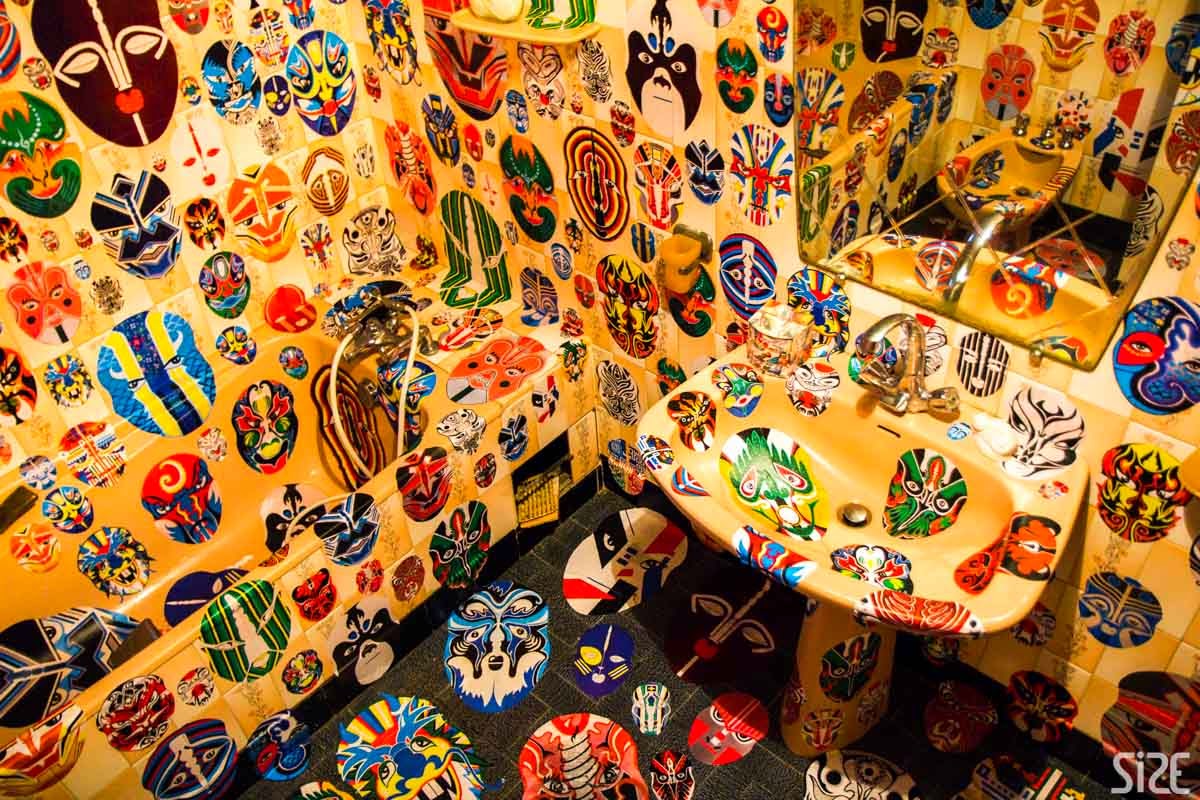
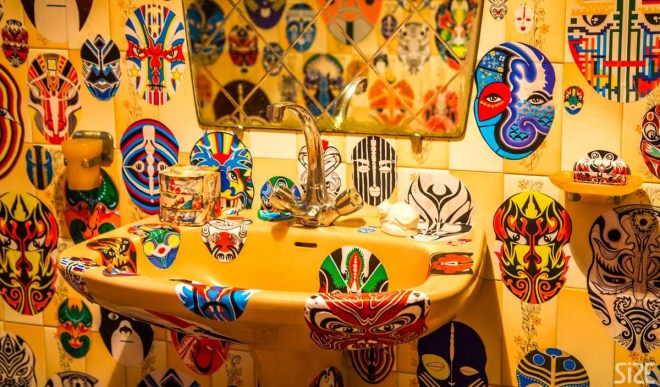
When they stepped into the bathroom, it took Bre a minute to realize that’s where they were. Everything—the walls, floor, sink, toilet, bathtub—was covered with pictures of something. It made it seem like the room was empty, fixtures blending together until they all became one thing.

“What are they?” Bre asked.

“I don’t know. The man who lived here before was an artist.”

The realtor whispered the word, as if it explained every little thing that was wrong with the house.

“They’re lucha libre masks,” Adam said. “Mexican.”

“It certainly seems cultural,” the realtor whispered.


They hadn’t thought finding a place would be so much work. Adam had shelled out money for the cheapest realtor. He’d told Bre that having someone on their side would lessen the stress.

“So, what’d you think?” Bre asked.

“Are you fucking kidding? It was terrible, and the rotten cherry on top of the pile of shit was that bathroom.”

“At least it’s interesting,” Bre said.

“I don’t want to settle for interesting.”

“We’re going to have to settle for something. Isn’t interesting better than nothing?”

Adam looked straight ahead, but he found Bre’s hand with his as they walked into the wind.


Adam had grown a beard, and Bre was seven pounds heavier, but the house looked the same. When the movers dropped the first boxes in the front room, the house sighed.

That first night Bre couldn’t sleep, so she had a bath. She sat in the hot water and looked at her body, the size and shape of her belly seeming as absurd as the masks staring up at her through the clear water.

She tried to name all of them, but didn’t get far.

The two towels they owned were still packed in a box somewhere, so she left puddles as she stepped out of the bathtub. She looked at herself in the mirror – her face was just another mask, just another part of a whole. She closed her eyes and the child inside her knocked three times. 

Not yet, she thought. Please, not yet.

sdb 2

word by Leah Mol

colour by BauBo

the fire

unnamed (2)

They’d seen a caiman at the zoo, her and Sadie, when they were little, maybe five and eight.

“What’s a caiman?” Sadie had asked their mother.

“It’s an alligator.”

She had read the sign and whispered to Sadie: “It’s not an alligator. It’s different.”


 “I was just letting her know I still existed,” he said. “So I lit her pillow up. It was a harmless prank.”

You burned down half of campus, they said.


People watched as the fire burned, from the other, safe side of campus, where the arts buildings were. It was pretty, if you let it be, the way it was black and orange and danced with the red and yellow leaves of October in Ontario. 

Thank goodness it was reading week. Thank goodness there was barely anyone on campus. Otherwise who knows what you could have caused. Do you understand the implications of your actions?


She went back for the caiman. At least, later she would tell herself she went back for the caiman. Once it was dead, it was easy to mourn its passing.

The truth was that she liked it. Her lab partner, a guy named Robert who was already crotchety at age twenty-seven, hated the thing. He called it Stinkeye and shuddered when he had to feed it.

She’d called Sadie to tell her, her first day on the assignment. “I’m a lab assistant now – we’re studying caimans.”

“That’s nice, Sab. What are you finding out?”

Sabrina had started to explain, the microbe that lived between the teeth, how they might learn to reconstruct molars, but she felt Sadie stop listening almost immediately. “How are the kids?” she asked instead.

She thought she was going back for the caiman, but when she reached the lab, she realized how silly that was, how improbable. How had she planned on carrying a caiman? Was she going to wrap it up in a towel, cradle it like a baby? Put it in a duffel bag, sling it over her arm? No, she could not save the caiman; she went back for the research.

She stood with her fingers to the glass tank, and thought that some understanding passed between them. She thought she saw, in its reptilian eyes, a knowledge of what was to come, an acceptance. Then they flickered shut and all that remained was its broken zipper mouth and its listless, horny skin.

She took all of the files on the caiman, all of the pieces of paper, all of the very important measurements and observations, she gathered it up and took it back to her apartment, where it sat in stacks on her living room floor until they were moved to a temporary lab where they bought another caiman. 

The condemnable actions of one student have been responsible for the loss of countless hours of research and millions of dollars of lab equipment, the dean said.

And the death of a caiman, she thought. A charred little skeleton in the wreckage somewhere.

word by Charlotte Joyce Kidd 

colour by Russell Cobb

the Bengal’s meal

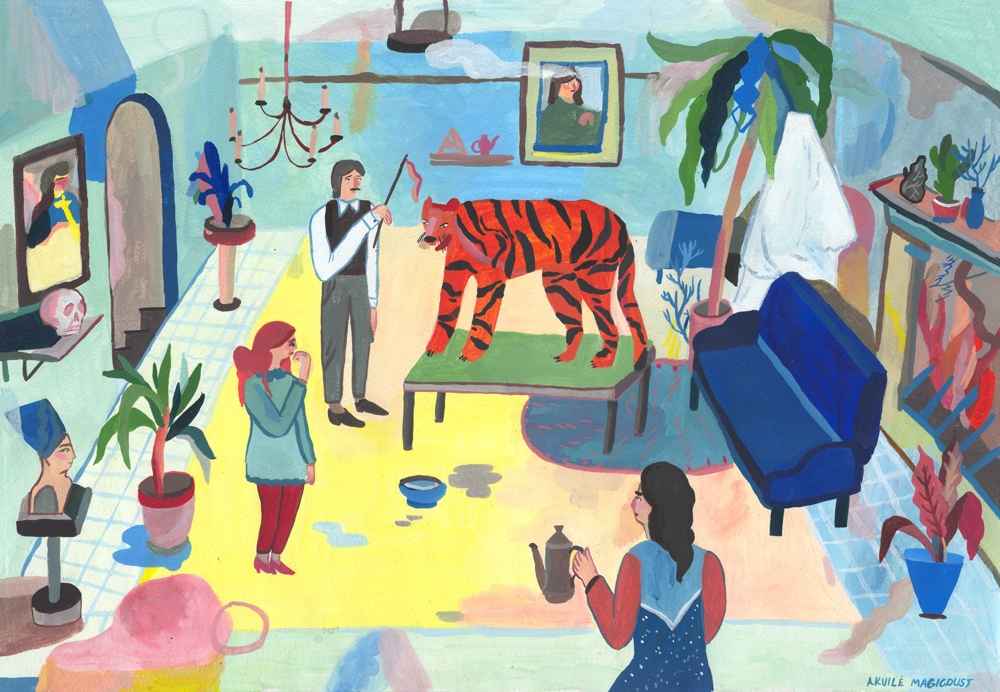
tiger-room-akvile-magicdust_1000

The drug, I’m told, is a fairly potent offshoot of the LSD compound studied by Timothy Leary in the mid-late sixties, whose experiments (and subsequent documentation of said experiments) with the drug were in no small part responsible for its explosion in popularity with the Flower Powerers. As the acid kicks in, I begin to wonder whether the old adage “they don’t make ’em like they used to” can be applied to hard drugs: I have a difficult time believing they made shit like this in the sixties.

The reputed hallucinogenic properties of this particular concoction, nicknamed The Bengal by the ever-growing population of acid-users in the Greater Toronto Area, would seem to explain not only the sudden appearance of the fuzzy death machine, smack in the middle of a reluctantly-attended dinner party, but also why I, sitting on the couch, seem to be the only one who is vaguely unsettled by its presence.

     I scream: THIS BENGAL IS DAMAGING MY SENSE OF CALM

The fichus beside me has no immediate response. I wonder if I’d have better luck with the poorly-potted orchid across the room, where a man with a stunning Selleck-esque moustache and a woman wearing a sweater made of what appears to be ocean waves are enjoying a lively conversation about what I’ve found to be the only obligatory topic at such gatherings: American politics (what with Canadian politics being completely devoid of the incendiary talking points required of the vaguely-informed yet heated exchange that always occurs at these sort of functions). I ignore the roars of panthera tigris and tune in.

     The overwhelming cultural and political ambiguity surrounding the renewed American presence in the Middle East…

Selleck 2.0 reaches for an hors d’oeuvre. The tiger watches. For God’s sake man, not the cocktail weenie: YOU’LL LOSE A HAND.

     I yell: YOU’LL LOSE A HAND

The tiger looks to me. Green eyes ablaze, tail twitching with a sort of unsettling anticipation, it watches me.

     I yell: WHAT’S HIS NAME

If I’m going to be eaten, I deserve to know who ate me.

     Reginald, comes the disinterested response.

The woman, in waves, pipes up.

     Rather regal name for a tabby, isn’t it?

     He goes by Reggie.

     I yell: TABBY…TIGER?

A light-bulb flickers in my acid-soaked brain. A tiger morphs into a tabby. At first, I am relieved. As the man drones on about drones, I long to be eaten – give me death over politics at any time of the night.

word by Josh Elyea

colour by Akvile Magicdust 

rocky mountain blues

Screen-shot-2013-05-01-at-20.40.36

I wanted to live in the mountains.  I even got a John Muir tattoo to prove it: Scrawled right across my heart, complete with an open road and clip-art-skyline. It says the mountains are calling, and I must go. It felt less cliché when I was 22, in the city.

As I shovel snow off my front porch, staring out at the very real skyline of the Canadian Rockies, all I feel is cliché.

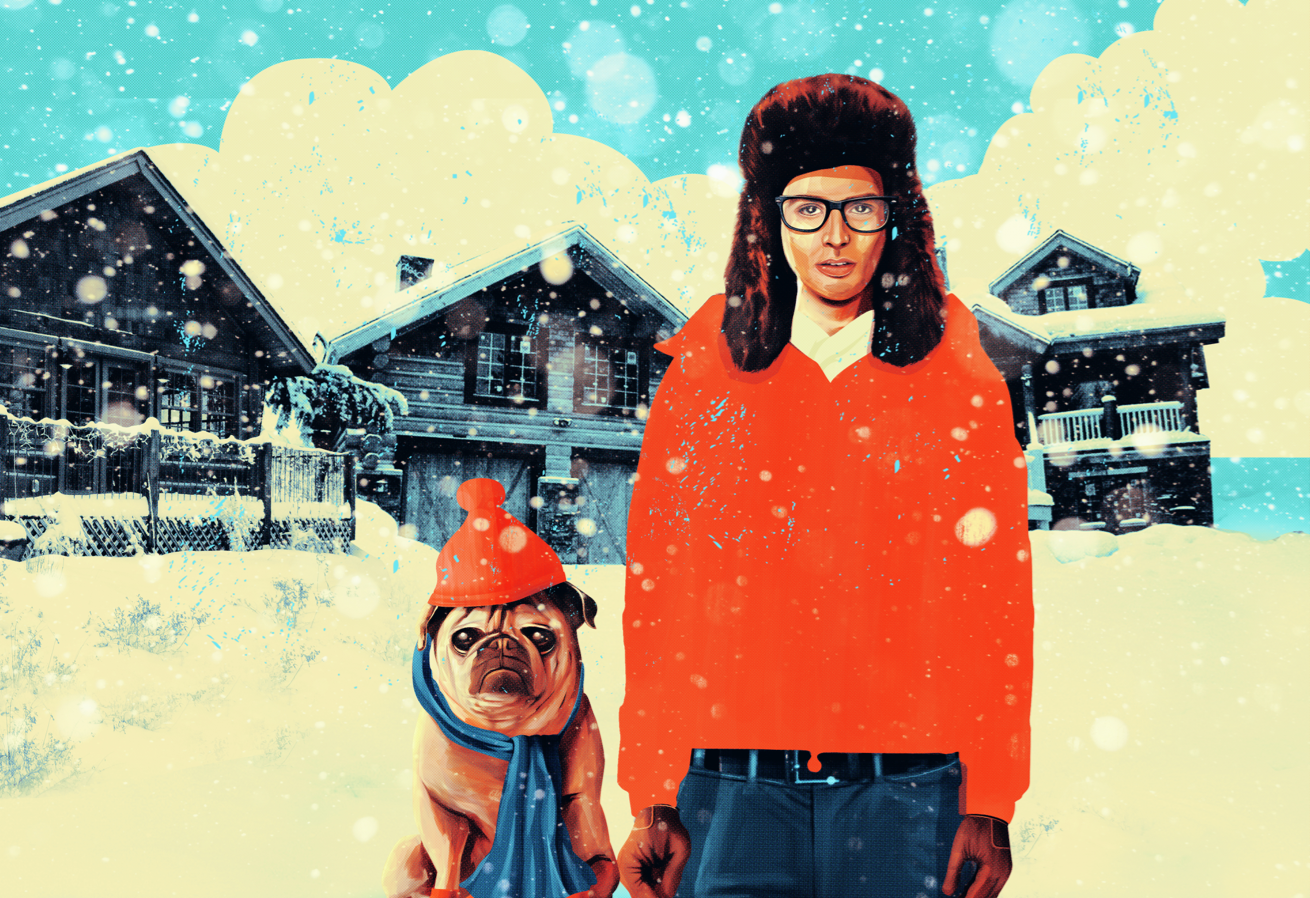
My Buddy Holly glasses are fogged as I venture inside – can’t see a damn thing without my glasses. I rub them clean. The fire, stacked high, burns bright in the corner. The familiar sound of roasting logs is as comforting to my neurosis as the heat is to my hands. I’ve always wondered why fire calms me down. Maybe it’s an imprint, I think, a long-lost instinct from our past that tells us a crackling fire will keep the dangers of the night at bay. I place another log on the fire.

Fumble sits by the fireside, staring out at me from between a toque and scarf. I named the dog Fumble as a joke, really: I played football growing up. The little bastard was more trouble than he was worth, but I couldn’t very well get rid of him now… my only company on this God-forsaken mountain. The woman who’d bought him had long since gone, vanished into the cold, cold night, the only kind of night I can remember now.

I’ve been on this mountain too long, I think, with six months left on a two year contract.

Six more months and I might start talking to myself, I say.

Whoever said Hell was hot was lying: Hell is a cold mountain with a pug for company. I pour a glass of scotch and look into the fire.

Then again, it’s my hell, I say.

And it’s not so bad, really. I’ve got whiskey, weed and White Stripes records. I’ve got Howlin’ Wolf on vinyl. I’ve even got some B.B. King to warm me up when I’ve got the Rocky Mountain blues.

Were things really any warmer down there, before, with everyone else?

word by Josh Elyea

colour by The Black Dynasty

bonsais and bad manners

10363475_10100669499245845_2793881420624295760_o

My ticket is one-way, CHICAGO-SEOUL. I’d always wanted to go to Chicago- Bill Murray is from Chicago, and Harrison Ford, too- Han fucking Solo and Indiana Jones. My layover is four hours- not long enough to leave the airport. I’m hungry. Can’t find a place that sells deep dish pizza. Can’t find a deep dish pizza in O’Hare. Maybe I’m not looking hard enough. Maybe it’s just 9:30 A.M. I try to meditate.

I must look ridiculous, sitting cross-legged in my Chucks and leather jacket, trying to ignore the hustle of the masses, molasses. Worrying about looking ridiculous defeats the purpose of meditation, I think. Can’t focus. Take out my laptop. Twenty minutes of free Wi-Fi: That’s all you’re given these days: Twenty minutes. A taste. Bastards might as well be pushing drugs. Take out a book. Kerouac’s Dharma Bums. I read it writing my thesis, not the same as reading it now. Get on the plane. Take off is bumpy in the tail. Cruising altitude.

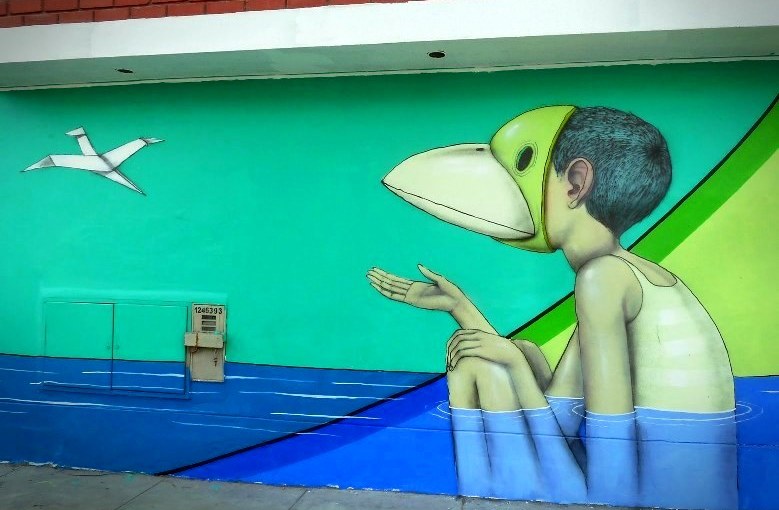
The sun is so much brighter above the clouds. This is the closest I might ever be to it, I think. I watch the wing tilt up, towards an ethereal blue. People sneer at me and the angry sun streaming in my window. I feel like I’m watching myself from the cloud, or from the ground, like a bird. They’re trying to sleep. I don’t care: Nobody should sleep this close to the stars. Jimmy Page massages my eardrums with the Ramble On as I stare over the pillow-soft clouds. Zeppelin II- so underrated. I remove my headphones when I notice my neighbour talking to someone in front.

Now you see here, Chuck, alls I’m trying to say is equilibrium is possible, even if you have to fly 32,000 feet to find it.

This cowboy, looking like Woody Harrelson, steals me from the clouds. Maybe it is Woody- sounds like him. I’ve been awake too long, I think.

It’s about balance, he says. He is talking to the chair.

Are you talking to me?

Who else?

My name isn’t Chuck.

Look, there: Perfect sorta balance. He points out the window. Man wound tight as you oughta realize there’s a simplicity to this: Equilibrium. You’ve gotta learn to balance your fuck yous with your Feng Shuis, your Bonsais with your bad manners.

We’re flying to Korea, not Japan- wrong Asian country.

I’m saying that in a backwater Buddhist temple or here, up here, at 32,000 feet, you’ve gotta realize you won’t have peace until you reconcile your recklessness, you hear?

I wanted to reach out and touch his hand to make sure that he was real.

You’re pretty smart for a cowboy.

I’m not smart, don’t know a damn thing. He lowered his Stetson over his eyes. Just a man who has to fly 32,000 feet to find his equilibrium, ‘course.

Bonsais and bad manners… I looked back over the clouds. Made sense up here, down there?

word by Josh Elyea

colour by Jade Rivera

I’m the center of the galaxy

geometrieva

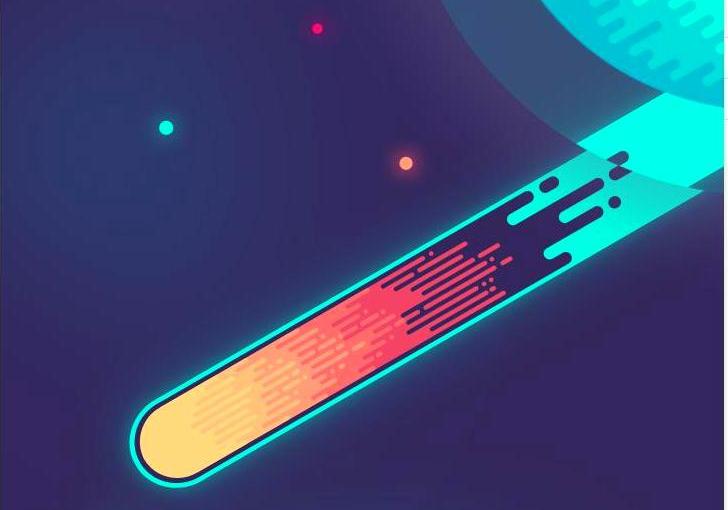
I am the center of the galaxy:People and buses and buildings and cafés curl around me, the main character of the city, planets orbiting the sun. (The fan slices air toward the radiator, fighting a -37C draft from this old window.) Being the center of the galaxy requires that you are in the right universe, the right city- otherwise, you might agree with that saying about how it doesn’t matter where you are, but who you’re with… The universe is more important than the stars. (You can’t help but blame your ancestors for having moved to such a frozen place: Who stumbles upon this death cold climate, where birds are flying away from, and says Hey, honey: I think we really found the place!) Control from the center means that everything happens to you, or that you are making things happen to others: All phenomena is because of you and your actions, at the center of the story: You receive the most praise or have the worst luck, stand in the longest lines, behind the worst drivers, in the hardest jobs: You confess in an intergalactic reality show booth, sharing your life with a camera for planets who want more of you, you, the star. (You can’t imagine how it could be colder, how things could be worse, with cold toes, your blanket only going so far, even if, sure, Mars whispered that, hey, -37C is warm to me, no offense, you know that they’re just trying to sound tough like Canadians who laugh at emergency closures when snow stays on the ground in the states, or Toronto.) What does it matter if the planets have problems- You’re a galaxy: Things happen to you for a reason, and, whether or not Mars is colder than your room, people rely on you- your life is unimaginably complex, different, and more challenging than these planets. (Planets couldn’t understand the troubles of a galaxy if they sent trillion dollar space equipment, whether manned by Einsteins or monkeys.) Spring is just around the corner.

colour by Nina Geometrieva 
words by Liam Lachance 

This is for the person who has to smile

8005192520_0e0b5505b1_z

trigger warning: sexual harassment

This is for the person who has to smile

or shake their head, or walk faster 
because of a follower who wants

to be that person 

who meets people

who people love

who women love

who doesn’t answer texts right away
who repeats lines from someone smooth in the movie
who succeeds in front of friends

and is recognized

and is validated

I’m a good person, I’m
doing the right thing,

people like me.

colour by Elian
words by Liam