the fire

unnamed (2)

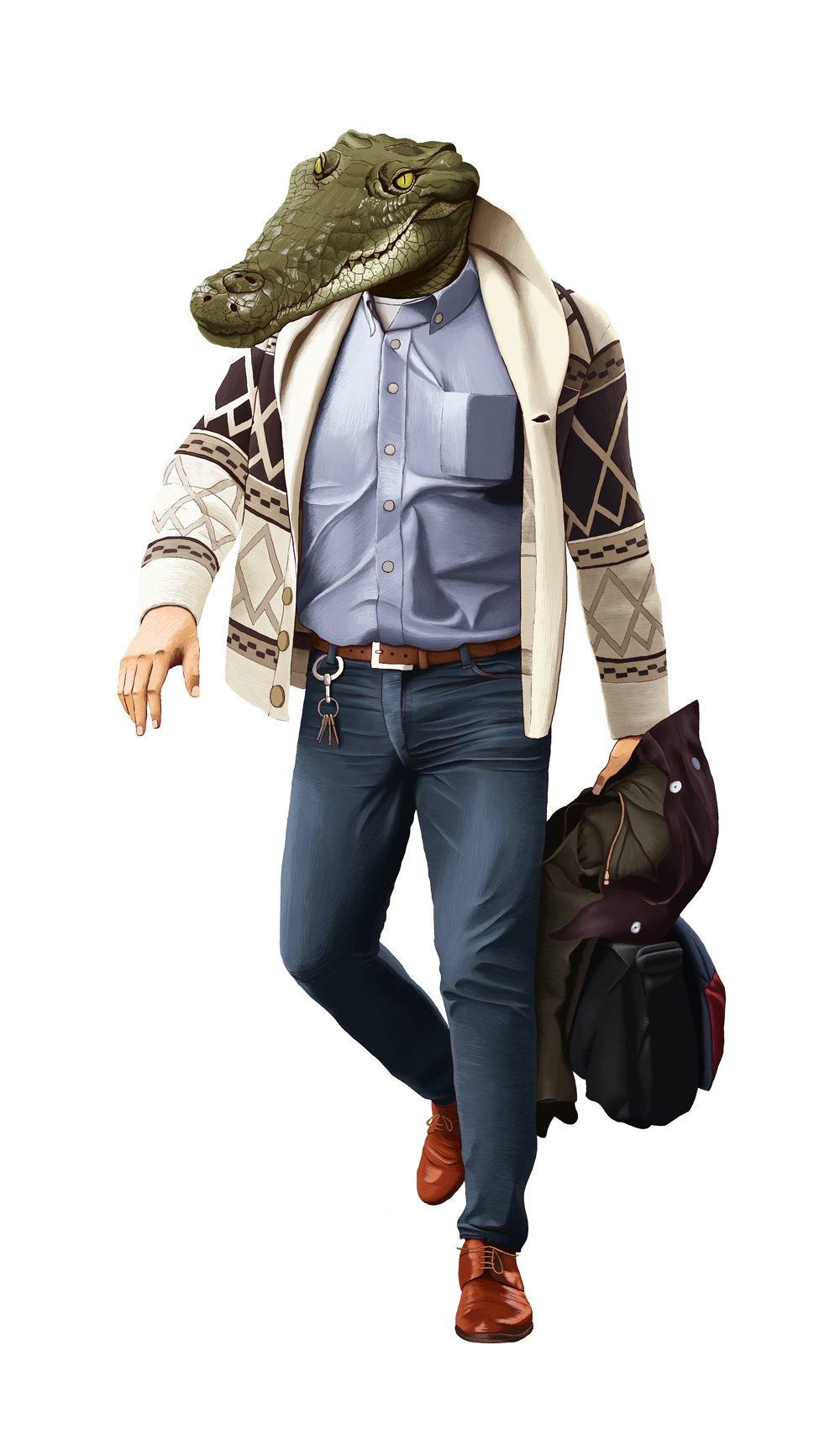
They’d seen a caiman at the zoo, her and Sadie, when they were little, maybe five and eight.

“What’s a caiman?” Sadie had asked their mother.

“It’s an alligator.”

She had read the sign and whispered to Sadie: “It’s not an alligator. It’s different.”


 “I was just letting her know I still existed,” he said. “So I lit her pillow up. It was a harmless prank.”

You burned down half of campus, they said.


People watched as the fire burned, from the other, safe side of campus, where the arts buildings were. It was pretty, if you let it be, the way it was black and orange and danced with the red and yellow leaves of October in Ontario. 

Thank goodness it was reading week. Thank goodness there was barely anyone on campus. Otherwise who knows what you could have caused. Do you understand the implications of your actions?


She went back for the caiman. At least, later she would tell herself she went back for the caiman. Once it was dead, it was easy to mourn its passing.

The truth was that she liked it. Her lab partner, a guy named Robert who was already crotchety at age twenty-seven, hated the thing. He called it Stinkeye and shuddered when he had to feed it.

She’d called Sadie to tell her, her first day on the assignment. “I’m a lab assistant now – we’re studying caimans.”

“That’s nice, Sab. What are you finding out?”

Sabrina had started to explain, the microbe that lived between the teeth, how they might learn to reconstruct molars, but she felt Sadie stop listening almost immediately. “How are the kids?” she asked instead.

She thought she was going back for the caiman, but when she reached the lab, she realized how silly that was, how improbable. How had she planned on carrying a caiman? Was she going to wrap it up in a towel, cradle it like a baby? Put it in a duffel bag, sling it over her arm? No, she could not save the caiman; she went back for the research.

She stood with her fingers to the glass tank, and thought that some understanding passed between them. She thought she saw, in its reptilian eyes, a knowledge of what was to come, an acceptance. Then they flickered shut and all that remained was its broken zipper mouth and its listless, horny skin.

She took all of the files on the caiman, all of the pieces of paper, all of the very important measurements and observations, she gathered it up and took it back to her apartment, where it sat in stacks on her living room floor until they were moved to a temporary lab where they bought another caiman. 

The condemnable actions of one student have been responsible for the loss of countless hours of research and millions of dollars of lab equipment, the dean said.

And the death of a caiman, she thought. A charred little skeleton in the wreckage somewhere.

word by Charlotte Joyce Kidd 

colour by Russell Cobb
the Bengal’s meal

tiger-room-akvile-magicdust_1000

The drug, I’m told, is a fairly potent offshoot of the LSD compound studied by Timothy Leary in the mid-late sixties, whose experiments (and subsequent documentation of said experiments) with the drug were in no small part responsible for its explosion in popularity with the Flower Powerers. As the acid kicks in, I begin to wonder whether the old adage “they don’t make ’em like they used to” can be applied to hard drugs: I have a difficult time believing they made shit like this in the sixties.

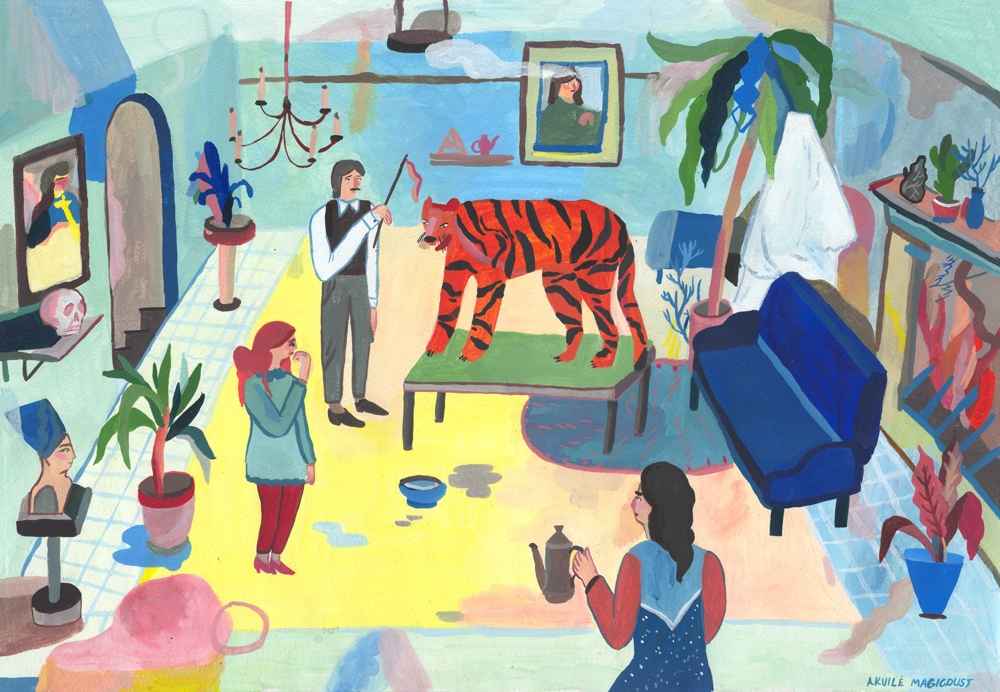
The reputed hallucinogenic properties of this particular concoction, nicknamed The Bengal by the ever-growing population of acid-users in the Greater Toronto Area, would seem to explain not only the sudden appearance of the fuzzy death machine, smack in the middle of a reluctantly-attended dinner party, but also why I, sitting on the couch, seem to be the only one who is vaguely unsettled by its presence.

     I scream: THIS BENGAL IS DAMAGING MY SENSE OF CALM

The fichus beside me has no immediate response. I wonder if I’d have better luck with the poorly-potted orchid across the room, where a man with a stunning Selleck-esque moustache and a woman wearing a sweater made of what appears to be ocean waves are enjoying a lively conversation about what I’ve found to be the only obligatory topic at such gatherings: American politics (what with Canadian politics being completely devoid of the incendiary talking points required of the vaguely-informed yet heated exchange that always occurs at these sort of functions). I ignore the roars of panthera tigris and tune in.

     The overwhelming cultural and political ambiguity surrounding the renewed American presence in the Middle East…

Selleck 2.0 reaches for an hors d’oeuvre. The tiger watches. For God’s sake man, not the cocktail weenie: YOU’LL LOSE A HAND.

     I yell: YOU’LL LOSE A HAND

The tiger looks to me. Green eyes ablaze, tail twitching with a sort of unsettling anticipation, it watches me.

     I yell: WHAT’S HIS NAME

If I’m going to be eaten, I deserve to know who ate me.

     Reginald, comes the disinterested response.

The woman, in waves, pipes up.

     Rather regal name for a tabby, isn’t it?

     He goes by Reggie.

     I yell: TABBY…TIGER?

A light-bulb flickers in my acid-soaked brain. A tiger morphs into a tabby. At first, I am relieved. As the man drones on about drones, I long to be eaten – give me death over politics at any time of the night.

word by Josh Elyea

colour by Akvile Magicdust 

oasis

1796661_288174391333568_1670898555_n

On the street she walks along most days there is a wall. The wall is one side of a building and is tall and made of brown bricks, neatly piled and cemented together. The wall has been painted in one spot, up high, and it is this painting of a triangle fox that she watches as she walks. The fox is brightly coloured, with kaleidoscope eyes. The first time she saw it was not so long ago, for she is new here and has only had the courage to walk the streets since she has known to some extent where they join. She told Miles about the fox that first time, but he frowned and kept typing and she couldn’t really explain about the yellow parts and the cave cheeks and the spike of its ears, or how it made her scared and safe at the same time, so she stopped, mid-sentence. Later he touched her hair as he walked to brush his teeth and asked her to tell him more about the tiger. She didn’t correct him.

Then there are the days when she walks down the street with the wall with the painting on it for no reason other than to look up at the fox. She isn’t very busy—jobs are like lucky pigs here—and she feels small and blurry in the apartment on her own. Sometimes as she rounds the bend and lets out a small sigh as she sees the fox up high, there is an old man standing where she stands when she looks at the fox, and he is looking up, too. He gives her a heart ache, with his grubby mittens in the middle of summer, the same drooping plastic bag by his side, every time. She feels so sad – her heart is an emptying bath. But he always moves before she gets to the spot, so, without guilt, she can look up, drinking in the kaleidoscope gaze from above her.

She is looking up at the fox one day, at that time in the very late afternoon when you can almost smell the sun sinking. She does not see the man until he backs into her, his grey hair combed straight and his jacket sticky. She apologizes; chokes out a laugh; wants him to know she does not fear him. He doesn’t seem to hear her. The man stumbles and she moves to let him as he tilts back his head and looks up at the fox. He is saying something—she can hear something croaking out between his upper lip and jaw. She cups her ear to hear him. 

word by Laura Helen McPhee-Browne

colour by DAAS 

sharp teeth

bartsmeets

Ben belonged to the last generation that would remember life before implantation, before your boss could send a message at 6 a.m. – to your brain. Some people resisted, at first, staging massive protests… Ben was not one of those people. How could you not see the advantage of having all knowledge in thought’s reach: To pull up any novel by thinking of it, without knowing what it contained?

The glitch – again – there was a glitch – the shattering sound – explosion of steel – burst of seawater – and then – the shark. Snub-nosed, its blue-black hide scarred by a hundred unnamed battles – the shark once again invaded his mind as he stood up to read. It was fitting, at least, for this reading – The Old Man and the Sea- and it tore through the tight prose, scattering the words. He shut down the book and the shark disappeared with the pool of letters.

Briefly, he gave up on reading. It was swimming through his work reports, and, of course, his mistake at trying to sneak a few pages of Moby Dick, but, by Friday, he had to work. Plus, he missed his library. So he called his friend Arn. Arn was a geek. Arn came over.

   So this is a problem?

Ben shuddered.

   That bad?

He connected to Ben with a cord between their ears. It had been determined in the early days of implantation that wireless connection between minds was disastrous – all the hacking.

   Have you ever looked into a shark’s eyes? There’s nothing in there, man: No soul. There’s nothing about a shark that can be described as even vaguely fucking human. They are the farthest living thing from a human being.

   You feel strongly about this.

    I’ve always hated them. This totally validates it.

Arn frowned. He wiggled his fingers against his thighs, a physical stand-in for the days when he would have been tapping at a keyboard.

     That’s a hack. A really good one.

     How the fuck does that happen?

Arn managed to look both empathetic and impressed. 

      Whoever did this is a genius, and clearly furious at you.

      Cara.

     You said it, not me.

     So what the fuck do I do?

     Way beyond me. Could try to get rid of it, but I might end up trashing your code really badly. You’d have to get re-implanted.

     Can’t afford it.

          Then you have to talk to Cara, he whispered. 

      Fuck.

Arn informed him that if Cara could harm his brain like this, she had probably been in there for a while, keeping an eye on him. She had been watching on the weekend before the wedding, he realized, involving someone brought home from the bar, and Cara’s up to that point unused wedding dress, perhaps sacreligious for use, even though they had broken up.

Sunday night, Ben stood up and pulled up a book. Before it went to shit, he concentrated on solidifying the words, making each one into a waterproof brick. It worked for a second: Investing every ounce of his mental strength, straining against Cara’s digital virtuosity, Ben held the shark at bay – literally.

When it broke through, the dynamite effect it normally had on just the book engulfed his entire body. The worst Ben had ever experienced. And there it was, as usual, the shark, with its expressionless mug and its pitiless teeth, the only thing he could see, seeming to smile.    

He reached out and touched the shark’s nose – something he had never tried. Its little heart was pulsing and warm in his hand.  


 word by Charlotte Joyce Kidd

colour by Bart Smeets

looking for nothing

amargo 2

Alice waits a long time to pick up the book. On the deck, beside her, the cover is damp from the ocean spray, but she doesn’t mind. Traveled, the book is heavy in her hands when she flips to the beginning, wet. At first, she can only stare through the worn pages –  it takes time to focus on the words. She hears her mother’s voice (faint, as though yelling from the kitchen) telling her that the first line of a story is the most important. Her dull and grey eyes scroll down to those crucial first words. 

I’ll either be great or nothing at all.

Now that’s how you start a book, she thinks. Deep. Legs laced through the ship’s rail, she reads on, occasionally lifting her head to stare out at the horizon. The lava-red sunset bleeds into the darkening sky, seeping into the black, giving the panoramic a sloppy finish, like God tipped over paint cans. She reads, waiting for the rest of the book to offer more of the infinite pearl glimpsed in those elegant first words.

It never does. Great or nothing at all. Like my story, like everyone’s story, she thinks. Things always start out simply: It’s only after we keep pushing deeper and deeper and pulling everything apart to look for something unknowable before putting it back together only to realize that now it’s just pieces. Commitment is complicated and petty and you can’t see that until the only people left to comfort you are an old book and the sea. He left his name and address. Who knows, maybe things will return to our initial simplicity. She won’t know unless she finishes the story.

She wipes her face and tastes salt on her lips. The last of the sunlight streams across the water. She reads. The ship beats slowly, steadily toward the horizon, and she wonders if the last line will be as good as the first.

word by Josh Elyea

colour by Pablo Amargo

mosquitos

bur

“I fell in love with you the first time I saw you fall off a horse.”

Her eyes are watery, glistening in their sockets. I can’t tell if it’s drool running over my lips and down my chin and neck or just some bruised emotional response to what’s happened, happening.

“You’re so stupid.”

She’s wiping at her eyelashes. If she keeps doing it I feel she’ll have no eyelashes left by this time next week. The window is open and all I can think is I know the mosquitoes are eating me alive and I can’t feel it. Most people unconsciously wish they could live a life in which mosquito bites don’t itch, can’t be felt. Others don’t mind the actual itching and scratching, finding themselves more inclined to fume at the violation of it all, the unseen bloodsucking and flying off into the night.

“I told you not to go.”

I think what happened was I drank a little too much, as is habit, and walked or stumbled out to the stables, snuck a horse out with what I can only imagine as indescribable grace and horsemanship, thereupon divining myself up onto it’s back, into the saddle… And there’s where all memory stops. And if I’m being honest, something I am not necessarily known for among both friends and enemies- everything I just remembered could be made up. I’d cry if I could feel anything physical. Not for me, but for this girl that knows the truth, the reality that I can’t remember. I can hear Sarah, and I think I can see her, but what I am listening to could be nothing more than unreality catching up with me. She sobs uncontrollably and I see her right arm, the good one, swing and slap my left arm. I can’t feel it and though my head wants to whip toward her in some accusatory fashion, nothing happens.

I fell in love with Sarah under a harvest moon. Sarah says it was blue and I made a mental note to check and see if harvest moons are ever blue. I never checked. I told her before we got serious that I can’t really have friends because I fall in love too quickly, platonic, heart-love, sexual fantasy, all of them separately but often attributed to the same person. And as a result I end up hurting everyone, like a man made of plutonium, some inevitable occurrence will disrupt my atmosphere and I’ll blow up and there won’t be anything left of us: and so I lie. I lie and never stop lying.

And now in an ironic twist of fate, here I am lying, on my back, catheter rooted and probably a dish of some kind caressing my naked buttocks, tubes jutted unfelt into my skin and veins, into my blood and the girl I may have actually changed for is crying and pulling out her eyelashes and I can’t even muster up the words, “It’s okay.”

word by Anthony Statham

colour by Sarah Burwash

how to escape a whale

cccc

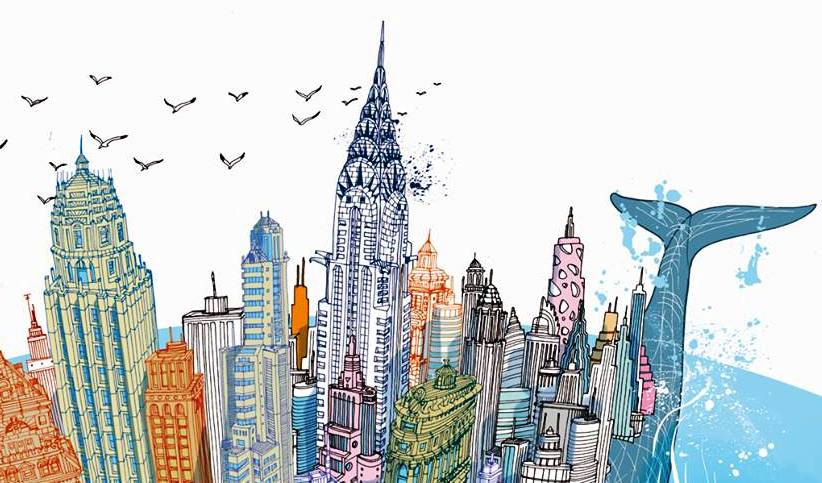
Becca’s leaving the city. She’s accepted this: after the fight, the crying, the insults neither really meant or believed, after all the ways in which they’ve hurt each other – it’s time. She’s leaving. It’s not just him. There is, after all, a whole city. She could avoid him if she wanted to. But it’s that, it’s the city: The city is the problem.

Lately, she suspects that the city is following her – the same placid towers, the same ageless fire hydrants, the same cheery, nondescript shops trailing her from block to block. Its serenity, its immutability, make her want to scream in her state of perilous irritation. She used to love the city.

She used to hum to herself as she walked through it. She used to smile at strangers on its streets.

Now, especially at night, it seems smug. Streetlights glow with calculated eeriness. Its inexplicable rustlings take on a self-important tone, as if to prove that industry and vigor will always exist in the city.

She had come here to feel that things were happening. Even when she herself was doing nothing, she could walk out onto the street and smoke a cigarette and watch the million odd goings-on passing her by and feel that the night was not wasted. Look, a man in a velour suit with an iguana on his wrist – pet or accessory? And over there, those two women, well-dressed, middle-aged, wearing a bit too much bronzer perhaps, that woman has just stuck her ice cream cone directly into the face of her friend.

She wanted to go to street markets, to art galleries, to neighbourhoods she’d never seen before, and partake in culture and romance and all of the borrowed nostalgia of other people’s lives.

She wanted to go out at midnight and get drunk on gin and tonics and revel in the sad, seen-it-all glamour.

It was her who had loved the city. Not him. They’d had an argument once: he’d told her that living in the city was like being a mite on the back of a great, eternal animal: You could drop right off and nothing would change. But you could also burrow your own tiny hole in the surface of the animal, and you would be free to do so. The city would continue in its forward momentum, unbothered by the specks living on its skin.

“That’s ludicrous,” she’d said. “We anthropomorphize cities, giving them entities, but they’re just made up of people. If we all disappeared, they wouldn’t keep going on their own.”

“How can you be so sure?”

“A city is not a tree with no one to hear it. Besides,” she’d added, “look at Detroit.”

Becca’s leaving the city. Every time she tries to picture being somewhere else, she can only see herself floating: Treading water, she watches its million winking points of light recede into the dark.

word by Charlotte Joyce Kidd 

colour by Carlo Stanga 


trying

23 july

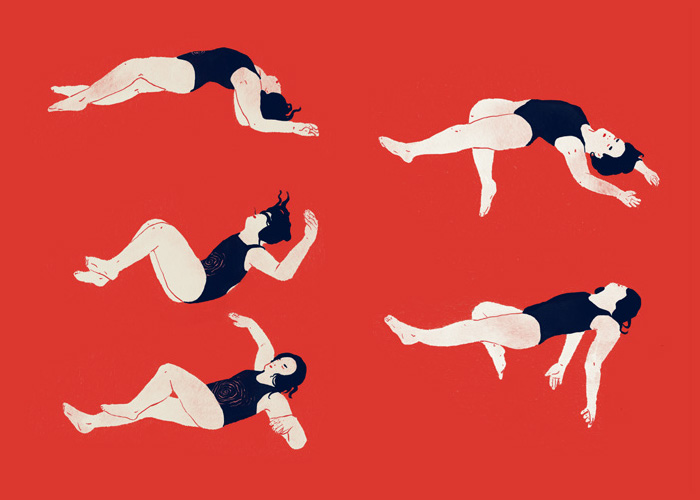
When I was younger, my father was always telling me to try. Part of me wonders if I was born a quitter, for him having to say it as much as he did. And I regret that it was the last word he ever spoke to me, reaching through the helplessly jarred door, pleading me to find a way to the upper deck, to a lifeboat; not to give up. To get into the water and swim, survive, try. I let go of his hand when the sea was at his chin, and, my eyes bleary with tears, I climbed, up to the black sea, which was churning and roiling and flashing with blinding strobes of light. The lifeboat was tangled in rigging that had snapped and couldn’t be lowered. So people were leaping into the ocean. I had put on my swimsuit at the first alarm, so only had to remove an oversized shirt before grabbing the cold rails and hoisting myself over the side. The jolting shock of the water. The dark silence beneath the surface. Clawing through the swirling brine to punch above. Gasping at the air being sifted through the sheets of rain. And already, just seeing the black hills of water around me, as I climbed and descended the impossible swells simply by treading water, I wanted to give up. Yet I swore to him I wouldn’t. So I tried, to swim, crawling forward, taking in salty water twice, coughing, crying. I found the best I could do was to keep my head above, swimming on my back, from nowhere to nowhere. Just keeping afloat. My muscles red with panic. Windmilling my arms, kicking as if trying to shake off some wild animal clutching at my feet. Swimming for my life, for my father, who was still sinking to the bottom of his saltwater grave. Trying. For both of us. Trying.


word by Mark Lavorato

colour by Jeannie Phan

sitting on Marty’s lap

I used to care what people thought of me. Like, I’d wonder what the guy at the coffee shop thought about my hair. All through high school I worried about whether or not I was popular. Then I met Marty and he told me nobody gives a shit about anyone else. Seriously, he said, nobody gives a shit. I know that’s the kind of thing people say, but Marty actually meant it. He even put his hands on my face when he said it, not letting me look away, like he really needed me to listen.

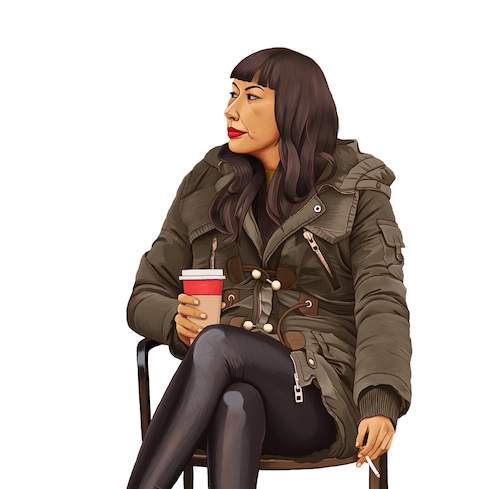
Every morning we sit outside on his porch and share one coffee and one cigarette. The first time I went over to his place I brought him his own coffee, but he told me he’d rather just share mine. He only smokes because of the coffee. Those things would piss me off if he were anybody else. I used to hate girls who would sit on people’s laps. I once went on a rant for about an hour because this girl was sitting on her boyfriend’s lap even though there were about five empty chairs right there. But now I get it. I think I’d sit on Marty’s lap if he asked me to. Yes, I would definitely sit on Marty’s lap.

20_by_evluk-d6t4dkk

***

It was the kind of day where everyone’s happy but nobody’s totally sure why. I think it has something to do with the weather, or maybe it’s just everyone being happy that makes everyone happy, like some kind of psychological butterfly effect.

We were sitting on Marty’s porch, but he had to go inside to get something he forgot. He was about to leave for work. Marty’s a lawyer. He says he got through law school by not caring about anybody or anything. He came back outside and just stood there. He checked his phone like he was in a hurry or something.

What if we got married? I asked.

We wouldn’t, he said.

Why not?

It’s not something we would do.

Sometimes I look at him out of the corner of my eye and I swear he’s different, like he’s only human when I’m looking him square in the face. I have dreams about him turning into an animal, becoming some terrific creature, but it always happens just out of view. The only reason I know for sure he’s changing is because it’s a dream, and you always know better in dreams.

***

I go into the coffee shop and I order one Americano. I sit outside the shop in one of those metal chairs that it’s impossible to get comfortable in. These kinds of places, the kind where they write your name on the coffee cup for you, never want you to stick around for long. It’s all a bunch of false comfort. I drink my coffee while I smoke my cigarette and I try to think about all the things I’m not going to miss.


words by Leah Mol

colour by EVLUK

breaking news in montreal

city_by_evluk-d5998pi

BREAKING NEWS IN MONTREAL: Woman thrown off balcony is pronounced dead at the scene – in other news one million, six hundred thousand and ninety four people not thrown off an astounding amount of balconies

(young artists in denial that they don’t own the mansions depicted in Renaissance paintings grow up to paint mansions; where are apartment building entrances with those random titles on glass doors- The Benmore, The Stallion, L’étranger- in front of heavily stickered mailboxes with variations of, NO FLYERS, NON, and POR FAVOR, HOMBRE, beside faux-marble stairs; we don’t need any more accidental replicas of Atwater’s informally-gated streets; where is Parc X; where are the apartment buildings with balconies of lone chairs and plastic wrap around iron, with shirtless men in sunglasses, surveilling the garbage-bag-placing-process of his neighbours, every Tuesday; where are the buildings with nice lobbies and average apartments; where is cote-des-neiges; where are our bicycles and lines waiting for the bus; where are paintings that embrace the lack of space, not 4 humans to 2 acres but 50 in 2, no wasted space when you connect, right?)

BREAKING NEWS IN MONTREAL: Middle-Eastern man deported for terrorism charges, born in Canada we’re still undecided where to send him – in other news three hundred and twenty thousand middle-eastern-Québecois not charged, although suspected, said to all continue lives in Montréal

(at what point does the state say, alright, busted, we don’t know how to feel like we’re needed when we don’t have a group to protect you from, we just want to feel valued, if you have any suggestions we’re feeling kind of vulnerable, please send them our way, this shit is getting old, we love you)

BREAKING NEWS IN MONTREAL: Black male suspected in armed robbery is presumed guilty – in other news five hundred thousand, three-hundred and twenty four people of colour will continue to live lives in Montréal, despite also being presumed guilty

(Montréal, listen: We love you. We know you can’t really afford to buy us that last round, but don’t worry: My brother is visiting from Toronto. JK 😉 We know you’re the uncle who gave us our first beer, and we get how you’re keeping strong in your middle-age with the festivals, trying to keep the bars open till 6, etc., and, I agree, let’s not talk about the financial district, the disappearing suits thing – it’s cool… We know our neighbourhoods aren’t 100% everyone hanging out together, hamburger, falafel and miso soup picnics, sure, our ethnicities do not interact like they do in the cartoons of our high school textbooks, under “Multiculturalism in Canada,” (or, in the least, white anglos with white francos) but, uh, could we have a festival based on the merit of the musicians, and not Officially Sponsored segregation?) 

BREAKING NEWS IN MONTREAL: Alcohol may have been a factor in Tuesday’s fatal crash on the 40, not the congestion – in other news literally millions of cars who have passed that spot on road have been pretty okay since : There is a 0.000001 chance that you will die on the 40 today

(cue the commercial that generally says, hey, death is less fun but buy this car and you’ll have friends and you’ll all laugh to somewhere vaguely rural like past Laval and drink on a dock, even if it isn’t your dock, or look a rock, and uh yeah we paid someone to shoot here, but there are so many docks and so much space away from the city, you can escape all your neighbours!)

BREAKING NEWS IN MONTREAL: Concordia survey finds female students more likely to judge self-worth by appearance than male counterparts – in other news when you force a mold on liquid chocolate it will likely harden into that mold more times than not

(Montréal, honey, we love you, tell your police officers we know that they are good people, tell your protesters that everything will be alright, even if it won’t, let’s hold hands and change the way that we train our police, let’s change the way that our classes get treated by the system that values money, even if it’s tough to insert a heart on our coloured currency, because, baby, we just want to share a Boréale Rousse with you by the canal, come feed me curd while I read you French translations of Richler)


word by Liam Lachance

colour by Evluk