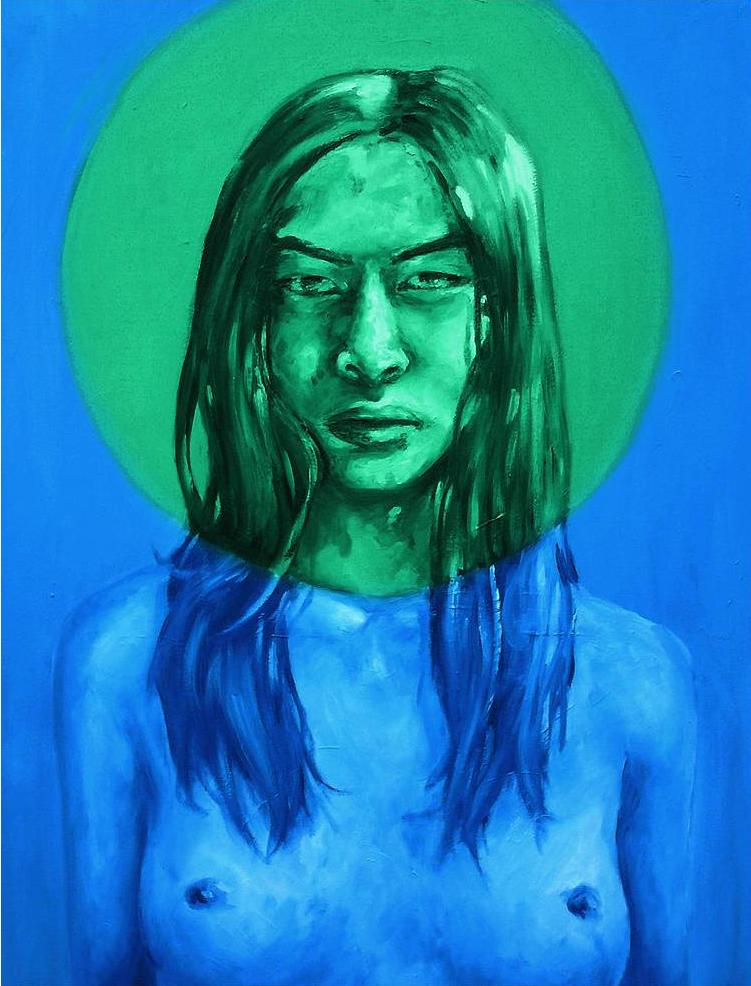
“Two Faced: On the Consequences of Beauty Standards”

proppe

“Two Faced”

The secrets of a woman’s mind are written in the details of her face.

Look closely.

Every expression, every line, and every crease has a tale to tell. They grow and change and multiply, just as the years do. Then, why is it that when I look in the mirror, I am consistently dissatisfied with what I see?

The root of my dissatisfaction lies in a variety of pubescent acne scars that have yet to fade; in the darkened circles under already dark, deep set eyes; in the thin but unmistakeable wisps of hair, around the corners of my lips and at the base of my nose, that bridge my eyebrows together.

I look in the mirror and I see an amalgamation of imperfections arbitrarily plastered together.

But there is a rawness in the way I choose to present myself. This amalgamation of imperfections is unassuming, unforgiving, and unafraid.
This is how I present myself to the world—this is how my story takes shape.

Why, then, is this what I am taught to dislike about myself? Why is this what I am taught to find fault with?

Every expression, every line, and every crease has its own tale to tell:

These acne scars are battle scars. My skin is my armor; tattered and trampled on, it shields my inner vulnerabilities and insecurities. These scars represent the years I spent hiding, covered in layers of foundation and concealer, failing to realize that beauty is more than skin deep.  These scars represent my development and growth, on both a physical and psychological level. While it is still imperfect, I’ve grown comfortable with my skin, in my skin.

It is often said that one’s eyes are the windows of the soul. Well, my soul shines out through them—they open wide, and bright, with excitement. Other times, these eyes are tired, showing exhaustion from late nights and sleep deprivation.
They crinkle when I laugh, just as tears pour out of them when I cry.

Hair grows relentlessly and freely all over my body—and, why wouldn’t it? Am I not human? Am I not alive and healthy?
Hair is the not-so-subtle reminder of my humanity, of my autonomy and my ability to choose. It can be both liberating and restricting, depending on how I choose to tame it.

My mouth is the vessel through which I articulate my thoughts; it is the vessel through which I express my emotions. The corners of my mouth curl up when I smile, and turn downwards when I am unhappy. It is with this mouth that I say, I love you, and with these lips that I let you feel and believe it.

The secrets of a woman’s mind are written in the details of her face.

Look closer.

Look deeper.

word by Fiona Williams

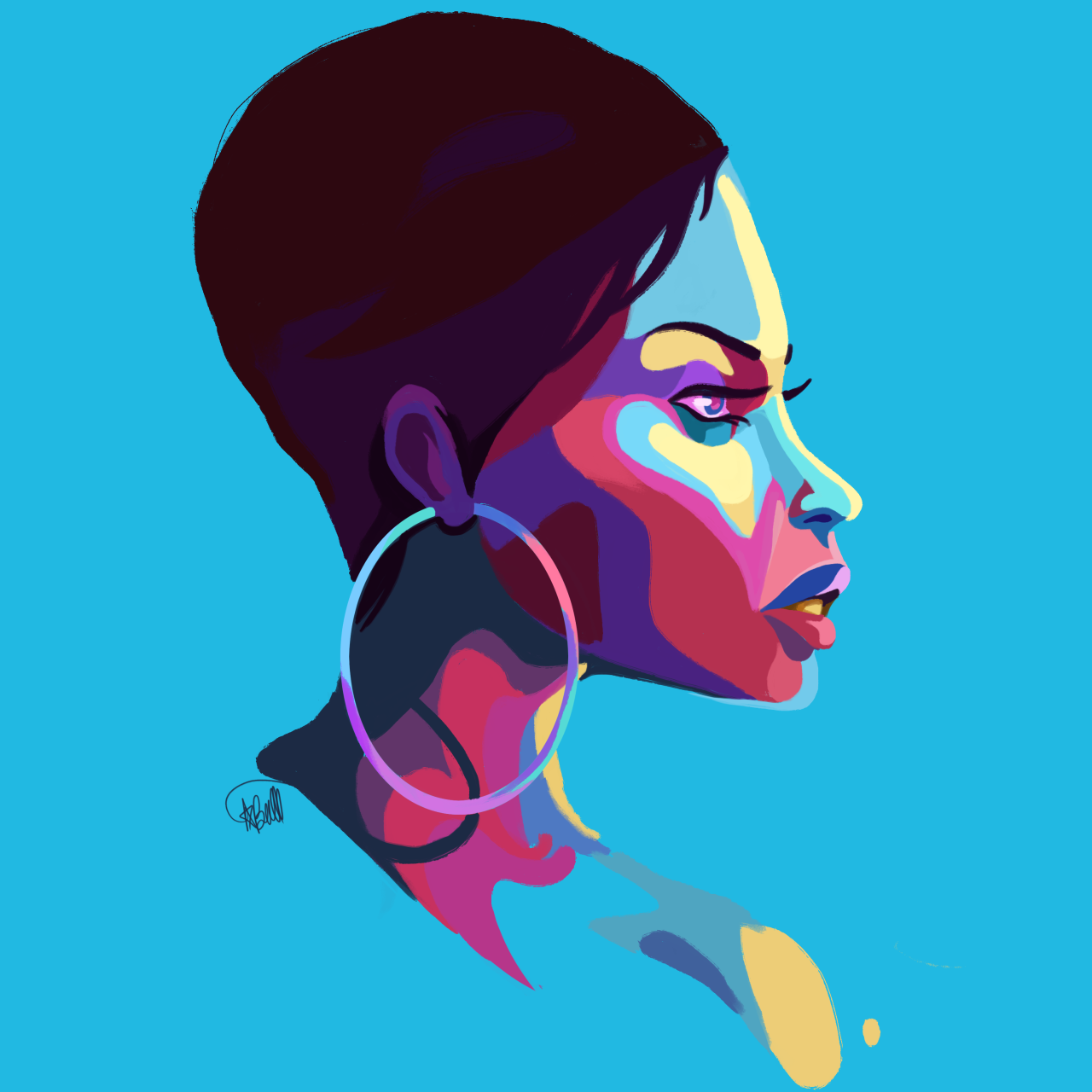
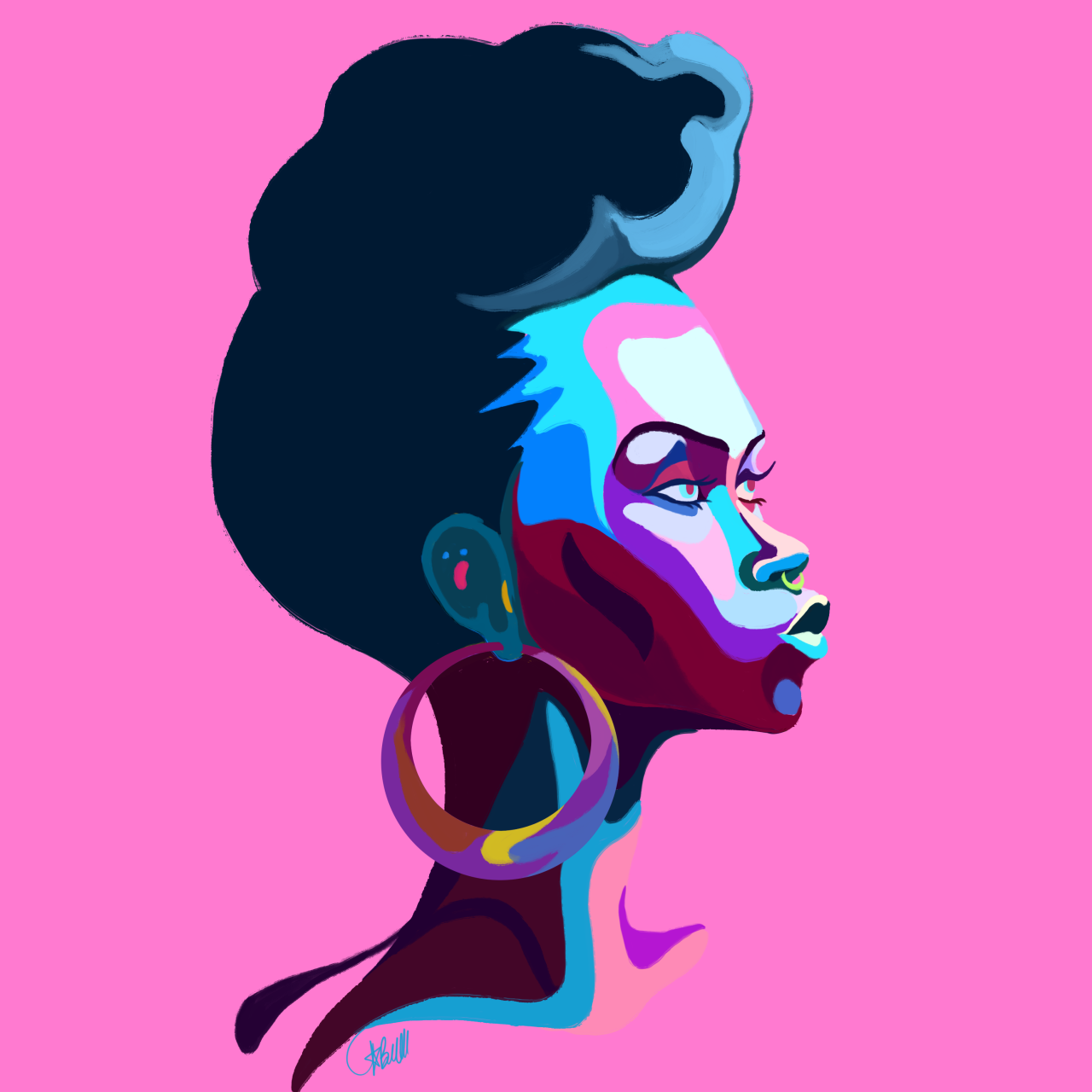
“The rawness of the artwork by Proppe caused me to reflect on how I view myself, particularly in light of the beauty standards perpetuated in the mainstream media. Whereas the female figure in Proppe’s art is depicted without inhibitions, I reflected on what I constantly find unsatisfactory, and then why I am unsatisfied with what I see: the immense amount of pressure we feel to be beautiful.” 

colour by Rebecca Proppe

“I’ve been making art my whole life, drawing story books and cartoons since I was a little kid. Now I’m an adult, and I still love to draw.

I’m currently studying art history mixed with some painting and drawing classes. Like most people I don’t know where my life will take me after graduation, all I know is I love art in all its forms and will be making it for the rest of my life 🙂

I hope some of you can enjoy my art as much as I did making it.”
 

On Family: “No applause for a hero”

50108d1d5ba0277995e238c6fe5396e2 (1)

“Teach your children well, their father’s hell did slowly go by,

And feed them on your dreams, the one they fix, the one you’ll know by.

Don’t you ever ask them why, if they told you, you would cry,

So just look at them and sigh and know they love you.”

“Teach Your Children,” by Crosby, Stills, Nash, & Young


‘What a fucking spread!’

‘Who woulda thought?’  Frances agreed.

‘Bagels, lox, whitefish, coffee, salami, bologna, provolone, macaroni—”

‘Chicken salad!’

Several parents crowded the cream cheese station at the back of the auditorium.  Henry admired his wife’s breasts as she crouched to pick up a tomato.  37.5% of the couples there were gay.  Mr. Hall, the middle school coordinator, wore a pesto green suit.  The hunchback look worked for him.  Everyone there paid $2.75 to ride the train to P.S. 463 if they didn’t hop the turnstile.  But by the looks of it, there were a few who might’ve jumped.

‘Hey!’  Caleb, 4’6”, rushed over and hugged his parents.  ‘Thanks for coming!’

‘Our pleasure!’

The chatter inconspicuously petered out when Mr. Hall tapped the microphone.  ‘Family, friends, distinguished guests: thank you for coming to P.S. 463’s annual Role Model Day!  In humanities this year, the students considered adolescence.  In lieu of their studies, they reflected on their role model’s unique qualities that they hope to emulate as rising middle schoolers.  Today, you will hear some of their thoughts.’

A little girl climbed on stage.  Mr. Hall adjusted the microphone stand appropriately. She looked down at her notecard: ‘Hi.’

After a pause, the audience realized it was being invited to exchange greetings.  ‘Hi!’

She continued, ‘My name is June Langley and my role model is Hermione.  Most of all, Hermione is a genius.  One day, I want to be a genius.  Hermione also helps Harry beat Voldemort again and again and again.  I want to defeat evil, too!’  June bowed, and the crowd cheered.  An ‘I love you sweetie!’ and, ‘You are a genius, babe!’ were made out from the clamor.  Surely it was June’s parents.

Another girl stepped on stage.  Her name was Anne Carney.  She had no index card.  Her role model was Serena Williams.  Serena, she informed the crowd, always wins and hates to lose.  Anne does, too, she tells the full house.  When she grows up she wants to be successful, like Serena!  The sound level meter for June’s speech reached a higher altitude.

Now Caleb hurried up the steps.  He took a piece of crumbled paper out of his pocket and unwrinkled it.  This had BOY written all over it.  Not once did he lift his eyes.  ‘My name is Caleb Monroe and my role models are my mom and dad.  Mom wakes up everyday at 5:00 and packs my lunch.  She fills the fridge with my favorite snacks.  Dad fought in court for my autistic brother Fred to go to a good school.  He drops me at basketball practice after school and always wants to play.  They are exhausted from work and then come home and cook.  If there is no food, they go shopping.  And tomorrow they’ll do it all again. They do not get paid for this job, and never ask for anyone to clap for their demanding work.  Being a parent is so heroic.  There’s no applause for a hero.’

The audience has no idea how to respond.


word by Jacob Goldberg

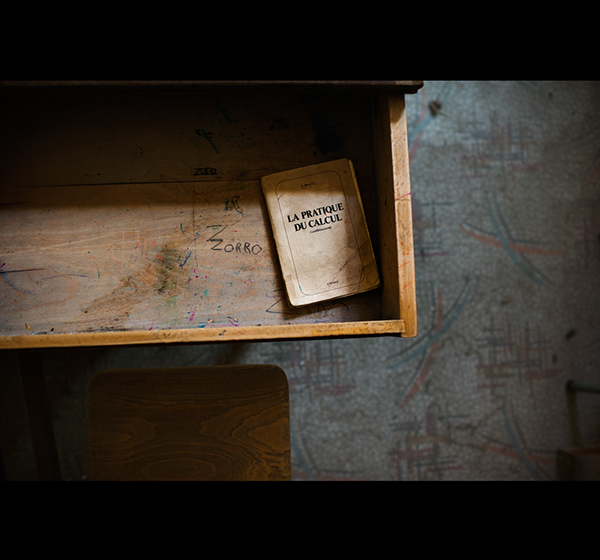
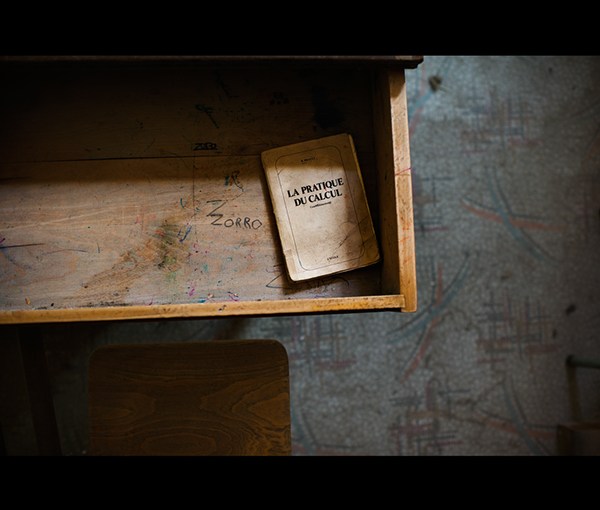
“After I learned that “La Practique Du Calcul” roughly translated to “basic calculus,” I wanted to write about how difficult calculus was for me but easy for others.  With that in mind, I hoped to sketch a story about something that I feel is at once important, simple, and uniquely hard: showing appreciation and love for those that really matter to us.”

colour by Julien Coquentin

On Persecution: “The Strangers”

5d36cf2748e179d7de3b18bdcd289c04

Noise noise noise noise noise.

A million million voices try to talk one on top of the other. It sounds like music. It sounds like the worst jazz you have ever heard.

The effect of all the voices is to make you feel screamed at, but no one is screaming. They are speaking with only a note of urgency. They are not shouting, but they know they should be heard. That you should hear them and that they must say their piece.

This is just when you first go through the gates. This is nothing yet.

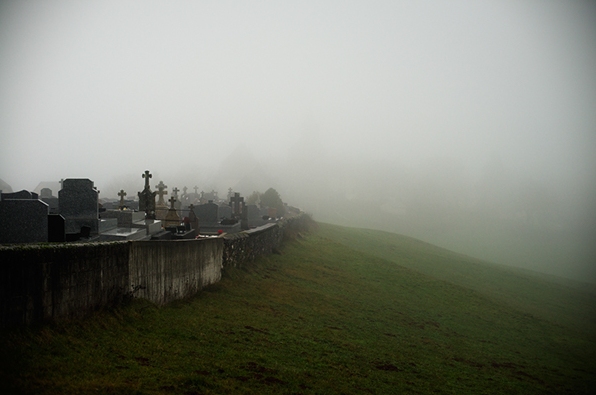
The gates, by the way, are tall and iron and topped with diamond-shaped spikes. They are there for a very specific purpose: because the boys of the town will try to sneak in and put mirrors on the graves. The gates will not stop the boys from trying, but they will stop all but the most resourceful boys from getting into the graveyard. In the time before the gates, that everyone remembers but no one was alive for, there were shards of mirrors all over the graves like magpie confetti. No one remembers why, but the boys know that this is what they are supposed to do. The gates are especially needed at holidays.

After you have recovered from the shock of all the voices – because it will be a shock, even though I’ve told you about it now – you can start walking into the graveyard. If you step too close to someone’s grave, there will be a hush. This will be tempting. But you should be careful, because the longer you linger by any one grave, the harder it will be to go back into the fray. Once, a girl who was not prepared ran into the graveyard at night time. She was overwhelmed by the voices, and she sat down on a grave to rest in the peace. They found her the next morning, lying on the rectangle of grass as if it were a down mattress. They were never able to wake her. This is another of the stories – the ones that everyone will tell you.

If you listen carefully, you’ll start to pick individual voices from the noise. You should listen to them. It will be hard. It won’t be hard to catch the thread, to latch onto a voice and follow it. But it will be hard to stop yourself from shaking it off once you do catch it. They don’t scream, the voices, but they do not flinch from the truth.

These are the graves of the strangers. None of them exist anymore. If they do exist, in an outnumbered molecule of someone’s blood, someone is not telling. I doubt that anyone will ever tell.

You will make your recommendation to the town council by the third of November. We didn’t know these people. Their traditions were not ours, and they are gone now. The land could be put to good use.

word by Charlotte Joyce Kidd

“This story could be about anyone.

My own familial and ancestral background is Jewish, and it’s a group that has been dodging annihilation throughout history.

Religious, racial and ethnic persecution happens and has happened everywhere, and too often results in genocide.

I also wonder about the living’s obligation to the dead in regards to burial wishes and traditions, especially in cases where the desired ritual of the deceased seems obsolete or culturally irrelevant. I was a voracious reader of Egyptian mythology and history growing up, and I questioned the ethics of excavations and exhibitions as much as I revelled in seeing them. Although it was anthropologically exciting and potentially important to dig up a Pharaoh’s grave, what if he had been right to believe that he needed a pyramid of clay figurines to survive in the afterlife? Had we just destroyed his vision of paradise? We can dismiss the desires of the dead as quaint, erroneous, or even morally wrong, but we don’t get the opportunity to argue; we can only choose to refuse or honour them.

In this piece, I tried to create an image of a society that may no longer believe in traditional burial, that has no connection to the buried, that exists on land that has no meaning to them but is historically deeply significant, that perhaps is even responsible for the elimination of a certain group, and finds itself struggling with the presence of a vanished people.”

colour by Julien Coquentin

On the Environment: “Forest for the Trees”

b31b950206fa403d7071aecce8d44b52

I’LL LOVE THIS FOREST UNTIL THE DAY I DIE.

It was a place of possibility.  Where anything could happen.  Secrets hidden behind every tree.  Discovery around every bend.  Adventure was everywhere.

I was always struck by the trees.  So much bigger than anything we had in the city.  And so many.  No matter where you looked, there they were, towering above and continuing on past the horizon.

Walking beneath them today, I’m reminded of the games of hide and seek we’d play in their shade.  The time I came upon the perfect spot.  When no one could find me, I cried my eyes out, waking hours later to Mom’s touch as she picked me up and carried me back to camp.  To the bonfire.

I craved the smoke’s heady scent in my nostrils while simultaneously doing everything in my power to avoid its brutal sting to my eyes.  Every night Liz and I would get one step closer to the perfect s’more recipe.  It’s a miracle our teeth didn’t fall out with all the scorched marshmallow and melted chocolate we ate amongst these trees.

In later years, we discovered the lake.  The forest stayed to its shore, watching on as we swam and played.  It became near impossible to get us to leave the water.  We’d spend full days splashing about, emerging only when our bodies became too tired to keep us afloat.

It’s still hard to believe this will be my last visit.  I wanted to protect this place.  To protect the memories it’s given me.  Now all I want is one last dip in the lake.

I never knew there were so many different machines for destroying trees.  I can only hope the water will drown out some of the noise.


word by Grant McLaughlin

colour by Julien Coquentin


On Heteronormativity: “Blue”

4

She recoiled from me; our breath left stagnant carbon dioxide in the air.

“What if—”

She bowed her head, interrupting me with piercing subtlety. I felt my body succumb to the numbness of rejection, some feigned self-defense in preparation for when she’d say the word that would make me crumble at her feet.

Her hollow cheeks were flushed, lips pursed- eyes, pensive now. I couldn’t bear the insurmountable shock of no.

Leave now, get out, I begged myself.

Go before she tilts her cheek at me the way she so-often does, ensconced in blue-violet, and says my name.

She was scorching and the thought of losing her felt unbearably electric as I reached for her arm, craving that magenta, tell me it’s okay.

She looked spooked.

“I’m sorry.”

She shook her head as if ridding herself of an awful dream.

“No.”

Blinking, I withdrew. She ran a finger over her lower lip, as if to feel the words as they left her mouth, and then shifted her gaze to me. “I don’t…”

I felt a surge of disappointment. But she let her eyes linger on mine. I studied their magenta hues, wanting to learn her before the moment she would inevitably tell me say goodbye.

I stared at her expectantly, unsure of what I could say.

“Of course I still care for you,” she spoke softly.

I no longer felt like crumbling.

“I want children, you know? This was fun. You have to understand.”

Now it was she who awaited my reaction. I wanted the moment last as long as possible. Anything I said now would become inextricably linked to a new era of us and I wasn’t ready to let her go just yet.

word by Annie Rubin
 
“Bold colours, and the well-defined silhouette of a woman inspired this piece to focus on passionate intimacy. This is a critique of heteronormativity, emphasizing two conflicting views on the legitimacy of a relationship between two women. I want to bring attention to the ways in which societal standards shape individual choices at a basic personal level.”

colour by Andre Barnwell 

Andre Barnwell was born July 7th, 1984 and raised in Toronto but currently resides in Vancouver. Ever since moving out west in 2013, Andre has been inspired by the city’s art community and motivated by the accessibility to the tools he needs to pursue his artistic passion and desires. Graduated as an animator from Ontario’s Sheridan College he was exposed to various styles and media to create art even though he prefers to use digital as a means to an artistic end. Fascinated by the human face, most of work is portrait based ranging in different colour schemes, particularly his blue and red monochromatic digital studies.

Outside of portrait work and digital sketches, he enjoys music, film, travelling, and building his brand, Sex N Sandwiches. He looks forward to collaborating with artists such as sculptors, photographers and musicians for future projects. With the world getting smaller with the help of technology, he implores artists and art lovers to follow his growth via social networks and eventually to international stages.

Keep it growing!

Professional Contact: 
Email: andrebarnwell@gmail.com

Social Contact:
Twitter: @AndreBarnwell77
Instagram: AndreBarnwell77

The author’s words do not necessarily represent the views of the artist.

On #Alllivesmatter: “The Sting Of The Jellyfish”

2

There’s a mural in the street that says ALL LIVES MATTER. A few days ago, it said BLACK LIVES MATTER.

As I stare at the defaced artwork, I begin to understand that the great sin of our time isn’t hatred. It’s apathy. It’s the impulse to surrender to your default settings, to your pre-configured notions of who somebody is based on how they appear. To assume, rather than think. To fear, rather than learn. Hatred has agency, it has intent. Hatred is a spear, ground to a fine point over hundreds of millions of years to serve a single purpose. It knows only one end, and therefore it’s limited. You dig? We can overcome hatred. But apathy? Apathy is easy, unassuming; it’s a jellyfish floating in the waves. Shifting and amorphous, it poses a far greater threat to the ocean than the spear, it’s callous indifference spread to all those around it via a simple touch. The  jellyfish is content in its carelessness, happy to administer its sting to both the tiniest fish and the greatest whale, as though they have fought the same current all their lives. Except they haven’t

This is why BLACK LIVES MATTER is an anchor, a rallying point for the marginalized and disenfranchised victims of systemic violence, and ALL LIVES MATTER is a mindless platitude, a jellyfish whose deadly sting serves only to satisfy our base impulse towards indifference, our desire to look beyond the pointed issue towards a world where we may all float along, unaware of to whom our ignorant stings are being administered. That’s the non-polyp ideology;  float on and care not who runs afoul of your tentacles, for your conscience will remain clean. You didn’t make the ocean violent, and therefore you don’t feel responsible for the structures that exist before you, around you, inside you. This is how indifference has become our new prejudice, how a lack of awareness has become far more toxic than even the most hateful of voices. When everyone is content to say nothing, even the quietest utterances of discrimination can be heard.

word by Josh Elyea

colour by Andre Barnwell 

Andre Barnwell was born July 7th, 1984 and raised in Toronto but currently resides in Vancouver. Ever since moving out west in 2013, Andre has been inspired by the city’s art community and motivated by the accessibility to the tools he needs to pursue his artistic passion and desires. Graduated as an animator from Ontario’s Sheridan College he was exposed to various styles and media to create art even though he prefers to use digital as a means to an artistic end. Fascinated by the human face, most of work is portrait based ranging in different colour schemes, particularly his blue and red monochromatic digital studies.

Outside of portrait work and digital sketches, he enjoys music, film, travelling, and building his brand, Sex N Sandwiches. He looks forward to collaborating with artists such as sculptors, photographers and musicians for future projects. With the world getting smaller with the help of technology, he implores artists and art lovers to follow his growth via social networks and eventually to international stages.

Keep it growing!

Professional Contact: 
Email: andrebarnwell@gmail.com

Social Contact:
Twitter: @AndreBarnwell77
Instagram: AndreBarnwell77

The author’s words do not necessarily represent the views of the artist.

On child abuse: “Snow in the water”

Rondeau2

A small girl and a tall, middle-aged man eat lunch together at the local fast food restaurant. Both have sauce on their face: him on his chin, her just above her left eyebrow, and both eat the French fries between them with ferocity.

‘Can I have another burger?’ the small girl asks the middle-aged man.

‘No, you’ve had enough, little dumpling,’ the man replies.

The girl looks down at her white liquid thighs. There are delicate webs of blue vein just beneath the skin. She can almost see them wriggling.


The man and the girl go to see a film at the small cinema with the smell like neglected cupboard and forgotten jacket. They stand looking up at the posters.

‘What would you like to see?’ the man asks.

‘I don’t mind, Daddy,’ the girl replies.


The middle-aged man buys two tickets to Titanic and as the opening credits roll he reaches over and puts his hand in the small girl’s lap. She begins from one hundred in her head and pictures each number brightly coloured, flying free across the dark inside her skull.


word by Laura McPhee-Browne

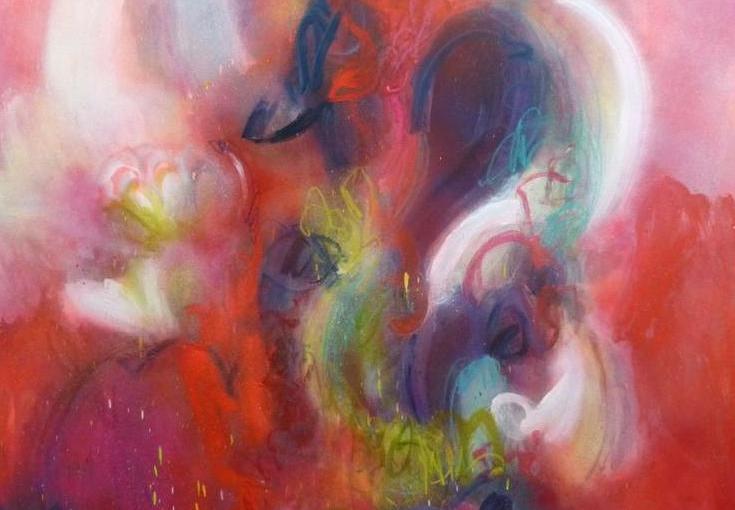
“This piece of art is beautiful to me but it is also confusing, and I believe it is not what it seems. The title of the painting is ‘iceberg’, and I decided to write a little story about something that, like an iceberg, is almost never what it seems to be; child abuse.

When child abuse occurs between a parent and a child, it can easily be dismissed as imagination or exaggeration, but often what a child discloses about what has happened to them will be only the tip of the iceberg. It is important for us as adults to delve deeper—to dive down and find out what is really going on underneath the surface.”

colour by Emilie Rondeau

“My visual practice is a transgression and alteration of our perception of reality. I encourage free and intuitive interventions. Although abstract, my paintings carry the memories of atmospheric gardens, nebulous spaces, organic landscapes and architectures. Made of solid and bright colours, washes, painted and drawn marks, the compositions are reminiscent of complex and dreamlike environments. From the infinitely big to the infinitely small, cosmic or cellular spaces transport us with a strong impression of movement and energy.

The lines intersect and intertwine, linking shapes and colours together. Sometimes fast and agitated mark making succeeds to slow and smooth gesture. Colour is pure and vibrant. The harmony is rich and thoughtful within the limits of strangeness. A delicate balance takes place in this continual research for new visual forms. The eyes travel, search and rest. My paintings are an invitation for a trip in between the painting surface and your mind.”

Not Afraid of Drowning

Rondeau

The first time they met was spectacular. She moved her hands across her body like breath, and told her every lurid detail of her dreams. She listened so hard and attentive as they untangled the depths, brushing pollen from her cheek and unfolding the bedsheets. She pulled the socks directly from her feet, insistent, and stood there naked and nauseated.

Her spit on her mouth like the milk at the broken stem of a fig pulled directly from the branch: these are soft, round fruit, weighty as organs. Fleshy and pink she carried them all day in the sun, stopping intermittently to adjust the sweater that cradled them in her bag. They bruised and split anyway.

Blackberries ripened in the hot field and along the train tracks and the only blank space was the white blue sky: asking no questions, reaching for nothing. She was having trouble looking at her hands, berries bleeding from small fists hanging at her sides.

What was soft at dawn had unfurled wicked and cheap. Every sentence was a scribble: unfinished and impossible to hear. The last time they met there was gravel underfoot and it was raining. She was indecisive and distracted by every turning head calling her name. They ate oysters and hard, ripe cheese. Green grapes.

When she turned the tap out poured rust and sediment, but they stepped in all the same to bathe in that murky swamp. She rubbed tea tree oil into her skin and ran a comb through knotted hair

When they made the bed that night every fold made her choke. She pulled the sheets taught and felt her body tense, muscles binding. Every sweeping gesture cut through the air, the blurred alarm clock’s blinking digits. It was not terrible, it was completely normal: the weight, the sinking feeling, the inability to remember what it was like to be awakened by her own vital breath.

She woke to the rain and the dampening of summer bush fires. The sharp smell of a half empty glass of red wine on the table reminded her of last night’s strain and she poured it down the sink.

She showered: clean, hard, spitting hot water, and sat at a single chair at an empty table in the kitchen and wrapped herself in a lavender bathrobe. She ate toast with warm blackberries, and the sugar hurt her mouth and the seeds lodged between her molars. She was not afraid of drowning in this rain, but only of slipping away.

word by Alisha Mascarenhas

“I wrote the piece as a documentation of tumultuous experiences occurring on several planes: fragments of dreams, fiction, and so-called reality that met or clashed in some way with the form and feeling of Rondeau’s work. The painting fed its form, and served to surface and to purge some previously unarticulated sensations and images.”  

colour by Emilie Rondeau

“My visual practice is a transgression and alteration of our perception of reality. I encourage free and intuitive interventions. Although abstract, my paintings carry the memories of atmospheric gardens, nebulous spaces, organic landscapes and architectures. Made of solid and bright colours, washes, painted and drawn marks, the compositions are reminiscent of complex and dreamlike environments. From the infinitely big to the infinitely small, cosmic or cellular spaces transport us with a strong impression of movement and energy.

The lines intersect and intertwine, linking shapes and colours together. Sometimes fast and agitated mark making succeeds to slow and smooth gesture. Colour is pure and vibrant. The harmony is rich and thoughtful within the limits of strangeness. A delicate balance takes place in this continual research for new visual forms. The eyes travel, search and rest. My paintings are an invitation for a trip in between the painting surface and your mind.”

On Mental Health: “blue”

Rondeau 3

She felt all sorts of colours, but she noticed blue the most.  Its thin translucent shade seemed to seep into the corners of her eyes, through her tear ducts, tainting everything in a filmy azure haze.  It was vague and arbitrary.  Resting above her heart, compressing the edges ever so slightly on good days, or sitting clammy and heavy (as a stiff tongue) on not-so-good days.  Such weight meant lengthy exhaling and slight inhaling, her chest exhumed its fire as the oxygen departed.  Her shoulders rolled forward, concave, curling inward.

The blue was pervasive.  It was a tinge with the boldness to disobey the doctors and smut her everyday life.  It was prescribed that she share sadness and cool shades with the therapist on Mondays, and reinvigorate her heart and head with pilates on Tuesdays and piano on Wednesdays.  Her room was painted yellow, an attempt to restrict pathetic fallacy.  From Thursday to Sunday she was unmoored.  In such barren gaps, she aimed for off-white and neutral shade.  A dank white was as martyred as it was innocent.  Shinning like an exemplary virgin untainted by any distressing moods, she perfected a bared-teeth smile and upturned eyes.  In the schoolyard and dining room such whiteness was encouraged by her mother’s wrinkled brow.  She floated down the sidewalk.  A wispy white cloud pulled through a royal-blue sky.

The abject arrival of the sadness dumbfounded the medical men.  No predicating calamity validated the diagnosis.  She was bred with a full palette.  Rosebud bushes and rose-rimmed eyelids.  Spinach salads and vitamins in colour-coded bottles.  It was juvenile and chaotic.

The flooding of blue necessitated a quarantine of colour.  Its existence was permissible, but in controlled segments.  She would be a swirling kaleidoscope.  In the turvy checkered shape, eyes would roam, seeing nothing lucidly.

But on Sundays, she found pleasure in evoking the hue.  Blue, cerulean, plum, indigo: she let her lips wander over their sounds.  Stepping out of the yellow rooms and white shrouds, she made her way to the seaside.  Alone at the cusp of this cumulative blueness, she could rest.  Other colours slipped off the edge and fell into its abyss.  Carmine reds, vivid greens and rusted oranges overpowered by the silver-blue mass.  She wouldn’t dive in- she was satisfied sitting on the shore.  Though comfort lie in this watery body, she held out for other colours to come through.

word by Keah Hansen

“I relate the colours of this piece to emotions.  The distinct yet blended shades symbolize the complexity of our moods, while the lines represent an artificial attempt to restrict or regulate feelings.  The prevalence of blue represents depression, and society’s discomfort with it.  While the protagonist tries to understand her mental state privately, she is subjected to regimented treatments.  Her accepting its existence is a cathartic step in recovering from it.” 

colour by Emilie Rondeau

“My visual practice is a transgression and alteration of our perception of reality. I encourage free and intuitive interventions. Although abstract, my paintings carry the memories of atmospheric gardens, nebulous spaces, organic landscapes and architectures. Made of solid and bright colours, washes, painted and drawn marks, the compositions are reminiscent of complex and dreamlike environments. From the infinitely big to the infinitely small, cosmic or cellular spaces transport us with a strong impression of movement and energy.

The lines intersect and intertwine, linking shapes and colours together. Sometimes fast and agitated mark making succeeds to slow and smooth gesture. Colour is pure and vibrant. The harmony is rich and thoughtful within the limits of strangeness. A delicate balance takes place in this continual research for new visual forms. The eyes travel, search and rest. My paintings are an invitation for a trip in between the painting surface and your mind.”

A Wild Animal

10623805_316600748548691_1181472894378573553_o

Trigger Warning: Sexual Assault 

We’ve gone to counseling a few times, but I don’t like it. Tom keeps saying the same things over and over again. Why are you so angry with me? he asks constantly. I want to say, When you start off loving somebody more than you can even imagine is possible, there’s only one way to go, but I don’t say anything.

The counselor asks us to initiate sex more. She says we should both initiate at least twice a week. The word initiate makes me feel extremely unsexy. When we get home from the session and turn off the lights and get into bed, Tom moves down to eat me out and I say I’m not into it and he says You love it and I try to push his head away but he starts licking my clit anyway. I clench my fists and close my eyes tight and I see spots that look like they belong on a wild animal. I tense my whole body as I feel the beginnings of an orgasm, and I am so frustrated I can feel a million bees pushing against my organs, trying to break through my skin from the inside. Tears force their way out between my eyelids and run down my cheeks, and I thrust with my breathy sobs. I come but everything else is still inside me. Tom moves back up and kisses my face and I wonder if he can taste the salt. See, I knew you’d love it, he says.

word by Leah Mol

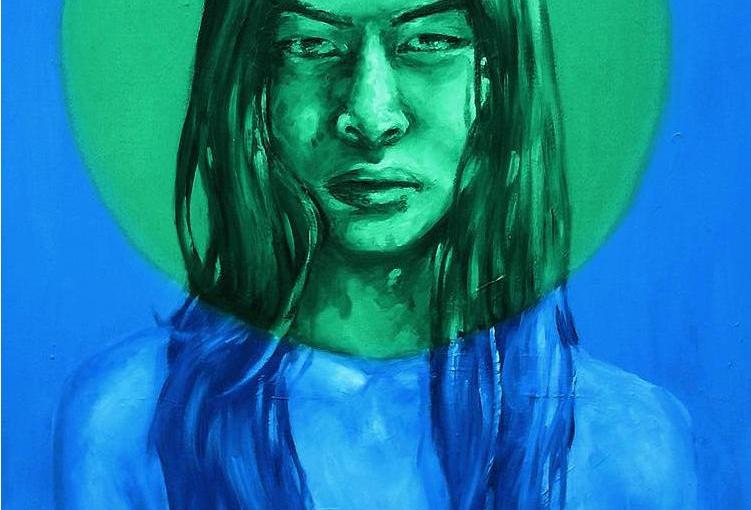
“This piece made me think of two living things that exist in the same place but will never really be joined together, and the conflict created as a result. So, I wanted to write a story exploring a relationship that has serious conflict, but neither party can really explain where it comes from. Relationships are complicated and confusing and boring and exciting. We are all just animals, in the end.”

colour by Chris Gismondi 

“I am an artist and an activist. I know this because I lie awake at night thinking about things in my life, in our world, and I think about communicating them to others. Not in text or song, but in performance, acrylic and instillation. I do not like the way the world is: I want to change it, make it better, loving, healthier, sustainable, tolerant and accepting. At first I thought my two passions of art and activism were disconnected, but as my thoughts came alive in performance, mixed media, acrylic, print making and body painting, I realized they were one in the same.”