High School Visionaries

randeecrudo2

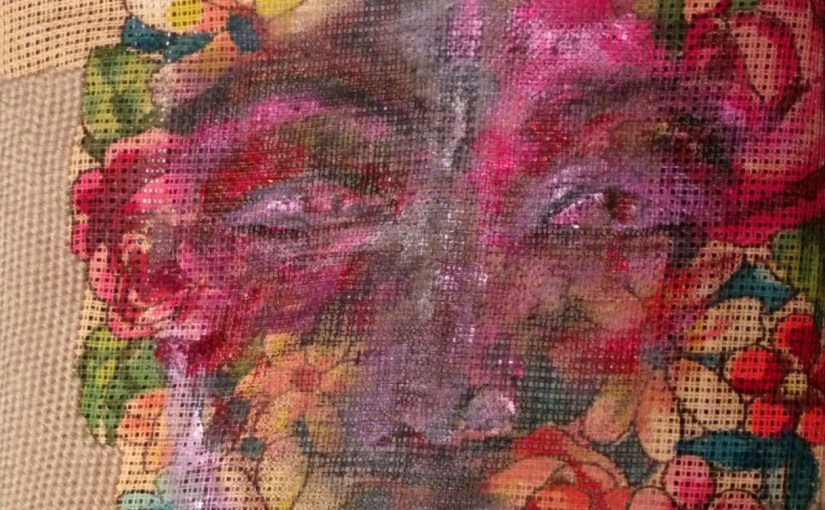
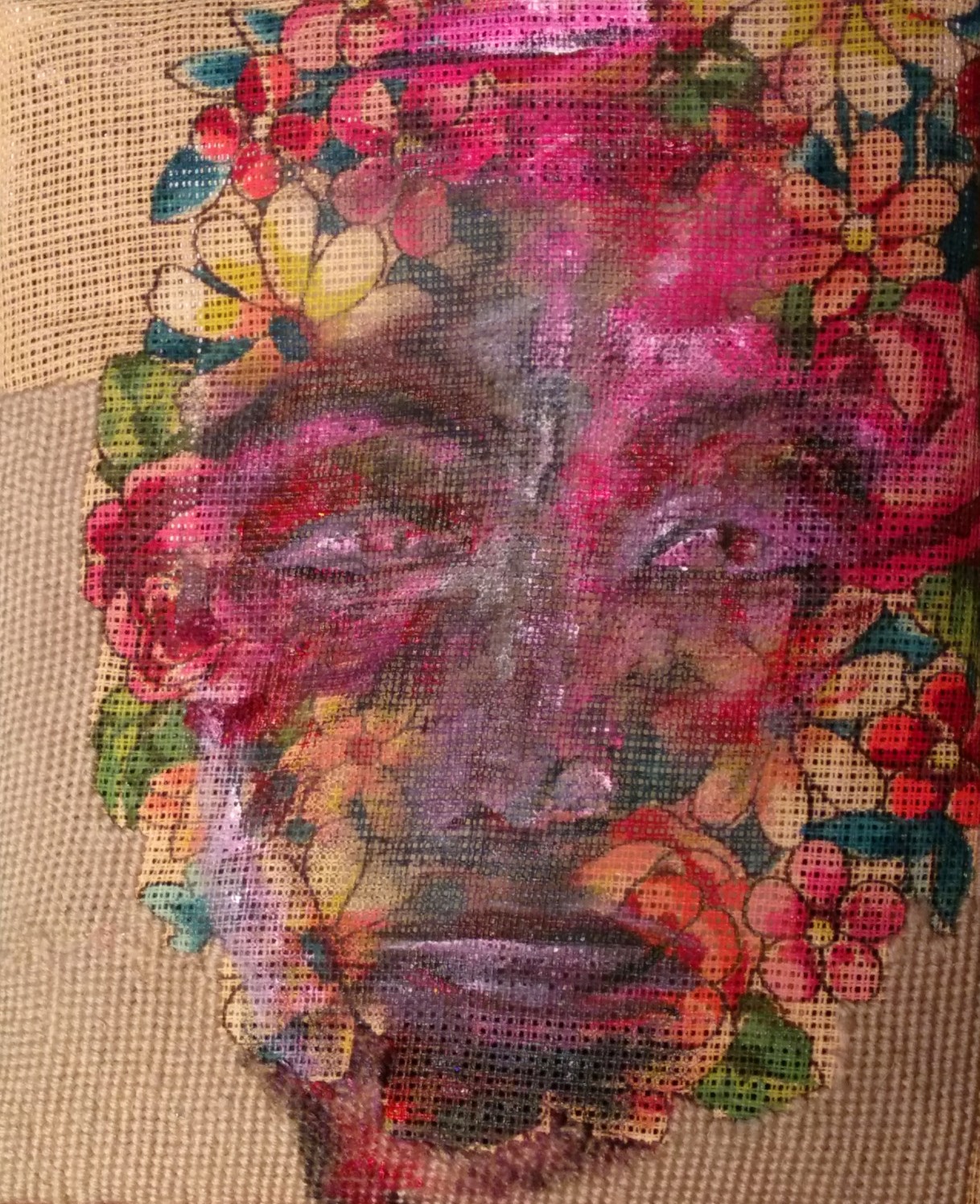
Rebecca Platt is and continues to be a member of an unrecognized but nonetheless elite club: Senior Superlative Actualization.  Rebecca Platt’s Willstown High School Class of ‘12 voted her Most Likely to Find The Meaning of Life.  As senior superlatives go, Ms. Platt’s was considered one of the more unachievable ones, along with Most Likely to Steal the Statue of Liberty, which Damon Quinn has still had no luck with.

The Class of ’12 had no good reason to believe that Rebecca was going to Find The Meaning of Life.  This is because Ms. Platt is as dumb as a doornail.  For example, she is known around Willstown High as the girl who infamously commented, ‘Is this Pennsylvania?’ on Hank Wiley’s photo in front of the Eiffel Tower.  She has regrettable tattoos.  E.g., a trail of generic lips runs down her oblique and beneath them reads, “Christ Was Here.”  Her fridge is empty because she spent her $300 monthly allowance on a Sun Conure, which she named JFK.  And with no additional money for a cage, JFK has been shitting everywhere.

It’s a boring story of how Rebecca Platt came upon The Meaning of Life.  She didn’t have a vision; there was no beam of light.  What it was was a series of mundane events that gave her some insight into the way the world is.  It happened on her 22nd birthday.

Rebbeca Platt was on the subway to work.  She sat across from a woman whose triceps were loose flaps of fat.  The man next her said, ‘Happy Birthday, Beth.’  ‘What?’ Beth said, leaning closer; she couldn’t hear him.  Beth was a mirror for Ms. Platt that day.  Fifty or some odd years separated them.  Beth’s arms were in some metaphorical sense a signpost of what Rebecca had to look forward to.   Ms. Platt imagined herself with her own flaps of fat, her own hearing aids, and sensed that she was deteriorating, nearing the end of her visit here.  Everyone has a Beth, and Rebecca observed that she could either neglect her eventual decay or accept it.  So she decided to bow to her mortality instead of avoiding it.

The subway stopped.  ‘Someone on the train needs medical attention.  We appreciate your patience.’  Work started in ten minutes and if Ms. Platt were late again she’d be fired.  Surprisingly, she didn’t get irritated.  Other people on the train are probably in similar or worse conditions than I am, she thought.  Rebecca didn’t know what to call it, but what she understood there on the stalled train was the importance of compassion.

Ms. Platt then learned about forgiveness.  ‘I’m sorry I always said that your brother was the smarter one,’ Rebecca Platt’s mom said through a teary happy-birthday call.  For most of her childhood, Rebecca was blue.  But daughter forgives mother, and by waiving her inner rage toward her mom, Rebecca relieved herself of a lot of psychic pain, and grew steady.

When Rebecca Platt got home from work later that day, though, she was unemployed and hungry, and still had to clean up all of JFK’s shit.

word by Jacob Goldberg

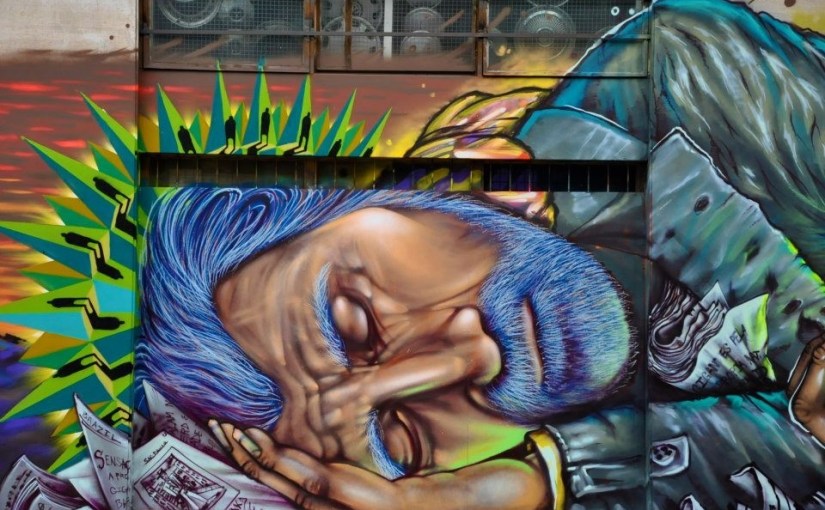
“If there is a meaning to life, I think it has to do with the stuff in the story.  And if you were to come across it, I imagine that a palette of colors might merge as they do in the artwork, and people would realize that deep down we can blend, too.  It’s important to always keep in mind that even if you think someone is stupid, they might in fact be worlds smarter and more capable than you think they are.  People are mirrors, and we shouldn’t miss out on opportunities to see ourselves in them.”

On Racism: “Choosing your ethnicity”

Shalak

This planet is comprised of a collective of starving artists painting prejudiced portraits that hang hidden in family homes. Cheap but sturdy frames are forced around those to whom difference is a prison, painting them with preconceptions and adding them to crowded collections. These brushstrokes soothe worn out eyes but suffocate those trapped behind the chipped glass piling up in petty portfolios.

Mouths do not have slots for double A batteries so why the hell do tongues mimic low-grade labelmakers spitting out insignificant identifiers based on the prominence of pigmentations and the foreignness of fatherlands?

We are all just souls upon bleeding soles traversing the tough terrain only some of us are allowed to call home.

She is exhausted because her ancestors planted their aching feet near the equator rather than the North Pacific. The ink from the classifieds dyes her fingertips a deeper shade of dark because the last name on her resume reads “Latin” rather than “qualified”.

He cries at night because his classmates pick at his afro but never pick him to be on their teams at recess when they run across the field at the school where the confederate flag flies half-mast because its just another Wednesday.

Those sons are dead because he saw them walking down the street and their melanin levels matched that of his entitlement so he pulled his regulation firearm because apparently blackness is still synonymous with corruption despite the alleged 150 year anniversary of the Civil War.

Don’t you get it?

The ability to pronounce and be proud of one’s diversity is a privilege reserved for those who have the ability to choose when to show it.

We live in a world where “dare to be different” is a slogan splashed on the t-shirts and timelines of pre-teens everywhere yet we fail to admit that unless you are lucky enough to fall into the majority, you will be damned if you do.

You will be harassed if you do.

You will be killed if you do.

We are all just souls upon bleeding soles traversing the tough terrain only some of us are allowed to call home. We take one step at a time but walk in circles because the ones who hold the keys are the same ones who refuse to hang contemporary art because their frames cling to the same vintage pieces their parents displayed in their own living rooms.

We are blinded to sameness and seized by difference, never fully allowing the interweaving web of pure humanity to unite us all in the sweet solace of symbiosis.

So she stays sleepless, and he never stops hanging his head. Fox News mornings lead to daylong mourning by faraway strangers thanking God it’s not their own kin suffocating under soil and sun-shriveled forget-me-nots. But from within their palisades of privilege, they never stop to think about who brandishes the brush and who keeps the key.

We are all just souls upon bleeding soles traversing the tough terrain only some of us are allowed to call home.

Don’t you get it? Turn the key. Welcome home.

word by Hannah Chubb

“This piece is designed to be a wake-up call in the face of the racially-driven Charleston massacre, in addition to countless other hate crimes. It is a stripped down reminder that while difference is often glorified, it is a ball-and-chain for those who do not have the ability to hide their minority status.”

colour by Shalak Attack

“Shalak Attack is a Canadian-Chilean visual artist dedicated to painting, muralism, graffiti urban art, and canvases. Shalak  has manifested her artistic expression on urban walls across the world.  Shalak is a co-founder and member of the international art collectives “Essencia”, the “Bruxas”, and the “Clandestinos”. 

“Shalak also works with several other mixed media approaches such as tattoo art, jewelery, illustration, installation, sound, and video making. In the past ten years, she has participated in numerous artistic projects and exhibitions in Canada, Chile, Brazil, Mexico, Palestine, Jordan, Isreal, France, Belgium, Spain, Argentina, Venezuela, the Dominican Republic, Senegal and recently in Sweden for the Artscape Mural Festival. 

Shalak shares her passion for freedom of expression, and has facilitated visual art workshops to youth of under-privileged communities and prisoners in various countries across the Americas, Europe, the Middle East and in Africa.  Her artistic work and community art-reach is rooted in the social and cultural values she received from her family growing up across Canada.  Since then, her most impacting education has been learning from different communities around the world. Public walls has become her favourite place to paint, she uses graffiti as an art form to create accessibility to culture for diverse communities.” 

On Homelessness: “Walking past”

Shalak3

“Look. I know. But I’m telling you, we, like, run in the same circles or something.”

“Which fucking circles are you running in?”

“I dunno, man, just…I’m telling you, I see him everywhere.”

“Give him some cash, man, he’ll leave you alone.”

“I dunno. Do you think he, like, stalks me?”

“Who knows, man. You know what he’s after.”

“Think he can hear us?”

“Probably. Keep looking forward don’t want to give him the wrong idea.”

The subject of their intrigue happened to be a well-recognized face on this street. His salt-and-pepper beard perpetually caked in sweat, eyes bloodshot, if ever opened, fingernails speckled with dirt.

When he wasn’t pacing the corner of the main street, he would lie curled on the ground, enveloped in a makeshift bed, a mattress formed from warped cardboard and a newspaper pillow.

A Styrofoam coffee cup rest at his feet to collect spare change—its position was far enough from his person so as not to elicit too intimate an interaction between hopeful donors and himself, yet close enough to grasp in the case of a thief lurking uncomfortably nearby. This was his domain.

The men who passed him daily found themselves split between curiosity and repulsion as they, in American Apparel, wondered how one could end up on the streets, and why the man couldn’t pull himself up by the bootstraps “and just find a job,” as they all had done for themselves.

The day he disappeared, those who questioned his absence primarily didn’t know who to confront with their concern, or why they felt they needed an answer in the first place, and never did anything about it.

word by Annie Rubin

“With such ease, passersby devalue or dehumanize the lives of homeless people. This story’s focus on the interactions of one man tries to demonstrate a lack of compassion and emphasize the societal conditioning that our culture perpetuates towards those who are not able to work or find a home.”

colour by Shalak Attack

“Shalak Attack is a Canadian-Chilean visual artist dedicated to painting, muralism, graffiti urban art, and canvases. Shalak  has manifested her artistic expression on urban walls across the world.  Shalak is a co-founder and member of the international art collectives “Essencia”, the “Bruxas”, and the “Clandestinos”. 

Shalak also works with several other mixed media approaches such as tattoo art, jewelery, illustration, installation, sound, and video making. In the past ten years, she has participated in numerous artistic projects and exhibitions in Canada, Chile, Brazil, Mexico, Palestine, Jordan, Isreal, France, Belgium, Spain, Argentina, Venezuela, the Dominican Republic, Senegal and recently in Sweden for the Artscape Mural Festival. 

Shalak shares her passion for freedom of expression, and has facilitated visual art workshops to youth of under-privileged communities and prisoners in various countries across the Americas, Europe, the Middle East and in Africa.  Her artistic work and community art-reach is rooted in the social and cultural values she received from her family growing up across Canada.  Since then, her most impacting education has been learning from different communities around the world. Public walls has become her favourite place to paint, she uses graffiti as an art form to create accessibility to culture for diverse communities.” 

Is Mural Fest an Art Festival?

Montreal hosted its third annual Mural Festival this year on Saint Laurent Boulevard; lasting 11 days and featured 20 different artists from all over the world.

This year’s murals, in addition to the final products of the 2013 and 2014 festivals, certainly leave a feeling of awe – but street art does far more than add colour to a neighbourhood.

Most artists don’t create for the sake of creating.

The very nature of street art is accessible to all by being outdoors, free, and easy to appreciate, and there is a strong belief amid the street artist community that there is a certain degree of responsibility to criticize, to create debate, or to denounce injustice through murals and street art.

Namely, Spanish-American Axel Void is known for acting as a witness in depicting the homeless and the persecuted in order to create relatable symbols out of people who are generally discounted by the rest of society. As a part of his series titled “Nadie”, Axel Void painted a homeless man he met on Boulevard St. Laurent. The mural is calledPersonne, and the man in question is at first glance easy to miss, almost concealed, behind the white letters stamped over his face. His mural is a testimony and a criticism to the fact that itinerants are often seen as invisible in society.

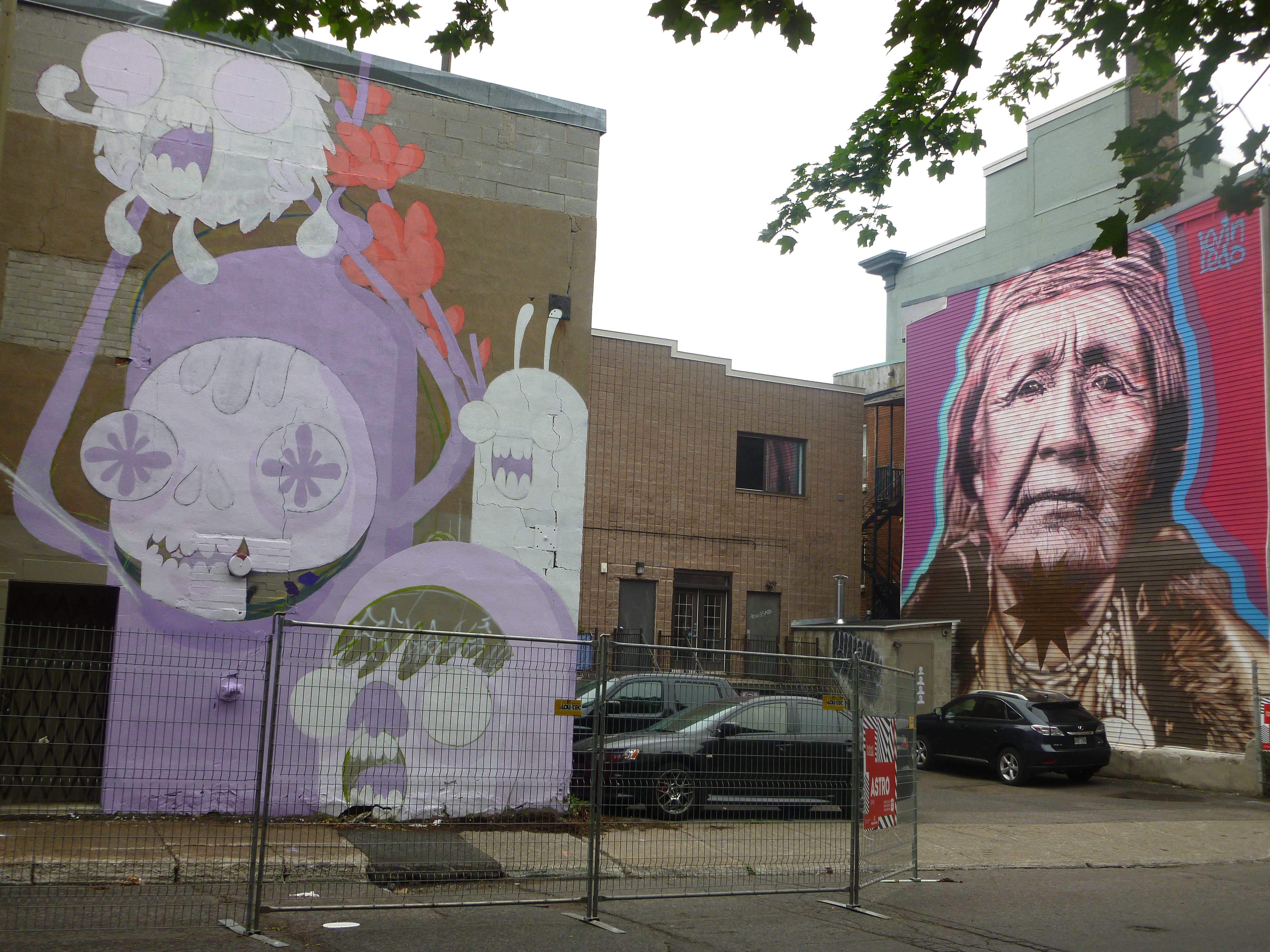
P1060999Mural by Canada’s ASTRO

Mexico city based Curiot is known for blending animal forms in creations inspired by Aztec art and Mexican traditions. His Montreal mural is no exception, and his chalk looking figures call for a heightened connection to nature and between human beings and animals.
P1070002

Austria’s NYCHOS- read his Word and Colour collaboration 

Argentinian Jaz is known for his political graffiti, often depicting scenes of conflict, confrontations, or combats. In his contribution to this year’s Mural Festival, he created a scene depicting cultural and identity clashes between two bulls with human bodies. The bulls are covered in tattoos of maple leaves, fleur de lys, and other Canadian and Québecois symbols.

Another interesting facet of street art is in its reflection of globalization. In addition to their murals in Montreal, you can find Reka One’s aboriginal inspired art in Australia, Italy and Austria, Seth‘s outward looking children in France, Tahiti and China; Etam Cru’s scenes of young girls in Poland, Germany and the United States.

If the artists strive to denounce inequality or injustice through their murals, the process of commercializing said art may strip it of its very purpose.
P1070006A mural by Brazil’s Bicleta Sem Freio 

The nomadic nature of street art allows for a presence of these recognizable characters all over the world. This creates a certain “fil d’attache” between street artists and enthusiasts, as well as between different countries, each faced by their own societal issues.

While Inti‘s mural in Montreal warns that our greed in exploiting Canada’s natural resources will in turn leave us waterless, his mural in Istanbul, Turkey encourages resistance to the government’s austere policies in solidarity with the 2013 Gezi protests. Through their murals, street artists encourage global solidarity in facing world issues.
And yet, when artists are commissioned into creating murals during a festival that clearly has commercial goals – commercial goals that became quite obvious through the street shopping component of the festival – we are called to question the subversive impact of the presence of capitalism in such a festival. Can art be critical of capitalism if it is created by and for capitalism?

P1070001

Moreover, many artists criticize capitalism through their work, but also struggle to pay for the materials necessary to create their works of art. Benjamin Moore sponsored most of the paint used by the artists during Mural Festival. Does art play the same role and have the same mission when its creator was sponsored, or commissioned, by commercial entities?

Though the muralists themselves may want to create art that criticizes capitalism, injustice or austerity, the fact that there was no platform to for them to discuss such themes with the public testifies to the fact that the organizers of the festival are perhaps not as concerned by activism as they are by capital.

In response to the commercialization of art within Mural Festival, the Anticolonial Street Artists Convergence has created a grassroots festival promoting anti-capitalist street art; Unceded Voices will take place from August 14 to 23 with the goal of sharing anticolonial values and indigenous resistance. Unceded Voices brings attention to the fact that Mural Festival takes place on unceded Kanien’kéhá:ka and Algonquin territories.

Contrary to Mural Festival, Unceded Voices will create spaces for artists and members of the community to discuss political issues and how art can act as a platform for such debate.

Check out the murals on St. Laurent, and support Unceded Voices this August.

word by Jiliane Golczyk

On Sexual Abuse: “Sizzler”


unnamed (1)

‘Is that all you’re having?’ Phillip has looked over her meal and seen that she is starving. It is the peak of a Melbourne summer outside and Merry feels fat and tired and large enough as it is. He frowns and pushes the breadbasket towards her. ‘You don’t have to worry about your weight, you wouldn’t suit being skinny. Have some bread.’

‘I’ve always been fat.’

art fiction 

Suddenly she doesn’t care about anything except what this conversation could be. No one since her father has ever brought up her weight. She has never talked to anyone about it either but now she feels she might be able to tell Phillip something, something that could perhaps explain.

He doesn’t reply with anything, doesn’t deny her statement. Merry feels a little light-headed, though she has hardly touched her Amaretto Sour. She fishes around in the glass with her fingers and pulls out the cherry, dangling it above and then down into her mouth.

art fiction 

‘Don’t do that. Women shouldn’t eat with their fingers.’

art fiction 

She wipes hand on the paper napkin beside her plate, mouth slightly watering from the effort not to lick.

After Phillip has gone back for more veal schnitzel and duck gravy and they are lily-lipped and cloud-eyed, he asks her if she will take him home.

art fiction 

‘I live with this old woman who hates it if I have guests. I think she’s in love with me.’

art fiction 

He smiles a little and adjusts his sagging shirt collar. Merry feels that the woman is most certainly in love with him; she understands through the liquor that the woman flirts with Phillip in her tattered kimono over eggs and beans for breakfast and that she has a cat who curls often on Phillip’s knee.

art fiction 

‘What’s her name?’ she asks.

‘June. Why?’ His voice has coloured slightly—it is a storm in the distance, in the heavy clouds.

‘Oh, I just wondered. June is a nice name.’

art fiction 

He frowns, forcefully, as if it will help him to tolerate her stupidity.

art fiction 

‘She’s just my housemate. She’s old and sagging and pays most of the rent.’

art fiction 

There is a familiarity to Phillip’s forehead that she did not see before. It’s in his crooked eyebrows, the slight pouches of muscle above each one that move when he talks like they are his voice. It must be the reason why she feels a pulsing in her groin at every word he speaks—because she knows him.

      They have dessert, coffee, more sours, more smooth froth on lagers like chocolate milkshakes. It is Phillip that decides when they need to leave, and he doesn’t come back to her nervous, cluttered flat after all. He starts to eat at her neck and then her chin in the taxi on the way there and tells the driver to stop so that he can fuck her up against an alleyway brick wall that is sprayed in red and green and blue: coloured words she can’t read but that she thinks just might mean everything.

       Just as he pushes himself in she sees who his forehead is. Now it’s her father with his hand up under her dress, pulling at her nipple too hard. She closes her eyes and tries to remember the sound of Philip’s voice. She hears sirens and feels strangled breath heat the skin that covers her neck tendons.

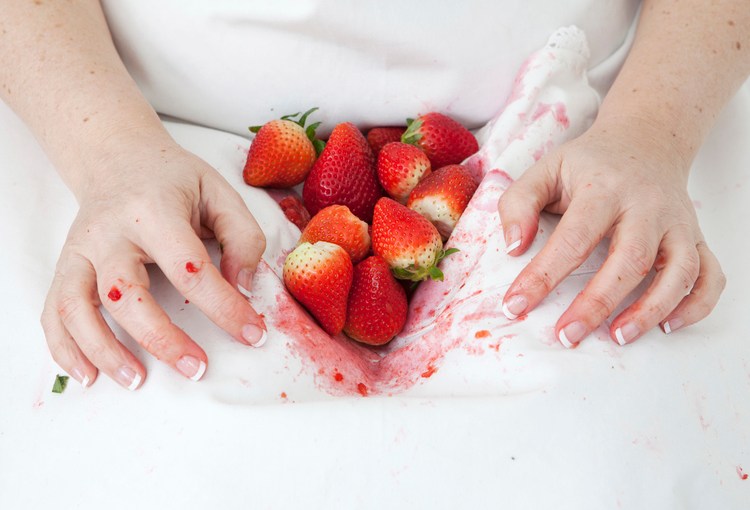
“When I saw this art piece by Fannie Gadouas, I immediately felt protective towards the woman with the blood and strawberries in her lap, with all her vulnerability so blatantly displayed. 
The character of Merry in my story ‘Sizzler’ is a vulnerable character because of her background, and the way her femininity and innocence was abused by those closest to her. Despite this trauma and vulnerability, Merry keeps living and trying to find something better for herself. The strawberries replacing most of the blood in Fannie Gadouas’ piece inspired the resilience inherent in the character of Merry, and reminded me of the resilience I have witnessed in so many (less fictional!) women I know and love.”

colour by Fannie Gadouas

“I am an interdisciplinary artist working with photography, fiber arts and performance. My work explores issues pertaining to femininity, identity and experience. By re-appropriating various traditional imagery, techniques and rituals, I question and challenge the way gendered identity is constructed, inherited and perceived in western society. Textiles is, and has traditionally been associated with the feminine realm. Critically engaging with techniques such as weaving, knitting and embroidery allows me to subvert and question my own role as both woman and artist. In this sense, my practice as a whole becomes a performance in which the process holds more relevance than the resulting objects. Informed and greatly influenced by feminist theory, the work I produce is a critical response to the social structure of western society.”

A reminder: your fate is permeable

back_03

The only time I ever took a pregnancy test I was eighteen years old and living with my boyfriend in a stranger’s apartment in Prague. We spent the days wandering and the nights drinking quietly, not knowing what or how to cook.


I curl into the kitchen windowsill smoking what might be my last cigarette, and silently contemplate this bleak fate. He slouches on the bed twirling the butterfly knife bought that afternoon despite my un-nuanced anti-violence politics. Or maybe I just couldn’t support violence for the sake of masculine amusement.


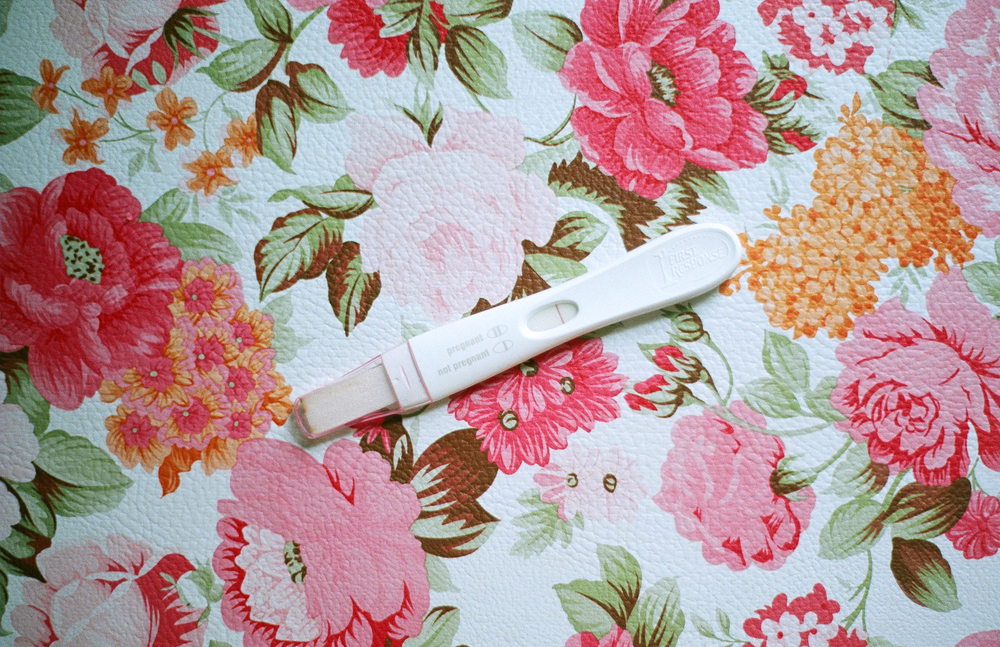
The kitchen table is draped in pink blossoming polyester flowers and the fridge is mostly empty. I swallow, and clutch to the unfinished sketches of my life, slipping. It is a small kitchen, badly lit and the night sky drops away from my body.


On a walk with mother, she told me that having children doesn’t necessarily equate to happiness. They did a study, she told me. On happiness. Together we unravelled the assumed inevitability that one day, you’ll see, it will just happen. Bam. Motherhood. And eventually you’ll even learn to like it.


Still I shrink away from the word, hold close and fast to the solitude, the silence, the ability to switch apartments seven times in four years.


Even without the study, her words sucked me out of the story. At least far enough away to bring it into focus. Socialization never amounted to fate in any mystical sense of the word. My anatomy does not presume that I was made for this, and mothering, just like any other job, must be knowingly consented to.


There I was: eighteen, tender and bitter with my un-nuanced anti-violence politics, licking childhood wounds and refusing fate. That small pink bar. I taped it to the wall along with the blossoming table cloth.


word by Alisha Mascarenhas 

“I thought about all of the babies in strollers I’ve walked past this week, and about the persistent disjuncture that often presents itself between what we need and what we are told that we need. I thought of how socialization of femininity is made real through direct transmission from those who impress upon our minds most legibly, and how necessary that there are alternative narratives offered to us in these moments. I thought of the economics behind the inevitability of motherhood, and the threatening possibilities that can surface when what appears fated is pulled apart, set aside and seen through.”

colour by Fannie Gadouas

“I am an interdisciplinary artist working with photography, fiber arts and performance. My work explores issues pertaining to feminine, identity and experience. By re-appropriating various traditional imagery, techniques and rituals, I question and challenge the way gendered identity is constructed, inherited and perceived in western society. Textiles is, and has traditionally been associated with the feminine realm. Critically engaging with techniques such as weaving, knitting and embroidery allows me to subvert and question my own role as both woman and artist. In this sense, my practice as a whole becomes a performance in which the process holds more relevance than the resulting objects. Informed and greatly influenced by feminist theory, the work I produce is a critical response to the social structure of western society.”

On Abuse, Beauty Standards: “Blueberry Scones”

022

Content warning: abuse 

Blueberry scones.  Louise recalled her mother baking them fragrant and buttery every Sunday morning.  They left flour trails on the good porcelain dishware and corners of her mouth as they dined on the lawn.  Their necks sheltered by the limbs of the poplar tree.  Louise would blush with the heady kisses of the blueberries and peals of laughter.  The poplar bared its fruits in that space, though its trunk was slim and its leaves almost translucent.

The air in the house took on an electrified vibe when he started coming around.  In the parlour under definite drawls of “honey,” the coffee was bitter but jarring.  It pooled black and inky as it rested on her knees.  Back straight as she perched on the sofa, her lips painted cherry red to match her mothers.  Daytime appearances seamlessly folded into nightly visits.  Dresses were ironed carefully each time; their clean A-lines improved by the hundreds of tummy toners performed every morning.  He brought new sound to the house too; concertos of harsh shouts that didn’t echo beyond the starched, checkered curtains. Her mother’s eyes shone like slivers of wet jewels- any drips that touched her cheeks wiped clean and painted over with cream-coloured powder.  Tender spots of bruised flesh could be covered by wool as autumn closed in.

The ruts in her mother’s chin grew deeper and her mouth settled in placidity.

“I am making this work for us”, a mantra repeated as she pinched the earrings tight on her lobes and pulled her hair taut against her head. A golden egg exposed for the taking.

“It’s better for us to have a man,” she repeated somewhat apologetically as she pulled Louise down street to her ballet classes.


____________________________


The screams washed over the house that evening.  They rolled over the kitchen mouldings and crashed against the windowpanes.  Louise dashed upstairs- it was time to seek higher ground.  A wild female wail then a teacup flung- it sung as it fractured against the wall.

The dishes continued to fall downstairs.  The crushing sound became definite and dependable, like the merging of orchestrated notes in her ballet classes.

“You’re just gonna do that all night are ya?”

No answer.  Louise heard the front door slam.  Piece after piece, they were hurled at the wall.  She began to feel a rhythm.

Shattering.  Release.  He was gone- all these broken pieces were too difficult to tread on.  She heard sobbing.  The breaking continued.  Alone in her bedroom, Louise started to spin.  The merging of sound, performing under pressure.  Was she straining?  She didn’t think so.  Among the wreck, she felt in her element.  She wasn’t broken – her flesh withstood more than those brittle dishes.  She tilted her head back – a dizzy distancing feeling crept in.  For now she could cope.  Soon enough she would rise from these fragments and pirouette away.


word by Keah Hansen

From the author: “The shattered tea cup- with its clean lines and dainty features- made me think of the strain women feel when upholding conventional beauty standards. Its brokenness inspired me to write about an abusive domestic relationship, and an experience of cathartic release for the female characters.  While the mother smashes through her imposed constraints and repels her perpetrator, she is still cloistered within the traditional domestic sphere.”

colour by Fannie Gadouas

“I am an interdisciplinary artist working with photography, fiber arts and performance. My work explores issues pertaining to feminine, identity and experience. By re-appropriating various traditional imagery, techniques and rituals, I question and challenge the way gendered identity is constructed, inherited and perceived in western society. Textiles is, and has traditionally been associated with the feminine realm. Critically engaging with techniques such as weaving, knitting and embroidery allows me to subvert and question my own role as both woman and artist. In this sense, my practice as a whole becomes a performance in which the process holds more relevance than the resulting objects. Informed and greatly influenced by feminist theory, the work I produce is a critical response to the social structure of western society.”


On Death and Instagram: “The Right Filter For My Memory”

nadoune 3
My eyes raced to skim over the part of the text that was relevant to our current conversation in hopes of catching on to the gist of what was being discussed. Of course I was finding it impossible to formulate anything barely intelligent to contribute. As per the usual, and despite his general lack of insight, Micah’s hand bolted sky high. In a seminar of 11 graduate students he had somehow consistently missed all of the social and visual cues and extended his unusually long arm, fingers arrow straight towards the ceiling, as though he would combust if he could not speak.
 Death and Instagram
Dr. Meyer glanced at her watch and subtly but expertly waved Micah’s hand down, squinting her eyes and pursing her lips as if to say in that one brief facial expression.
Death and Instagram
“I know, we’ve run of out of time, I’m so sorry we’ll miss your gems of wisdom.”
Death and Instagram
Micah’s hand returned to the table and he nodded his head as if to respond, “You’re too right, I need more time to explain my genius to these folks.”
 
Before letting us go, she concluded: “In the corners of my mind are memories, deep in the archives, rarely if ever recalled. The truth is you have to train yourself in the art of that kind of excavation and it is work. You can easily rest your laurels on those moments prompted by a photo that has been sat in a dusty frame for eons, you can access it so readily that you begin to conflate the image for the history of the thing. Do you remember being there? What did you wear? How did you feel? You’re all so busy capturing the moment that you miss it. Do you remembering being there? Or texting, staring into your phone, applying filters? Do you remember being there?”
Death and Instagram
I chuckled thinking to myself. What does this old lady know about Instagram? Dr. Meyer was 68. Her probing questions anchored deep and roused me. I had covered over the covering over, forgotten what I had forgot, and there was a persistent gnawing, a dull reminiscent ache: the photos only captured so much, there were too few of them to ever imply an iota of the significance of your time and place here with me.
Death and Instagram
I don’t know when I lost you, really. Maybe it was when you moved, or maybe when you lost your leg; you had already begun to slip away. I couldn’t grasp your death until I saw you go into the ground.
Death and Instagram
Every now and then your face surfaces above the mossy mist. Your milk carton full of buttons had a very particular acrid smell, and the touch of your soft wrinkly skin felt like pure love; sewing needles kept in plastic film canisters and the fans you took to church. You are not far – I see you.

colour by Nadine Doune 

“Nadine est née à Montréal, d’une famille venant de s’installer d’Algérie. Elle grandit dans l’école buissonnière, une école dédiée à l’apprentissage par l’art. La musique et le visuel sont toujours présents dans sa vie, dès qu’elle le peut elle voyage avec son violon et ses poèmes/dessins au Mexique, dans l’ouest Canadien, et aux États-Unis où elle s’y installe un an. C’est une autodidacte qui apprend par les expériences, la rue est son terrain de jeu et où elle est le plus inspirée. Elle essaye de rendre la connaissance accessible en donnant plusieurs ateliers (notamment dans une coopérative d’art communautaire nommé le Milieu qu’elle essaye d’aider à bâtir). Elle est intervenante sociale, vend des popsicles artisanaux, et travaille présentement sur un projet de prise de parole chez les femmes immigrantes.”

“Nadine was born in Montréal to a family who arrived from Algeria. She grew up in the Buissonière School, where learning is achieved through art. Music and aesthetics are always present in her life, as she travels with her violin, her poems, and her drawings to Mexico, to Western Canada, and to the United States, punctually for years. The street and her experiences are her main sources of inspiration. She works to make education and art accessible by giving workshops – notably in Le Milieu, a community art cooperative that she’s involve in. She is currently working on a project that centers on the voices of immigrant women.”

On Self-Doubt: “Weather”

unnamed

It’s been raining for days. The girl has just been feeling like rain lately. She’s not sure when it’ll stop, but she knows it can’t go on forever.

            She sits in the waiting room of the office and thinks about how boring it all is. The same magazines as always, the same water cooler across the room, the same assistant answering phone calls and shuffling papers.

            The doctor comes into the waiting room and says the girl’s name. He holds the door to his office open for her, and she gets up slowly, walks toward him past the painting of a horse, past the painting of a whale. When they’re both in the office, he closes the door behind them.

            “So,” he says, “how are we feeling today?”

            “How do you think?” she asks.

            “I thought we were past this.”

            “Apparently not.” The girl sits in the uncomfortable chair she always sits in. The doctor sits in the more comfortable chair, takes the lid of his pen off with his teeth. The girl leans back.

            There’s the sound of thunder and the doctor looks out the window.

            She saw the first doctor when she was eight. He called her problem an Extreme Emotional Response to Weather Patterns, but even then she knew it didn’t explain anything. What was inside her head matched the weather before she ever saw the rain or the sun or the tornado. She could always feel the truth of it.

            “What is good or bad weather anyway?” the doctor asks. She can tell he’s frustrated with her. They always get frustrated eventually. She gives this one another two weeks. “If you’d been feeling great for a month, say, so we desperately need rain, shouldn’t it rain then even if you’re feeling great, since rain would be the great weather?”

            “I don’t make the rules,” the girl says, crossing her arms.

            “Let’s try a visualization exercise.”

The girl knows how this goes; she closes her eyes.

            The doctor speaks slowly, confidently. “Think of a forest. You’re deep in the forest. So deep that nothing can come through the trees. It’s very, very dark. You’re feeling angry today, so let yourself really feel that. Stay there for a minute.

            “Now I want you to start walking. You’re walking through the forest and you come to a clearing, and the first thing you notice is that it’s sunny. You can smell it and feel it as you come to the clearing.”

            The girl feels her anger and she feels the sun on her shoulders and she opens her eyes.

            The doctor pulls his sweater a little tighter around his body.

            “It’s only going to get colder,” she says.

word by Leah Mol 

“The artwork reminded me so much of those moments when a storm is just beginning or just ending. My story is about a link between weather and emotion in the mind of a girl who nobody believes. She is, after years of trusting her own instincts, finally feeling the self-doubt creeping in, which could be the ending or just the beginning of the storm.”

colour by Nadoune Doune 

“Nadine est née à Montréal, d’une famille venant de s’installer d’Algérie. Elle grandit dans l’école buissonnière, une école dédiée à l’apprentissage par l’art. La musique et le visuel sont toujours présents dans sa vie, dès qu’elle le peut elle voyage avec son violon et ses poèmes/dessins au Mexique, dans l’ouest Canadien, et aux États-Unis où elle s’y installe un an. C’est une autodidacte qui apprend par les expériences, la rue est son terrain de jeu et où elle est le plus inspirée. Elle essaye de rendre la connaissance accessible en donnant plusieurs ateliers (notamment dans une coopérative d’art communautaire nommé le Milieu qu’elle essaye d’aider à bâtir). Elle est intervenante sociale, vend des popsicles artisanaux, et travaille présentement sur un projet de prise de parole chez les femmes immigrantes.”

“Nadine was born in Montréal to a family who arrived from Algeria. She grew up in the Buissonière School, where learning is achieved through art. Music and aesthetics are always present in her life, as she travels with her violin, her poems, and her drawings to Mexico, to Western Canada, and to the United States, punctually for years. The street and her experiences are her main sources of inspiration. She works to make education and art accessible by giving workshops – notably in Le Milieu, a community art cooperative that she’s involve in. She is currently working on a project that centers on the voices of immigrant women.”

Issue 225: “At Daybreak”

For Jennifer 3 (1)

There is a room in the red house up the block that lets sound neither escape nor enter.  Its floor-to-ceiling window faces East.  The other walls are bare.  In the center of the room stands a canvassed easel off of which loosely hang a palette and brush.  But there are no colors to paint with.

At dawn, the woman who lives in the red house goes to the room and locks the door behind her.  She takes the palette and brush and settles in front of the canvas in a painterly posture.  The brow of the sun emerges from behind the buildings opposite her house.  The sun washes the room in the same hue as scrambled eggs.  She does not speak as she studies the canvas or the landscape in front of her.  She searches them with the intensity of one who is trying to pop her own pimples.

Her stomach’s growl sounds like someone squeezing an empty bottle of ketchup.  Every wall is a window.  The suck-suck of her heartbeat fills the room.  The woman dabs at the empty palette with the dry brush, which she holds the way you might imagine holding a wand.

The sun still rises. She runs the brush over the surface of the palette several times.  An inflating lung sounds like the hush when you go from out to inside a tunnel.   Her control of the brush for all intents and purposes seems limited to Mr. Miyagi’s recommendation to ‘paint the fence.’  The bristles on the brush appear frayed from overuse.  She has been doing this for a while.  Alive, she restores the palette and brush and leans on the wall adjacent to the window.

In this room, she is sound.

A crowd of boys on the street below walks hunched together.  One of them holds a baseball.  They can’t be older than fourteen.  The woman in the room smiles down on them as if they were her own children.  Her grin reveals that her 9th and 10th teeth have been badly broken.  The boys down below look up at her and mock her.  They pretend to paint.  The boys, they have all seen her before.  The woman’s expression, though, remains.

Her ears ring painfully as the glass shatters.  The room gasps for sound as would someone for air.  The baseball rolls across the ground and stops by the base of the easel.  The boys below laugh and walk away triumphantly.  The woman does not say anything but she has stopped smiling.  Their laughter hurts the way it hurts to have a snowball fight barehanded.  The woman wonders why they threw the ball through her window.  She spends the remainder of the morning picking up the glass shards and putting them in a recycling bag.

I wonder if she is a sad woman.

word by Jacob Goldberg

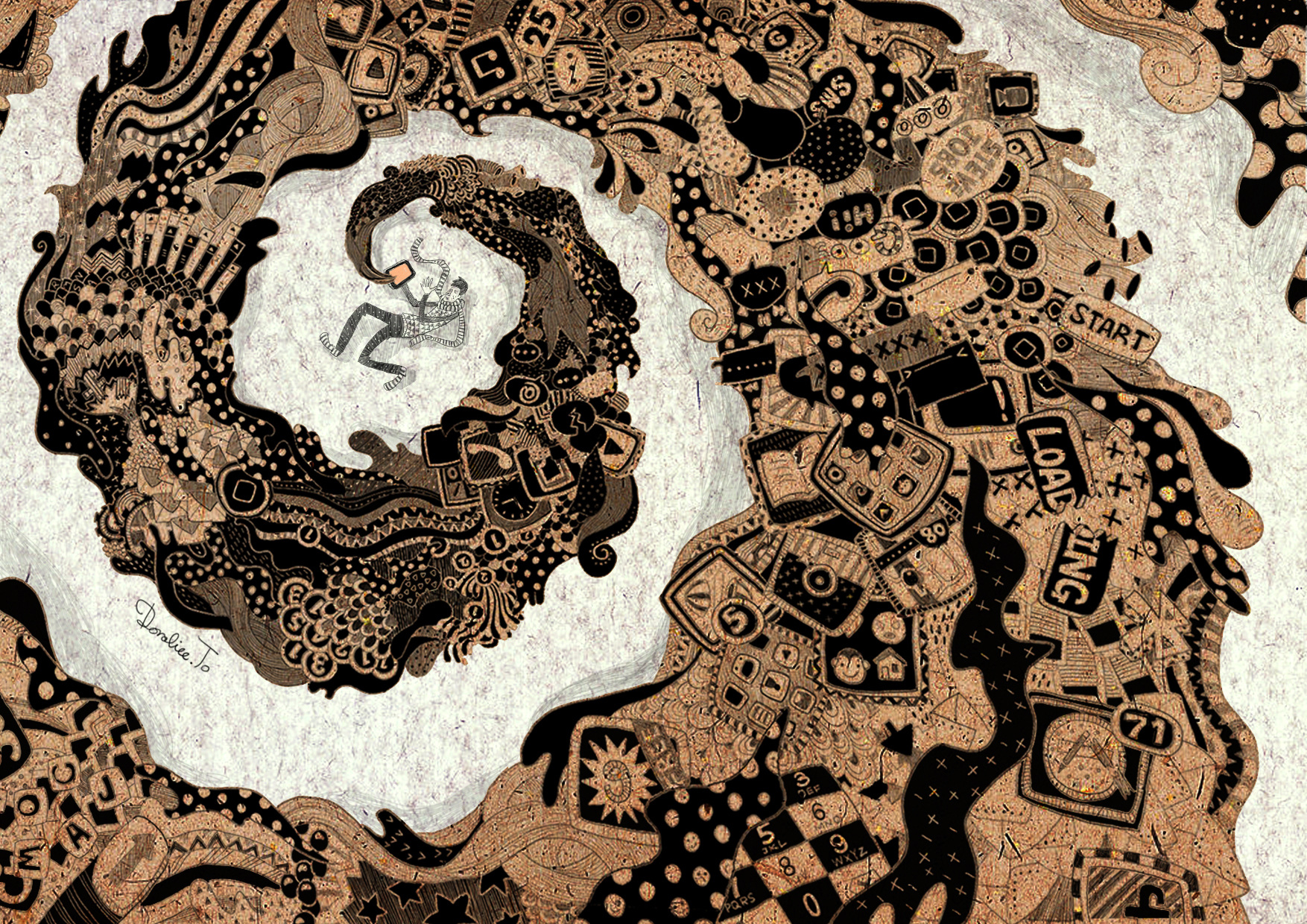
“The artwork that goes along with this painting gave me pause about how I can let technology control my life and consequently, forget to maintain focus and care about on what’s going on around me and inside me.  The woman in this story fights that as she is disciplined and compassionate – she just gets picked on for being different.” 

colour by Yukai Du, an illustrator and animator from Guangzhou, China, currently based in London.

“In 2012 I finished my BA Animation degree in Guangzhou Academy of Fine Arts, China.
‘Musical Chairs’ was my BA final project, also my first animation film.

Two years later I have received my MA degree in Central Saint Martins College in London.
I focused on research skills during my first year study in MA Communication Design
and then transferred to MA Animation in the second year for a more practical project ‘ Way Out’ – my second animation film.
Meanwhile, I have also been working as designer and animator in M-I-E studio, London.”