New Poetry by Francine Cunningham: “Whales can’t save us all—but they try”

blue_bird

The child waits,

drawn with shaky fingers
the thick lines of a blue whale’s eyes come into focus
out of the abyss of the great white ocean
the form is coaxed into being
and with the life ink has given stretches its fins

scratchy and ruthless the strokes of the pen dig into the paper
tearing tiny holes into the surface of the water
but nonetheless,
the whale grins as bubbles tickle its thick heavy body

the sound of thudding boots on carpet makes its thunderous arrival outside the door
and still the child waits
shoulders hunched around ears
eyes trained on the figure
silent in the middle of the page

a splinter of sound against the door
the pen lifts, the child listens
thrashing in the stagnant water
the whale gasps for the breath of true life
follicled mouth
begging for movement

the pen smashes down against the eye
and in desperation, blots more black against it
willing it to see, to see, to see
to witness
and for a moment out of the blackness
there is a hazy figure, blue paint, red carpet, pictures shaking against the wall

but then suddenly the pen digs too deep
crashes through
and the whale sinks
deeper, deeper, deeper
until neither can see
only wait


these words by Francine Cunningham were inspired by the work of Daphne Boyer

New Poetry by Jeff Blackman: “Client-facing”

blow_13x9

Today called myself an idiot a lot.
It’s fine. I’m fine. They and we’re fine.

When wise, I delete my posts
but generally settle for clever. At work

I’m perpetually perfecting an expression
that affirms I had nothing to add. I joke,

“Whaddya mean end-of-fiscal? My
calendar says it’s March thirty-fourth.”

I colour code what’s to be done.
My white noise play list skips.

“Whaddya mean end-of-fiscal? My
calendar says it’s March thirty-sixth.”


these words by Jeff Blackman were inspired by the work of Kelsy Gossett

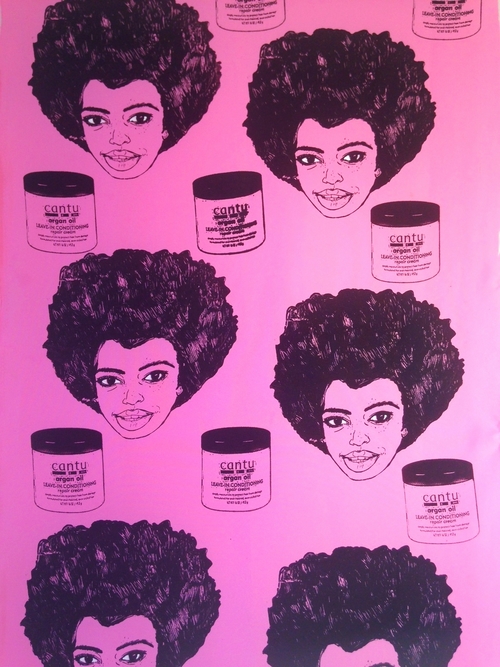
“Still gaze,” by Khatira Mahdavi

angela pilgrim_kinky hair cantu butter wonders
We are standing at bay
with a curtain drawn across the sea
from here, the sunset is only half as beautiful as it could be 
and the moon has lost its grip on the waves
but I am still standing here 
drowning in your eyes
wholly enamoured by that gaze


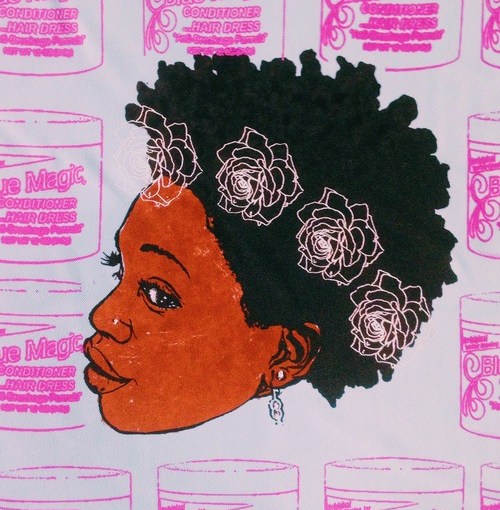
these words by Khatira Mahdavi were inspired by the work of Angela Pilgrim

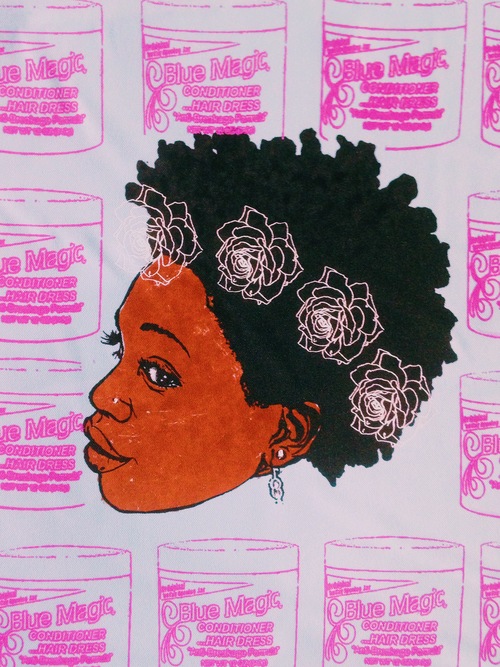
“Balanced,” New Poetry by Ivana Velickovic

Processed with VSCOcam with c1 preset

You asked me if I thought
you were pretty.
Pretty is relative only to
everything besides oneself.
When I stare deeply into the mirror
I become confused.
There are two versions,
one always melting into
the other.

The first: a goddess,
black magic turned blue.
A garland of roses
atop my head,
pure and perfumed.

The second: relative.
A wise aunt who shares dark eyes.
A brave father who shares resilient,
smooth skin.

You liked the idea that beauty
is ancestral and proud.
You asked how you could come to wear
a garland made of roses.
Together we looked in the mirror
and I removed my garland,
delicate as a newborn.

I let it settle on your head.
I let it bring you balance.


these words by Ivana Velickovic were inspired by the work of Angela Pilgrim

New Poetry by Annie Rubin: “You tasted safe”

Processed with VSCOcam with c1 preset

Someone once told me not to make homes out of human beings but with you I
couldn’t help it—

your body cradled perfectly against mine,
as if we were built to rest with our limbs intertwined.

We forged space for each other where there was none to be made.
I’d feel your heart as you held my head to your chest
I wanted to merge your body with mine.
But you were indestructibly you.

You lingered in the air, irresistible.
Exquisite, as you lay back, stretching out
beneath the sunlight of your bedroom window that splayed sparkles upon your cheeks.
As you unequivocally made yourself a part of my world.


these words by Annie Rubin were inspired by the work of Angela Pilgrim

New Poetry by Nahomi Amberber: “When It Hurts to Stand Next to Him”

james-gilleard_2

Forgive me

For not coming any closer.

You remind me too much of my father,

And the type of men

Who destroy

Women like me.


these words by Nahomi Amberber were inspired by the work of James Gilleard

Taisha Cayard in Dialogue with Audre Lorde, “But What Can I Learn From You”

poem

This poem by Taisha Cayard was inspired by Audre Lorde’s “But What Can You Teach My Daughter,” published in Lorde’s 1978 collection, The Black Unicorn 

New Poetry: “Later,” by Jess Goldson

later-30x30cm-2014

‘See you later,’
I say to you
as I leave you for the last time.
I do not know it yet, but when I return
our pool will be dry.
There will be no evidence
of our glorious summer days
soaking in the sun;
nor remnants of our gin-soaked laughter,
as we trudge through the snow in the winter.
You are gone; I wish I were.
I see telephone lines as they reach through the countryside,
searching for you,
and I feel your voice vibrate through your body,
while I rest my head on your chest.
I see the curve of an arch,
and I remember how miraculously our bodies fit together.

these words by Jess Goldson were inspired by the work of Mairi Timoney

“Tinaja,” by Ruth Daniell

dona-daigua_4_2014

The views expressed in the texts do not necessarily represent the views of the artist.


Sometimes you wish you could forget your body,
walk away from its needs and all the ways you believe

it fails you. You are not always kind. Just now
you are scrambling up a canyon. The rock is red

and the sky is blue. This is your first time in the desert
and you had not expected to be so in love

but you are. You love the deep blue sky
and the yellow and orange and red sandstone

and the creosote bush and the Joshua trees and
you note with curiosity that the beauty doesn’t

make you less aware of your small self,
it doesn’t take you away from your body. No,

instead your body is a marvel, too, a marvel
that carried you to these other marvels, the sky,

the rock, the creosote bush and the Joshua trees and
now, finally, to the tinaja, this natural basin

carved by wind and filled with rare desert rain. It is
uncommonly wonderful: cool and green and quiet.

Your own body took you here. It is wonderful, too,

to notice your body in this way, when so often

you notice it only when you are hungry or thirsty

or tired or too hot or too cold or you have to pee

and you’re miles from the nearest rest stop.

Your body will be inescapable for your entire life

but you will not be ungrateful. You will press

your hands onto the smooth sandstone

and feel where the wind has come and gone
and will come again and slowly change the world.


these words by Ruth Daniell were inspired by the art of Sonia Alins Miguel

New Prose Poem: “Washi Tales,” by Ilona Martonfi

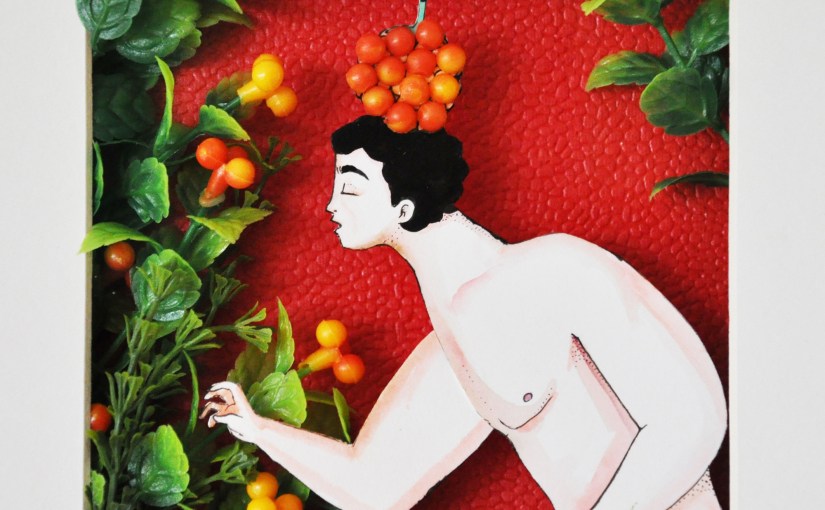
the-forbidden-fruit

The views expressed in the texts do not necessarily represent the views of the artist.

i.

No one in the village will tell her. The repossessed house. Her childhood home. The rotting wood. Four rooms. Iron stove. A table. A mother and a father. Two sisters, little brother. Grandmother. Sand dunes, grasslands, reed-lined backwaters, tiny white farms. Disassembled.

Poïesis clangour. Percussive bowing. Scavenging emptiness. Improvisation, nomadic process. Obsessive. The marginal and maimed. That which is cast out. A place of no place. Into the nothing. Riffing off these lines. Her mother reporting the bad news. Or retelling old bad news. Keeping track of shapeless, violent births; confessions and letters; the omen unfolding in real life. Shuffling. Slurring. Inept.

A purple iris. Faceless, carrying her. Name folded into another name. Put black paint back to its unblemishedness. Unbruised.

ii.

Wading in warm mud. A womb. Tales of sexual predation. Cruel loneliness.


these words by Ilona Martonfi were inspired by the art of Sonia Alins Miguel