A reminder: your fate is permeable

back_03

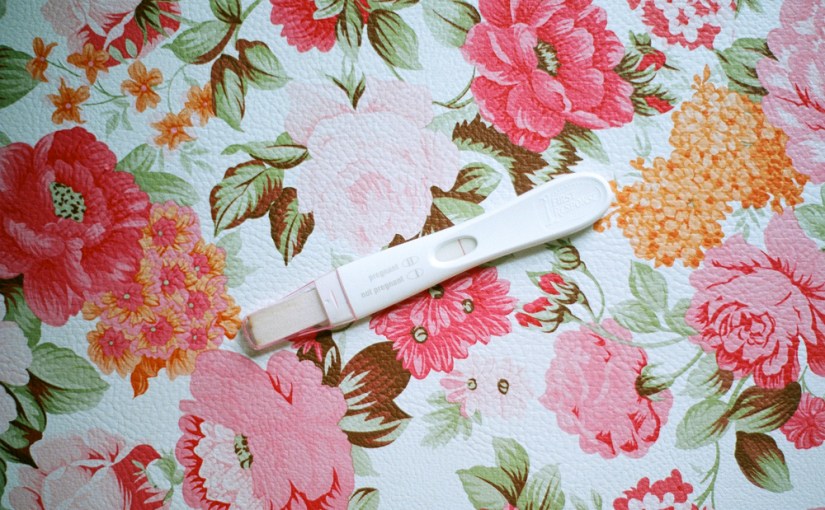
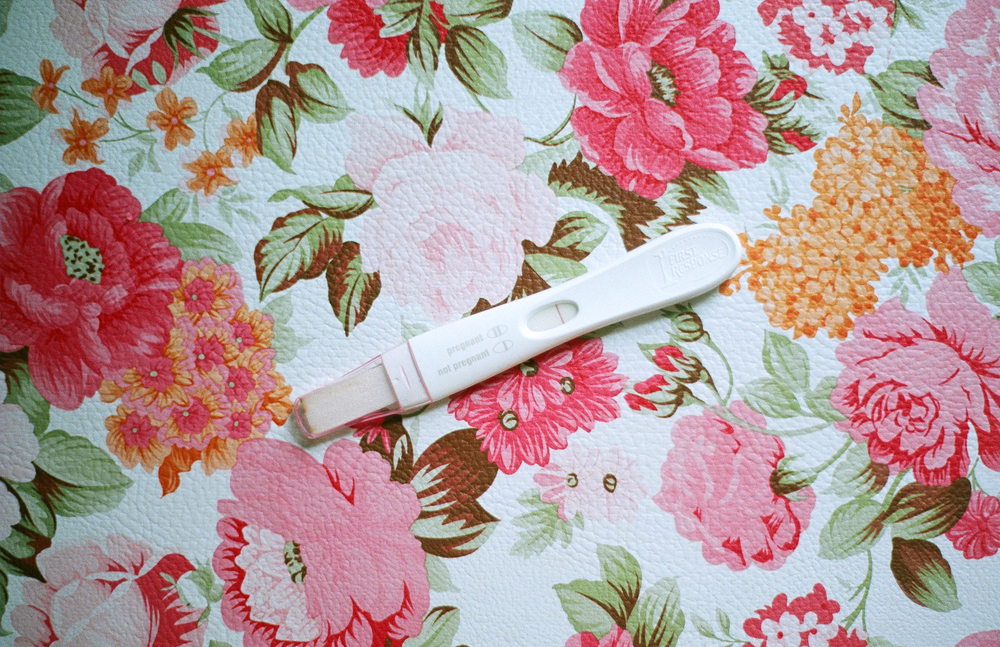
The only time I ever took a pregnancy test I was eighteen years old and living with my boyfriend in a stranger’s apartment in Prague. We spent the days wandering and the nights drinking quietly, not knowing what or how to cook.


I curl into the kitchen windowsill smoking what might be my last cigarette, and silently contemplate this bleak fate. He slouches on the bed twirling the butterfly knife bought that afternoon despite my un-nuanced anti-violence politics. Or maybe I just couldn’t support violence for the sake of masculine amusement.


The kitchen table is draped in pink blossoming polyester flowers and the fridge is mostly empty. I swallow, and clutch to the unfinished sketches of my life, slipping. It is a small kitchen, badly lit and the night sky drops away from my body.


On a walk with mother, she told me that having children doesn’t necessarily equate to happiness. They did a study, she told me. On happiness. Together we unravelled the assumed inevitability that one day, you’ll see, it will just happen. Bam. Motherhood. And eventually you’ll even learn to like it.


Still I shrink away from the word, hold close and fast to the solitude, the silence, the ability to switch apartments seven times in four years.


Even without the study, her words sucked me out of the story. At least far enough away to bring it into focus. Socialization never amounted to fate in any mystical sense of the word. My anatomy does not presume that I was made for this, and mothering, just like any other job, must be knowingly consented to.


There I was: eighteen, tender and bitter with my un-nuanced anti-violence politics, licking childhood wounds and refusing fate. That small pink bar. I taped it to the wall along with the blossoming table cloth.


word by Alisha Mascarenhas 

“I thought about all of the babies in strollers I’ve walked past this week, and about the persistent disjuncture that often presents itself between what we need and what we are told that we need. I thought of how socialization of femininity is made real through direct transmission from those who impress upon our minds most legibly, and how necessary that there are alternative narratives offered to us in these moments. I thought of the economics behind the inevitability of motherhood, and the threatening possibilities that can surface when what appears fated is pulled apart, set aside and seen through.”

colour by Fannie Gadouas

“I am an interdisciplinary artist working with photography, fiber arts and performance. My work explores issues pertaining to feminine, identity and experience. By re-appropriating various traditional imagery, techniques and rituals, I question and challenge the way gendered identity is constructed, inherited and perceived in western society. Textiles is, and has traditionally been associated with the feminine realm. Critically engaging with techniques such as weaving, knitting and embroidery allows me to subvert and question my own role as both woman and artist. In this sense, my practice as a whole becomes a performance in which the process holds more relevance than the resulting objects. Informed and greatly influenced by feminist theory, the work I produce is a critical response to the social structure of western society.”
On Death and Instagram: “The Right Filter For My Memory”

nadoune 3
My eyes raced to skim over the part of the text that was relevant to our current conversation in hopes of catching on to the gist of what was being discussed. Of course I was finding it impossible to formulate anything barely intelligent to contribute. As per the usual, and despite his general lack of insight, Micah’s hand bolted sky high. In a seminar of 11 graduate students he had somehow consistently missed all of the social and visual cues and extended his unusually long arm, fingers arrow straight towards the ceiling, as though he would combust if he could not speak.
 Death and Instagram
Dr. Meyer glanced at her watch and subtly but expertly waved Micah’s hand down, squinting her eyes and pursing her lips as if to say in that one brief facial expression.
Death and Instagram
“I know, we’ve run of out of time, I’m so sorry we’ll miss your gems of wisdom.”
Death and Instagram
Micah’s hand returned to the table and he nodded his head as if to respond, “You’re too right, I need more time to explain my genius to these folks.”
 
Before letting us go, she concluded: “In the corners of my mind are memories, deep in the archives, rarely if ever recalled. The truth is you have to train yourself in the art of that kind of excavation and it is work. You can easily rest your laurels on those moments prompted by a photo that has been sat in a dusty frame for eons, you can access it so readily that you begin to conflate the image for the history of the thing. Do you remember being there? What did you wear? How did you feel? You’re all so busy capturing the moment that you miss it. Do you remembering being there? Or texting, staring into your phone, applying filters? Do you remember being there?”
Death and Instagram
I chuckled thinking to myself. What does this old lady know about Instagram? Dr. Meyer was 68. Her probing questions anchored deep and roused me. I had covered over the covering over, forgotten what I had forgot, and there was a persistent gnawing, a dull reminiscent ache: the photos only captured so much, there were too few of them to ever imply an iota of the significance of your time and place here with me.
Death and Instagram
I don’t know when I lost you, really. Maybe it was when you moved, or maybe when you lost your leg; you had already begun to slip away. I couldn’t grasp your death until I saw you go into the ground.
Death and Instagram
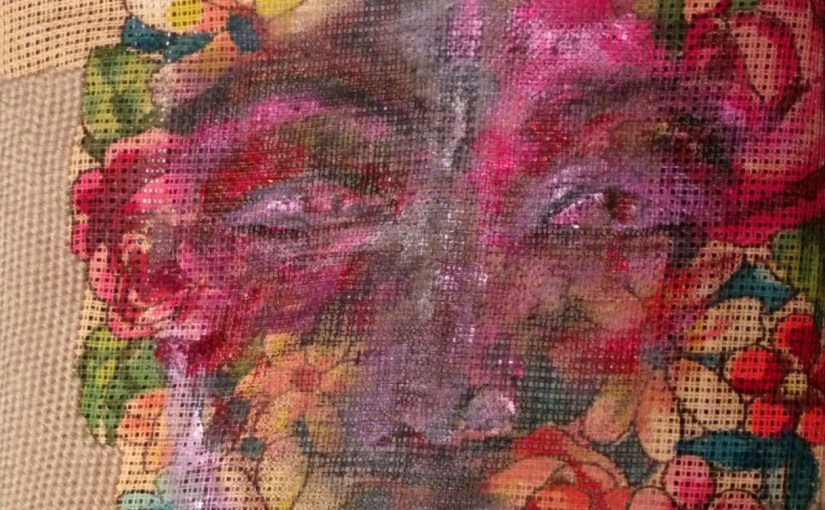
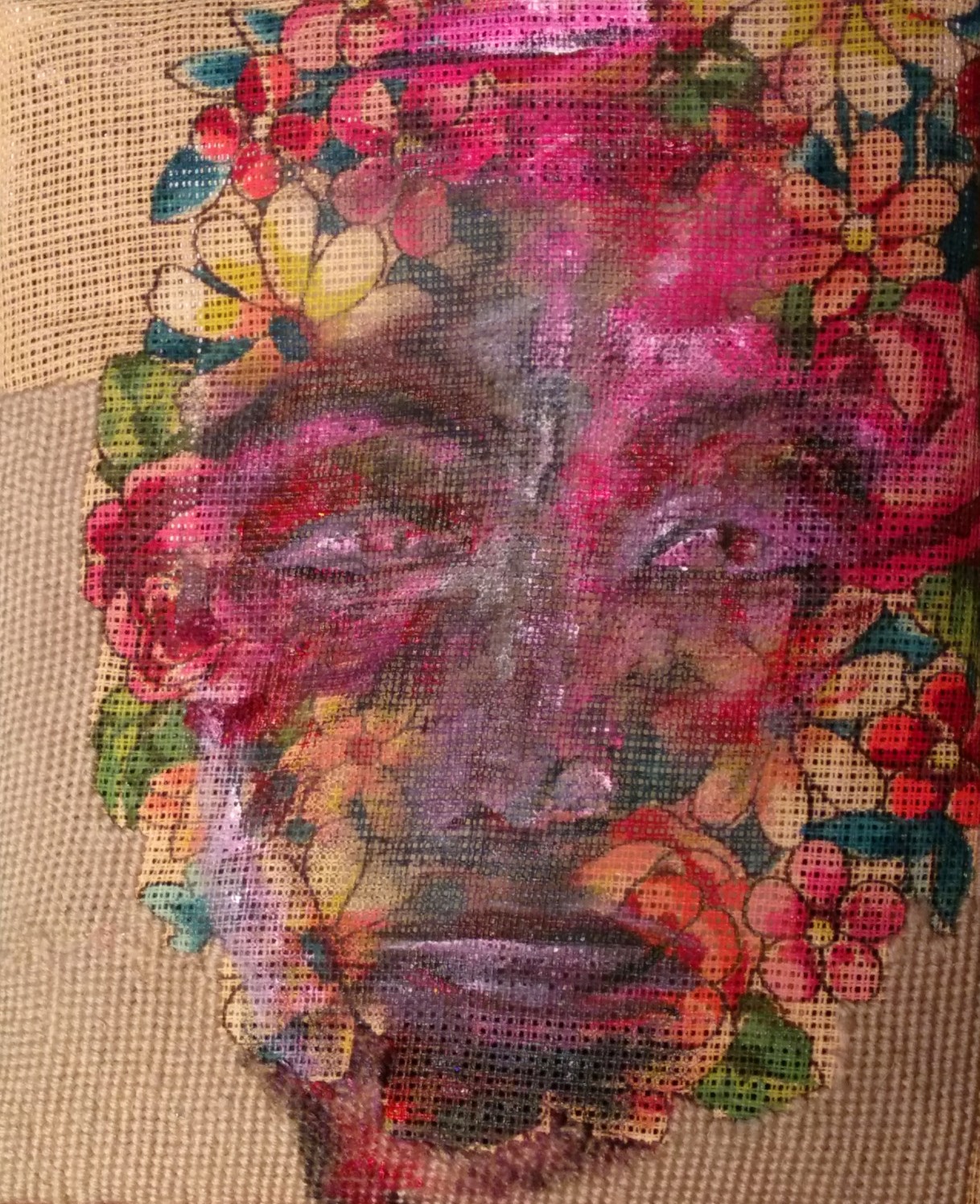
Every now and then your face surfaces above the mossy mist. Your milk carton full of buttons had a very particular acrid smell, and the touch of your soft wrinkly skin felt like pure love; sewing needles kept in plastic film canisters and the fans you took to church. You are not far – I see you.

colour by Nadine Doune 

“Nadine est née à Montréal, d’une famille venant de s’installer d’Algérie. Elle grandit dans l’école buissonnière, une école dédiée à l’apprentissage par l’art. La musique et le visuel sont toujours présents dans sa vie, dès qu’elle le peut elle voyage avec son violon et ses poèmes/dessins au Mexique, dans l’ouest Canadien, et aux États-Unis où elle s’y installe un an. C’est une autodidacte qui apprend par les expériences, la rue est son terrain de jeu et où elle est le plus inspirée. Elle essaye de rendre la connaissance accessible en donnant plusieurs ateliers (notamment dans une coopérative d’art communautaire nommé le Milieu qu’elle essaye d’aider à bâtir). Elle est intervenante sociale, vend des popsicles artisanaux, et travaille présentement sur un projet de prise de parole chez les femmes immigrantes.”

“Nadine was born in Montréal to a family who arrived from Algeria. She grew up in the Buissonière School, where learning is achieved through art. Music and aesthetics are always present in her life, as she travels with her violin, her poems, and her drawings to Mexico, to Western Canada, and to the United States, punctually for years. The street and her experiences are her main sources of inspiration. She works to make education and art accessible by giving workshops – notably in Le Milieu, a community art cooperative that she’s involve in. She is currently working on a project that centers on the voices of immigrant women.”

Issue 217 (Gender, Sexuality): “IN THE BATHROOM”

unnamed

“IN THE BATHROOM”

May and Silas lie on the bed. May knows that it would be worthwhile having sex right now—to feel close to him, to remind him that she is not ordinary. Right now she would rather have sex with her substitute science teacher (he had that hair that she liked, it licked up the back of his neck) or the butch woman who had stared at her in the waiting room at the dentist after school yesterday. The staring had made her go red in the face and her vagina spasm in a way that Silas’s gaze hadn’t in months.


Silas turns his slender frame towards her. He is fine and delicate. I’m bored, he grins, let’s cuddle. She grins back and stretches out her arms to pull him in—her arms over his shoulders as always, her body bigger and darker than his will ever be. They kiss and then she pulls back just enough for him to pull back too. Do you want to, he asks, hot breath smelling of closed rooms and wet toilet paper. She pauses. Yes. His eyes coat her in beauty—when he is aroused she feels like he sees her better. She can toss her head and whinny, like a mare, and he will kiss her pulsing veins. They help each other to pull off their clothes: her undies, his exhausted boxer briefs. There is always a laugh here, when her undies are down around her ankles and she is shifting and twisting to fling them off. Sexy, he says.


Moans. Noises she never makes at any other time but that she consciously makes now. Light, quick breaths on his collarbone and light, quick bites of his stretched out neck skin. She doesn’t feel like it until his penis goes in. Then it does feel good, good, like she tells him.


May rolls over, taking Silas with her until he is underneath. She can feel the sweats of each of them slipping and creaking against each other.  She is provocative up here. Silas is beaded lightly all over and his eyes bulge. May resists an urge to reach out and gently move his hair from out of his eyes. This must be over quickly before the sheen wears off and he starts to see the hair on her arms, her pores. Silas tells her he loves her. She feels the warmth of the words in her fingers and her vagina aches just behind and below the labia when she looks down to see his light tuft and her dark one, their tufts, bouncing against each other.


Silas pulls her hips tight in against his own and heaves at her, the sound a bath drain slurping. May breathes out and pulls the sheet across her shave-cut legs. She will bring herself to climax later, will run the tap to quiet her sounds, in the bathroom.

word by Laura McPhee-Browne

From the author: “I saw this art piece as the collage of a girl going through the emotions of becoming a young adult.

 
This art piece brought back to me the insecurities, anxieties and play-acting aspects of being a young woman, and I decided to write a story that delved into the mind of a young woman trying to be ‘normal’ and to do ‘normal’ things, such as having satisfying, meaningful sex with her boyfriend, despite the ambiguity and complexity of such an act.
 
Through my story, I also wanted to get across how much pressure there can be on young women to be ‘nice’, to be ready and willing, and to be relaxed, and to sacrifice their own pleasure and well-being for the sake of men, when this is an impossible and unrealistic expectation. I believe that the various slogans in the art piece, ‘BEING NICE IS COOL’ and ‘DON’T FRET’ are the slogans that young women chant inside themselves, when really it should be okay to not be okay.”

colour by Jasmine Okorougo

Issue #215: On memory and colour

OLYMPUS DIGITAL CAMERA

When I look at my hands I start to cry. Leathered and worn, dry skin flakes between my fingers and my lifelines seem etched into my palms, my hands are permanently stained; dark hues of purple and green crept below the surface, and stayed there. My life is on my hands and I can’t hide the fact that I have graced many a wall with my personal epithets. I staked my claim, marked my territory with a manifest destiny-type vengeance and sought out every clear space, every void, and every emptiness to fill it.
 art colour memory
My face is wet and I let the tears fall freely from my face. My hands lay in my lap, unmoving, poised for continued inspection. They tell every memory and moment and hurt with the knowledge of a past ached for.
  art colour memory
In the summer time heat, the humidity was thick and held the paint in the air around me. I searched the streets for new ground and found beautiful canvasses in the neatly tucked away spaces between buildings, inside dimly lit tunnels and parking lots; these were areas ripe for beautification. Can always at the ready, I would surveil the area and quickly throw up my tag. I would come home tinged in color, turned sepia, a danger to all white surfaces in my vicinity. I would take my black off, strip down bare, lay on my back, raise my arms in the air and look at my hands with intense interest. Color caked in the crevices of my cuticles and my knuckles darkened by the paint in the creases of my skin. I would lay there until my arms were tired, feeling the adrenaline leave the extremities of my body. Right index finger bent, I would practice above my head, my tag lines fluid, clean and quick. They littered the pages of my school books, and even now, the discarded envelopes that formerly housed my bills, bank statements and junk mail. I make my mark everywhere, although no one else sees it now.

word by Cora-Lee Conway

colour by Pichi&Avo

Support our art event!

11182076_10100949515975075_8917371626465767779_n

Join the rest in helping our art event come true by visiting http://www.kisskissbankbank.com/en/projects/word-and-colour-s-live-art-exhibit/ !

On Family: “Bug”

152251_orig (1)

Bug

when Benny was 1 and I was 7, I took him down to the park near our place on the lane named after Shakespeare

he’d been at the pool with Mum all morning, tucked behind the blue walls on Alexandra Parade, and his tuft of soft hair was still wet

he nestled into my arm as we walked along the cooking bitumen, and when I crooked my arm to let him in, he cooed like a bird would, if a bird was Benny

at the park I climbed us up the ladder of the slide and put his bum on the cool grey top of it

he giggled as I backed down the rungs one by one and as I walked away from him and the slide and the sand and the dog poo, I felt my heart get bigger slowly like a blowing up balloon

my heart kept getting bigger and bigger as I walked down the street towards the milk bar, and as I was paying for my lemonade icy-pole it burst

Benny was wailing when I got back

I told him I’d just gone to get us an icy pole and he didn’t have to be sad

he was choking on his tears but then the tears slowed to hiccups and then the hiccups slowed to snot and I told him he’d crawled into my heart like a funny little bug, and it was just as well you can’t spray bug-spray near your heart

word by Laura McPhee-Browne

“This painting is beautiful, and reminded me of familial love. 

It reminded about how it for me was when my brother was a baby, and how older siblings often experience a cacophony of emotions when they are confronted with siblings, emotions that are strong and fierce and both negative and positive.” 

colour by Kojiro Ankan Takakuwa

On Masculinity: “Her lipstick”

10675542_10205668266971916_2726513934329467292_n

Content Warning: misogyny, violence

“She looks like a whore,” I say, covering my mouth with my hand in case the lady can read lips. I lean back against the wall, hiding my unlit cig behind me.

“It’s her lipstick,” says Danny. “Nobody’s wife wears that colour lipstick. It makes her mouth look like a pussy.”

Danny pulls a cig out of his pocket and lights it right there in front of the lady sitting in the car. He doesn’t care who sees him. Danny takes another cig out of his pocket and hands it to Albert, who’s sitting on the curb. Albert is my little brother. He’s in a school for kids who are slow because he doesn’t know how to read. Danny hands Albert his naked lady zippo and Albert lights up, just like Danny.

Albert holds the zippo out to me, looking at me like I’m a pussy.

The alley behind the gas station is where we always come to smoke. Danny steals cigs from the bag his dad keeps in the freezer. We come here because there’s never anyone here, but today there was the lady in the car. She’s just sitting in the passenger seat staring out the side window. I’ve never smoked in front of someone older than me before.
“She doesn’t give a shit, Thomas,” Danny says. He says it like he doesn’t want me to embarrass him. He waves at the lady but she doesn’t move; she just keeps staring, looking past us at the wall, maybe even past the wall.

“I know,” I say. I take the zippo from Albert but I leave the cig behind my back. Danny’s zippo has a hula dancer on it and when you flick the cap open her head comes off. Mine just has my grandad’s initials on it.

“She looks kinda like Ms. Glover,” Danny says. “Ms. Glover was a babe. Remember last year when she left school and Mr. Plummer got arrested?”

Everyone remembers when Ms. Glover left school. The lady in the car does look like Ms. Glover, except for the lipstick.

I take the cig out from behind my back and flick off the hula girl’s head. I run it along my jeans and it lights the first time. When I was 10 like Albert, I thought you were supposed to swallow the smoke and I’d cough every time, but I’m better at it now. I was scared of sea monsters and boogeymen; I was scared of the dark. Now that I’m 12, I’m not afraid of anything.

Albert flicks his cig out into the alley. “She’s trying not to cry,” he says.

word by Leah Mol

colour by Luis Sipion

From the author: “Youth is a time of naked tribalism, a time when language and behaviours stand as shibboleths. In this story, boys are pretending to be men in order to fit in, but they believe part of being a man is oppressing others. Thomas doesn’t want the lady to see him use the word whore, but he also doesn’t understand the weight that word carries with it. Danny brings up Ms. Glover and hints at the reason she left school, but they don’t explore the importance of that.

This story is about fear and reactions to fear. Fears of children vs. fears of adults. Fears of women vs. fears of men. Fears of imagined monsters, of not fitting in, of getting caught somewhere you shouldn’t be. And fears of the very real monsters that make people cry every day.”

Am I an anyday person?

datum-illustration-energy-power

When I lived in a tiny balloon, I did not know someone had the scissors. I thought the world was rubbery and hermetic, the way it feels when you read inside a moving car. Every day, every teacher, every traffic jam assured me that things were meant to repeat themselves – I thought that was the deal. Do what you are expected to do and everything stays in place. I paid a tax for every missed thank you – I got cornered through every lie. Parents, family, society, looking out for my way of doing things, holding me accountable for the perpetuation of our good values.

Us, we lived high on helium, so their tactics of masks and deceit stayed far. We kept them at bay with bunkers of reeky diaries, Michael Jackson shreeks and daily marble tournaments. I gave the fuzzy stickers to my best pals only, and together we read about species going extinct which we would grow up to save. We knew some were out to wreck it all with their boredom, and we were eager for our turn to come. We would make things right. We would melt the herd of frowns and expose raw beauty. It would shine invincibly.

Did we implode or were we severed?

Was it all planned or did it fester until it could no longer handle us inside?

One day, something cut the cord, broke the diving bell, and young oxygen became stale.

In some parts of the world, they train children to carry guns. In other parts, they train them to carry mortgages. In both, the key is to begin infiltrating the mind before it has the chance to form itself around the body that holds it.

This way, kids become anyone.

An anyday person among anyday people.

The last plane crashed inside because it wanted to die innocent. And then we popped: we stayed stuck in the free-fall for a long time, before there were ever any followers or any marginals. We used to be on the same page before they enlisted some on the front, others on the back, and crumpled and twisted us against one another.

I keep shards of childhood tucked beneath my veins, so that I don’t forget we all come from the land which growing-up destroys. I carry stickers that I give out to my best pals only. They read, “Do Not Ever Grow Extinct.”

word by Hoda Adra 

colour by Strautniekas

From the author: “The artwork inspired thoughts about childhood as a homeland, and how we might go through personal acts of resistance when faced with the pressure of belonging to the dangerous adult world.”

datum-illustration-2

sounds from the future

zzz

Jimmy was a prick for bringing me here. I don’t frequent these sorts of places, at least not since the end of the 21st century when jazz made a big comeback with the space-faring folk. Something about trumpets and saxophones helps when you’re staring out into all that black. It ain’t for me though, jazz- cramped venues that reek of cigar. Charlie Parker aside, whose work any semi-intelligent individual should be intimately familiar with, I hate jazz.

Jimmy kept going on and on about this woman, a jazz singer, and I had to see her.

       That’s what they’ve got holographics for, my man, I said. Wear a pin, stream me in.

       No way, he says. It’s gotta be live.

Left me drinking Jameson at the bar, listening to jazz, and it ain’t all that bad. The band’s minimal, a real stripped back affair. Ivory and vocals. The singer’s got this retro style that reminds me of the post-postmodern infusion of underground Japanese disco into the Can-American consciousness. Lollipop chic. Real big circa 2025, before I left the Rock. It’s the hair, I think: styled, but not overly so. It’s got that outside-the-asteroid belt attitude – think glam-rock meets two months on a space freighter. Works for her.

Wearing one hell of a dress too, a swanky number that looks like it’s patterned after those pre-revolution flapper girls you see on OWC (the Old World Channel). It all adds up to a spectacular sort of woman, one who projects this sultry voice right into my whiskey-soaked skull. Real stellar eyes too… all sorts of devastating, like second-hand smoke, purple, and heavy, and deadly to breathe in. Stardust on her eyelids… listening to her sing, maybe space isn’t a wasteland. Don’t make ’em like this back on the Rock, you know?

I’m staring – she notices.

I hear her speak, a voice smouldering like the sun outside the tinted window.

What’re you looking at, Earthling?

word by Josh Elyea

colour by Zutto

From the author: “”When I was writing this piece, I couldn’t move past the eyes. They’re captivating, and I imagine I could’ve spent the entire piece talking about them…what you’re left with is a vignette about a man in space who finds himself head over heels for a jazz singer from Jupiter.”

The View From Gym

tumblr_n5v671HMwK1rpft6ho1_1280

Content warning: suicide

There is a big fire in the sky. A plane hit a building across the river and I am looking out at it through the window next to my school’s gym. I press my forehead against it. Black things fall out of the building.  

I am five.

I don’t hear the fire alarm. Maybe it went off outside. Maybe that’s why firemen put out fires. They told me in school I should stop drop and roll if I was on fire. My gym teacher says a word my brother says when he loses Tetris. I say “Fuck” too. Hey Mr. Gym Teacher are we losing? The people down there on the street look confused. Maybe they want hugs. Hi there do you want hugs? If I hug you maybe the fire in the sky will go out. 

I’ve never been on a plane that flied that bad. This building has a lot of black things in it. “Fuck.” I wonder if the building I’m in now has a lot of black things too and whether they would fall out if a plane hit. My classmate says that the black things look like people. I trust her because she is wearing glasses. How can you tell? Because there are those two people right there you see and they are holding hands falling together turning together in the sky.  

I am scared of heights. I wonder if these falling things are scared too. Hey people are you scared? Hey do you think that they are falling together because they are in love? Hey people are you in love? I want to catch the falling things. I am good at catching things with my baseball glove. The falling things might be scared of heights too.  

My friend’s mom is going to take us home. I don’t know how far we are from home because I don’t know how to tell how far you are from something. I take my Doritos out of my backpack and give some to my sister. Besides I don’t think that they make rulers that long. Like from my house to my school.  Paper is just floating around. I wonder whether someone lost their paper.  Dad would be mad if he lost his. Papers. Maybe we should give them back to whoever lost them.

I like Doritos.  

Sometime after, I learned that the black things were people and that they jumped out of the buildings. Maybe they were afraid of the flames because maybe they were too hot. Fire does seem really hot and it probably hurts to be in fire. But I don’t want to jump out of a building because I’m scared of heights. Also what would happen if I hit the ground. I think about whether the jumpers had to cook dinner later that night for their families’ and who might cook dinner now that they weren’t around. I am scared about who might cook dinner for me if my parents weren’t around anymore either.

word by Jacob Goldberg

colour by Fiona Tang

From the author: “White sheets of paper have the unique quality of all opaque things: they disguise what is behind them.  Only in tearing the paper do we meet this surprise.  This notion of the unknown, coupled with the fierceness of the artist’s rendering of the tiger, largely contributed to the inspiration for the above story.  September 11th, 2001 was just that: initially, an azure sky; then, one stained with smoke and black things.

It is shaking events like 9/11 that should exhort us to become more compassionate; to take refuge in exploring the deep, soulful questions that many find difficult to broach.  In so doing, we can learn the enduring power of relationships and that fate might be tempered by unrelenting love.  Even more vital would be our newfound cognizance of time, and the fact that we simply cannot know how long we have.  To find solace in living with that uncertainty, but to have also developed an absolute commitment to living: that will be our catharsis.”