On Silence and Domestic Abuse

unnamed

I was fifteen years old when she told me for the first time. I had asked her how she was doing. She looked squarely into my eyes, which look exactly like hers, and said words that she would go on to repeat many times: “I am waiting to die.” She said it in her usual way: tired yet hard and brazen. No tremble, no sadness. Defiant eyes. She didn’t say it to complain, or to illicit pity. (Though that’s what the others sometimes said about her.)

Most grandchildren don’t expect to hear that kind of language. Not me. I was fairly certain I knew why she said it. I knew about the angry welts on her body from his hands. I had been there once as a small child when he grabbed her by the hair and smashed her head toward the corner of the wooden cabinet. It was the last thing I saw before she pushed me out of the room and closed the door with her falling weight. I knew that she had been the sole breadwinner her whole life, working manual labour to put food on the table, to pay for her children’s school fees, to unwillingly fund his addictions to gambling and prostitutes, cigarettes and alcohol. (This later came to include funding his child support payments for those illegitimate children that we didn’t talk about but whose mouths were also fed by her hard work.) These, after all, had been the constant realities of my life as I flitted in and out of their home, not quite innocent enough to escape their burning silences but thankfully spared from the fits of rage and violence that I knew existed underneath. But I still had to ask her “Why?” to hear it from her own lips.

“Because my health is clearly worse than his, and at this rate, the only way I will find peace away from him is when I’m gone.” She was in her mid-seventies at this point.

“But if what you want is to be free of him, isn’t there anything we can do other than wait? Can’t you get a divorce? Can’t you move out and stop living with him?” I asked. Visions of my grandmother as I had never known her, happy and carefree, danced before me.

“There’s no point.” She seemed instantly to regret saying anything, shooing away my questions and telling me that I wouldn’t – couldn’t – understand. There was too much I didn’t know. In my teenage mind, I felt patronized. What was she keeping from me?  

I asked my mother. I asked my aunts. I got mixed responses. From “We’ve tried. We’ve offered multiple times to move her out, but she won’t leave. And he won’t leave either,” to the more frightening, “She’s past the point of moving on. There’s nothing you can do for her now.” I felt impotent. I thought about those defiant eyes; that hard stare that she gave him when she wordlessly served him his breakfast, lunch and supper which she cooked from scratch, no matter how bedridden the doctors told her she was. Diabetes, hypertension, a heart attack: nothing could stop her from keeping him fed. It seemed impossible to understand – if she wanted it to end, why didn’t she just walk away?

Ten years have passed since she first declared to me that she was waiting to die. Her body is older, closer to the relief she seeks and further from us who love her.  On a warm January morning this year, she told me yet again, “My bones are very tired. I am waiting to die.” And for once, finally, she was ready to say why.

“My father had wanted to choose a husband for me, as was common in those days, but I was headstrong and insisted on marrying your grandfather out of love. We had known each other since we were children; we grew up as neighbours. My father relented and we got married. The first couple years were okay. We had your aunt and your mother. But then, things started changing even before your uncle and aunt were born. You know already: gambling , alcohol, prostitutes. I had to start working, and then I had to work more and more. We were getting poorer and poorer…at some points we were barely eating, and we had to pull your aunt out of school. My father tried to loan us money but your grandfather always spent it all. Since I’m a woman, my father couldn’t trust me with money…he always gave the loans directly to your grandfather. But it was always gone before it ever reached me or the children, and I could never pay my father back, no matter how hard I worked.  I could barely put food on the table with my salary. He eventually had to cut us off because he realized that any cent he loaned us would be a cent wasted. He passed away before I could ever pay him back, before I could ever apologize for costing him so much and for having wronged him so greatly with my choice of husband.”

Before I could say a word, she continued.

“My mother was much more sympathetic. She moved in with us to care for your mother and her siblings so that I could work more hours. Sometimes, I would have to go away for days at a time. She always begged me not to go for too long.”

Tears were falling down her cheeks.

“One day, your great-grandmother got sick while I was gone. She must have been in her late 70s and she was such a tiny, frail person. Your aunt took her to the doctor’s, where they diagnosed her…”

The tears came stronger; her words almost a whisper.

“With an infection that came from untreated chlamydia. Your aunt had to translate the doctor’s questions as to how on earth a woman at that age could have contracted…”

She paused. The realization dawned on me.

“…a venereal disease. And that’s how I found out that he had been raping my own mother for nearly twenty years.”

She took a pause. We blew our noses, and wiped our tears.

“She said she never told me because he threatened her by saying that if she ever told, he would hurt me and the girls. Of course, by that point he already had… your aunt and uncle were forced onto me by assault. I didn’t want to have any more children after your mother was born. And my little girls… I could only protect them when I was home, but when I wasn’t around…Your mother was seven years old when she came crying to me when I got back from work. She said she had been bent over, feeding the chickens when he came over and…and…”

She couldn’t finish.

“He used to break broomstick handles over your mother’s head for her insolence. But she always fought back. Not like your great-grandmother. She was so tiny, so meek…I can never forgive myself for any of it.”

My ears felt like they were ringing, my chest felt heavy, my eyes were stinging. Three generations of women before me had been abused by the man who was sitting on the other side of the house…

Except that he wasn’t. He wasn’t on the other side of the house. Somehow, in all our sadness, we had missed the sound of his footsteps approaching. He was suddenly standing there, in the doorway looking silently at our puffy eyes and runny noses.

As our eyes met, he said, “Did you read the news about the EU?”  

I was incapable of saying a word. I wanted to get up and punch him in the face. I wanted to lash out and scream at him. I wanted to push him down the stairs, out of the house and away from all the people that I loved.

I looked at my grandmother. The defiant eyes were gone. She did not look scared of him: she looked scared of me. She gave an almost imperceptible shake of the head as if to say “Don’t.”  I thought I understood. He had already ruined everything that was sacred to her…her mother, her father, her children, herself. If I said anything, he would be on her as soon as I left. I kept my mouth shut. Once he had crossed to the living room, she whispered that I must promise to never never breathe a word to him about it. I promised, frightened of what he would do to her.   

I spent much of the next twenty four hours horrified. I tried to convince her that we needed to make a plan to get her away from him. She was infuriated by my many suggestions.

“You promised me you wouldn’t make a fuss!”

When it was clear that I wasn’t intending on giving up, she took me aside and looked me in the eye.

“I’m not afraid of your grandfather. He can do nothing worse than what he has already done. So stop trying to ruin everything. I was foolish to think that you would ever understand.”

I was so confused. I had thought that she didn’t want me to say anything precisely because she was afraid of the violence he might cause.

It has taken me a long time for me to understand why she hasn’t left. I see now that my grandmother has had very few choices in her life…but her choice to stay or leave is hers to make, not mine to make for her.  So much has already been taken from her. Who am I to take away her one last choice to solemnly await death? She has decided for herself that while on earth she cannot escape the madness and guilt of his doing. No physical distance from him can set her free from her anger towards herself. She seems to choose to be within hating distance of him so as to concentrate all her silent fury outward, instead of in. As much as she hates him, I feel she hates herself more for not having been able to stop him. She comes from a generation that doesn’t believe in counselling, so I have no way to help her shed her guilt. Instead, she waits for the end.

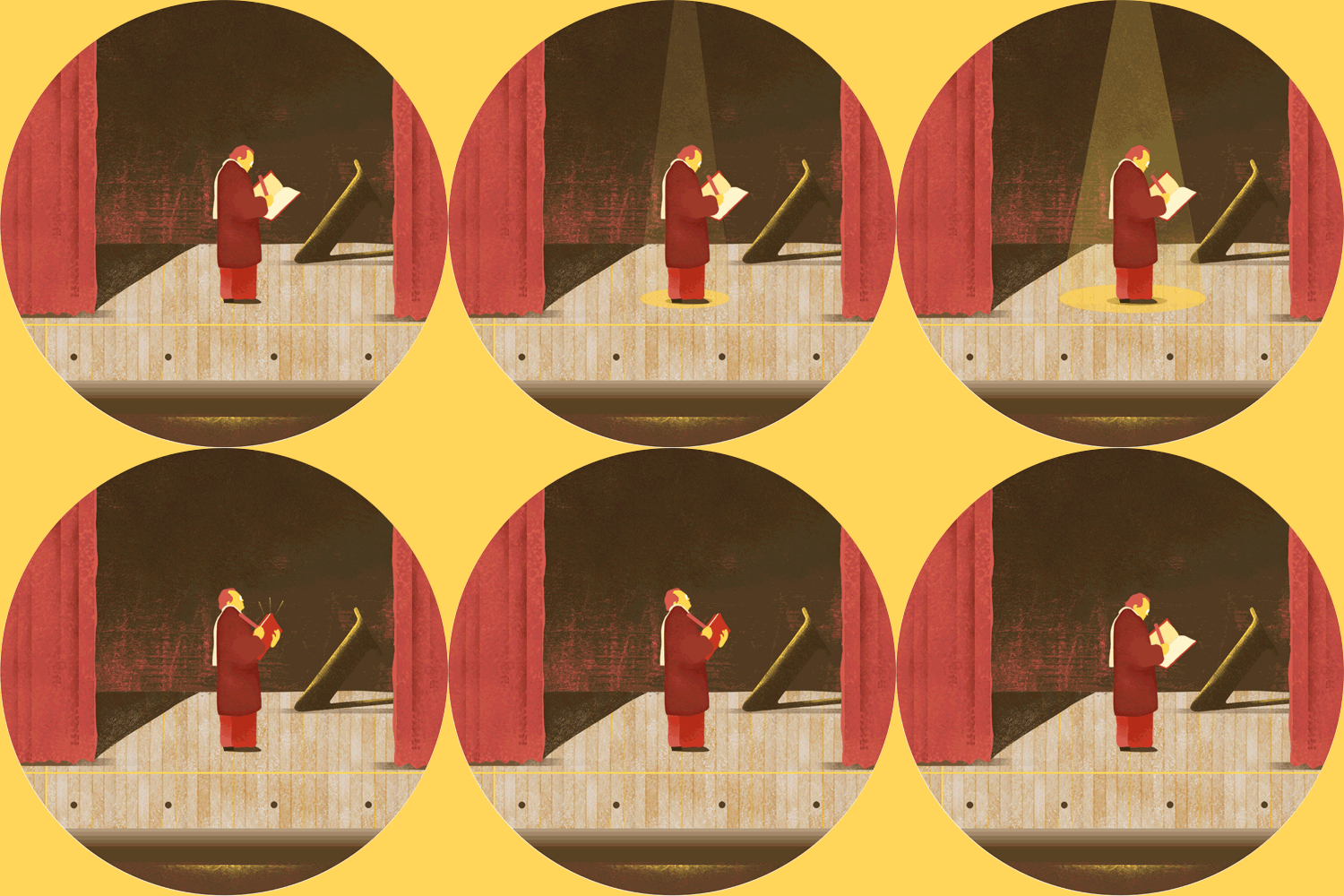
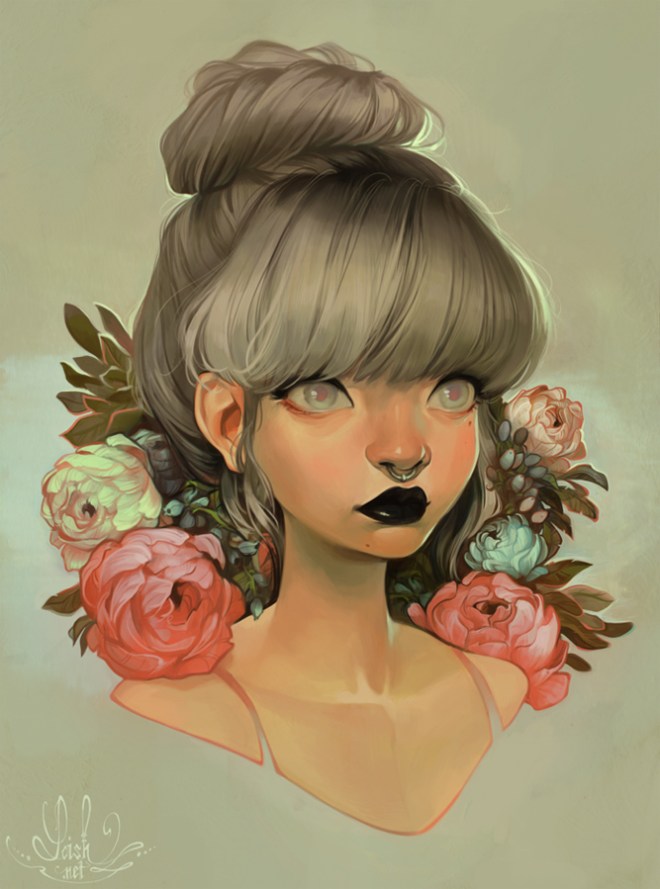
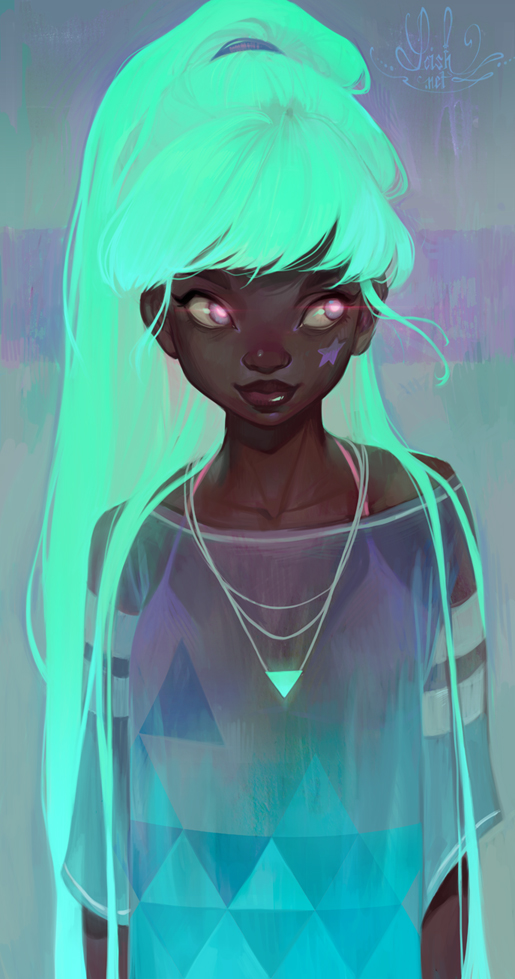
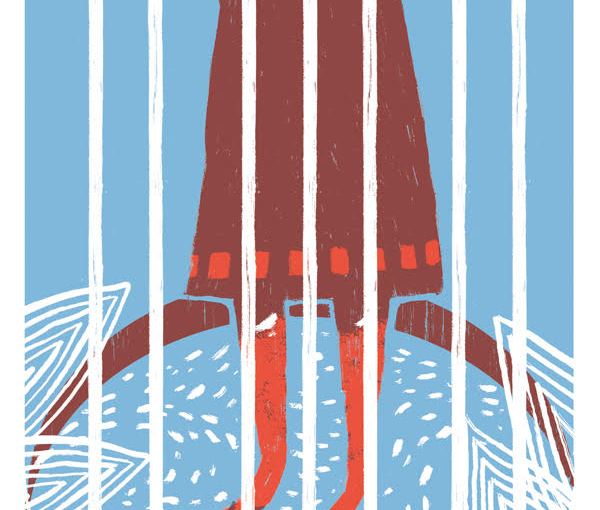
these words by Jo-Ann Zhou were inspired by the colour of Raphael Varona

these words by Jo-Ann Zhou were inspired by the colour of Raphael Varona

On Vulnerability: “Forsaken Feathers”

d6ec2d17932945.562cbdc073c63

Two seagulls fly low, weaving underneath and above each other. Their interactions caught in a glimpse, mid-form. Black footprints upon the white glistening snow match these black tipped birds as they fly against white cloud. They weave underneath and above, through their mirrored existence. Our environment runs parallel to our creation; our image is chosen/created, our feathers with which we cloak ourselves.

Their flight draws my eyes down as they land on the branch above you. The wind dances through each branch of the tree, an invisible force that shakes the soul from complacency. That same wind blows your coat open from across the park. Stealing the air right out from my lungs, it continues to power through your feathers.

Above you, the leaves rustle against this force, and your subconscious proclamation of self exposes itself through vibrancy, a testament of individuality.   

I only see what you have conscripted to be yours. The cultivation of your portrayal is just an accumulation of elements favoured and adopted from others. (I would know.)

The tree above me is my own product. A manifestation of a lifetime of observation and careful selection, with cherished values, amplified desires, and distorted experiences.

My tree, your tree; up through the rough, textured trunk which grows stronger and taller with every opinion adopted. Each tree is an existential playground for us to swing, explore, and grow in our own identity: a branch for every joy, a root for every sadness. The forest of humanity lives and breathes, grows and dies. The leaves shed as seasons of growth embody the human condition of evolution. 

Who I am and how my tree grows is an elaborate reflection of all that I chose to define me.

Unfamiliar feathers tickle my chin. One leg wrapped around another hold us close. Velvety flesh sliding and sticking; we are but two trees in a winter forest. You’ve dominated my perception as shards of you sear into my skin. Hot breath heavy and damp pass between us… through us… The wind is still. There is but you and I. Aside from our biologies/biology, we are indistinguishable.

My tree will never stand as tall as it does in this immortal moment, next to you. Perhaps, before, it did, when we met in crisp white and black footprints.

Our fingers then fumbled with the buttons of our cloaks and we cautiously shed our defensive feathers, leaving them for the birds. The same feathers where we chose to hide ourselves left us in blank white nakedness. Nude from perception and projection, abandoning ego driven expectation.

But they will return, just as we must re-dress. And my walk, your eyes, my charm, your laugh, will carry on painting an image from borrowed colours. Each personalized tree a displayed collection of borrowed attributes. We can do nothing but motion forward in this jungle world, searching for those moments where our feathers shed and our trees stand taller than they have before.  

these words by Alexandra Sheffield were inspired by the colour of Raphael Varona 

From the author: “This art inspired an exploration on the self engineered image we wear for others recognition. Ones image as a lifetime of accumulative elements  becoming hypostatized as an emblematic tree.  How far are we willing to go to maintain this image?  When and for who do we drop the façade and allow ourselves to be exposed?”


Dear Men: You Can’t Opt Out of Patriarchy by Derailing Her Post

ce05de31550947.56a7933cc241a

Bro: you gotta stop.

No yes buts or but not all – just stop.

Some posts are not open for debate.

Yes –  breathe: some things are not debatable.

Some posts are shared to simply call out bullshit.

Some are shared to release pent up things that destroy mental health.

Some are shared because violence is contingent on secrecy and omission.

Don’t comment yet – acknowledge that some posts do not require your input.

Breathe, brother!

What the fuck am I talking about?

When you comment on a post shared by a woman about how women are not believed when they say they have been attacked to say that well men are not always violent, it’s more than ironic that you’re trying to discredit a woman who says the discrediting of sexual assault claims reinforces the frequency of violence against women through its normalisation: it’s gutless.

Where the fuck do I get off?

I am a man. I feel entitled to talk about anything.

Seriously: violence against women is the disproportionate responsibility of men to resolve, and this is why men need to prevent each other from derailing women’s solidarity movements in order to make ourselves feel better.

WTF why is it my disproportionate responsibility?

Violence against women is disproportionately committed by men and patriarchal systems benefit men – whether or not individual men invented the system. 

We play the game on an easier level than women, and this easy level is drawn from the fact that they play on expert level. 

What the fuck are you saying?

If you live in a system whose insecurity requires body counts to show it is working, someone’s bodies will be targeted, and, in terms of gender, they are not ours. 

When was the last time that you were attacked because you were a man?  

How does this relate to anything?

A woman who is traumatized by being attacked releases the truth about her attack (with all of the stigma that will now be associated to her; which is why so few women expose sexual attacks) and you choose to remind her that even her friends are going to join in on discrediting her, revealing  your support for systemic violence against women while you are tasked to dismantle it. 

The least you could do is not derail the anti-violent labour that you aren’t doing. 

Your choice to question the validity of sexual assault survivors says that attempting to exonerate yourself from being associated with violent men overrules the health of women’s bodies.

This choice is more than gutless: it is violent.

Instead of using up a reserve of guilt to make sure that you are not associated with other men (impossible because you’re benefiting from the violence just as I am; easy level), use it to hold violent men accountable.

Use your passion to instead investigate why rape is so normal.

Investigate why the pervasiveness of rape means that rapists are the students sitting beside you and the teachers at the front of the room and the bus drivers and cousins and customer service folk and your best friends, and what this pervasiveness says about the strength of the influences that socialize us to become violent with women.

Or do anything that serves to dismantle patriarchal violence.

If your goal is to stop violence, break down the influences that prompt men to rape.

If your goal is to stop violence, and you discredit victims while ignoring the existence of the attacker, you’re being inconsistent.

That’s not how murderers are held accountable.

Bro: be consistent.

Do anything before outing yourself as part of the problem.

Comment support or do not comment anything at all.


colour of Raphael Varona
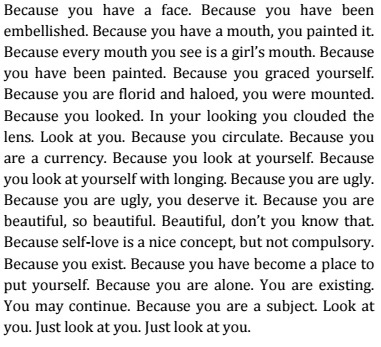
From the author: “I wrote this after seeing male reactions to women’s sharing after the verdict of serial abuser Jian Gomeshi. Guilt of being associated with this violent man seems to have prompted guys to question women about the seriousness of their experiences of sexual assault, derailing posts of solidarity, placing their attempts for exoneration over the health of female bodies around them – although patriarchy is not something men can simply opt out of.

Men were similarly commenting on posts that were made out of solidarity as though to ask that these women educate them about sexual violence, presuming that women exist to volunteer their time to make men less violent. Men are instead responsible to educate one another to reduce violence, and this type of commenting represents the disparity of emotional labour in Canada.” 


On the Invisibility of Mental Illness

0373312716084.560145db8a3cf

“When Surviving Is Too Difficult”

They say that genius and madness are two sides of the same coin.

Well, my genius is elusive—I am descending into madness.

I feel crazy. Genuinely crazy.  I feel as if an intangible, impregnable, unidentifiable force is weighing down on me, is clouding my mind.

It limits my judgement and tests my patience. I am struggling to break free from my own self-imposed shackles.

It is difficult to be strong when I feel so mentally and physically weak.

The bones in my body are frail, my sanity is fragile. The bones in my body do not form a skeleton—they form a carcass.

I am carcass.

Inside this carcass is emptiness, but the emptiness has a heaviness of its own.

I am a victim of my insecurities.
I am overwhelmed by my shortcomings.
I am burdened by my expectations.

For some of us, surviving is too difficult. I am tired of battling against my own mind.

I am tired. I am tired. I am tired.

My mind is an incredible thing, its capacity is endless; yet it continues to torment me.

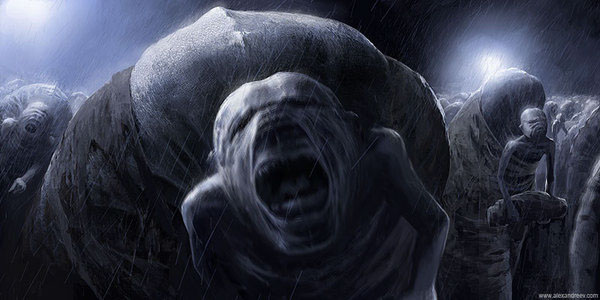
these words by Fiona Williams were inspired by the colour of Alex Andreev

On Masculinity and Relationships: “When I’m Alone”

andreev

I’m pretty sure she fucked her ex at a wedding once. I mean I can’t be sure but I think that’s probably what happened.

When she’s away I wear the same pair of underwear at least two days in a row. I throw a little party for myself in the kitchen with a bottle of wine and I cook food that I know I won’t have to share. I always thought, Why does dad make spicy food when mom’s gone? Why does he cook steak?

            When we first got together (yes it was summer, and yes it was humid, and yes the light on her face through the lace curtains in her room was dappled and soft) we would talk about how we’d never cause each other any pain. We would talk about how we should never leave the bed and we would wish we never got hungry or thirsty. We would scrunch up our eyes and wish we never had to get up to go to the bathroom.

            She goes away on business sometimes or to visit her mother in Vancouver. I don’t know what she does while she’s there. I send her text messages and ask her what she’s doing. But I don’t tell her I’m sitting by the kitchen window eating a whole pizza, getting drunk and chain-smoking to reruns of Seinfeld with my laptop on the table.

            The two of them went to this wedding together and it was no big deal because we’d just spent a whole week in bed wishing we didn’t have to go out to buy milk. Now that we live together, I think about it. Some time I’m going to ask her, Did you sleep with Bryan at the wedding? (I won’t say fuck him, I’ll ask if she slept with him.) Or I’ll say, I know you slept with Bryan at that wedding. 

            I always clean the apartment before she comes home. She brings it up when we fight, that I don’t ever finish cleaning the place. I’ve always got laundry to do and it takes a long time to vacuum the carpet. I’m usually hungover so it takes more time than I thought it would.  

            Once she’s back, I apologize. I ask her how her trip was and I make a salad or pasta for dinner, then we eat in front of the TV.

              When she’s home I go out for walks by myself.

these words by Sandy Martin were inspired by the colour of Alex Andreev

Kidd & loish: “She had a horrible boss”

1ef01d7b453f93610d45b8aa8759187e-d85e3o9

She had a horrible boss. He had, always, a harvest of spittle at the corners of his mouth, and it seemed to her that every particularly horrible man that she’d met in her life had coffee breath and this same sea foam at the edges of his lips. In addition to this chronic hygienic condition, this boss had ghost hands, which was worse even than the spittle. All day, she could feel his ghost hands on the back of her neck and the small of her back and, when she unthinkingly left them untucked from her desk, her kneecaps. As he caressed her invisibly, the boss would sit, legs spread, on the corner of her desk, instructing her condescendingly on how she could advance her career to reach the status that he had achieved, or else telling her about the many gifts he bought his wife. “Swarovski crystals,” he would say, as he ran his disembodied digits over her skin. “Tiffany bracelets. Trips to Hawaii, without the kids.”

She didn’t shudder and she didn’t say anything because she didn’t think HR would know how to deal with her boss projecting his phantom hands into her clothing.

On the day she quit her job, she got dressed and went to work as usual. The boss had fire in his eyes that day, because he’d heard a rumour that one of his rivals was going to be promoted. On her first fifteen minute break of the day, she went out and bought a scone with cream and strawberries on top, which she ate on the way back to her desk.

Going back to her daily tasks, she felt that one of the strawberries had fallen down her shirt and was sitting between her breasts, wet and heavy. She tried to look down her collar to see it, but her shirt was tightly buttoned and she couldn’t see anything at all. She continued to feel it, grainy and soft, as she went about her work. She plotted to go to the washroom as soon as she could. But when she got up to go, the boss blocked her way. He stood in her path, fat hands on wide hips, and started to say, “In business, keep your friends closer and your enemies closer,” and stopped, his spit spilling out, gurgling. She could see, in the soft cavity of his mouth, that his tongue was missing. She stopped and gasped as the strawberry in her bra worked its way down to her belly button.

“I think you have something of mine, sweetheart,” the boss said as he took a step closer, and she gagged as if it were her tongue that had gone wandering, and then the boss thundered, “my pen, where’s my pen,” and she ran out of the office, which she was never to see or hear from again save for a last cheque unceremoniously deposited in her account a week later. On the way home, she shook from relief at the feeling of having nothing but her own body in her shirt.

these words by Charlotte Joyce Kidd were inspired by the colour of loish

On Child Abuse: “The Intentions of Wolves”

1948225_10155178767665048_1187957752347932746_n

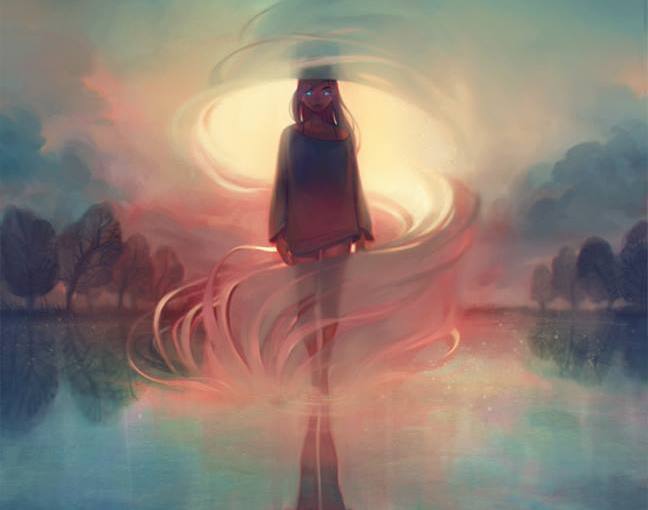
this piece of art, “breathe,” was created by loish

6. TIN ROOFS SPLIT THE SKY LIKE MOUNTAINS. The spring of a summer door would creak when stretched, as rust spreads when left unchecked. The gap in the wire fence was never discussed

5. Questions from visitors regarding the fence deflated conversations. Topics were then rerouted by the parent, such as an investigation on whose boots had sunk in the mud behind the pines, near a canister of roaches. The children were tense during these reroutes as though a house of cards was shivering with laughter.

4. Others addressed it with polite warning, as when a police officer flashes their lights. The parent would return from these talks to nod at children on staircases, as though the neighbouring guests of the same hotel.

Or, they were picked up.

“I love you, you know that?

3. Morning silences balanced these night enthusiasms. The children were well-aware of the emotional see-saw and did their best to avoid existing as the balance. Gaps in the fence were large enough that you could fit if you got down on your knees or if you were dragged through on your back. Of course visitors with gaps in their fences shared great laughs in our house.

2. Sometimes, deer would approach the back windows that faced the woods. You’d turn from the TV, and there would be two, three deer, spotted white, watching you. They would approach me in the yard. There we’d stand, looking at the other. There was tension in the lines of their muscled haunches. Then the door might creak open and my dog might run them back toward the pines. Their white tails would flip over the field’s weeds, never tripping over objects that were entombed in the grass, close but never caught by the dog.

1. You’d see them on the side of roads, too, with their necks twisted: bodies toward the road, eyes to the trees. In the winter, their blood spattered over snow-covered roads. In the summer, the warm liquid poured out to fill in creases of the cement.

0

1. I lived in this house for ten years. There wasn’t a fence, but the driveway was made of gravel. As many people know, surviving one of these houses often means leaving. The borders of a driveway give promise to understand who one is or can become without the dynamic of the abused and the abuser. Crossing the border at the end of the lane is often complicated by the fact the attacked is told to be lying, where the abusive parent may discount the uncomfortable truths being shared through threats, a defensiveness which underlines their guilt and shock at the inconvenient possibilities of your voice.

2. Yes, the deer would actually come up to our windows. Half of our house faced a forest, and they’d cross the long weeds to stand on our stone patio and look inside our living room.

3. I wonder if a deer’s ears are like a dog’s ears, and if they could hear through the windows.

4. When I’d see one strung up in a friend’s garage, leaking blood into a bucket, I was perhaps more affected, as though I’d lost a witness who could testify in a case I never wanted to attend.

5. Abusers are insulated by the glorification of keeping family secrets and a culture of stoicism in Ontario. My masculinity amplified this silence and abusive power relies on a special status treatment of silence. If attacked on the street, most people would call the police partially to prevent others from being attacked.*

4. I cannot speak for other members of my family. 

3. It is often this inability to share and process trauma with strangers or friends that will prompt people to become violent later on to cope with feelings of vulnerability. The saying goes, “although not all children who were abused grow up to become abusers, the vast majority of those who abuse were abused as children.”My ability to move from that tendency involves a lot of work and privileges.

4. It is the responsibility of the violent to adopt methods of coping with stress or trauma that do not require the destruction of the minds and bodies of those around them. 

3. Processes of accountability with violent parents require the parent to acknowledge that violence occurred. As acknowledging abuse is acknowledging ‘imperfection,’ tactful rearrangements of memory are often made to lighten the case. (See: ‘it wasn’t my intention’ defenses of racism.) 

2. No person should be shamed for choosing to start such a process with someone who has been violent to them. 

1. No person whose survival is in spite of the attempts of a parent should be blamed for walking away from that person. Shaming this individual should be taken as seriously as shaming someone who avoids snakes because they have been bitten by snakes. 

2. No person exists to be the emotional or physical punching bag for another person to deal with their issues, whatever the complex histories of that person.

1. Those who rush to support the ‘loving’ defense of abuse (“but they love them!”) often reveal the blades in their own hands.

2. There is no ‘complete’ escape from the house that influenced so much of who I am and how I’m writing to you today. 

2. You don’t arrive at zero during a process of rewiring. It’s instead some hybrid form which works to pivot from a new set of values. Gravel is not asphalt and even asphalt splits depending on the heat. Delaying the desire for change and accountability makes sense if it is antagonistic to one’s mental health. Neurologist Gabor Maté convincingly argues that rewiring processes can begin at any age, contrary to the whole old dogs saying.

1. Our bedrooms were on the top floor of the log house. Sleeping under a tin roof meant that you could hear every drop of the rain. The thousands of sounds felt like blankets at night, reminding you how close you were to being outside.

The intentions of wolves

From the author:

“The choice to share my story was influenced by a recent reading by poet Jessica Bebenek, as well as a November reading by Kalale Dalton-Lutale.

The piece of art, “breathe,” was created by loish.

*What the criminal justice system chooses to do with violent offenders is certainly in need of radical change, however the existence of the impulse to prevent violence through accountability is significant.

Further reading: Maté, Gabor. In The Realm Of Hungry Ghosts.

Bebenek & Loish: “Selfie”

ambrosial_by_loish-d8habrs

Untitled

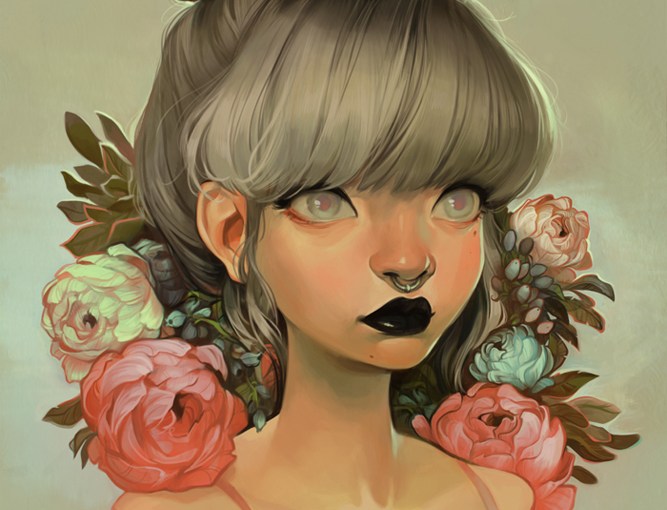
this poem by Jessica Bebenek was inspired by the art of Loish

On Advertising and Chips: “Crusading”

lumen_by_loish-d8zmpov

“Crusading”

word by Jacob Goldberg

colour by Loish 

Elias’ bag of chips had gone missing. He was walking around the classroom searching for his bag of chips. He brandished his lunch box at Mr. Epplin, telling him that they were there this morning. He asked Mr. Epplin where they had gone. Meanwhile Mr. Epplin hadn’t even asked him a question. He had been standing at the chalkboard writing the Fundamental Theorem of Calculus. And he looked to everyone to be terribly confused, like someone who had just been told that in fact Santa did exist. Elias didn’t care. He wanted to know where was his bag of chips. LAYS. Bag made of 70% reusable goods. The bag doesn’t mention where the last 30% came from. Elias speculates that it came from non-reusable goods. This is what Mr. Epplin calls an educated guess. 

Several minutes had elapsed since class began but this class seemed to be a lost cause. Of course, it could be have been recovered, had Mr. Epplin had ambitions to resume. But he didn’t. Mr. Epplin was looking for Elias’ chips. In fact, everyone was. Elias had corralled all of his classmates and his teacher into searching for his chips.

Elias asked every one of his classmates to empty their bags on their desks. He asked them to examine their belongings for his chips. He told them that they might have forgotten what you put in their bags. Sometimes, Elias said, he could overhear Mom whisper to Dad at Olive Garden that she’d forgotten something and now there was in issue underneath the table. This issue was her period. But dad would find a tampon in her purse. Elias said that the moral of the story was that you sometimes forget what you put in your bag. 

Mr. Epplin totally understood what Elias was getting at. He exclaimed to the class that he would be their father and inspect their bags for them. One girl, Eve, wondered whether this proclamation was grounds for terminating Mr. Epplin’s career as a teacher, but God intervened. He said to her, “Your namesake ate the apple: Don’t be the second Eve to fuck it up.” She wasn’t sure how to take this advice.  

When Ms. Chu, the biology teacher, appeared at the door with her students, Mr. Epplin, frisking Joseph, told her that he could arrest her if he wanted. He removed a pair of handcuffs from his breast-pocket and said don’t test me.   

Elias had removed the axe from the In-Case-Of-Emergency box and began to hack at the room’s infrastructure. One student had removed a wok from his backpack, another dry ice. Several students in the room were smoking cigarettes. Ms. Chu asked a student for one. The student said no. Ms. Chu and Mr. Epplin were holding hands. There was much excitement. Yes. Yes yes yes.

With the floorboards uprooted, the desks overturned, the windows kristallnachted, and the wallpaper peeled, Elias sadly decided that his chips were not in the room.

The next step was to set off the fire alarm. Elias’ thinking was: chips are denser than water, so they’ll sink in the rising water. Yes, Ms. Chu, the science teacher agreed. They emerged from the classroom, all attached to toddler leash.

The day would end soon, and Elias would go home hungry and chipless. All of Wilmington High would soon be on the Crusade for the Chips. Here, there is separateness in the togetherness, loneliness in the community. This crowd grows, and they are not alone, warding day and death away. 

word by Jacob Goldberg

“I was thinking about what it means to be a member of a group, to be driven by an idea, buying stuff, and how advertising can compel us to do things.  The girl in the picture seems like she could inspire such a crowd.”

see more colour by Loish 

This home will be home again

e26a9632907573.5697fdf1d1b92 (1)

word by Boris But 

colour by Alex Andreev

The obsidian titan looms from

Below, a weary vision bestowed

On the fallow dreamer dreary-

Minded by the sea.

st-petersburg montreal

Your quiet eyes pace through

My possessions: strangling rope,

Brine-soaked pages, symbols of the

Lost hope of an exiled meanderer.

st-petersburg montreal

Dear stranger, learn of home

And sing of it. When us strangers

Gather on stranger seas, we

Recall a home we never see.

st-petersburg montreal

Tale by tale you regale of the forgotten,

The sea-tossed bottle lost in tribal

Misunderstanding, a tongue

Lashing at hollow space,

st-petersburg montreal

Our anguish laid bare in mutual

Vulnerability, pyrobabble in place

Of a strange silence. Your eyes

Glimmer beneath a buried quaver,

st-petersburg montreal

A ripple pulsing from an unknown

Provenance ripping apart

In a fear or pain

Lost to a generation unto me.

st-petersburg montreal

My adrifted mind scrambles for some

Consolation of storied survivors or

A measure of a distinguished nature, blessed

By the godliness of constellations above,

st-petersburg montreal

The mortal shipwrecked sands below.

But let me rot here with you

Borne in eternal entropy,

Born to be forever forgotten.

st-petersburg montreal

Do dead men cry? Do words die?

Who swims and who sinks in your currents?

This home will be home again. Welcome,

Old friend, and dare not stay silent.

st-petersburg montreal

word by Boris But 

“What stranger does not first appear to be alien? Inspired by Alex Andreev’s masterful piece and anguished by the refugee crises and the oft-overlooked diaspora of vagrants everywhere, I crafted a poem about two strangers, perhaps parallel images, making a common home. What estranges people is the failure to recognize humanity in what we find unfamiliar. Stories imbue us with a transcendental magic, building homes where nothing should be.”

colour by Alex Andreev

“Alex Andreev lives in St. Petersburg, Russian Federation.
He’s been drawing, painting and doing graphic design over last 20 years.
He works as art-director in advertising agency and as senior concept artist for movie and game production. Born in 1972, Russia”