politics of the locust pose

aaaaaaaaa

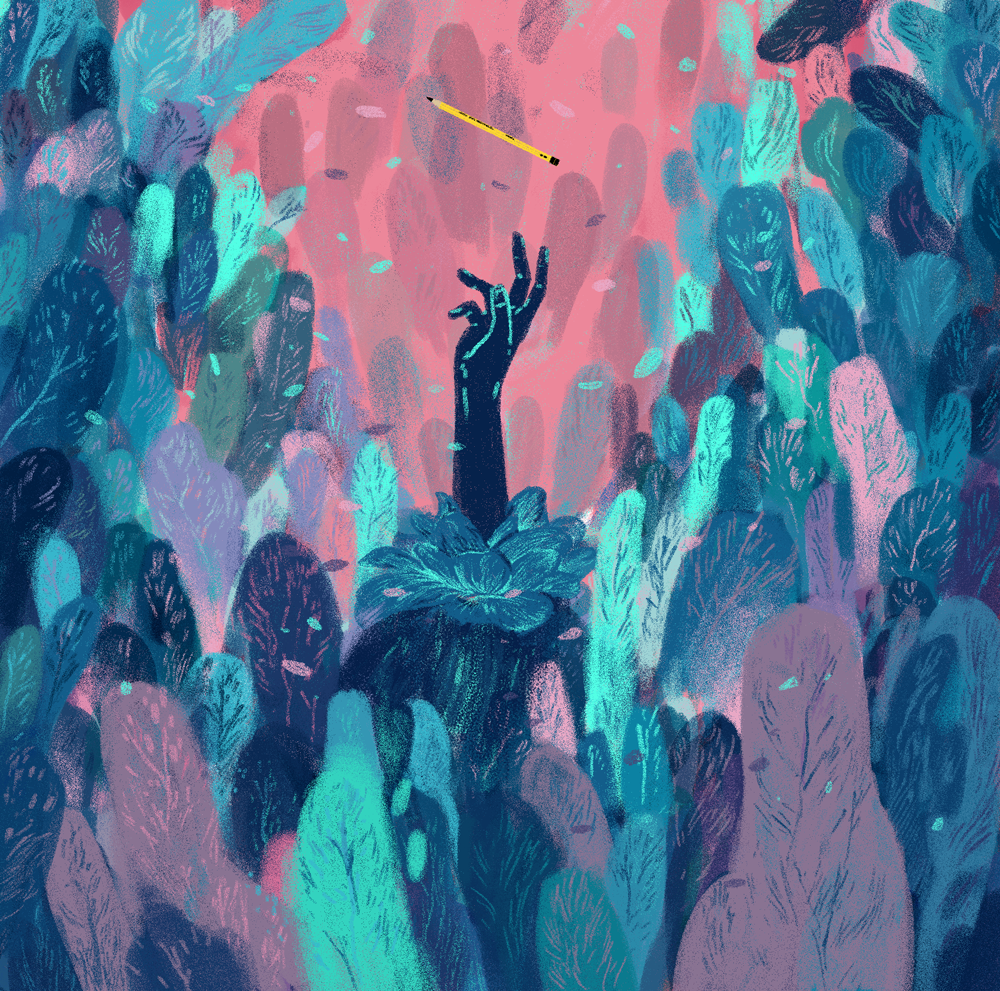
There was, of course, Joan.

It was Tuesday, and it was drizzling out of a low sky. The clouds looked preoccupied. Elijah’s 1900h yoga class was held in a studio on Delancey St. between Ludlow and Broome. Joan was one of the regulars. And on that Tuesday, she, Elijah, and I were the only ones who showed. The studio probably used to be a smoking room in one of the tenements, given the smell. Certainly the most curious item in there was a folding screen.

Tuesdays are my busiest day: I leave for work at 0630h, arrive at around 0800h, work until 1700h, whereupon I return to the lower east side for therapy, leaving me about ten minutes to get to yoga, which is thankfully three blocks from my house. As we waited for Joan, I considered the unpalatable pathos involved in paying someone to listen to your thoughts for a given amount of time. I am likely to discontinue therapy.

When Joan arrived she used a tissue to dab at the corner of her right nostril, which wasn’t leaking any material as far as I could see. She looked like a walking Nike advertisement and unrolled her yoga matt at about ping-pong distance from me. I have been doing yoga for four years.

Elijah began the session. He reminded us that no one was to speak. That this was an advanced class. I had done yoga with Joan for three of those years. A white noise machine hummed along outside the studio. Yoga has taught me many unexpectedly sexy facts. One is that if enough of the people in a room are quiet, you can hear the sound of perspiration. Another is that some people have the capacity to flex any combination of their abdominal “packs,” whenever they choose. And as I sank into locust pose, we sank into the quiet.

The session ended earlier than usual. Joan used one of the gratuitous Clorox wipes that Elijah leaves out to wipe the sweat off of her mat. When we leave the tenement, Joan asked if she could use the bathroom at my house because she lives back in Brooklyn, and my house was on her way to the F train. The air had the texture of a peach. It still rained. A picture falls out of Joan’s wallet; I pick it up.  Fog collects on the windows of every apartment. It was then that I learned that Joan is the type of woman who keeps a picture of her chiropractor in her wallet.

When we entered the house, I removed my shirt, soaked as it was from the rain. Joan found the bathroom easily enough. And I was slicing carrots for dinner when I heard the bathroom door open behind me. Joan said, Thanks partner. And as I began to turn, I felt her naked breasts drag across my back. My temple popped like a chicken you’ve left in the microwave too long.

word by Jacob Goldberg

colour by Andy Rofles 

From the author: “The chief thematic concern of this story is the nature of people beneath the masks that they sport everyday – and Joan is wrestling with trying to take hers off; she is trying to be human.”

Am I an anyday person?

datum-illustration-energy-power

When I lived in a tiny balloon, I did not know someone had the scissors. I thought the world was rubbery and hermetic, the way it feels when you read inside a moving car. Every day, every teacher, every traffic jam assured me that things were meant to repeat themselves – I thought that was the deal. Do what you are expected to do and everything stays in place. I paid a tax for every missed thank you – I got cornered through every lie. Parents, family, society, looking out for my way of doing things, holding me accountable for the perpetuation of our good values.

Us, we lived high on helium, so their tactics of masks and deceit stayed far. We kept them at bay with bunkers of reeky diaries, Michael Jackson shreeks and daily marble tournaments. I gave the fuzzy stickers to my best pals only, and together we read about species going extinct which we would grow up to save. We knew some were out to wreck it all with their boredom, and we were eager for our turn to come. We would make things right. We would melt the herd of frowns and expose raw beauty. It would shine invincibly.

Did we implode or were we severed?

Was it all planned or did it fester until it could no longer handle us inside?

One day, something cut the cord, broke the diving bell, and young oxygen became stale.

In some parts of the world, they train children to carry guns. In other parts, they train them to carry mortgages. In both, the key is to begin infiltrating the mind before it has the chance to form itself around the body that holds it.

This way, kids become anyone.

An anyday person among anyday people.

The last plane crashed inside because it wanted to die innocent. And then we popped: we stayed stuck in the free-fall for a long time, before there were ever any followers or any marginals. We used to be on the same page before they enlisted some on the front, others on the back, and crumpled and twisted us against one another.

I keep shards of childhood tucked beneath my veins, so that I don’t forget we all come from the land which growing-up destroys. I carry stickers that I give out to my best pals only. They read, “Do Not Ever Grow Extinct.”

word by Hoda Adra 

colour by Strautniekas

From the author: “The artwork inspired thoughts about childhood as a homeland, and how we might go through personal acts of resistance when faced with the pressure of belonging to the dangerous adult world.”

datum-illustration-2

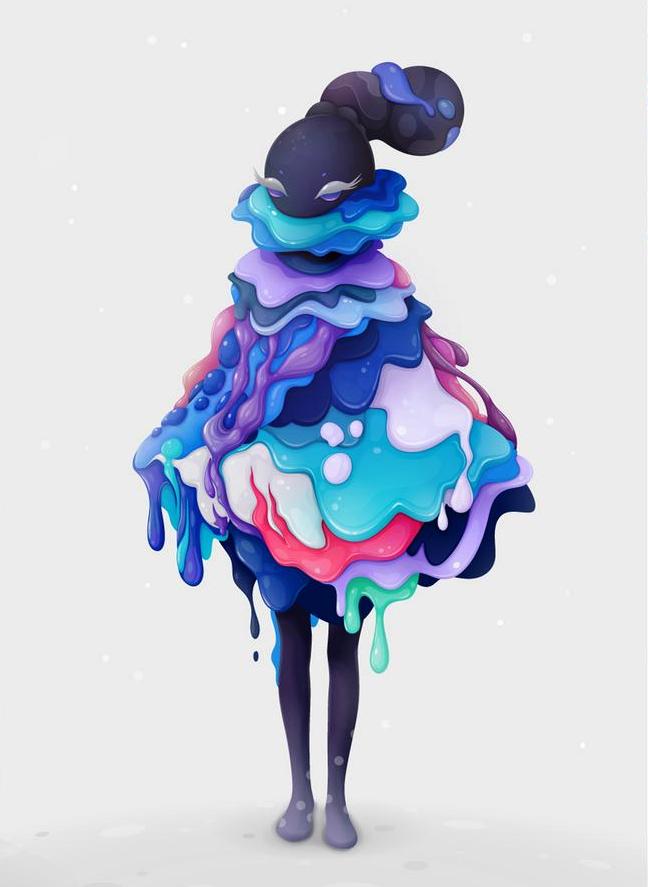
taking control of the layers

untitled

Dissension oozed thick, coloured with every shade of emotion; everyone could see that she was loosing form. The angles and contours of her performance were obscured – all precision to the approach had been abandoned. All that was left was a covering-over of that which was covered-over. Her sharp words now muffled and barely audible over the noise of what could be clearly seen as an implosion come undone.

I closed my eyes and put my fingers to my temples and awaited the barrier of silence I had built in my mind to be shattered by the sound of her cries. As her father I had become accustomed to reading the signs and positioning myself to be at the ready should she need me. I primped and prepped and practiced alongside her, but once she stepped out on that stage she was entirely on her own. And here she was, melting into a puddle of pastel-coloured mess, centre-stage, harsh lights ablaze. I sensed amusement on the lips of those around me, and full-bellied brawling laughter was just moments away. I sensed the horror on the faces of the four perfectly coiffed has-beens who spent their every weekend judging the misguided proclivities of young girls whose burgeoning self-worth would be inextricably tied to their looks.

I prepared myself for the unwonted stares, pitiful glances and murmurs of judgment but instead as I made my way towards the stage I found an impressive showing of ingenuity. In what appeared to be the beginning stages of a meltdown, profuse dissension had resolved itself into abundant honesty, a truth so pure that it lacked its typical bite.

Inside the dingy low-budget hotel conference room, in front of pageant parents, child contestants and jaded judges, Noelle begun to confidently rip long pieces of fabric off her dress, and stick them into the spaces between her still first set of teeth. She took the heels of her palms and expertly smeared eye make-up down her face. She ripped her tights, undid her hair and ran around the stage fully committed to portraying the mythical creature in her favourite bedtime tale. In one beautiful act of childhood defiance, Noelle played and pretended, sang and cooed, delivering gibberish prose with Shakespearian gravitas. Laughter escaped the tightly pursed and botoxed lips of the former beauty queen judges and childhood chatter echoed off the walls and lurid drapes.

I was once beyond resentful of spending my every other weekend with the insipid pageant folks, practicing routines and applying fake lashes, but that was all that I could get, so I took it. And Noelle was a wonder on that stage, consistently low-scoring but persistent. And after years of attempted conformity an apparent meltdown unleashed a cacophony of colour and sound, my beautiful girl.

word by Cora-Lee Conway

colour by Zutto

From the author: “A thick, sweet, melt like a human ice cream cone; I kept thinking about the upside to a meltdown… Perhaps also inspired by my location as I write this sitting on the beach in Cuba, melting in the best way.”

zuttto

zuttto33

sounds from the future

zzz

Jimmy was a prick for bringing me here. I don’t frequent these sorts of places, at least not since the end of the 21st century when jazz made a big comeback with the space-faring folk. Something about trumpets and saxophones helps when you’re staring out into all that black. It ain’t for me though, jazz- cramped venues that reek of cigar. Charlie Parker aside, whose work any semi-intelligent individual should be intimately familiar with, I hate jazz.

Jimmy kept going on and on about this woman, a jazz singer, and I had to see her.

       That’s what they’ve got holographics for, my man, I said. Wear a pin, stream me in.

       No way, he says. It’s gotta be live.

Left me drinking Jameson at the bar, listening to jazz, and it ain’t all that bad. The band’s minimal, a real stripped back affair. Ivory and vocals. The singer’s got this retro style that reminds me of the post-postmodern infusion of underground Japanese disco into the Can-American consciousness. Lollipop chic. Real big circa 2025, before I left the Rock. It’s the hair, I think: styled, but not overly so. It’s got that outside-the-asteroid belt attitude – think glam-rock meets two months on a space freighter. Works for her.

Wearing one hell of a dress too, a swanky number that looks like it’s patterned after those pre-revolution flapper girls you see on OWC (the Old World Channel). It all adds up to a spectacular sort of woman, one who projects this sultry voice right into my whiskey-soaked skull. Real stellar eyes too… all sorts of devastating, like second-hand smoke, purple, and heavy, and deadly to breathe in. Stardust on her eyelids… listening to her sing, maybe space isn’t a wasteland. Don’t make ’em like this back on the Rock, you know?

I’m staring – she notices.

I hear her speak, a voice smouldering like the sun outside the tinted window.

What’re you looking at, Earthling?

word by Josh Elyea

colour by Zutto

From the author: “”When I was writing this piece, I couldn’t move past the eyes. They’re captivating, and I imagine I could’ve spent the entire piece talking about them…what you’re left with is a vignette about a man in space who finds himself head over heels for a jazz singer from Jupiter.”

Ken

floating-away_650 (1)

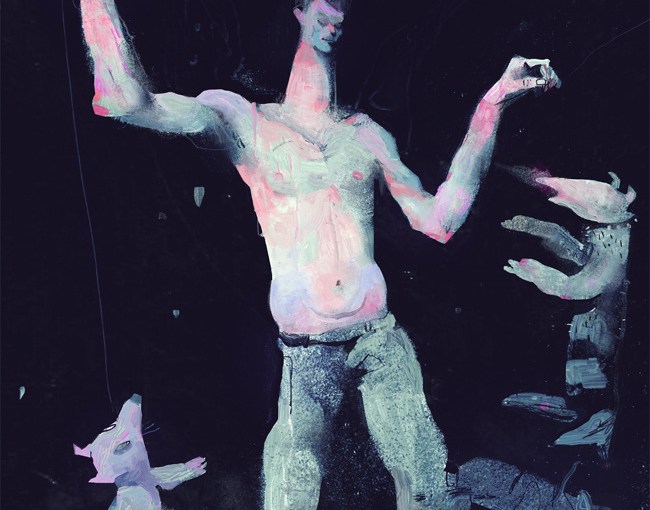
Ken and Mavis lived at number 9 Flosstooth Avenue. Ken loved Mavis like a dog loves its favourite bone—he would chew on her every now and then to remind himself what true gristle could taste like, but then he would bury her, and all that she meant, and would wait for weeks or months until he dug her up to gnaw at her all over again. That way it was special, and that way Ken knew he would never get bored of his favourite bone. Mavis didn’t like being gnawed at every few months; she told him just before she asked him to leave that she expected constant gnawing. He hadn’t realised that, and offered to never bury her again, but by then it was far too late.

The summer before the end, the neighbours on the side with the dead rose bush that looked like a mutant spider moved out. A few weeks later a dual-cab UTE was parked in the driveway when Ken got home from work, and after some careful investigating from the kitchen window through Mavis’s homemade gauze curtains, Ken gathered that their new neighbour had moved in, and that he was a tall, broad-chested man, with the necessary bulges to wear only a singlet as he loped from his UTE to the door with boxes and bags. Ken saw that the man with the necessary bulges had two lean and hefty dogs. Ken was terrified of dogs, ever since he had been chased by a pack of gnashing greyhounds up and over the slide in the playground one afternoon when his father had forgotten to pick him up from school. He felt trapped in the house, and told Mavis about it when she came home weary from the salon, but she didn’t seem to be listening, and just stood and watched out the window until the sun went down and there was nothing to see anymore.

A couple of months later on a Friday Ken decided to leave work early. He arrived home to see that Mavis was already there, and though he called out for her in every room in the house but he couldn’t find her. Mavis didn’t like to walk anywhere; if her car was there, she had to be too. Ken poured the tap for the kettle and as he poured he looked through the gauze straight into the man with the bulges’ living room. There he saw Mavis, completely naked and dancing around the room with the man with the necessary bulges.

Ken hadn’t wanted to leave, even after watching Mavis and the man with the bulges in a variety of positions all over the living room that made him begin to sweat under his arms and in between his elbow creases. When she came home that night, crumpled and smelling of dog food, he had offered to stay in the spare bedroom. That she simply agreed, and didn’t seem to need to ask him why, told Ken that he would never unearth his favourite bone again.

word by Laura Mcphee-Browne

colour by Ilya Shipkin

From the author: “When I first saw this illustration by Ilya Shkipin, I saw the man and the dogs he was feeding as dangerous, as hostile. As I came back to look at the illustration again and again, I began to feel that there was a special relationship between the man and the dogs; that they knew each other well, and perhaps looked after each other.

My story, ‘Ken’ is about a man who does not feel comfortable in his own skin like the man in this illustration surely does. It is about the threat that confidence and mystery can be to a flailing relationship.”

my atlas

2 - Leah

I have to confess to being an absolute intolerable lay-about for the past twelve weeks. Never before has so many eggs on toast been consecutively imbibed. But after week twelve, something changed. You see, I began being able to read the brightness of other people’s souls.

Now – bear with.

I would never lie to you, my reader. A few nights ago, I was watching the box and I could see and feel the density and energy in the souls on screen, you see.

Imagine a sort of X-ray sense, an unlocked potential from partially losing my vision. Not better hearing but a heightened instinct for character.

Quite quickly I’m proud to say I started spotting a pattern. It wasn’t to do with how ‘famous’ or how ‘good’ humans they were, nothing as crude as that, it was to do with their real actions in our little society, you see: watching the whitest ones shine darkest.

The real problem whirs in our nightmarish collective of unhappiness and inequality… while the rich get richer, they stamp up the prices of opportunity and education. Meritocracy?

Bullshit, I’ve always said, only difference is that it’s now in my face, glowing from the screen. Can’t ignore it anymore.

As I watch the oozing blackness pulsate around every orifice of the spiffingly rich and white, I begin to realign where I stand in this mess of a melting pot.

I’m now the guardian of the gates, the one thing that has the god-given ability to grab the status quo by the horns and flip it on its head.

I can physically suck out their prejudices…

I can cure them of their illness.

word by Sam Fresco

colour by el Decertor

The View From Gym

tumblr_n5v671HMwK1rpft6ho1_1280

Content warning: suicide

There is a big fire in the sky. A plane hit a building across the river and I am looking out at it through the window next to my school’s gym. I press my forehead against it. Black things fall out of the building.  

I am five.

I don’t hear the fire alarm. Maybe it went off outside. Maybe that’s why firemen put out fires. They told me in school I should stop drop and roll if I was on fire. My gym teacher says a word my brother says when he loses Tetris. I say “Fuck” too. Hey Mr. Gym Teacher are we losing? The people down there on the street look confused. Maybe they want hugs. Hi there do you want hugs? If I hug you maybe the fire in the sky will go out. 

I’ve never been on a plane that flied that bad. This building has a lot of black things in it. “Fuck.” I wonder if the building I’m in now has a lot of black things too and whether they would fall out if a plane hit. My classmate says that the black things look like people. I trust her because she is wearing glasses. How can you tell? Because there are those two people right there you see and they are holding hands falling together turning together in the sky.  

I am scared of heights. I wonder if these falling things are scared too. Hey people are you scared? Hey do you think that they are falling together because they are in love? Hey people are you in love? I want to catch the falling things. I am good at catching things with my baseball glove. The falling things might be scared of heights too.  

My friend’s mom is going to take us home. I don’t know how far we are from home because I don’t know how to tell how far you are from something. I take my Doritos out of my backpack and give some to my sister. Besides I don’t think that they make rulers that long. Like from my house to my school.  Paper is just floating around. I wonder whether someone lost their paper.  Dad would be mad if he lost his. Papers. Maybe we should give them back to whoever lost them.

I like Doritos.  

Sometime after, I learned that the black things were people and that they jumped out of the buildings. Maybe they were afraid of the flames because maybe they were too hot. Fire does seem really hot and it probably hurts to be in fire. But I don’t want to jump out of a building because I’m scared of heights. Also what would happen if I hit the ground. I think about whether the jumpers had to cook dinner later that night for their families’ and who might cook dinner now that they weren’t around. I am scared about who might cook dinner for me if my parents weren’t around anymore either.

word by Jacob Goldberg

colour by Fiona Tang

From the author: “White sheets of paper have the unique quality of all opaque things: they disguise what is behind them.  Only in tearing the paper do we meet this surprise.  This notion of the unknown, coupled with the fierceness of the artist’s rendering of the tiger, largely contributed to the inspiration for the above story.  September 11th, 2001 was just that: initially, an azure sky; then, one stained with smoke and black things.

It is shaking events like 9/11 that should exhort us to become more compassionate; to take refuge in exploring the deep, soulful questions that many find difficult to broach.  In so doing, we can learn the enduring power of relationships and that fate might be tempered by unrelenting love.  Even more vital would be our newfound cognizance of time, and the fact that we simply cannot know how long we have.  To find solace in living with that uncertainty, but to have also developed an absolute commitment to living: that will be our catharsis.”

shark and whale

10262265_476646099136322_7572693832391211453_n

She spent most of the waking hours of her life in an office tower. It was obvious to her that this was not a real problem, that the people around her were also spending most of their lives in office towers, and that everybody else seemed fine with it.

She spent only ten minutes of her day everyday outside, the walk between her apartment and the subway station, five minutes in the morning after which she descended underground and remained there, subway station to tower lobby, tower lobby to elevator, elevator to sky, to being up in the sky but also trapped inside a grey-walled cubicle. She could see a piece of sky over the top of her cubicle wall and the sun glinted sometimes in a way that was the most flippant, the most torturous of teases. And then five minutes on the way home, dark by the time she emerged. This, too, she knew was not a problem, because the air was cold in the city she lived in and to be inside, indeed to be underground, was desirable. Shelter was a plea granted.

There were tall mirrors in the elevators of the office tower, and sometimes she looked in these mirrors in the middle of the day and was surprised by the normalcy. She looked like an office worker, wearing the right clothing for an office worker, with her hair done up and her shoes clean and her teeth brushed. What she felt like was something big and floating, something that took moving with a crane or the buoyancy of an ocean of salt to support. Something helpless and slow.

There was a boy who worked in the Starbucks in the lobby of the office tower. He had long hair and a nice, easy smile. She started to take trips down to the Starbucks on her breaks and moon around. She reached sailing plateaus of caffeine highs by the end of the day.

One week, she came in on a Sunday, and the boy was not there. Another boy handed her a cup of coffee instead, a boy with short hair and a sharp, too-big smile. It occurred to her that Starbucks had paid for this smile, that this boy and maybe all the boys were smiling at her because Starbucks had told them to.

She drank too much coffee that day anyways.

She could not sit on the subway home, and because it was late and the only other people in the carriage were too gone to care, she paced back and forth for the whole ride, long strides that made her legs feel real for the first time in weeks and she imagined the office tower being filled with water, with salty ocean water and then with monstrous animals that stared without seeing and bit with delight and she imagined them darting back and forth in the gloomy, empty space. Shreds of mangled whale floated past them.

word by Charlotte Joyce Kidd

colour by Fiona Tang 

From the author: “It looked to me like the shark and the whale in this picture were both trying to break free from the wall, but whereas the whale strains against it, the shark bites its way out. I’ve also been thinking a lot lately about what the inside of the office tower I work in would look like if it was hollowed out and made into an aquarium, or some kind of colossal sculpture gallery. Those images together became this piece of writing.”


caught us drifting

Sam-Rowe-Computer-Arts-01b_1000

Well they caught us drifting through the fingers of trees, wandering in seamless departure from the essence of things. We withdrew and abandoned the impulse to document; to fix what is most fleeting; to brighten the darkest hollows of the mind.

An inhale the sound of a gasp:  to impress upon the skin of a page, we took the impulse of the full moon, drawn up from between the folds and foliage of the mind to smear the light of dawn, the pastels of dusk, refusing to lose the immediate pleasure of the tactile.

To make a mark, gesture upwards, scratch the ceiling of what is possible: We are unbound by flurries of furious distraction to grasp the instrument of our making.

Write it down. Make a joyful stain: etch what is unknown and unknowable until it hits the steady surface. We will not be impeded by what presses bustling against our shoulders and hips, urging us forward, faster, into action without a moment’s pause to ask ourselves, “Is this what we wanted? How many hours remain?”

We settled for hustling, propelled by the urgency of thoughtless expectation, unawake to the voices wailing at us from within our bellies, to create: to return life with life. We died every night in a stupor, tracing well tread neuropathways that brought us comfort and apathy. 

And they shook us at our core and said,

Hello! I am love with you! You are unbearably beautiful and you have so much more to give!

They asked us to document and fix what is most fleeting so that we never lost the tactile. They told us to seek light and a higher plane. They taught us never to settle. They said smear the light of dawn with your mouth, wake up and loosen the binds of your muscles to the bones and burn the sap that adheres to what is familiar. None of this is what you think, and everything you say will be used against you. Dark laughter is a censor that shows us what we hate in ourselves.

They told us to shed what is stale, reach gasping for all that is holy and alive in us.

Listen, they are whispering: know that the depths of the tides move in you as well. Bring them forth in offerance and in the most tender humility, children: you are holy and you are the dawn and you are so much more than this. We love you, and we are also trapped. Slowly, gently unbinding. 

word by Alisha Mascarenhas

colour by Sam Rowe

From the author: “I wrote this in a process of learning to persistently refuse the censors we are surrounded with: the pressures of productivity, the insistent draw to external stimulation that pulls us from our deepest selves, the infiltration of a busy world into the sacred realm of the mind. I wanted to honour the vital creative process, to respond to the struggle of validating this work despite all that tells us it is unimportant. And I wanted also to somehow draw light to those special beings, visible and invisible, who/that compel us to continue and show us the power of our own potential.”

the world can come to you

3

There’s a now-redundant wall outside the (currently unsponsored) stadium, on which someone has scrawled a strange, pseudo-cubist bird. It’s bulging, ever-watchful eye was painted at some point before tech made that kind of old-school social mischief – the real good stuff – obsolete. Graffiti doesn’t give you the same rush as virtual reality, ya dig?

The stadium hasn’t been used in years. I’d venture to say that the bird is the only one watching sports in person. People can’t be bothered to leave their houses for anything, let alone sports, since the nationwide rollout of the Microsoft Xperience Holographic Immersion Throne v.2.1 ™ and its accompanying Virtual Reality processes.

Why go out into the world when the world can come to you?

The tagline from the commercials was secured with some science gibberish, something about how a series of small pulses from the throne’s electromagnetic halo could be delivered to the part of the brain responsible for…whatever…and a neurological substitute for an external stimuli could be produced… all very sci-fi, except, you know…it was real.

The Microsoft Xperience Holographic Immersion Throne v.2.1 ™ was real. It was here, in America, and it was addictive. Look on a long enough timeline and you’ll see abuse follows the distribution of any groundbreaking technology. Most of the time, this abuse stands to exacerbate some mental burden, some level of active participation that can easily transition to passive consumption. That’s not marketing: it’s a fact.

Passivity became the norm. Of course, some people will argue that it was status quo long before Microsoft (hell, I might even be one of ’em) but something just clicked in the American psyche when that fucking chair came out.

It was like all the little bits and pieces of the broken people of America were glued back together as soon as the electromagnetic halo, like a scorpion’s tail ready to sting, fired that first electric shock straight into the brain. The MXHIT v.2.1.

External stimuli are irrelevant once you figure how to manipulate intra-neural connections. There’s no reason to trudge all the way to a stadium to watch a football game when you can download a bioprog that makes your brain think you’re there, eating nachos and drinking beer with all your famous friends (Scarlett Johansson’s been the most downloaded bioprog three years running). All of this from the comfort of your own living room.

What hard-working, overeducated, underpaid American could resist that?

Could you?

Some days I sneak past the bird and into the stadium. I sit way up high, in the nosebleeds. I can’t imagine being able to afford ones close to the field. I breathe deep and picture tiny players scrambling around the dilapidated field far below. The stadium seat isn’t as warm as the one I’ve got at home.

word by Josh Elyea

colour by Mark McClure

From the author: “When writing this piece, I really wanted to ponder what it was about the contemporary moment that’s so threatening to “the real” (I know that’s vague…bear with me). I’m often distracted by questions of authenticity; authenticity of art, authenticity of experience, anything. This piece gave me the opportunity to analyze some of those questions through the technological filter that’s omnipresent in our everyday lives. It’s overwhelming to think of the sheer speed of technological advancement these days, and it begs the question; how does technology affect our understanding of authenticity? Is there something to be said for genuine experience? Hell, if that’s your argument, does technology diminish an experience at all? Or does it enhance it? Life’s not as simple as sitting in a chair anymore, and I really wanted to take a look at why.”