On Silence and Domestic Abuse

unnamed

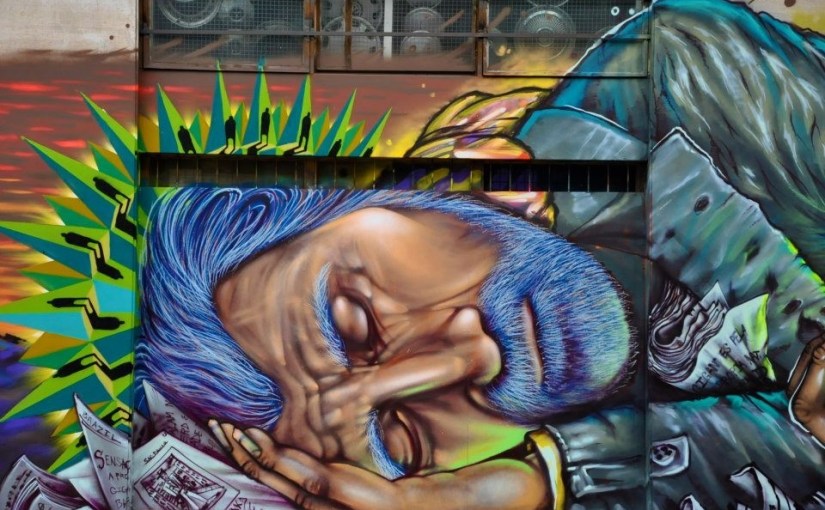
I was fifteen years old when she told me for the first time. I had asked her how she was doing. She looked squarely into my eyes, which look exactly like hers, and said words that she would go on to repeat many times: “I am waiting to die.” She said it in her usual way: tired yet hard and brazen. No tremble, no sadness. Defiant eyes. She didn’t say it to complain, or to illicit pity. (Though that’s what the others sometimes said about her.)

Most grandchildren don’t expect to hear that kind of language. Not me. I was fairly certain I knew why she said it. I knew about the angry welts on her body from his hands. I had been there once as a small child when he grabbed her by the hair and smashed her head toward the corner of the wooden cabinet. It was the last thing I saw before she pushed me out of the room and closed the door with her falling weight. I knew that she had been the sole breadwinner her whole life, working manual labour to put food on the table, to pay for her children’s school fees, to unwillingly fund his addictions to gambling and prostitutes, cigarettes and alcohol. (This later came to include funding his child support payments for those illegitimate children that we didn’t talk about but whose mouths were also fed by her hard work.) These, after all, had been the constant realities of my life as I flitted in and out of their home, not quite innocent enough to escape their burning silences but thankfully spared from the fits of rage and violence that I knew existed underneath. But I still had to ask her “Why?” to hear it from her own lips.

“Because my health is clearly worse than his, and at this rate, the only way I will find peace away from him is when I’m gone.” She was in her mid-seventies at this point.

“But if what you want is to be free of him, isn’t there anything we can do other than wait? Can’t you get a divorce? Can’t you move out and stop living with him?” I asked. Visions of my grandmother as I had never known her, happy and carefree, danced before me.

“There’s no point.” She seemed instantly to regret saying anything, shooing away my questions and telling me that I wouldn’t – couldn’t – understand. There was too much I didn’t know. In my teenage mind, I felt patronized. What was she keeping from me?  

I asked my mother. I asked my aunts. I got mixed responses. From “We’ve tried. We’ve offered multiple times to move her out, but she won’t leave. And he won’t leave either,” to the more frightening, “She’s past the point of moving on. There’s nothing you can do for her now.” I felt impotent. I thought about those defiant eyes; that hard stare that she gave him when she wordlessly served him his breakfast, lunch and supper which she cooked from scratch, no matter how bedridden the doctors told her she was. Diabetes, hypertension, a heart attack: nothing could stop her from keeping him fed. It seemed impossible to understand – if she wanted it to end, why didn’t she just walk away?

Ten years have passed since she first declared to me that she was waiting to die. Her body is older, closer to the relief she seeks and further from us who love her.  On a warm January morning this year, she told me yet again, “My bones are very tired. I am waiting to die.” And for once, finally, she was ready to say why.

“My father had wanted to choose a husband for me, as was common in those days, but I was headstrong and insisted on marrying your grandfather out of love. We had known each other since we were children; we grew up as neighbours. My father relented and we got married. The first couple years were okay. We had your aunt and your mother. But then, things started changing even before your uncle and aunt were born. You know already: gambling , alcohol, prostitutes. I had to start working, and then I had to work more and more. We were getting poorer and poorer…at some points we were barely eating, and we had to pull your aunt out of school. My father tried to loan us money but your grandfather always spent it all. Since I’m a woman, my father couldn’t trust me with money…he always gave the loans directly to your grandfather. But it was always gone before it ever reached me or the children, and I could never pay my father back, no matter how hard I worked.  I could barely put food on the table with my salary. He eventually had to cut us off because he realized that any cent he loaned us would be a cent wasted. He passed away before I could ever pay him back, before I could ever apologize for costing him so much and for having wronged him so greatly with my choice of husband.”

Before I could say a word, she continued.

“My mother was much more sympathetic. She moved in with us to care for your mother and her siblings so that I could work more hours. Sometimes, I would have to go away for days at a time. She always begged me not to go for too long.”

Tears were falling down her cheeks.

“One day, your great-grandmother got sick while I was gone. She must have been in her late 70s and she was such a tiny, frail person. Your aunt took her to the doctor’s, where they diagnosed her…”

The tears came stronger; her words almost a whisper.

“With an infection that came from untreated chlamydia. Your aunt had to translate the doctor’s questions as to how on earth a woman at that age could have contracted…”

She paused. The realization dawned on me.

“…a venereal disease. And that’s how I found out that he had been raping my own mother for nearly twenty years.”

She took a pause. We blew our noses, and wiped our tears.

“She said she never told me because he threatened her by saying that if she ever told, he would hurt me and the girls. Of course, by that point he already had… your aunt and uncle were forced onto me by assault. I didn’t want to have any more children after your mother was born. And my little girls… I could only protect them when I was home, but when I wasn’t around…Your mother was seven years old when she came crying to me when I got back from work. She said she had been bent over, feeding the chickens when he came over and…and…”

She couldn’t finish.

“He used to break broomstick handles over your mother’s head for her insolence. But she always fought back. Not like your great-grandmother. She was so tiny, so meek…I can never forgive myself for any of it.”

My ears felt like they were ringing, my chest felt heavy, my eyes were stinging. Three generations of women before me had been abused by the man who was sitting on the other side of the house…

Except that he wasn’t. He wasn’t on the other side of the house. Somehow, in all our sadness, we had missed the sound of his footsteps approaching. He was suddenly standing there, in the doorway looking silently at our puffy eyes and runny noses.

As our eyes met, he said, “Did you read the news about the EU?”  

I was incapable of saying a word. I wanted to get up and punch him in the face. I wanted to lash out and scream at him. I wanted to push him down the stairs, out of the house and away from all the people that I loved.

I looked at my grandmother. The defiant eyes were gone. She did not look scared of him: she looked scared of me. She gave an almost imperceptible shake of the head as if to say “Don’t.”  I thought I understood. He had already ruined everything that was sacred to her…her mother, her father, her children, herself. If I said anything, he would be on her as soon as I left. I kept my mouth shut. Once he had crossed to the living room, she whispered that I must promise to never never breathe a word to him about it. I promised, frightened of what he would do to her.   

I spent much of the next twenty four hours horrified. I tried to convince her that we needed to make a plan to get her away from him. She was infuriated by my many suggestions.

“You promised me you wouldn’t make a fuss!”

When it was clear that I wasn’t intending on giving up, she took me aside and looked me in the eye.

“I’m not afraid of your grandfather. He can do nothing worse than what he has already done. So stop trying to ruin everything. I was foolish to think that you would ever understand.”

I was so confused. I had thought that she didn’t want me to say anything precisely because she was afraid of the violence he might cause.

It has taken me a long time for me to understand why she hasn’t left. I see now that my grandmother has had very few choices in her life…but her choice to stay or leave is hers to make, not mine to make for her.  So much has already been taken from her. Who am I to take away her one last choice to solemnly await death? She has decided for herself that while on earth she cannot escape the madness and guilt of his doing. No physical distance from him can set her free from her anger towards herself. She seems to choose to be within hating distance of him so as to concentrate all her silent fury outward, instead of in. As much as she hates him, I feel she hates herself more for not having been able to stop him. She comes from a generation that doesn’t believe in counselling, so I have no way to help her shed her guilt. Instead, she waits for the end.

these words by Jo-Ann Zhou were inspired by the colour of Raphael Varona

these words by Jo-Ann Zhou were inspired by the colour of Raphael Varona

On Art and Relationships: “Extending the Pattern”

for josh

word by Josh Elyea 

colour by Mojo Wang

          Jane knows that compartmentalization is the key to a healthy relationship. She’s put all the little boxes where they belong, and for God’s sake, she’s going to leave them there.

          Jack says the simplest things in life are the most insidious. Comfort, for example. No good can come from comfort, he says. He’s speaking while deftly disassembling a French press that hasn’t been cleaned in months; Jane is only half listening, since she’s just put on Joe Strummer and the Mescaleros and is ruminating on the late singer’s post-Clash career with a keenness she’s not able to summon for the tired lecture aimed in her general direction. Rather, she’s enamoured with the sound quality pouring from their new BOSE Sound System. You really do pay for quality.

          It’s only after a large purchases, like a new BOSE Sound System, when Jack and Jane fight about money. It’s only in those moments that Jane’s chosen profession matters; only after the limited square footage of the apartment has been claimed, carefully cordoned off with a clear presence on either side does it matter what she does for a living. Jack wouldn’t go so far as to suggest she do something else with herself; no, he’s fairly certain art is where she belongs. He’d sure to like to see her make some money from it though, and he’ll be damned before he feels awful for saying so. Or, at least, that’s how this argument went the last time they had it, and the time before, and before…

          It’s not like Jane is overburdened; student loans notwithstanding, she owes a few hundred dollars on a VISA and has an unpaid cell phone bill in collections (she’s only recently stopped receiving calls where a bland, deathly voice asks “Hello, may I speak with Mrs. Jane _____ about an outstanding and quite frankly egregious debt…”). Other than that, she doesn’t owe a cent to anyone. So she’s just getting by right now – so what?   

          Often, Jane wished Jack would try and understand what it meant to be an artist, what it meant to try and create something from nothing. She wished he wouldn’t stare so obviously when she said she didn’t make much progress on her novel that day, and that he wouldn’t move with such reluctance when removing his credit card from his wallet to buy things like BOSE Sound Systems. Hell, she wished he’d stop buying things like BOSE Sound Systems so she didn’t feel so indebted to him, so she didn’t feel like she owed him anything.

          Jane looks towards Jack and sees there’s a torn piece of wallpaper where the counter-top ends; looking behind it, she can see that the little black and white boxes don’t end where they appear to, and the pattern extends far beyond her cursory understanding of it.


See more colour by Mojo Wang


on depression: “the red door”

joehengst

word by Kate Shaw

colour by Joe Hengst

It has been several days since I’ve left the house. In a significant way, at least – I’ve left to take out the garbage, to buy eggs, to remember that I owned clothes that weren’t pajamas, but it has been several days since I’ve gone anywhere, done anything.

It’s cold. Not northeastern U.S. cold – worse. Wind chill down to thirty below zero. It’s amazing, how cold it can be. Every time I walk outside I re-hear those news broadcasts about Canadian citizens suffering severe skin injuries from five minutes of exposure to extreme cold. Is it cold enough to be dangerous right now? My cheeks feel like they’re turning to putty.

Hour after hour passes by and I pace, I sink into the torn, velvety couch, I heat oil in a skillet but forget what I was planning to make (did I have a plan?). I sit on the ledge by the window and look. See. It doesn’t look so cold out there, I think. There are people out there, walking around, and they’re not collapsed or clutching at their putty cheeks. They’re living despite all this, despite this unbelievably-wind-chilled air.

And then I pace again. Sometimes I pick up a book, but usually the words just end up dancing out of my consciousness before I can understand them and I just read the same lines over and over, absorbing nothing. As hard as I try to focus on the little letters, they blow away.

v

I haven’t been seeing anyone. My roommate is gone and I tell other people – friends, I guess – that I’m just overwhelmed with school, just trying to catch up on reading, thanks for saving me a seat but I’m actually not coming to campus today, oops!

v

It actually looks lovely outside. If I force my eyes through the grayish haze hanging over the street, I can nearly unearth the image of the bakery with its little orange sign, or the barbershop with its red front door. They were colored once, lovely shades, I know they were. The colors are distorted now. I hope the originals come back.

I’ve decided to start sitting on the floor instead of on the couch. From down here I feel small, and maybe that will make me feel overwhelmed by how big everything is around me, or amazed by how much this new apartment feels like home, or pitiful of what a pathetic spectacle I’m making of myself. Maybe sitting down here will make me feel something.

I lean back against the couch – I think it was green once, but the colors in here are distorted too. I don’t know how long I’ve been sitting, and now that it’s dark outside it could be 5:30 or 9 or 2 in the morning. Now, even if the colors hadn’t disappeared, I wouldn’t be able to see them anyway.


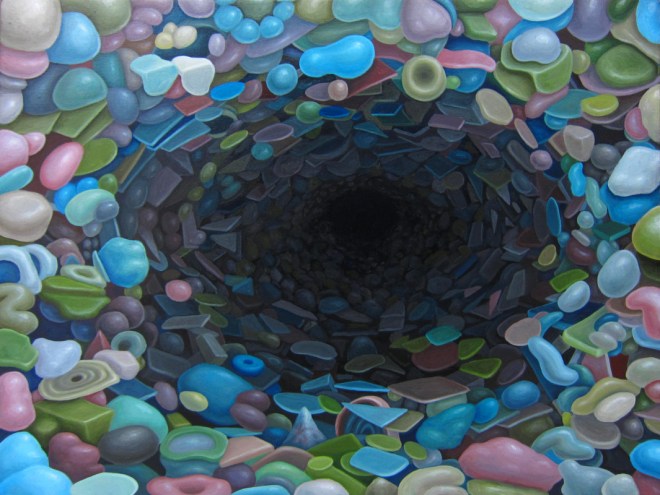
from the author: “The shades present in the visual art piece have an eerie tint to me, which is underscored by the dark tunnel in the center that disappears into nothingness. It made me think of the distorted way one sees the world through the lens of depression and other mental illnesses, so this piece deals with that distortion and the inability to pull oneself out of that dark space that burrows its way to the center of everything against your will.”

Hollywood, Heartbreak & Horsepower

ptb_Van

Alone in the mountains, a van sits idly as the sun rises. From the west comes a slight breeze, and were there any grass it would’ve rustled in the wind. As it is, there’s only the subtle sounds of the shifting sands to act as a soundtrack for this lonely scene.

Inside the van, a young man wakes up. He uses a worn French press to make a cup of coffee and then steps outside briefly to survey the landscape. Back indoors, he sits down at the folding kitchen table (it doubles as a bed and sleeps three, in a pinch) and inserts a tape into the video camera perched precariously on a makeshift tripod of books, tupperware and vinyl records. He holds up a sign that reads Day 155, P.B. (Post Bridgette) and begins to speak directly into the camera.

Fuck Hollywood, he says. And while we’re at it, fuck Bruce Springsteen too.

He doesn’t mean that last bit, of course. He loves Bruce Springsteen; he’s America’s most treasured songwriter. Speaks for the people, you know? But he was angry and felt betrayed by The Boss, and if you couldn’t trust Bruce Springsteen you couldn’t trust anyone.. All those stories on Born to Run, the ones about the good times with the fast cars and beautiful girls, they’d been a lie. There was no peace to be found on the open road, or perhaps there was no peace to be found in him. Either way, he could see now that you could never walk in the sun, and there was no gorgeous brunette putting the sunset to shame as you stare at her and press down on the gas pedal, just a little harder. 2,567 miles from New York to Nevada, and he didn’t feel any better than when he had left. He blamed Hollywood for the heartbreak, and Springsteen too; decades of bizarre and damaging genre clichés, of sitcom reruns and pop song replays had  codified romance as nothing more than a means to an end, a search for a simulated intimacy that taught people all the wrongs ways to find each other, to be together. People hate on Hallmark, but their cards are just the falsities of romance given physical form; it’s the movie studios who are to blame, and the music makers too, for the idea of romance, for that poisonous ideology which has become inescapable in our day to day lives. And he finally understood romance, or at least he thought he did. Standing alone in the desert, he knew what it meant to have been in love.*

word by Josh Elyea

“I’ve always been particularly susceptible to the allure of the open road, due in no small part to early exposure to Kerouac and a strong affinity for the Springsteen works mentioned in this piece. While I think these narratives are important for the ways in which they offer an escape from the mundane, it’s also important to look at the inconsistencies in these narratives; for example, while guys like Springsteen and Kerouac were the strongest proponents of the restorative powers of the open road, they rarely deal with what happens when you reach the end of your road. What happens after you drive off into the sunset? That’s what I wanted to look at with this piece.”

colour by Hey Studio

“Hey is a graphic design studio based in Barcelona, Spain.
We specialise in brand identity, editorial design and illustration.
We love geometry, color and direct typography.
This is the essence of who we are.
We take care of every single step of the design process and we always work closely with our clients, big or small, in one-to-one relationships.

We also undertake side projects. These activities aim to play with new ideas, push our creative boundaries and develop a passion that is then injected into client’s work.

In 2014, we opened an online shop, a place to share our passion for typography, illustration and bold graphics.

Hey was founded in 2007 with the idea of transforming ideas into communicative graphics.
Here is a selected list of projects crafted for our clients.
We would love to hear from you. Say hi here.”

On Persecution: “The Strangers”

5d36cf2748e179d7de3b18bdcd289c04

Noise noise noise noise noise.

A million million voices try to talk one on top of the other. It sounds like music. It sounds like the worst jazz you have ever heard.

The effect of all the voices is to make you feel screamed at, but no one is screaming. They are speaking with only a note of urgency. They are not shouting, but they know they should be heard. That you should hear them and that they must say their piece.

This is just when you first go through the gates. This is nothing yet.

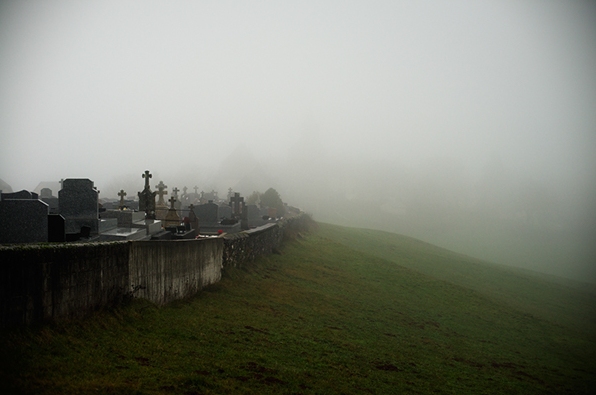
The gates, by the way, are tall and iron and topped with diamond-shaped spikes. They are there for a very specific purpose: because the boys of the town will try to sneak in and put mirrors on the graves. The gates will not stop the boys from trying, but they will stop all but the most resourceful boys from getting into the graveyard. In the time before the gates, that everyone remembers but no one was alive for, there were shards of mirrors all over the graves like magpie confetti. No one remembers why, but the boys know that this is what they are supposed to do. The gates are especially needed at holidays.

After you have recovered from the shock of all the voices – because it will be a shock, even though I’ve told you about it now – you can start walking into the graveyard. If you step too close to someone’s grave, there will be a hush. This will be tempting. But you should be careful, because the longer you linger by any one grave, the harder it will be to go back into the fray. Once, a girl who was not prepared ran into the graveyard at night time. She was overwhelmed by the voices, and she sat down on a grave to rest in the peace. They found her the next morning, lying on the rectangle of grass as if it were a down mattress. They were never able to wake her. This is another of the stories – the ones that everyone will tell you.

If you listen carefully, you’ll start to pick individual voices from the noise. You should listen to them. It will be hard. It won’t be hard to catch the thread, to latch onto a voice and follow it. But it will be hard to stop yourself from shaking it off once you do catch it. They don’t scream, the voices, but they do not flinch from the truth.

These are the graves of the strangers. None of them exist anymore. If they do exist, in an outnumbered molecule of someone’s blood, someone is not telling. I doubt that anyone will ever tell.

You will make your recommendation to the town council by the third of November. We didn’t know these people. Their traditions were not ours, and they are gone now. The land could be put to good use.

word by Charlotte Joyce Kidd

“This story could be about anyone.

My own familial and ancestral background is Jewish, and it’s a group that has been dodging annihilation throughout history.

Religious, racial and ethnic persecution happens and has happened everywhere, and too often results in genocide.

I also wonder about the living’s obligation to the dead in regards to burial wishes and traditions, especially in cases where the desired ritual of the deceased seems obsolete or culturally irrelevant. I was a voracious reader of Egyptian mythology and history growing up, and I questioned the ethics of excavations and exhibitions as much as I revelled in seeing them. Although it was anthropologically exciting and potentially important to dig up a Pharaoh’s grave, what if he had been right to believe that he needed a pyramid of clay figurines to survive in the afterlife? Had we just destroyed his vision of paradise? We can dismiss the desires of the dead as quaint, erroneous, or even morally wrong, but we don’t get the opportunity to argue; we can only choose to refuse or honour them.

In this piece, I tried to create an image of a society that may no longer believe in traditional burial, that has no connection to the buried, that exists on land that has no meaning to them but is historically deeply significant, that perhaps is even responsible for the elimination of a certain group, and finds itself struggling with the presence of a vanished people.”

colour by Julien Coquentin

On the Environment: “Forest for the Trees”

b31b950206fa403d7071aecce8d44b52

I’LL LOVE THIS FOREST UNTIL THE DAY I DIE.

It was a place of possibility.  Where anything could happen.  Secrets hidden behind every tree.  Discovery around every bend.  Adventure was everywhere.

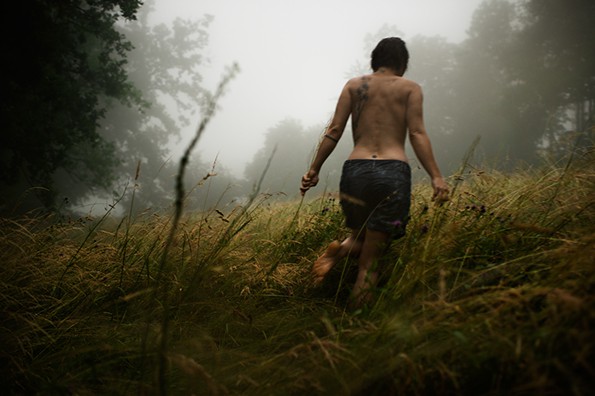
I was always struck by the trees.  So much bigger than anything we had in the city.  And so many.  No matter where you looked, there they were, towering above and continuing on past the horizon.

Walking beneath them today, I’m reminded of the games of hide and seek we’d play in their shade.  The time I came upon the perfect spot.  When no one could find me, I cried my eyes out, waking hours later to Mom’s touch as she picked me up and carried me back to camp.  To the bonfire.

I craved the smoke’s heady scent in my nostrils while simultaneously doing everything in my power to avoid its brutal sting to my eyes.  Every night Liz and I would get one step closer to the perfect s’more recipe.  It’s a miracle our teeth didn’t fall out with all the scorched marshmallow and melted chocolate we ate amongst these trees.

In later years, we discovered the lake.  The forest stayed to its shore, watching on as we swam and played.  It became near impossible to get us to leave the water.  We’d spend full days splashing about, emerging only when our bodies became too tired to keep us afloat.

It’s still hard to believe this will be my last visit.  I wanted to protect this place.  To protect the memories it’s given me.  Now all I want is one last dip in the lake.

I never knew there were so many different machines for destroying trees.  I can only hope the water will drown out some of the noise.


word by Grant McLaughlin

colour by Julien Coquentin


On #Alllivesmatter: “The Sting Of The Jellyfish”

2

There’s a mural in the street that says ALL LIVES MATTER. A few days ago, it said BLACK LIVES MATTER.

As I stare at the defaced artwork, I begin to understand that the great sin of our time isn’t hatred. It’s apathy. It’s the impulse to surrender to your default settings, to your pre-configured notions of who somebody is based on how they appear. To assume, rather than think. To fear, rather than learn. Hatred has agency, it has intent. Hatred is a spear, ground to a fine point over hundreds of millions of years to serve a single purpose. It knows only one end, and therefore it’s limited. You dig? We can overcome hatred. But apathy? Apathy is easy, unassuming; it’s a jellyfish floating in the waves. Shifting and amorphous, it poses a far greater threat to the ocean than the spear, it’s callous indifference spread to all those around it via a simple touch. The  jellyfish is content in its carelessness, happy to administer its sting to both the tiniest fish and the greatest whale, as though they have fought the same current all their lives. Except they haven’t

This is why BLACK LIVES MATTER is an anchor, a rallying point for the marginalized and disenfranchised victims of systemic violence, and ALL LIVES MATTER is a mindless platitude, a jellyfish whose deadly sting serves only to satisfy our base impulse towards indifference, our desire to look beyond the pointed issue towards a world where we may all float along, unaware of to whom our ignorant stings are being administered. That’s the non-polyp ideology;  float on and care not who runs afoul of your tentacles, for your conscience will remain clean. You didn’t make the ocean violent, and therefore you don’t feel responsible for the structures that exist before you, around you, inside you. This is how indifference has become our new prejudice, how a lack of awareness has become far more toxic than even the most hateful of voices. When everyone is content to say nothing, even the quietest utterances of discrimination can be heard.

word by Josh Elyea

colour by Andre Barnwell 

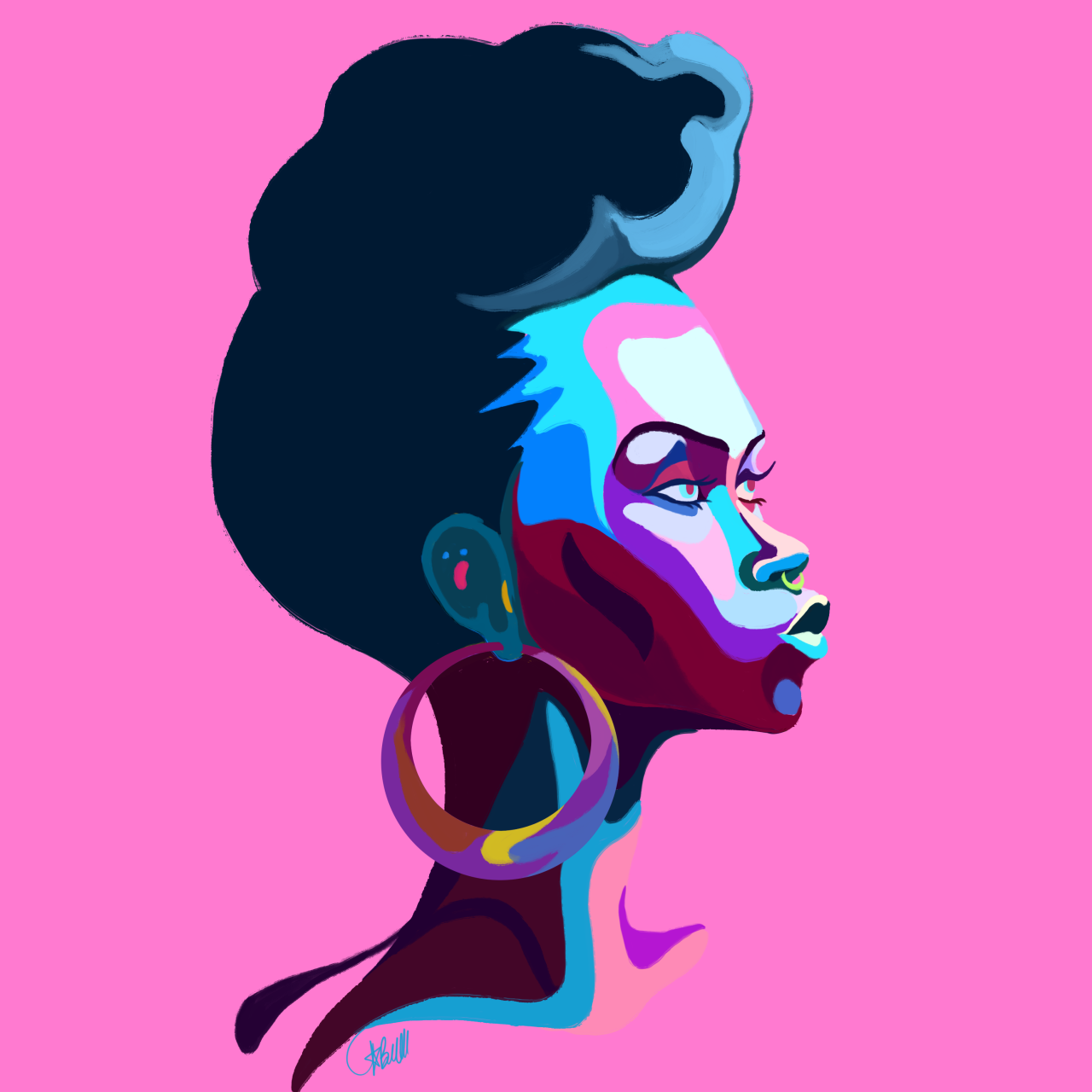
Andre Barnwell was born July 7th, 1984 and raised in Toronto but currently resides in Vancouver. Ever since moving out west in 2013, Andre has been inspired by the city’s art community and motivated by the accessibility to the tools he needs to pursue his artistic passion and desires. Graduated as an animator from Ontario’s Sheridan College he was exposed to various styles and media to create art even though he prefers to use digital as a means to an artistic end. Fascinated by the human face, most of work is portrait based ranging in different colour schemes, particularly his blue and red monochromatic digital studies.

Outside of portrait work and digital sketches, he enjoys music, film, travelling, and building his brand, Sex N Sandwiches. He looks forward to collaborating with artists such as sculptors, photographers and musicians for future projects. With the world getting smaller with the help of technology, he implores artists and art lovers to follow his growth via social networks and eventually to international stages.

Keep it growing!

Professional Contact: 
Email: andrebarnwell@gmail.com

Social Contact:
Twitter: @AndreBarnwell77
Instagram: AndreBarnwell77

The author’s words do not necessarily represent the views of the artist.

On Mental Health: “blue”

Rondeau 3

She felt all sorts of colours, but she noticed blue the most.  Its thin translucent shade seemed to seep into the corners of her eyes, through her tear ducts, tainting everything in a filmy azure haze.  It was vague and arbitrary.  Resting above her heart, compressing the edges ever so slightly on good days, or sitting clammy and heavy (as a stiff tongue) on not-so-good days.  Such weight meant lengthy exhaling and slight inhaling, her chest exhumed its fire as the oxygen departed.  Her shoulders rolled forward, concave, curling inward.

The blue was pervasive.  It was a tinge with the boldness to disobey the doctors and smut her everyday life.  It was prescribed that she share sadness and cool shades with the therapist on Mondays, and reinvigorate her heart and head with pilates on Tuesdays and piano on Wednesdays.  Her room was painted yellow, an attempt to restrict pathetic fallacy.  From Thursday to Sunday she was unmoored.  In such barren gaps, she aimed for off-white and neutral shade.  A dank white was as martyred as it was innocent.  Shinning like an exemplary virgin untainted by any distressing moods, she perfected a bared-teeth smile and upturned eyes.  In the schoolyard and dining room such whiteness was encouraged by her mother’s wrinkled brow.  She floated down the sidewalk.  A wispy white cloud pulled through a royal-blue sky.

The abject arrival of the sadness dumbfounded the medical men.  No predicating calamity validated the diagnosis.  She was bred with a full palette.  Rosebud bushes and rose-rimmed eyelids.  Spinach salads and vitamins in colour-coded bottles.  It was juvenile and chaotic.

The flooding of blue necessitated a quarantine of colour.  Its existence was permissible, but in controlled segments.  She would be a swirling kaleidoscope.  In the turvy checkered shape, eyes would roam, seeing nothing lucidly.

But on Sundays, she found pleasure in evoking the hue.  Blue, cerulean, plum, indigo: she let her lips wander over their sounds.  Stepping out of the yellow rooms and white shrouds, she made her way to the seaside.  Alone at the cusp of this cumulative blueness, she could rest.  Other colours slipped off the edge and fell into its abyss.  Carmine reds, vivid greens and rusted oranges overpowered by the silver-blue mass.  She wouldn’t dive in- she was satisfied sitting on the shore.  Though comfort lie in this watery body, she held out for other colours to come through.

word by Keah Hansen

“I relate the colours of this piece to emotions.  The distinct yet blended shades symbolize the complexity of our moods, while the lines represent an artificial attempt to restrict or regulate feelings.  The prevalence of blue represents depression, and society’s discomfort with it.  While the protagonist tries to understand her mental state privately, she is subjected to regimented treatments.  Her accepting its existence is a cathartic step in recovering from it.” 

colour by Emilie Rondeau

“My visual practice is a transgression and alteration of our perception of reality. I encourage free and intuitive interventions. Although abstract, my paintings carry the memories of atmospheric gardens, nebulous spaces, organic landscapes and architectures. Made of solid and bright colours, washes, painted and drawn marks, the compositions are reminiscent of complex and dreamlike environments. From the infinitely big to the infinitely small, cosmic or cellular spaces transport us with a strong impression of movement and energy.

The lines intersect and intertwine, linking shapes and colours together. Sometimes fast and agitated mark making succeeds to slow and smooth gesture. Colour is pure and vibrant. The harmony is rich and thoughtful within the limits of strangeness. A delicate balance takes place in this continual research for new visual forms. The eyes travel, search and rest. My paintings are an invitation for a trip in between the painting surface and your mind.”

On Homelessness: “Walking past”

Shalak3

“Look. I know. But I’m telling you, we, like, run in the same circles or something.”

“Which fucking circles are you running in?”

“I dunno, man, just…I’m telling you, I see him everywhere.”

“Give him some cash, man, he’ll leave you alone.”

“I dunno. Do you think he, like, stalks me?”

“Who knows, man. You know what he’s after.”

“Think he can hear us?”

“Probably. Keep looking forward don’t want to give him the wrong idea.”

The subject of their intrigue happened to be a well-recognized face on this street. His salt-and-pepper beard perpetually caked in sweat, eyes bloodshot, if ever opened, fingernails speckled with dirt.

When he wasn’t pacing the corner of the main street, he would lie curled on the ground, enveloped in a makeshift bed, a mattress formed from warped cardboard and a newspaper pillow.

A Styrofoam coffee cup rest at his feet to collect spare change—its position was far enough from his person so as not to elicit too intimate an interaction between hopeful donors and himself, yet close enough to grasp in the case of a thief lurking uncomfortably nearby. This was his domain.

The men who passed him daily found themselves split between curiosity and repulsion as they, in American Apparel, wondered how one could end up on the streets, and why the man couldn’t pull himself up by the bootstraps “and just find a job,” as they all had done for themselves.

The day he disappeared, those who questioned his absence primarily didn’t know who to confront with their concern, or why they felt they needed an answer in the first place, and never did anything about it.

word by Annie Rubin

“With such ease, passersby devalue or dehumanize the lives of homeless people. This story’s focus on the interactions of one man tries to demonstrate a lack of compassion and emphasize the societal conditioning that our culture perpetuates towards those who are not able to work or find a home.”

colour by Shalak Attack

“Shalak Attack is a Canadian-Chilean visual artist dedicated to painting, muralism, graffiti urban art, and canvases. Shalak  has manifested her artistic expression on urban walls across the world.  Shalak is a co-founder and member of the international art collectives “Essencia”, the “Bruxas”, and the “Clandestinos”. 

Shalak also works with several other mixed media approaches such as tattoo art, jewelery, illustration, installation, sound, and video making. In the past ten years, she has participated in numerous artistic projects and exhibitions in Canada, Chile, Brazil, Mexico, Palestine, Jordan, Isreal, France, Belgium, Spain, Argentina, Venezuela, the Dominican Republic, Senegal and recently in Sweden for the Artscape Mural Festival. 

Shalak shares her passion for freedom of expression, and has facilitated visual art workshops to youth of under-privileged communities and prisoners in various countries across the Americas, Europe, the Middle East and in Africa.  Her artistic work and community art-reach is rooted in the social and cultural values she received from her family growing up across Canada.  Since then, her most impacting education has been learning from different communities around the world. Public walls has become her favourite place to paint, she uses graffiti as an art form to create accessibility to culture for diverse communities.” 

On Death and Instagram: “The Right Filter For My Memory”

nadoune 3
My eyes raced to skim over the part of the text that was relevant to our current conversation in hopes of catching on to the gist of what was being discussed. Of course I was finding it impossible to formulate anything barely intelligent to contribute. As per the usual, and despite his general lack of insight, Micah’s hand bolted sky high. In a seminar of 11 graduate students he had somehow consistently missed all of the social and visual cues and extended his unusually long arm, fingers arrow straight towards the ceiling, as though he would combust if he could not speak.
 Death and Instagram
Dr. Meyer glanced at her watch and subtly but expertly waved Micah’s hand down, squinting her eyes and pursing her lips as if to say in that one brief facial expression.
Death and Instagram
“I know, we’ve run of out of time, I’m so sorry we’ll miss your gems of wisdom.”
Death and Instagram
Micah’s hand returned to the table and he nodded his head as if to respond, “You’re too right, I need more time to explain my genius to these folks.”
 
Before letting us go, she concluded: “In the corners of my mind are memories, deep in the archives, rarely if ever recalled. The truth is you have to train yourself in the art of that kind of excavation and it is work. You can easily rest your laurels on those moments prompted by a photo that has been sat in a dusty frame for eons, you can access it so readily that you begin to conflate the image for the history of the thing. Do you remember being there? What did you wear? How did you feel? You’re all so busy capturing the moment that you miss it. Do you remembering being there? Or texting, staring into your phone, applying filters? Do you remember being there?”
Death and Instagram
I chuckled thinking to myself. What does this old lady know about Instagram? Dr. Meyer was 68. Her probing questions anchored deep and roused me. I had covered over the covering over, forgotten what I had forgot, and there was a persistent gnawing, a dull reminiscent ache: the photos only captured so much, there were too few of them to ever imply an iota of the significance of your time and place here with me.
Death and Instagram
I don’t know when I lost you, really. Maybe it was when you moved, or maybe when you lost your leg; you had already begun to slip away. I couldn’t grasp your death until I saw you go into the ground.
Death and Instagram
Every now and then your face surfaces above the mossy mist. Your milk carton full of buttons had a very particular acrid smell, and the touch of your soft wrinkly skin felt like pure love; sewing needles kept in plastic film canisters and the fans you took to church. You are not far – I see you.

colour by Nadine Doune 

“Nadine est née à Montréal, d’une famille venant de s’installer d’Algérie. Elle grandit dans l’école buissonnière, une école dédiée à l’apprentissage par l’art. La musique et le visuel sont toujours présents dans sa vie, dès qu’elle le peut elle voyage avec son violon et ses poèmes/dessins au Mexique, dans l’ouest Canadien, et aux États-Unis où elle s’y installe un an. C’est une autodidacte qui apprend par les expériences, la rue est son terrain de jeu et où elle est le plus inspirée. Elle essaye de rendre la connaissance accessible en donnant plusieurs ateliers (notamment dans une coopérative d’art communautaire nommé le Milieu qu’elle essaye d’aider à bâtir). Elle est intervenante sociale, vend des popsicles artisanaux, et travaille présentement sur un projet de prise de parole chez les femmes immigrantes.”

“Nadine was born in Montréal to a family who arrived from Algeria. She grew up in the Buissonière School, where learning is achieved through art. Music and aesthetics are always present in her life, as she travels with her violin, her poems, and her drawings to Mexico, to Western Canada, and to the United States, punctually for years. The street and her experiences are her main sources of inspiration. She works to make education and art accessible by giving workshops – notably in Le Milieu, a community art cooperative that she’s involve in. She is currently working on a project that centers on the voices of immigrant women.”