Job opening: Head Of Colour

cropped-wqwww1.jpg

Job opening: Head of Colour

Word and Colour

Reports to Editor

The Art Director will curate the art for upcoming features at the magazine. After contacting artists, the Art Director will inform the Editor of upcoming features with all required information. Certain events in Montréal may require the attendance of the editor to represent our brand, and the Editor may also select artists to feature.

*An awareness or openness to social justice politics is essential as a representative of the Word and Colour brand. Word and Colour is a creative Non-Profit Organization of volunteers. This position will be paid when revenue streams are implemented according to workload, and requires minimal hours of commitment.

Our Ideal Candidate:

Reliable, organized, proactive

Education / Experience with visual art

Knowledge of social justice issues

Responsibilities:

Contacts artists for weekly features

Represents Word and Colour at art events

Responds to e-mail within the day

Is available for monthly meetings in Montréal


Please read over our mission statement before applying!

Application deadline:  Friday, May 1, 2015

Send CV to word@wordandcolour.com

Le théâtre des opprimés

10968503_1590582171177990_5645835069203416747_n

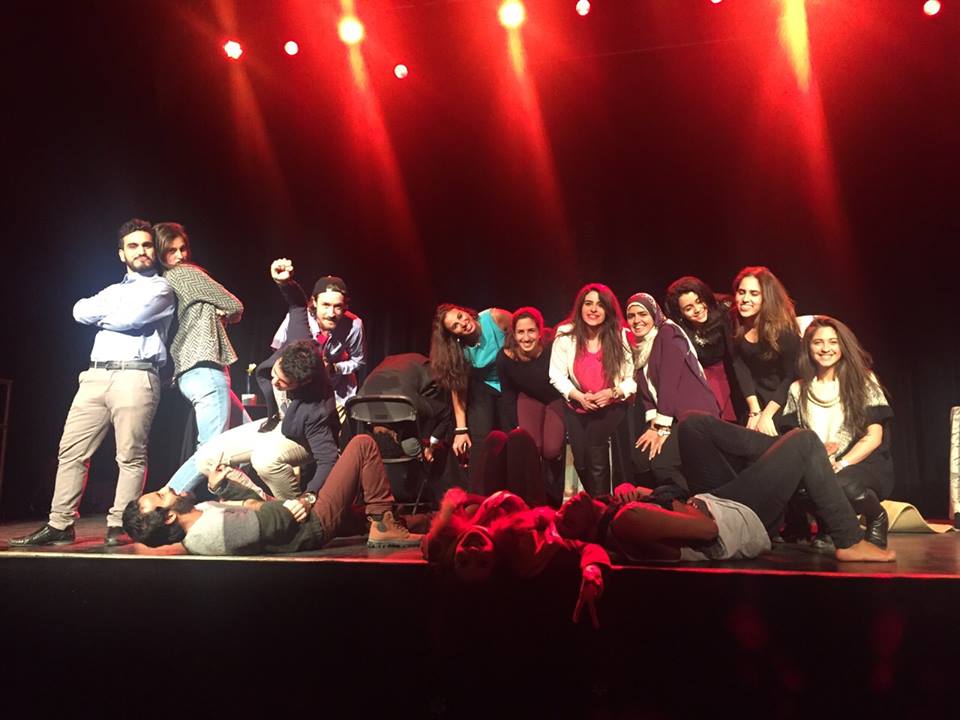
Le théâtre des opprimés, présenté par l’association des étudiants arabes (ASA), est un spectacle en deux actes ayant la fonction de poser d’importantes questions sur les rapports entourant l’oppression – sans toute fois prétendre avoir des réponses. Le spectacle mets en scène oppresseurs et opprimés et vers la fin de la représentation, des spectateurs sont invités à recréer des scènes en tentant d’améliorer le sort des personnages opprimés.

Cette technique interactive – développée en 1971 par l’activiste Augusto Boal – mis de la fébrilité dans l’air, le public ayant eu l’impression que ses interventions pouvaient avoir un fort impact sur la manière d’aborder le rôle des genres dans la famille, du profilage racial ou du harcèlement public au coeur des scènes.

Les membres du public trouvèrent de nouvelles façons d’interpréter les scènes du point de vue des opprimés sans toutefois changer radicalement les traitements prodigués par les oppresseurs. Les harceleurs publics continuèrent d’harceler leurs victimes malgré les réponses renouvelées de ces dernières et un officier de police qu’on confronta à la présence possible de motifs raciaux derrière l’exécution de sa fouille répondit:

“Et alors?”

11081047_1608204596082414_887284934734218877_n

La décision de l’Association des étudiants arabes de rendre chaque personnage multiple est intéressante. Tous tentent vivement de trouver la paix tant dans leur vie privée que leur vie en société, mais n’y arrivent pas toujours. Ce qui pose plusieurs questions: est-ce que l’oppression entoure seulement l’existence des oppressés mêmes ou en sommes-nous socialisés pour en être tous porteurs?

Comment réduire la souffrance lors de situations oppressantes lorsque l’oppresseur semble insensible aux appels de l’opprimé?

Bien que le rôle du Théâtre des opprimés n’était pas d’apporter des réponses concrètes, l’expérience qui se veut une opportunité d’humaniser l’humanité a su soulever des questions majeures.  L’association fait du travail important à Montréal et nous attendons leur prochain événement avec impatience.

Laurence Dauphinais – Montréal

click here for English

Review: ASA’s Theatre of The Oppressed

10968503_1590582171177990_5645835069203416747_n

The Theatre of The Oppressed, put on by the Arab Students’ Association, was a two act show that served to ask important questions about interactions on oppression – without claiming to have the answers. The performance intertwined lives of the oppressed and their oppressors in an interactive way: upon closing, members of the audience were invited to recreate scenes where they felt harm could have been reduced by taking the place of an oppressed character.

The innovative technique – developed in 1971 by activist Augusto Boal – brought tangible excitement to the audience. The feeling seemed that these new interventions would make a significant change in the scenes on gender roles in the family, racial profiling, and street harassment.

Audience members brought new ways of interpreting the scene from the oppressed, although bringing little change to the treatment by the oppressor: street harassers went on harassing, regardless of new responses from the harassed. A police officer was confronted on the racial motives of a search. The officer’s response?

“So what?”

11081047_1608204596082414_887284934734218877_n

Valuable lessons come from the ASA’s decision to portray all characters in a multifacted perspective, each struggling to find a balance of peace in their home and public lives, raising many questions: is oppression simply ‘around’ the oppressed, or is everyone born with it? How do we reduce harm in oppressive situations, when it seems that, however the oppressed responds, the same treatment seems to occur?

As the group proposed, the Theatre of The Oppressed was not to provide prescriptive solutions for change, but rather to raise awareness and pose questions while ‘humanizing humanity.’ An important group doing important work in Montréal – we look forward to their next event.

Allison Kutcher, 23 March 2015, Montréal

Image credits: Arab Student Association of McGill

Am I an anyday person?

datum-illustration-energy-power

When I lived in a tiny balloon, I did not know someone had the scissors. I thought the world was rubbery and hermetic, the way it feels when you read inside a moving car. Every day, every teacher, every traffic jam assured me that things were meant to repeat themselves – I thought that was the deal. Do what you are expected to do and everything stays in place. I paid a tax for every missed thank you – I got cornered through every lie. Parents, family, society, looking out for my way of doing things, holding me accountable for the perpetuation of our good values.

Us, we lived high on helium, so their tactics of masks and deceit stayed far. We kept them at bay with bunkers of reeky diaries, Michael Jackson shreeks and daily marble tournaments. I gave the fuzzy stickers to my best pals only, and together we read about species going extinct which we would grow up to save. We knew some were out to wreck it all with their boredom, and we were eager for our turn to come. We would make things right. We would melt the herd of frowns and expose raw beauty. It would shine invincibly.

Did we implode or were we severed?

Was it all planned or did it fester until it could no longer handle us inside?

One day, something cut the cord, broke the diving bell, and young oxygen became stale.

In some parts of the world, they train children to carry guns. In other parts, they train them to carry mortgages. In both, the key is to begin infiltrating the mind before it has the chance to form itself around the body that holds it.

This way, kids become anyone.

An anyday person among anyday people.

The last plane crashed inside because it wanted to die innocent. And then we popped: we stayed stuck in the free-fall for a long time, before there were ever any followers or any marginals. We used to be on the same page before they enlisted some on the front, others on the back, and crumpled and twisted us against one another.

I keep shards of childhood tucked beneath my veins, so that I don’t forget we all come from the land which growing-up destroys. I carry stickers that I give out to my best pals only. They read, “Do Not Ever Grow Extinct.”

word by Hoda Adra 

colour by Strautniekas

From the author: “The artwork inspired thoughts about childhood as a homeland, and how we might go through personal acts of resistance when faced with the pressure of belonging to the dangerous adult world.”

datum-illustration-2

sleeping over

pix

A prickling sensation creeps from the bottoms of her feet up the backs of her calves and thighs. The silkiness of the satin sheets underneath fades to cold cement ground. His left leg is sprawled just below her knees, occasionally twitching with the rhythmic echoes of his snore-embedded breaths. She doesn’t move it. Her legs can do the sleeping tonight. They can have the pins and needles. Since she too, with eyes wide open, is on pins and needles.

          When will he be gone?

Just like all the other ones.

That’s all she can think about.

College girls always joke about fears of waking up with a stranger in bed Saturday morning.

Her biggest fear on the other hand,

Is waking up without the stranger Saturday morning.

        “Don’t leave me tonight, okay?”

        “Okay.”

Honestly, it’s not because she cares about them (at least she tries not to). It’s not the who, but the what, that breaks her every time. It’s the reminder that to these thirsty bodies, she’s esteemed for nothing more than the vacant space inside her (and every other female). She’s a Marlboro. Lit up. Inhaled. Exhaled. Until the last bit of romanticism and hope is sucked out and released; foul and toxic secondhand smoke that pleads to be appreciated one last time before evaporating and losing all evidence of existence. Then disposed of. If she’s lucky, she burns out before they’re done (at least she’s left with some dignity). If she’s not, they’re done before she burns out. And she gets stepped on. With a little extra pressure in the toe box, just in case she’s not out with the first step.

Nothing more than a butt.

That’s what she is to them.

Why does she still do it?

Some presume she’s masochistic.

Some think she’s outright stupid.

However the rare few, like the one sleeping beside her right now, knows otherwise. He knows that behind her indifferent eyes, hidden emotions and sarcastic comebacks:

She’s been hurt, deceived, and mistreated.

She’s tired of clubs, parties and alcohol.

She hates empty words, hookups and promises.

She sleeps with both eyes open, because she’s reluctant to yet again lose this game that she thinks she finally knows the rules to.

She’s still hopeful.

What she doesn’t know, is that she has finally found someone, who feels the exact same.

Someone who is determined to dismantle her walls.

Someone who plans to patch her wounds with his own skin.

Someone who sees her not as a cigarette, but as a cup of coffee.

The Americano with a spoonful of sugar that he can’t start a morning without.

word by Eleanor Tsang

colour Pixel Pancho

oasis

1796661_288174391333568_1670898555_n

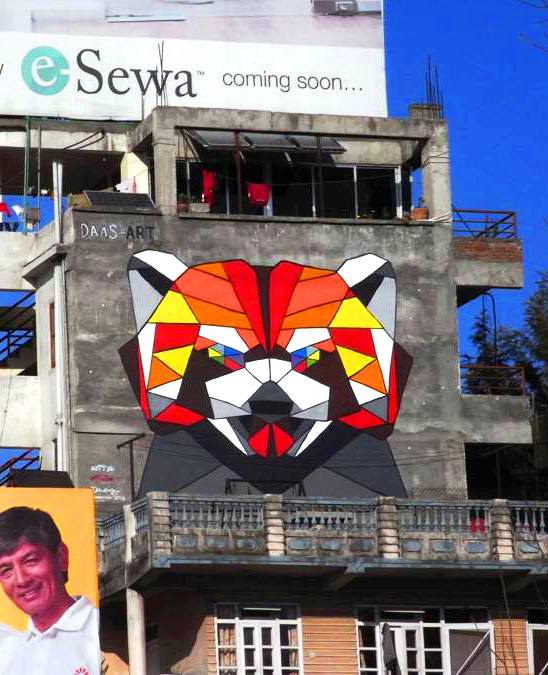
On the street she walks along most days there is a wall. The wall is one side of a building and is tall and made of brown bricks, neatly piled and cemented together. The wall has been painted in one spot, up high, and it is this painting of a triangle fox that she watches as she walks. The fox is brightly coloured, with kaleidoscope eyes. The first time she saw it was not so long ago, for she is new here and has only had the courage to walk the streets since she has known to some extent where they join. She told Miles about the fox that first time, but he frowned and kept typing and she couldn’t really explain about the yellow parts and the cave cheeks and the spike of its ears, or how it made her scared and safe at the same time, so she stopped, mid-sentence. Later he touched her hair as he walked to brush his teeth and asked her to tell him more about the tiger. She didn’t correct him.

Then there are the days when she walks down the street with the wall with the painting on it for no reason other than to look up at the fox. She isn’t very busy—jobs are like lucky pigs here—and she feels small and blurry in the apartment on her own. Sometimes as she rounds the bend and lets out a small sigh as she sees the fox up high, there is an old man standing where she stands when she looks at the fox, and he is looking up, too. He gives her a heart ache, with his grubby mittens in the middle of summer, the same drooping plastic bag by his side, every time. She feels so sad – her heart is an emptying bath. But he always moves before she gets to the spot, so, without guilt, she can look up, drinking in the kaleidoscope gaze from above her.

She is looking up at the fox one day, at that time in the very late afternoon when you can almost smell the sun sinking. She does not see the man until he backs into her, his grey hair combed straight and his jacket sticky. She apologizes; chokes out a laugh; wants him to know she does not fear him. He doesn’t seem to hear her. The man stumbles and she moves to let him as he tilts back his head and looks up at the fox. He is saying something—she can hear something croaking out between his upper lip and jaw. She cups her ear to hear him. 

word by Laura Helen McPhee-Browne

colour by DAAS 

police

07-27-2011_n1_900


The police officer is circulating the metro station. Escalator teeth sink into tiles, reminding you of waves, disappearing in the floor. Your feeling is that, as the metal step dissolves, it is gone, like the wave. The police officer is sitting beside you. Plastic boxes for the fluorescent lights, above, hold dirt, and bugs, and you only notice it for the first time, now, bored enough to examine the details of the station. The police officer is sharing your view. For better or worse the dirt of these lights and the teeth of this escalator are part of the cities’ landscape, and we notice them as much as the country kid notices squirrels in branches. One step is one step – one wave is one wave… It’s more beneficial to have a thousand individuals walking around a metro station than a thousand people who know each other, who can empathize and learn from each other – individuals need to Find Their Selves in products or political movements, vote for us, we aren’t those old bastards, you’re a rebel if you buy this thing – you will end up with this white woman, and look at these jets bro! The police officer is asking you a question. You answer: Waiting. Another stair sinks into the tile. The impression is that the wave is separate from the ocean: It is never that the ocean is touching the beach- slapping it, really. Life is always one piece splitting away, independent. The police officer is asking you another question. When you entered the metro you paid for your individual ticket and placed it in the turnstile. The machine clicked after you pushed the metal bar so that the person behind you knew this stranger had passed through and it was their turn to enter. It’s easier to control a shape if you tell each electron they are the most important, you can be a nucleus someday if you work hard enough, don’t mind all those others – you have nothing in common. The police officer is circulating the metro station. The same piece of gum keeps on coming up on this same stair.      


word by Liam Lachance

colour by Agilmore