On Beauty Standards: “Deep Hues and Curves”

untitled

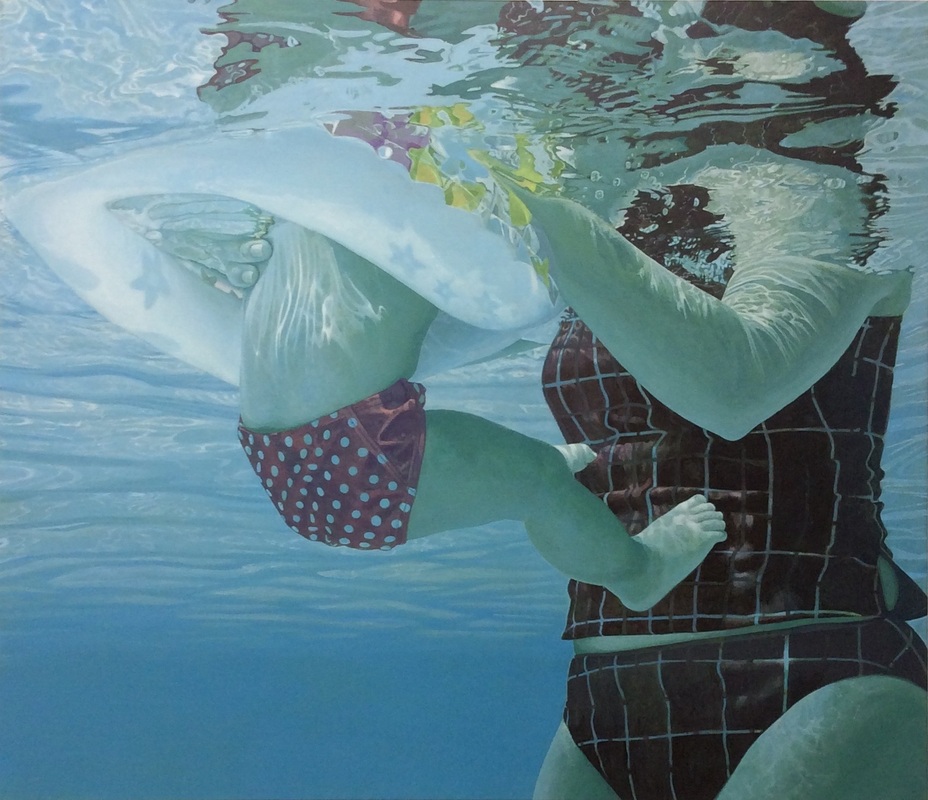
“Deep Hues and Curves”

It was her thirteenth birthday and she’d asked for red lipstick, strapped heels, and an appointment to have her eyebrows waxed. We went to the mall together to try on dresses for the celebration. She wanted pale blue to match the balloons.

She picked one with a frill along the neckline that accentuated her small waist and cut off above the knee. She had flat-ironed her springy brown hair and twirled a smooth lock around her finger as she gazed at me from the floor of the changing room.

“This would look better on you,” she moaned.

I winced. What was unbelievably clear to me seemed positively inaccessible to Ella. How would she react if I told her she looked like Brooke Shields in the pale blue—smooth-skinned, perfect frame?

What I would give to look anything like that.

Instead I mustered a weak, “I like it.”

I saw a spectrum of colour in her eyes.

She shook her head and tossed the dress to the ground. We finally settled on a violet strapless cocktail dress that draped across her body regally.

I came over early to help set up. Her mother asked me to tie the knots as she inflated helium balloons. I watched Ella stride down the living room stairs in the purple dress, lips tinted bright red, eyes lined, she flashed me the kind of grin that said you’re in on the secret.

I smiled back, twisting the elastic of another balloon around a ribbon and letting it float to the ceiling.

How reassuring it must feel to be factory-made.

“Let me do your hair!” She sang, running her fingers through my messy blonde.

I followed her upstairs, where for a moment as she braided, I watched her lock eyes with herself in the mirror. The colour drained from her face and she looked away, turning back to me. “Will you help me go blonde?”

It was somewhat an absurd request, but one to which I was compelled to oblige. The title of best friend came with great levels of moral responsibility.

It was five and guests were supposed to arrive. Her mother was frosting the cake in the kitchen. It was chocolate, Ella’s favourite. She proceeded to dip a slim finger into the bowl of frosting, receiving a glare in return, and a harsh murmur of disapproval. Promptly, she ran her hand under the faucet, sugar dissolving in water, before turning back to me.

“She’s right,” Ella whispered.

I didn’t ask about what.

“I don’t need it.”

I found myself by her side for the remainder of the evening. It felt natural, shadowing her: my image of womanhood. She grasped my hand as she blew out her candles.

After her mother sliced the cake, I watched Ella stare at the plate placed in front of her. She prodded the chocolate with a fork, all the while inhaling the wafting smoke of blue striped candles. Not once did I see her lift the fork to her mouth.

word by Annie Rubin

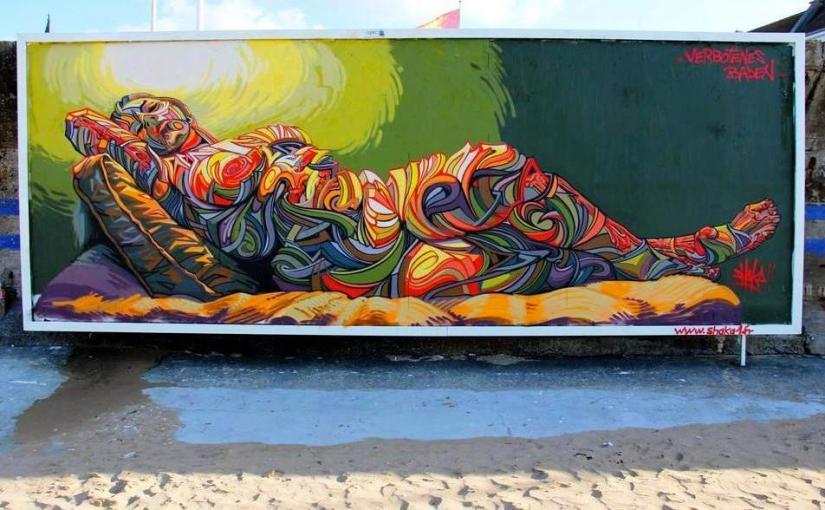
colour by SHAKA

From the author: “Adolescence is the time when our ideals of beauty are explored most thoroughly. As we grow, we learn about ourselves through our parents, our friends, and through what we see in the media.

Often, though, we are our own worst critics—what we see in the mirror is far more flawed than what our friends might see when they look at us.

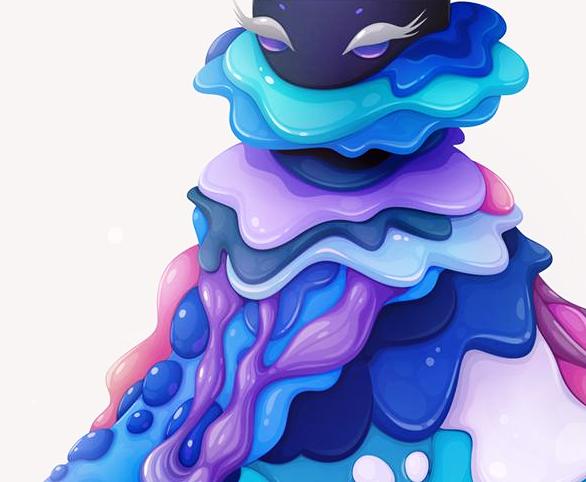
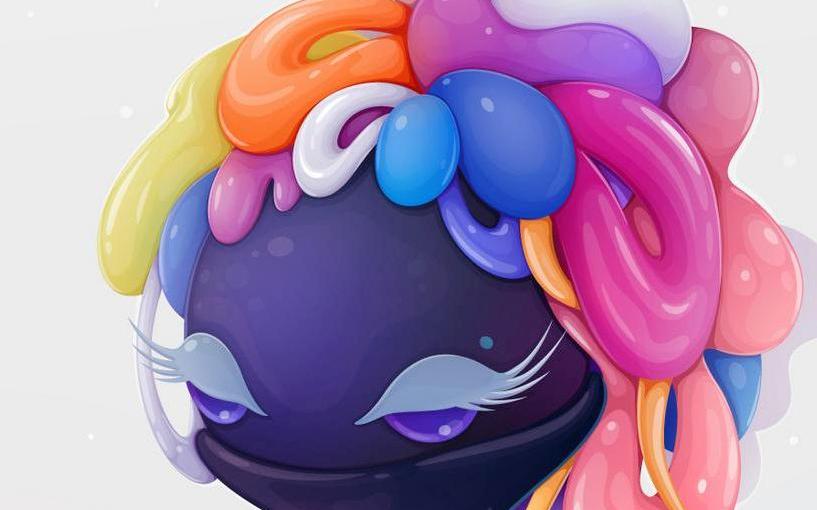
Each of us are made up of many colours, and once we begin to accept our uniqueness, we can rest as confidently as this figure sprawled upon her couch.”

Support our live art event! 

On memory: “self and other”

image

Despondent at the sight of her, waxing caramel and silk, bruising blue from apathy. Who it is I am looking for in the shape of her, the curve and weight of her bones. The scrutiny of this survey has everything to do with consumption. Mass of flesh, scent of jasmine, soap, talcum powder.

I become suddenly thirsty and my legs fold in like a hand. From every angle calls some small adjustment, something not quite in place, not quite concealed. I remember the shirts I wore in highschool, carefully selected from your laundry pile and big enough for my body to move beneath them unnoticed.

Meanwhile she moved with such a lightness I had never been empty enough to feel, spread her toes across the bathroom counter smoothing lotion into her calves; she had six children for the institutions of God and marriage. What I saw for the sake of this story was the width of her waist on an inhale, saw her spinning across the living room floor. She praised my poetry then stopped calling altogether.

Of course I never expected she would, and this is not really about her, or the blue light of my new apartment where no one eats and everything is covered with a film of dust and the smell of smoke. I blink into the mirror and take a sip from a white, enamel cup stained with her lipstick. I know that I will see her in the kitchen and she will have cut her hair again. She will be quietly frantic, pouring cream in her coffee and letting the filter drip. The garbage can is full of dust and the ends of her cigarettes stained with lipstick.

If the weight of my bones were a little less dense. If I did not bruise under the touch of her fingertips. I could step into this room unfeeling, dressed in animal prints and steel, chewing a stick of gum.

word by Alisha Mascarenhas
colour by Gan Chin Lee 

On Family: “Bug”

152251_orig (1)

Bug

when Benny was 1 and I was 7, I took him down to the park near our place on the lane named after Shakespeare

he’d been at the pool with Mum all morning, tucked behind the blue walls on Alexandra Parade, and his tuft of soft hair was still wet

he nestled into my arm as we walked along the cooking bitumen, and when I crooked my arm to let him in, he cooed like a bird would, if a bird was Benny

at the park I climbed us up the ladder of the slide and put his bum on the cool grey top of it

he giggled as I backed down the rungs one by one and as I walked away from him and the slide and the sand and the dog poo, I felt my heart get bigger slowly like a blowing up balloon

my heart kept getting bigger and bigger as I walked down the street towards the milk bar, and as I was paying for my lemonade icy-pole it burst

Benny was wailing when I got back

I told him I’d just gone to get us an icy pole and he didn’t have to be sad

he was choking on his tears but then the tears slowed to hiccups and then the hiccups slowed to snot and I told him he’d crawled into my heart like a funny little bug, and it was just as well you can’t spray bug-spray near your heart

word by Laura McPhee-Browne

“This painting is beautiful, and reminded me of familial love. 

It reminded about how it for me was when my brother was a baby, and how older siblings often experience a cacophony of emotions when they are confronted with siblings, emotions that are strong and fierce and both negative and positive.” 

colour by Kojiro Ankan Takakuwa

On Body Image and Norms

untitled“The little skeleton girl”

She was born without flesh.

It was just one of those things that happened sometimes: there was nothing anyone could have done about it and it was a blessing that it hadn’t been worse.

Her mother sat her down the day before the first day of school, tickled each vertebra in her back and said, “You have a spine.”

She knocked her knee caps and said, “You have good, strong legs.”

She stroked the underside of the girl’s flappy, yappy jaw and said, “You have a mouth, and a heart and a brain. You’ll be just fine.”

The little girl was late to school because a small, straw-y twig got stuck in her rib cage and it tripped her up. All the other kids knew each other already.

The girl had a crush on someone. She asked him to be her boyfriend. He held out his hand in her face and she didn’t know what it meant so she grabbed it with her bony claws and kissed it with her lips that weren’t lips. She felt something go from his palm to her mouth and it dodged past her vigilant tongue and slithered down, down, down into her stomach where it sat like a thumbtack in an airless balloon. He had shoved a tiny stone into her mouth to see if it would break her bones and though it was the most that anyone had ever hurt her, she did not cry but rather looked at the boy with a look of understanding that said that she saw that it was the worst thing he would ever do and that it would haunt him always and be the last thing he thought of before he fell asleep for a long time. Maybe it hadn’t been true before , but that look scared him so much that after it, the boy never did do anything worse, even when he was a man and there were many things he could have done.

The little skeleton girl, though, was pretty much done with the world after that, and she retreated to her room, where she wrote very very sad poems that hardly anyone understood. She did that for nearly the rest of her life.

word by Charlotte Joyce Kidd

colour by Andy Rofles

Review: ASA’s Theatre of The Oppressed

10968503_1590582171177990_5645835069203416747_n

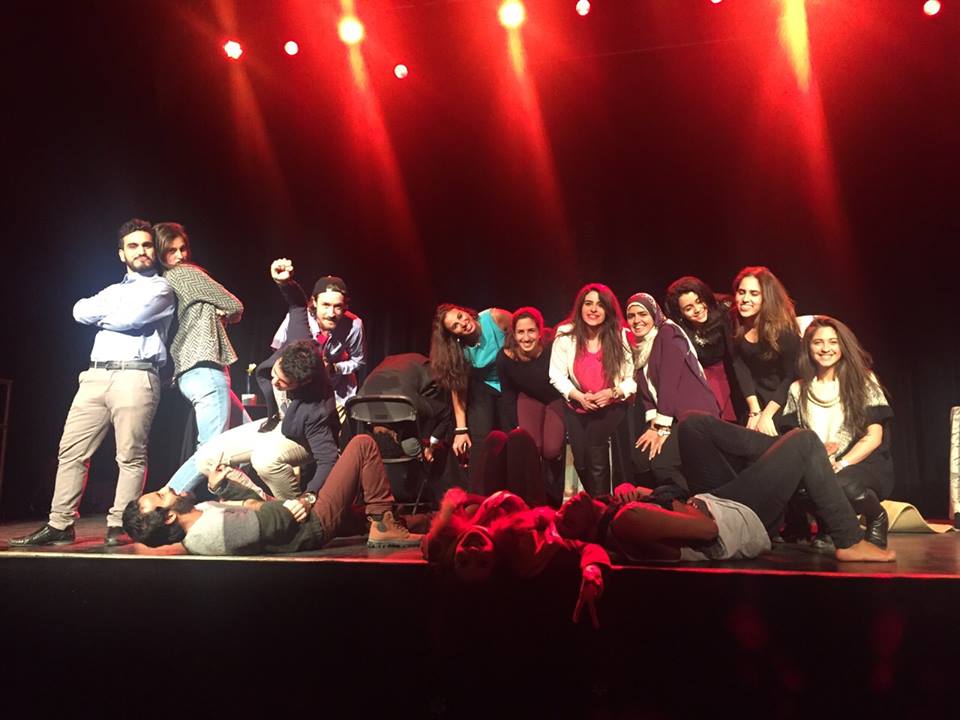
The Theatre of The Oppressed, put on by the Arab Students’ Association, was a two act show that served to ask important questions about interactions on oppression – without claiming to have the answers. The performance intertwined lives of the oppressed and their oppressors in an interactive way: upon closing, members of the audience were invited to recreate scenes where they felt harm could have been reduced by taking the place of an oppressed character.

The innovative technique – developed in 1971 by activist Augusto Boal – brought tangible excitement to the audience. The feeling seemed that these new interventions would make a significant change in the scenes on gender roles in the family, racial profiling, and street harassment.

Audience members brought new ways of interpreting the scene from the oppressed, although bringing little change to the treatment by the oppressor: street harassers went on harassing, regardless of new responses from the harassed. A police officer was confronted on the racial motives of a search. The officer’s response?

“So what?”

11081047_1608204596082414_887284934734218877_n

Valuable lessons come from the ASA’s decision to portray all characters in a multifacted perspective, each struggling to find a balance of peace in their home and public lives, raising many questions: is oppression simply ‘around’ the oppressed, or is everyone born with it? How do we reduce harm in oppressive situations, when it seems that, however the oppressed responds, the same treatment seems to occur?

As the group proposed, the Theatre of The Oppressed was not to provide prescriptive solutions for change, but rather to raise awareness and pose questions while ‘humanizing humanity.’ An important group doing important work in Montréal – we look forward to their next event.

Allison Kutcher, 23 March 2015, Montréal

Image credits: Arab Student Association of McGill

Am I an anyday person?

datum-illustration-energy-power

When I lived in a tiny balloon, I did not know someone had the scissors. I thought the world was rubbery and hermetic, the way it feels when you read inside a moving car. Every day, every teacher, every traffic jam assured me that things were meant to repeat themselves – I thought that was the deal. Do what you are expected to do and everything stays in place. I paid a tax for every missed thank you – I got cornered through every lie. Parents, family, society, looking out for my way of doing things, holding me accountable for the perpetuation of our good values.

Us, we lived high on helium, so their tactics of masks and deceit stayed far. We kept them at bay with bunkers of reeky diaries, Michael Jackson shreeks and daily marble tournaments. I gave the fuzzy stickers to my best pals only, and together we read about species going extinct which we would grow up to save. We knew some were out to wreck it all with their boredom, and we were eager for our turn to come. We would make things right. We would melt the herd of frowns and expose raw beauty. It would shine invincibly.

Did we implode or were we severed?

Was it all planned or did it fester until it could no longer handle us inside?

One day, something cut the cord, broke the diving bell, and young oxygen became stale.

In some parts of the world, they train children to carry guns. In other parts, they train them to carry mortgages. In both, the key is to begin infiltrating the mind before it has the chance to form itself around the body that holds it.

This way, kids become anyone.

An anyday person among anyday people.

The last plane crashed inside because it wanted to die innocent. And then we popped: we stayed stuck in the free-fall for a long time, before there were ever any followers or any marginals. We used to be on the same page before they enlisted some on the front, others on the back, and crumpled and twisted us against one another.

I keep shards of childhood tucked beneath my veins, so that I don’t forget we all come from the land which growing-up destroys. I carry stickers that I give out to my best pals only. They read, “Do Not Ever Grow Extinct.”

word by Hoda Adra 

colour by Strautniekas

From the author: “The artwork inspired thoughts about childhood as a homeland, and how we might go through personal acts of resistance when faced with the pressure of belonging to the dangerous adult world.”

datum-illustration-2

taking control of the layers

untitled

Dissension oozed thick, coloured with every shade of emotion; everyone could see that she was loosing form. The angles and contours of her performance were obscured – all precision to the approach had been abandoned. All that was left was a covering-over of that which was covered-over. Her sharp words now muffled and barely audible over the noise of what could be clearly seen as an implosion come undone.

I closed my eyes and put my fingers to my temples and awaited the barrier of silence I had built in my mind to be shattered by the sound of her cries. As her father I had become accustomed to reading the signs and positioning myself to be at the ready should she need me. I primped and prepped and practiced alongside her, but once she stepped out on that stage she was entirely on her own. And here she was, melting into a puddle of pastel-coloured mess, centre-stage, harsh lights ablaze. I sensed amusement on the lips of those around me, and full-bellied brawling laughter was just moments away. I sensed the horror on the faces of the four perfectly coiffed has-beens who spent their every weekend judging the misguided proclivities of young girls whose burgeoning self-worth would be inextricably tied to their looks.

I prepared myself for the unwonted stares, pitiful glances and murmurs of judgment but instead as I made my way towards the stage I found an impressive showing of ingenuity. In what appeared to be the beginning stages of a meltdown, profuse dissension had resolved itself into abundant honesty, a truth so pure that it lacked its typical bite.

Inside the dingy low-budget hotel conference room, in front of pageant parents, child contestants and jaded judges, Noelle begun to confidently rip long pieces of fabric off her dress, and stick them into the spaces between her still first set of teeth. She took the heels of her palms and expertly smeared eye make-up down her face. She ripped her tights, undid her hair and ran around the stage fully committed to portraying the mythical creature in her favourite bedtime tale. In one beautiful act of childhood defiance, Noelle played and pretended, sang and cooed, delivering gibberish prose with Shakespearian gravitas. Laughter escaped the tightly pursed and botoxed lips of the former beauty queen judges and childhood chatter echoed off the walls and lurid drapes.

I was once beyond resentful of spending my every other weekend with the insipid pageant folks, practicing routines and applying fake lashes, but that was all that I could get, so I took it. And Noelle was a wonder on that stage, consistently low-scoring but persistent. And after years of attempted conformity an apparent meltdown unleashed a cacophony of colour and sound, my beautiful girl.

word by Cora-Lee Conway

colour by Zutto

From the author: “A thick, sweet, melt like a human ice cream cone; I kept thinking about the upside to a meltdown… Perhaps also inspired by my location as I write this sitting on the beach in Cuba, melting in the best way.”

zuttto

zuttto33

sounds from the future

zzz

Jimmy was a prick for bringing me here. I don’t frequent these sorts of places, at least not since the end of the 21st century when jazz made a big comeback with the space-faring folk. Something about trumpets and saxophones helps when you’re staring out into all that black. It ain’t for me though, jazz- cramped venues that reek of cigar. Charlie Parker aside, whose work any semi-intelligent individual should be intimately familiar with, I hate jazz.

Jimmy kept going on and on about this woman, a jazz singer, and I had to see her.

       That’s what they’ve got holographics for, my man, I said. Wear a pin, stream me in.

       No way, he says. It’s gotta be live.

Left me drinking Jameson at the bar, listening to jazz, and it ain’t all that bad. The band’s minimal, a real stripped back affair. Ivory and vocals. The singer’s got this retro style that reminds me of the post-postmodern infusion of underground Japanese disco into the Can-American consciousness. Lollipop chic. Real big circa 2025, before I left the Rock. It’s the hair, I think: styled, but not overly so. It’s got that outside-the-asteroid belt attitude – think glam-rock meets two months on a space freighter. Works for her.

Wearing one hell of a dress too, a swanky number that looks like it’s patterned after those pre-revolution flapper girls you see on OWC (the Old World Channel). It all adds up to a spectacular sort of woman, one who projects this sultry voice right into my whiskey-soaked skull. Real stellar eyes too… all sorts of devastating, like second-hand smoke, purple, and heavy, and deadly to breathe in. Stardust on her eyelids… listening to her sing, maybe space isn’t a wasteland. Don’t make ’em like this back on the Rock, you know?

I’m staring – she notices.

I hear her speak, a voice smouldering like the sun outside the tinted window.

What’re you looking at, Earthling?

word by Josh Elyea

colour by Zutto

From the author: “”When I was writing this piece, I couldn’t move past the eyes. They’re captivating, and I imagine I could’ve spent the entire piece talking about them…what you’re left with is a vignette about a man in space who finds himself head over heels for a jazz singer from Jupiter.”

The View From Gym

tumblr_n5v671HMwK1rpft6ho1_1280

Content warning: suicide

There is a big fire in the sky. A plane hit a building across the river and I am looking out at it through the window next to my school’s gym. I press my forehead against it. Black things fall out of the building.  

I am five.

I don’t hear the fire alarm. Maybe it went off outside. Maybe that’s why firemen put out fires. They told me in school I should stop drop and roll if I was on fire. My gym teacher says a word my brother says when he loses Tetris. I say “Fuck” too. Hey Mr. Gym Teacher are we losing? The people down there on the street look confused. Maybe they want hugs. Hi there do you want hugs? If I hug you maybe the fire in the sky will go out. 

I’ve never been on a plane that flied that bad. This building has a lot of black things in it. “Fuck.” I wonder if the building I’m in now has a lot of black things too and whether they would fall out if a plane hit. My classmate says that the black things look like people. I trust her because she is wearing glasses. How can you tell? Because there are those two people right there you see and they are holding hands falling together turning together in the sky.  

I am scared of heights. I wonder if these falling things are scared too. Hey people are you scared? Hey do you think that they are falling together because they are in love? Hey people are you in love? I want to catch the falling things. I am good at catching things with my baseball glove. The falling things might be scared of heights too.  

My friend’s mom is going to take us home. I don’t know how far we are from home because I don’t know how to tell how far you are from something. I take my Doritos out of my backpack and give some to my sister. Besides I don’t think that they make rulers that long. Like from my house to my school.  Paper is just floating around. I wonder whether someone lost their paper.  Dad would be mad if he lost his. Papers. Maybe we should give them back to whoever lost them.

I like Doritos.  

Sometime after, I learned that the black things were people and that they jumped out of the buildings. Maybe they were afraid of the flames because maybe they were too hot. Fire does seem really hot and it probably hurts to be in fire. But I don’t want to jump out of a building because I’m scared of heights. Also what would happen if I hit the ground. I think about whether the jumpers had to cook dinner later that night for their families’ and who might cook dinner now that they weren’t around. I am scared about who might cook dinner for me if my parents weren’t around anymore either.

word by Jacob Goldberg

colour by Fiona Tang

From the author: “White sheets of paper have the unique quality of all opaque things: they disguise what is behind them.  Only in tearing the paper do we meet this surprise.  This notion of the unknown, coupled with the fierceness of the artist’s rendering of the tiger, largely contributed to the inspiration for the above story.  September 11th, 2001 was just that: initially, an azure sky; then, one stained with smoke and black things.

It is shaking events like 9/11 that should exhort us to become more compassionate; to take refuge in exploring the deep, soulful questions that many find difficult to broach.  In so doing, we can learn the enduring power of relationships and that fate might be tempered by unrelenting love.  Even more vital would be our newfound cognizance of time, and the fact that we simply cannot know how long we have.  To find solace in living with that uncertainty, but to have also developed an absolute commitment to living: that will be our catharsis.”

shark and whale

10262265_476646099136322_7572693832391211453_n

She spent most of the waking hours of her life in an office tower. It was obvious to her that this was not a real problem, that the people around her were also spending most of their lives in office towers, and that everybody else seemed fine with it.

She spent only ten minutes of her day everyday outside, the walk between her apartment and the subway station, five minutes in the morning after which she descended underground and remained there, subway station to tower lobby, tower lobby to elevator, elevator to sky, to being up in the sky but also trapped inside a grey-walled cubicle. She could see a piece of sky over the top of her cubicle wall and the sun glinted sometimes in a way that was the most flippant, the most torturous of teases. And then five minutes on the way home, dark by the time she emerged. This, too, she knew was not a problem, because the air was cold in the city she lived in and to be inside, indeed to be underground, was desirable. Shelter was a plea granted.

There were tall mirrors in the elevators of the office tower, and sometimes she looked in these mirrors in the middle of the day and was surprised by the normalcy. She looked like an office worker, wearing the right clothing for an office worker, with her hair done up and her shoes clean and her teeth brushed. What she felt like was something big and floating, something that took moving with a crane or the buoyancy of an ocean of salt to support. Something helpless and slow.

There was a boy who worked in the Starbucks in the lobby of the office tower. He had long hair and a nice, easy smile. She started to take trips down to the Starbucks on her breaks and moon around. She reached sailing plateaus of caffeine highs by the end of the day.

One week, she came in on a Sunday, and the boy was not there. Another boy handed her a cup of coffee instead, a boy with short hair and a sharp, too-big smile. It occurred to her that Starbucks had paid for this smile, that this boy and maybe all the boys were smiling at her because Starbucks had told them to.

She drank too much coffee that day anyways.

She could not sit on the subway home, and because it was late and the only other people in the carriage were too gone to care, she paced back and forth for the whole ride, long strides that made her legs feel real for the first time in weeks and she imagined the office tower being filled with water, with salty ocean water and then with monstrous animals that stared without seeing and bit with delight and she imagined them darting back and forth in the gloomy, empty space. Shreds of mangled whale floated past them.

word by Charlotte Joyce Kidd

colour by Fiona Tang 

From the author: “It looked to me like the shark and the whale in this picture were both trying to break free from the wall, but whereas the whale strains against it, the shark bites its way out. I’ve also been thinking a lot lately about what the inside of the office tower I work in would look like if it was hollowed out and made into an aquarium, or some kind of colossal sculpture gallery. Those images together became this piece of writing.”